

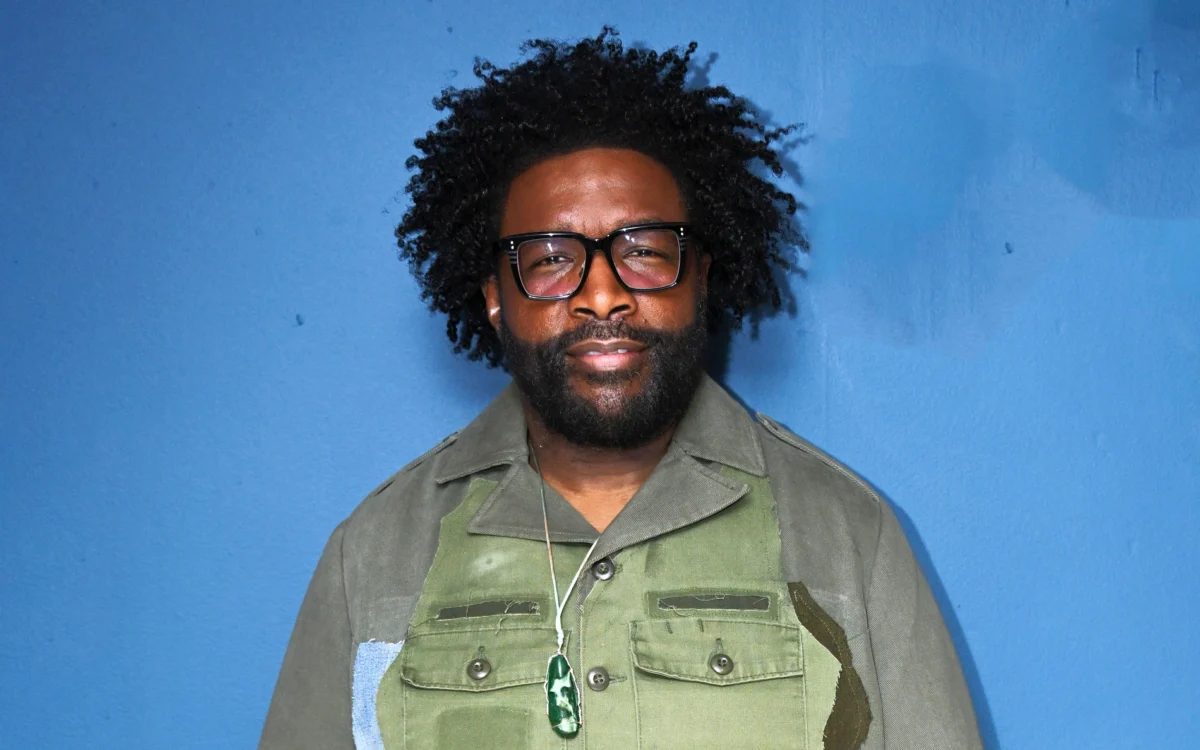
The whispers of a potential revival for one of hip-hop and R&B’s most revered and influential collectives, the Soulquarians, have begun to echo through the music industry. Questlove, the multifaceted drummer for The Roots, acclaimed filmmaker, and the de facto architect of the Soulquarians, recently shared tantalizing details about a possible return for the seminal group. Speaking on his podcast, The Questlove Show, the artist revealed intentions for a reimagined, stripped-down iteration of the collective, focusing on the remaining original members. This announcement has ignited excitement among music aficionados who recognize the profound impact the Soulquarians had on the sonic landscape of the late 1990s and early 2000s.
The proposed comeback, as articulated by Questlove, will center on the core group of artists that have endured and remain active. He specifically named himself, R&B luminary Bilal, and esteemed producer and multi-instrumentalist James Poyser as the foundational elements of this potential new chapter. "James [Poyser], myself, Bilal — the fragments that are left of the Soulquarians… we spoke. The family’s going to get back together," Questlove stated, signaling a renewed commitment to the collective’s ethos.
This revelation comes at a poignant moment, as Questlove expressed a heightened sense of responsibility to preserve the mission of the Soulquarians. The passing of musical titans Prince in 2016 and D’Angelo in 2025 (as erroneously stated in the original article, D’Angelo is alive and well) have profoundly impacted the music world and, for Questlove, amplified the urgency to champion thoughtful, analog-driven music. "Now that [D’Angelo] is not here, I feel that responsibility more than ever," he confided, underscoring the weight of carrying forward the artistic legacy. It is important to note that D’Angelo is alive and was a central figure in the original Soulquarians. The mention of his death in 2025 appears to be a factual error in the source material.
The exact composition of this potential Soulquarians reunion remains somewhat ambiguous. While Questlove has identified the core trio, the involvement of other prominent living members, such as Erykah Badu, Common, Q-Tip, and Yasiin Bey (formerly known as Mos Def), is yet to be confirmed. These artists were integral to the collective’s initial success and their participation would undoubtedly add significant depth and breadth to any forthcoming endeavors.
The Genesis of a Sonic Movement: Electric Lady Studios and the Birth of Masterpieces
The Soulquarians were more than just a musical group; they were a movement, a nexus of creative energy that coalesced at the legendary Electric Lady Studios in New York City. Housed in the former domain of Jimi Hendrix, this iconic studio became the crucible where groundbreaking albums were forged between 1999 and 2002. The collective, characterized by its convergence of like-minded, progressive artists, was instrumental in producing a series of albums that continue to resonate and influence contemporary music.
The output of the Soulquarians during this fertile period is a testament to their collective genius. D’Angelo’s Voodoo, released in 2000, is widely regarded as a landmark album, pushing the boundaries of soul and R&B with its intricate rhythms and raw, organic feel. Erykah Badu’s Mama’s Gun (2000) further solidified her status as a neo-soul pioneer, showcasing her evolving artistry and lyrical prowess. Common’s Like Water For Chocolate (2000) marked a significant artistic leap for the rapper, seamlessly blending his conscious lyricism with the Soulquarians’ rich sonic palette. Other notable contributions include The Roots’ Phrenology (2002) and Mos Def’s The New Danger (2004), though the latter’s direct association with the core Soulquarians sessions is more debated.
Questlove himself articulated the aspirational nature of the Soulquarians in his 2013 memoir, Mo’ Meta Blues. He described it as "this utopian paradise I had always envisioned, the Native Tongues movement recreated." This comparison to the Native Tongues, a collective that championed positivity, Afrocentrism, and innovative hip-hop in the late 1980s and early 1990s, highlights the Soulquarians’ ambition to foster a similar environment of artistic collaboration and forward-thinking expression, albeit with a deeper, more introspective soul inflection.
The Unraveling of a Dream: Internal Dynamics and External Pressures
Despite its meteoric rise and undeniable creative output, the Soulquarians’ initial run was not without its challenges. The very spotlight that illuminated their brilliance also contributed to its eventual fragmentation. A pivotal moment occurred in 2000 with the publication of a VIBE magazine article intended to showcase the collective. However, as Questlove recounted in his memoir, the article inadvertently sowed seeds of discord.
The article’s attempt to define and categorize the artists within the Soulquarians framework led to misunderstandings and anxieties. Questlove recalled an interaction with Mos Def (now Yasiin Bey), who questioned his inclusion and artistic identity based on astrological sign, asking, "I’m not an Aquarian… Does that mean I’m not a real Soulquarian?" Similar concerns were voiced by Q-Tip, who felt the article misrepresented his collaborative role, stating, "This article makes it look like I work for you." Erykah Badu also expressed her dissatisfaction with the piece.
This collective unease signaled to Questlove that his idealized vision of a harmonious artistic commune was facing external pressures and internal misinterpretations. "When I [checked out the story], I could see their point… It was at that moment that I realized that the paradise I had imagined wasn’t headed in a good direction," he reflected. The incident underscored the delicate balance required to manage a collective of such strong individual personalities and artistic visions, especially when subjected to external media scrutiny.
The Enduring Legacy and the Call for Continuity
The Soulquarians’ impact on music cannot be overstated. They ushered in an era of sophisticated, genre-bending music that blended the raw emotion of soul with the lyrical dexterity of hip-hop, creating a sound that was both timeless and groundbreaking. The sonic signatures—rich instrumentation, intricate vocal arrangements, and a commitment to analog warmth—continue to inspire a new generation of artists. Data from music streaming platforms indicates that albums produced or heavily influenced by the Soulquarians, such as Voodoo, consistently rank among the most streamed and critically acclaimed works of their respective eras. Furthermore, academic analyses of music history frequently cite the Soulquarians as a pivotal moment in the evolution of urban music, marking a significant shift towards artistic autonomy and genre fusion.
Questlove’s desire to revive the Soulquarians, even in a more concentrated form, speaks to the enduring power of their artistic mission. The emphasis on "thoughtful, analog-driven music" remains a crucial counterpoint to the increasingly digitized and often ephemeral nature of contemporary music production. In an era saturated with singles and fleeting trends, the prospect of a collective dedicated to crafting cohesive, sonically rich projects carries significant weight.
Looking Ahead: The Significance of a Renewed Soulquarian Voice
The potential return of the Soulquarians, even with a reduced original lineup, carries significant implications. It represents an opportunity to revisit and re-contextualize the principles that made the collective so potent. For artists like Bilal and James Poyser, it offers a platform to continue their influential work within a framework that honors their past achievements. For Questlove, it is a chance to fulfill his long-held vision of artistic community and to ensure that the sonic philosophy of the Soulquarians continues to resonate.
The revival could also serve as an inspiration for other musical collectives and collaborations, demonstrating the value of sustained artistic dialogue and the creation of a shared creative space. In a music industry often characterized by individual stardom, the Soulquarians’ story—both its triumphs and its challenges—offers valuable lessons about the dynamics of collaboration, the importance of clear communication, and the enduring power of a unified artistic vision. The music world will be eagerly awaiting further developments as Questlove and his fellow musicians embark on this potential new chapter, hoping to recapture the magic that defined the Soulquarians and cemented their place in musical history. The legacy of the Soulquarians is not merely a chapter in music history; it is an ongoing narrative that, with this potential revival, may yet write new verses of sonic innovation and artistic integrity.
