

The year 1965 stands as a transformative era in the history of popular music, marking a pivotal intersection where technological advancement, economic prosperity, and a burgeoning youth culture converged. For the American teenager of the mid-1960s, the acquisition of a first automobile represented more than mere transportation; it was a symbol of burgeoning independence and a private venue for the consumption of a new, electrified sound. This period saw the music industry pivot toward the "youth market" with unprecedented focus, driven by the ubiquity of the AM car radio and the proliferation of 45 RPM singles. As the "Baby Boom" generation reached adolescence, their collective purchasing power and social habits dictated the charts, resulting in a year that many historians consider the pinnacle of the 20th-century pop explosion.
The Socio-Economic Landscape of 1965
To understand the impact of the hits of 1965, one must analyze the socio-economic environment of the United States and Western Europe during this time. The mid-60s were characterized by a robust post-war economy. In the U.S., the automotive industry was flourishing, with the Ford Mustang—introduced in mid-1964—becoming a cultural phenomenon by 1965. This vehicle, marketed specifically toward younger drivers, emphasized style and performance over traditional family utility.
For the 1965 teenager, the car served as a "rolling living room." Unlike the family television or the household hi-fi system, which were often under parental supervision, the car radio offered a curated space for the exploration of rock, soul, and the emerging folk-rock genre. This autonomy allowed for the rapid spread of new musical trends. Radio stations like WABC in New York and KHJ in Los Angeles adopted "Top 40" formats that prioritized high-energy hits, creating a shared national experience for millions of young listeners simultaneously.
The British Invasion Reaches its Zenith: The Beatles and Help!
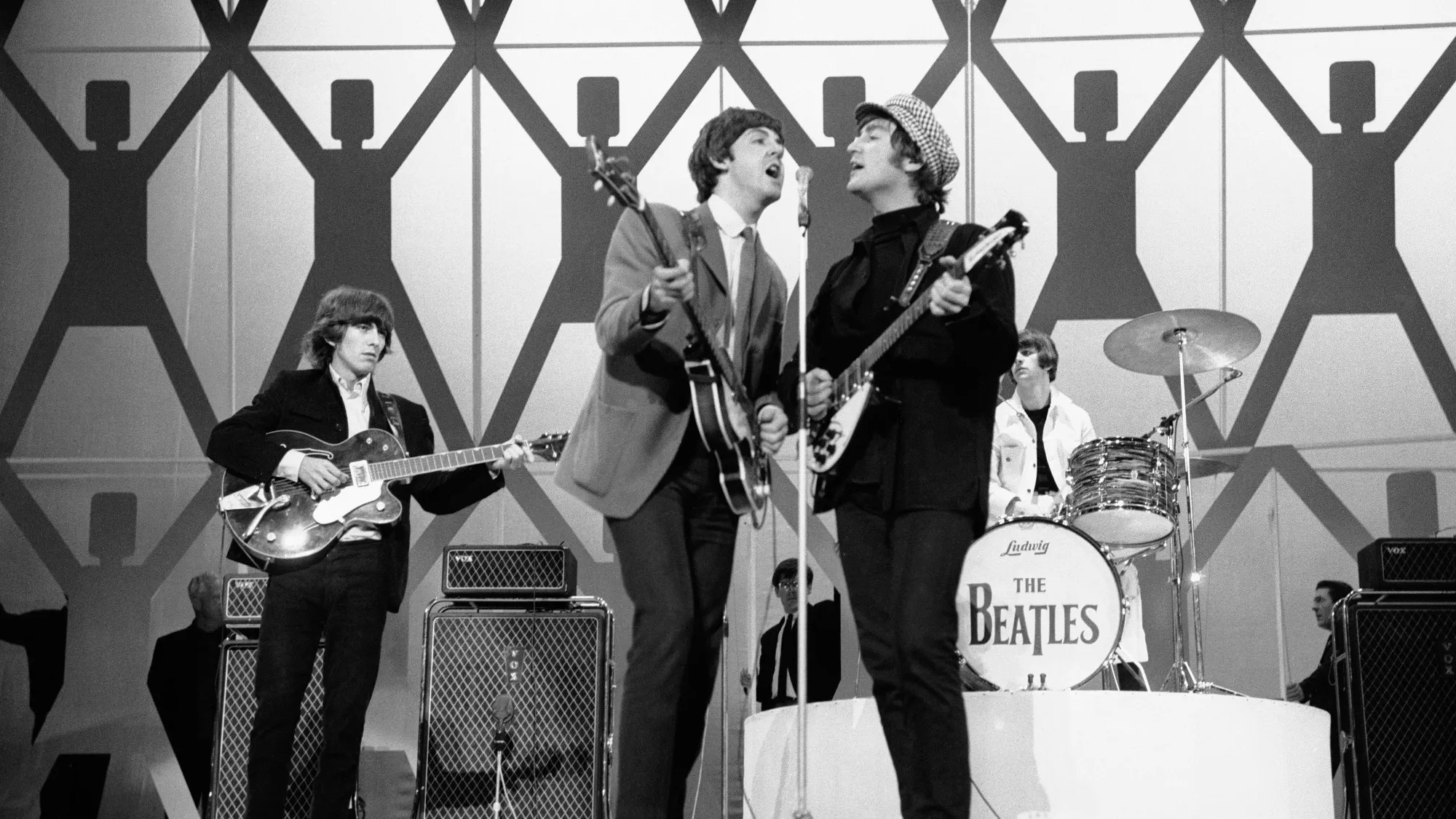
By 1965, the British Invasion was no longer a novelty but a dominant force in the global music industry. The Beatles, having already conquered the U.S. market in 1964, began to evolve their sound from simple "mop-top" pop to more complex, introspective compositions. The release of "Help!" in July 1965 served as the title track for both their second feature film and their fifth studio album.
The song’s performance was statistically staggering. It reached No. 1 on the Billboard Hot 100 on September 4, 1965, and remained there for three weeks. Globally, it topped charts in the United Kingdom, Canada, Australia, and across Europe. While the track’s upbeat tempo and signature vocal harmonies appealed to the teen demographic, historical analysis reveals a deeper narrative. John Lennon, the primary songwriter, later characterized the track as a genuine plea for assistance during a period of intense pressure and "discontinuity" in his life.
Industry data from 1965 indicates that the Help! album was a primary driver of Capitol Records’ revenue, contributing to the label’s record-breaking sales year. The song also signaled a shift in production techniques, utilizing more sophisticated overdubbing and a 12-string guitar sound that would influence the burgeoning folk-rock movement.
The Anthem of Rebellion: (I Can’t Get No) Satisfaction
While The Beatles represented a polished, albeit evolving, version of the British sound, The Rolling Stones provided a grittier, more provocative alternative. In June 1965, the band released "(I Can’t Get No) Satisfaction," a track that would define the decade’s spirit of youthful dissatisfaction and rebellion.
The song is famous for its opening riff, created by guitarist Keith Richards using a Gibson Maestro FZ-1 Fuzz-Tone pedal. Originally intended as a placeholder for a horn section, the distorted guitar sound became the song’s defining feature and a catalyst for the "fuzz" effect’s popularity in rock music.
"Satisfaction" reached No. 1 in the United States on July 10, 1965, staying at the top for four weeks. Its lyrical content, which critiqued rampant consumerism and hinted at sexual frustration, faced significant pushback. Several radio stations and television programs, including Shindig!, attempted to censor or omit certain verses. Despite this—or perhaps because of it—the song became an essential anthem for teens. It provided a voice for a generation that felt increasingly alienated from the "establishment" values of the 1950s.
The Motown Influence: The Temptations and My Girl
While the British Invasion dominated the headlines, the domestic music scene in the United States was being revolutionized by Motown Records in Detroit. 1965 marked the year that Motown truly became "The Sound of Young America," successfully crossing over from R&B charts to the mainstream pop market.
"My Girl," performed by The Temptations and written by Smokey Robinson and Ronald White, was released in late December 1964 but achieved its peak impact in early 1965. It became the group’s first No. 1 hit on the Billboard Hot 100 in March 1965. The song was a masterclass in the "Motown Sound"—a combination of polished orchestral arrangements, tight vocal harmonies, and a driving, melodic bassline.
The success of "My Girl" was a significant milestone for African American artists in a still-segregated musical landscape. It proved that soulful, gospel-influenced pop could achieve universal appeal among white and Black teenagers alike. For many teens driving in 1965, "My Girl" was the quintessential "cruising" song, representing the softer, more romantic side of the era’s musical output.
Chronology of Musical Milestones in 1965
The year was marked by a rapid succession of releases that expanded the boundaries of what pop music could achieve:
- January 1965: "My Girl" by The Temptations begins its ascent to the top of the charts, establishing Motown as a dominant force for the year.
- March 1965: Eric Clapton leaves The Yardbirds, citing their move toward a more "pop" sound with "For Your Love," signaling a growing divide between commercial pop and "serious" blues-rock.
- May 1965: The Rolling Stones record "(I Can’t Get No) Satisfaction" at RCA Studios in Hollywood.
- June 1965: The Byrds release their cover of Bob Dylan’s "Mr. Tambourine Man," effectively birthing the folk-rock genre.
- July 1965: Bob Dylan "goes electric" at the Newport Folk Festival, a move that causes a schism in the music world but validates the use of rock instrumentation for serious lyrical themes.
- August 1965: The Beatles perform at Shea Stadium in New York before 55,600 fans, the largest concert audience in history at that point, grossing an unprecedented $304,000.
- December 1965: The Beatles release Rubber Soul, an album that moves away from the "teenybopper" sound toward experimental studio techniques and complex lyricism.
Technical and Industry Implications
The hits of 1965 were not just artistic triumphs; they were the products of a rapidly evolving industry. The shift from mono to stereo recording was underway, though most teens still heard these songs in mono through their car’s single dashboard speaker. The demand for "higher fidelity" led to improvements in vinyl pressing and the eventual rise of FM radio in the following decade.
Furthermore, 1965 saw the emergence of the "Producer" as a creative force. Figures like George Martin (The Beatles), Andrew Loog Oldham (The Rolling Stones), and Berry Gordy (Motown) became as central to the music’s success as the artists themselves. They understood that the teenage audience was looking for a "total package"—a combination of image, sound, and relatability.
Broader Impact and Historical Legacy
The musical output of 1965 had profound implications for the remainder of the 20th century. It was the year that "pop" began to transform into "rock." The themes of the songs became more complex, moving from simple teenage romance to social commentary, psychological depth, and political unrest.
The relationship between the car and the radio solidified the concept of the "soundtrack of our lives." For the teens of 1965, these songs were inextricably linked to the sensory experience of driving—the smell of vinyl seats, the glow of the vacuum-tube radio dial, and the feeling of freedom on the open road.
Analysis of the 1965 charts reveals a unique moment of cultural unity before the social fractures of the late 1960s. In 1965, a single radio station could play The Beatles, The Temptations, and The Rolling Stones in the same hour, appealing to a massive, diverse audience. This "Big Tent" era of pop music would eventually give way to the fragmentation of genres (heavy metal, progressive rock, disco) in the 1970s.
Ultimately, 1965 was the year the music industry grew up, even as it remained firmly focused on the youth. The hits of that year provided the blueprint for the modern music business, proving that artistic innovation and massive commercial success were not mutually exclusive. As these songs continue to be covered, sampled, and played on "classic hits" stations today, their enduring relevance confirms that the "regular rotation" of a 1965 car stereo was, in fact, the sound of a new world being born.
