

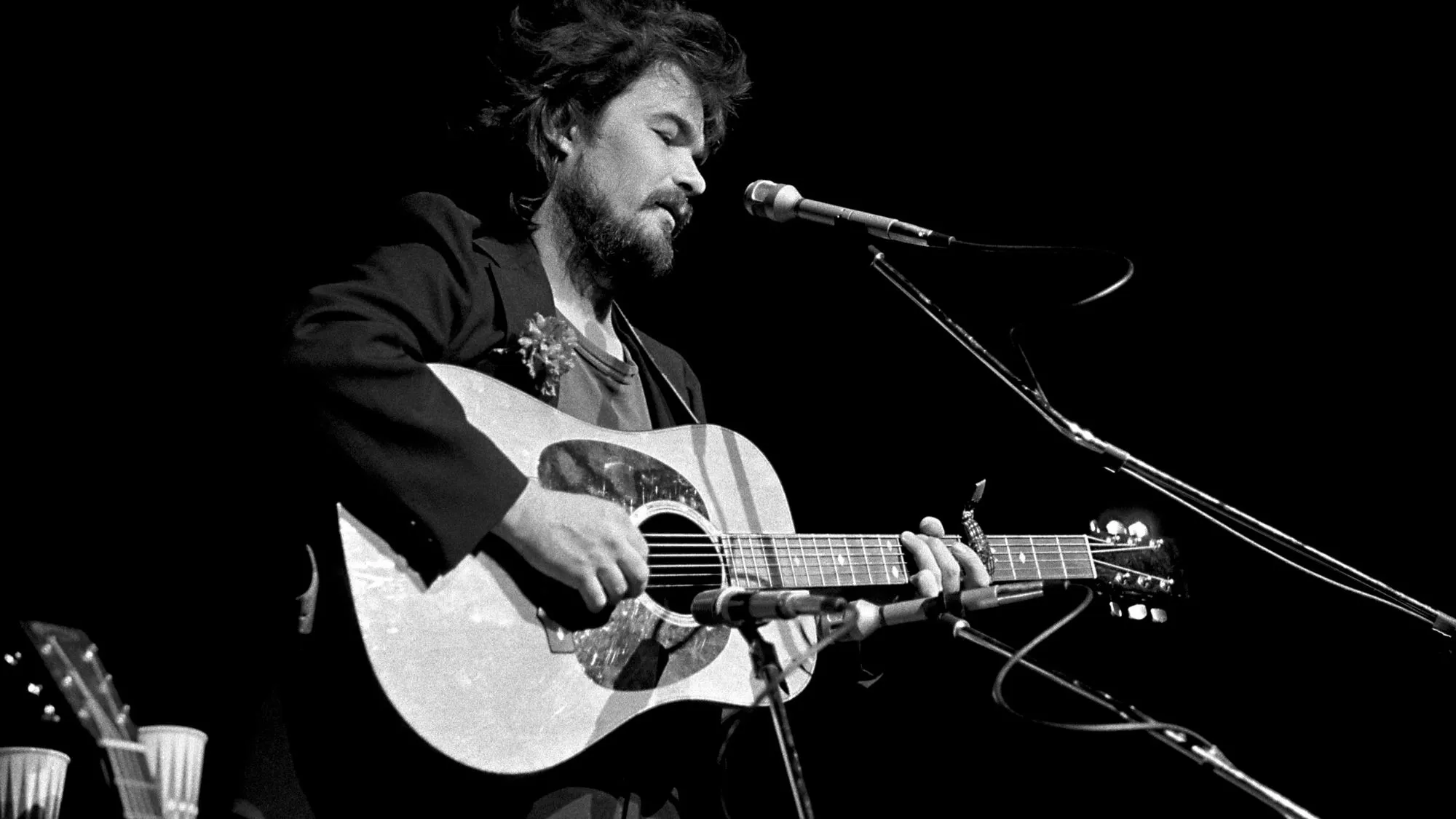
The evolution of popular music has frequently intersected with the traditions of oral storytelling and formal literature, yet few artists successfully bridge the gap between a three-minute radio hit and the depth of a multi-chapter novel. In the contemporary musical landscape, the designation of "songwriter" often falls short of describing individuals who utilize complex rhyme schemes, intricate character development, and atmospheric world-building to craft their works. Taylor Swift, John Prine, and Joni Mitchell represent a triumvirate of creators whose lyrical output transcends the standard conventions of verse and chorus, offering listeners a robust narrative experience comparable to the Great American Novel. By examining their distinct approaches to storytelling, it becomes evident how these artists have reshaped the cultural perception of the song as a literary medium.
The Literary Architecture of Taylor Swift
Taylor Swift has emerged as the preeminent narrative songwriter of the 21st century, a feat supported by both commercial data and academic scrutiny. While her early career was rooted in the "confessional" style of country music, her later work—specifically the 2020 sister albums folklore and evermore—demonstrated a pivot toward third-person fiction and complex non-linear storytelling. Swift’s ability to utilize "prosaic, diaristic" elements allows her to ground high-concept emotional arcs in relatable, tactile details.
A primary example of her novelistic capability is found in the track "Champagne Problems," where she employs vivid imagery to depict a failed marriage proposal. The lyrics, "Your Midas touch on the Chevy door / November flush and your flannel cure / ‘This dorm was once a madhouse’ / I made a joke, ‘Well, it’s made for me,’" function as a micro-novel. In just four lines, Swift establishes a setting (a college campus in autumn), a relationship dynamic, and a foreshadowing of the protagonist’s mental health struggles.
The "Taylor Swift Effect" has extended into academia, with prestigious institutions such as Harvard University, Stanford, and the University of Texas at Austin offering courses that analyze her lyrics alongside the works of William Shakespeare, Robert Frost, and Sylvia Plath. Professor Stephanie Burt of Harvard has noted that Swift has an "unparalleled" sense of narrative structure, often employing the "unreliable narrator" trope—a staple of literary modernism—to complicate the listener’s perspective. Swift’s impact on the industry is quantifiable; according to Billboard, her emphasis on narrative-driven "Eras" has not only redefined concert touring but has also encouraged a resurgence in lyric-focused consumption among younger demographics.
John Prine: The Mark Twain of American Songwriting
If Swift represents the modern evolution of the narrative song, the late John Prine served as its humble, Midwestern architect. Often referred to as the "Mark Twain of American songwriting," Prine possessed a singular ability to imbue the lives of ordinary, often marginalized people with the dignity of epic heroes. His songs were rarely just melodies; they were "pseudo-novels" populated by three-dimensional characters who lived, breathed, and suffered within the span of four minutes.
Prine’s 1971 self-titled debut album remains a masterclass in character study. In "Donald & Lydia," he explores the interior lives of two lonely individuals with the precision of a short-story writer. The opening lines—"Small town, bright lights, Saturday night / Pinballs and pool halls flashing their lights / Making change behind the counter in a penny arcade / Sat the fat girl daughter of Virginia and Ray"—set a cinematic scene that immediately establishes the social and emotional geography of the story.
Throughout his career, which spanned five decades until his passing in 2020, Prine earned the highest accolades from his peers. Bob Dylan once remarked that Prine’s stuff was "pure Proustian existentialism," noting that his "midwestern mind-trips" were unique in the American canon. Prine’s legacy is defined by his capacity for empathy. Whether writing from the perspective of an elderly woman in "Hello in There" or a veteran struggling with addiction in "Sam Stone," he utilized the "folk parable" format to address complex societal issues. His work remains a cornerstone of the Americana genre, influencing generations of artists who seek to prioritize the "human story" over commercial artifice.
Joni Mitchell and the Aesthetic of Intimacy
Joni Mitchell’s contribution to the novelistic tradition in music is characterized by her "robust and vibrant" command of language and her revolutionary approach to song structure. While her contemporaries in the 1960s and 70s were often focused on political protest or traditional folk tropes, Mitchell turned her gaze inward, creating a "confessional" style that was as structurally complex as it was emotionally raw. Her work, particularly the 1971 album Blue, is frequently cited as the gold standard for autobiographical storytelling.
Mitchell’s narrative scope is perhaps best displayed in compositions like "The Last Time I Saw Richard" and "Hejira." These songs do not merely describe feelings; they document journeys—both physical and psychological. In "Hejira," the lyrics act as a travelogue of the soul, utilizing the landscape of the American highway to mirror the protagonist’s internal restlessness. Her use of "open tunings" and non-standard chord progressions served as a musical "setting" for her stories, creating an atmospheric depth that complemented her lyrical density.
In 2023, Mitchell was awarded the Library of Congress Gershwin Prize for Popular Song, a testament to her enduring influence. During the ceremony, Librarian of Congress Carla Hayden described Mitchell’s songs as "standard-bearers of the human experience." Mitchell’s influence is seen in the works of artists ranging from Prince to Brandi Carlile, all of whom have cited her ability to weave "short stories with as much backstory and importance as a full-length book" as a primary inspiration for their own creative endeavors.
A Chronology of Narrative Excellence
The lineage of novelistic songwriting can be traced through a distinct chronology of cultural shifts:
- 1960s–1970s: The Architect Era. Joni Mitchell and her contemporaries in the Laurel Canyon scene move away from the "Brill Building" pop factory model toward highly personal, literary compositions. John Prine introduces the "everyman" narrative to the folk revival movement.
- 1980s–1990s: The Genre Expansion. The narrative style begins to permeate other genres, including hip-hop and alternative rock, though the "singer-songwriter" archetype remains the primary vessel for novelistic lyrics.
- 2000s–2010s: The Diaristic Shift. Taylor Swift debuts, initially focusing on teenage narratives but quickly evolving into a sophisticated storyteller who utilizes digital-age connectivity to turn her lyrics into a shared "lore" with her audience.
- 2020–Present: The Literary Synthesis. The release of Swift’s folklore and the posthumous celebration of Prine’s final works signal a renewed critical and commercial interest in "slow-burn" storytelling. Music streaming data suggests that "lyric-heavy" tracks are seeing increased engagement, as listeners seek deeper meaning in a fragmented media environment.
Data and Analytical Implications
The success of these three songwriters suggests a significant market for "high-literacy" music. According to a 2022 study on lyrical complexity, while the average vocabulary of Top 40 hits has fluctuated, artists who maintain a "novelistic" approach tend to have higher "catalog longevity." This means their songs continue to be streamed and purchased decades after their release because they offer layers of meaning that require multiple listens—much like a favorite book requires multiple readings.
Furthermore, the "official response" from the literary community has been increasingly welcoming. The awarding of the Nobel Prize in Literature to Bob Dylan in 2016 broke the barrier between "song" and "poetry/prose," paving the way for artists like Mitchell, Prine, and Swift to be evaluated as serious writers. This shift has practical implications for the music industry, as labels now frequently market "lyric videos" and "annotated booklets" as premium content, recognizing that for a large segment of the audience, the "story" is the primary product.
The Broader Impact on Modern Art
The legacies of Taylor Swift, John Prine, and Joni Mitchell demonstrate that the constraints of a musical composition—typically limited by time and rhythm—are not barriers to profound storytelling. Instead, these constraints act as a crucible, forcing the songwriter to distill complex human experiences into their most potent forms.
By treating melodies like novels, these artists have ensured that their work occupies a permanent place in the cultural consciousness. They have proven that a clever rhyme scheme, when paired with an unparalleled command of language, can create a world as "rich and robust" as any found in a library. As the music industry continues to evolve in the age of artificial intelligence and algorithmic curation, the human-centric, narrative-driven craftsmanship exemplified by these three legends remains the benchmark for artistic excellence. Their songs do more than entertain; they document the intricacies of the human condition, one verse at a time.
