

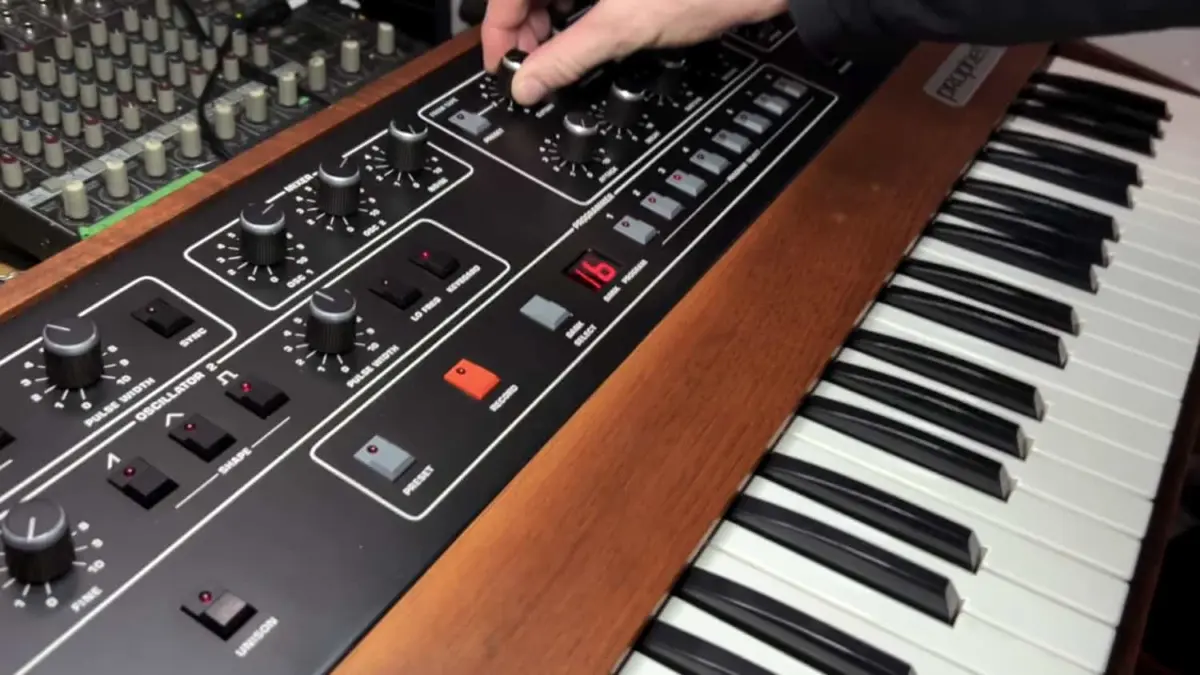
The landscape of modern analog synthesis is witnessing a significant shift as independent developers increasingly bridge the gap between classic hardware design and contemporary digital functionality. In a notable development for the synthesizer community, a new third-party firmware modification titled prophet-rev4-mods has been released, targeting the Sequential Prophet-5 and Prophet-10 Rev4. This open-source project, hosted on GitHub under the MIT license, introduces a suite of highly requested features—including an arpeggiator and a polyphonic step sequencer—to instruments that were originally designed to adhere strictly to their 1970s-era heritage. By leveraging the existing digital control systems within these modern analog recreations, the project expands the performance capabilities of the Prophet line without necessitating any physical alterations to the hardware.
The Evolution of the Prophet-5 and the Rev4 Milestone
To understand the impact of the prophet-rev4-mods project, one must consider the historical weight of the Sequential Prophet-5. Originally released in 1978 by Dave Smith and John Bowen at Sequential Circuits, the Prophet-5 was the first fully programmable polyphonic synthesizer. It revolutionized the industry by allowing musicians to store and recall patches, a feat made possible by the integration of a Z80 microprocessor to control its analog voice circuits. Over its initial production run, the Prophet-5 went through three major revisions (Rev1, Rev2, and Rev3), each utilizing different internal components—most notably the SSM and later CEM (Curtis Electromusic Specialties) integrated circuits.
In 2020, Sequential released the Prophet-5 Rev4, a "greatest hits" version of the instrument that combined the best features of all previous iterations. It featured a "Vintage" knob to simulate the instability of older units and included both the SSI 2140 filter (a descendant of the SSM 2040) and the CEM 3320 filter. While the Rev4 was hailed for its authentic sound and build quality, it remained a "purist" instrument. Unlike its modern siblings, the Prophet-6 and the OB-6, the Prophet-5 Rev4 did not include a built-in arpeggiator or sequencer, as the original 1970s units lacked these features. The prophet-rev4-mods project represents a community-driven effort to modernize the Rev4 workflow while maintaining its prestigious analog signal path.
Technical Specifications and Feature Integration
The prophet-rev4-mods firmware is not a complete replacement of the Sequential operating system but rather a sophisticated patch applied to the official Main OS 2.1.0. This approach ensures that the core stability and voice management of the instrument remain intact while "hooking" into the control software to add new routines. The primary features introduced by the modification include:
- Integrated Arpeggiator: This adds a versatile performance tool that was notably absent from the factory specification. Users can now trigger rhythmic patterns based on held chords, a feature that has become a staple of electronic music production.
- Polyphonic Step Sequencer: Drawing inspiration from the sequencers found in the Prophet-6 and OB-6, this allows for the recording and playback of complex melodic and harmonic patterns.
- Octave Shifting: This utility feature allows players to quickly transpose the keyboard range, a vital addition for the five-octave keyboard of the Prophet-5 and Prophet-10 when performing live.
- Patch-Level Sequence Memory: Perhaps the most significant workflow improvement, this allows the synthesizer to store sequence data alongside individual patches. In the factory firmware, the Prophet-5 Rev4 focuses primarily on timbre storage; this mod aligns it with more modern "performance-oriented" synthesizers where the sequence is often an integral part of the preset’s identity.
The developer, known in the GitHub community as "dangerous," has designed the installation process to be accessible yet cautious. It requires users to possess the official Sequential firmware binary, which is then processed through the developer’s patching tool to create a modified SysEx (System Exclusive) file. This file is then transmitted to the synthesizer over MIDI.
Chronology of Development and Community Testing
The emergence of prophet-rev4-mods follows a timeline of increasing user-led modifications in the synth industry. While Sequential has a history of providing robust official updates—such as the OS 2.0 update which improved MIDI implementation and added "Vintage" mode behaviors—the community has often looked for ways to push the hardware further.
The author of the repository reported successful testing of the modification on a Prophet-10 Rev4 in October 2026. As of the current release cycle, the Prophet-5 Rev4 hardware remains "untested" by the primary developer, though the underlying architecture of the Prophet-5 and Prophet-10 Rev4 is virtually identical, save for the voice count. The Prophet-10 utilizes two stacked voice boards to achieve its ten-voice polyphony, but both models share the same digital control infrastructure, suggesting that the firmware should, in theory, be cross-compatible.
The project’s presence on GitHub marks a significant moment in the "right to modify" movement within the music technology sector. By releasing the code under the MIT license, the developer has invited other programmers to audit, improve, and expand upon the features, creating a collaborative environment that contrasts with the proprietary nature of traditional hardware manufacturing.
Comparative Analysis: Official vs. Third-Party Firmware
The decision to install third-party firmware involves a calculated trade-off between functionality and manufacturer support. Sequential, now a part of the Focusrite Group, is known for its high standards of customer service and hardware reliability. However, like most hardware manufacturers, Sequential does not officially support or warrant instruments running unauthorized software.

From a technical standpoint, the Prophet-5 Rev4 uses a modern ARM-based processor to handle MIDI, the front panel interface, and the CV (Control Voltage) generation for the analog oscillators and filters. The prophet-rev4-mods project exploits the "headroom" in this processor’s cycles. Because the Rev4 was designed with a relatively powerful control chip to handle the complex "Vintage" modeling and tuning calibrations, there is sufficient computational power to run an arpeggiator and sequencer in the background without affecting the timing of the analog voices.
Analysts in the music technology space note that this modification brings the Prophet-5 Rev4 into closer competition with the Arturia PolyBrute or the Novation Summit, both of which offer extensive digital control features. For many professional musicians, the lack of an arpeggiator was the only deterrent to choosing the Prophet-5 over more feature-rich modern polysynths. This firmware mod effectively removes that barrier.
Risks, Recovery, and Safety Protocols
The installation of any alternate firmware carries the inherent risk of "bricking"—a state where the device becomes unresponsive due to corrupted software. The prophet-rev4-mods repository addresses these concerns by providing a clear path for restoration. Because the Prophet-5 Rev4’s bootloader is separate from the Main OS, users can typically force the unit into a "bootloader mode" to re-install the official factory firmware via SysEx even if the modified firmware fails to load.
The developer emphasizes several critical prerequisites for installation:
- Sequential Main OS 2.1.0: The patch is strictly version-dependent. Attempting to apply it to older or future versions of the official OS could result in system instability.
- Reliable MIDI Interface: Low-quality USB-to-MIDI cables are notorious for dropping packets during large SysEx transfers. The developer recommends high-quality interfaces to ensure the firmware integrity during the flash process.
- Documentation Review: Users are urged to read the repository’s "known issues" section, which outlines potential bugs in the sequencer’s timing or UI feedback on the Prophet’s limited two-digit LED display.
Broader Implications for the Synthesizer Industry
The release of prophet-rev4-mods is part of a larger trend where "legacy" hardware is given a second life through software. Similar projects have existed for years, such as the "Gligli" firmware for the 1980s-era Sequential Prophet-600, which transformed a budget-friendly vintage synth into a high-performance machine with faster envelopes and higher-resolution control.
However, the fact that this is happening to a product still in active production is a newer phenomenon. It suggests that the "firmware-as-a-service" model—where manufacturers provide years of free updates—has conditioned users to expect constant improvement. When a manufacturer decides that an instrument is "feature-complete," the community may now take it upon themselves to continue the development cycle.
This movement poses a unique challenge for companies like Sequential. While these mods can increase the desirability and resale value of the hardware, they also create a secondary tier of user experience that the company cannot control. Nevertheless, the existence of such a project is a testament to the enduring popularity of Dave Smith’s designs and the vibrant, technically proficient community that surrounds them.
Future Outlook and Availability
As of the latest reports, the prophet-rev4-mods project continues to receive interest from the synth community. Future updates may include swing settings for the arpeggiator, additional sequencer play modes, or even expanded MIDI CC (Continuous Controller) mapping for the front panel knobs.
For users interested in exploring these new features, the project remains free to download. The developer has maintained a transparent "open-book" policy regarding the code, encouraging a "use at your own risk" but "learn from this" philosophy. As the Prophet-5 and Prophet-10 Rev4 continue to serve as centerpieces in studios worldwide, the addition of these digital tools ensures that these analog titans remain relevant in an increasingly fast-paced and feature-heavy production environment.
The success of this project may also signal to other manufacturers that there is a significant market for "hybrid" workflows—where the purity of an analog signal path is augmented by the flexibility of modern digital control—even in instruments marketed on their historical authenticity. For now, the Prophet-5 Rev4 stands as a bridge between two worlds: the uncompromising analog past and a community-driven, open-source future.
