

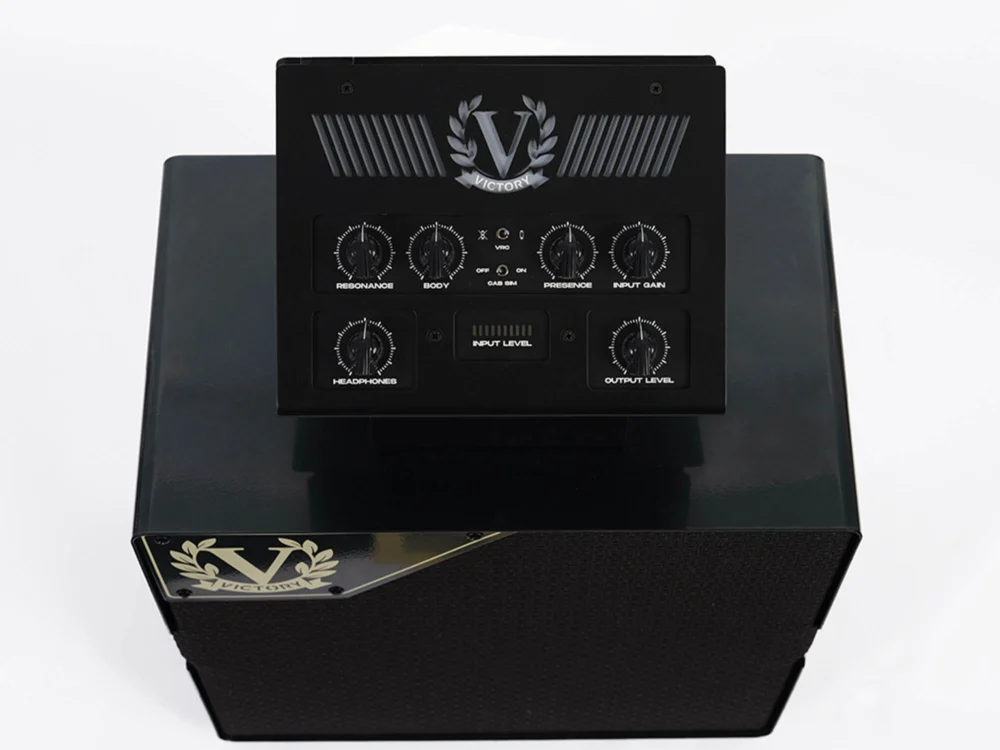
In a significant move for the guitar amplification industry, Victory Amplification has unveiled its latest innovation, the PowerValve 200. This 200-watt valve power amplifier is engineered to serve as a crucial bridge between the advanced capabilities of digital guitar rigs and the undeniable tactile and tonal characteristics inherent to traditional valve amplification. Priced at £499 / $599 / €579, the unit is now available, marking a concerted effort by Victory to address the persistent gap in dynamic response often cited by guitarists using digital modelers, preamps, and pedalboards.
The Enduring Quest for Authentic Tone: Digital vs. Analog
For decades, the electric guitar world has been shaped by the sonic imprint of valve amplifiers. These classic designs, utilizing vacuum tubes, are celebrated for their organic warmth, rich harmonic content, natural compression, and unparalleled dynamic response to a player’s touch. The way a valve amp "sags" under heavy playing, its progressive breakup characteristics, and the distinctive interaction with a physical speaker cabinet have become the gold standard for guitar tone.
However, the advent of digital technology brought a revolution. Starting with early digital multi-effects processors in the 1990s and evolving into today’s sophisticated amp modelers and profilers—such as the Neural DSP Quad Cortex, Kemper Profiler, and Fractal Audio Axe-Fx series—digital rigs have achieved astonishing levels of accuracy in replicating the static sound of amplifiers, cabinets, and effects. These devices offer unparalleled versatility, portability, and consistency, making them a staple for professional touring musicians, studio engineers, and home enthusiasts alike. The convenience of having hundreds of amp models and effects in a single, lightweight unit, often with direct-to-PA or recording capabilities, has fundamentally altered how many guitarists approach their sound.
Despite these advancements, a persistent critique from a segment of the guitar community has been the perceived lack of "feel" or "amp-in-the-room" presence when relying solely on digital solutions, especially when paired with Full-Range Flat-Response (FRFR) speaker cabinets. While FRFR systems accurately reproduce the modeled sound, they often lack the unique dynamic interaction and physical air movement that a traditional guitar speaker cabinet, driven by a valve power amp, provides. This subtle yet profound difference in tactile feedback and harmonic complexity has been the holy grail for many players seeking to marry the convenience of digital with the visceral experience of analog. Victory Amplification’s PowerValve 200 directly confronts this challenge, aiming to provide the best of both worlds.
The PowerValve 200: A Technical Overview
At its core, the PowerValve 200 is designed to integrate seamlessly into existing digital workflows. Players can connect their preferred modeler, preamp, or pedalboard directly to the PowerValve 200 via its 1/4" balanced input. Once connected, users can engage the unit’s dedicated valve stage to drive a real speaker cabinet, unlocking what Victory describes as "authentic amp-like response."
Central to the PowerValve 200’s design is Victory’s proprietary Valve React Circuit (VRC). This innovative circuit features an EF91 (CV4014) valve, a miniature pentode known for its robust performance and specific tonal characteristics in various audio applications. The choice of the EF91 is deliberate, as it contributes to the "subtle harmonic content generated by a valve stage [that] creates slight asymmetry in the waveform," as explained by Martin Kidd, Chief Designer at Victory. This asymmetry is crucial for imparting the dynamic feel and touch sensitivity that guitarists associate with traditional valve amplifiers, distinguishing it from the often more linear response of purely solid-state or digital power sections. The VRC works to introduce the desirable non-linearity and responsive compression that gives valve amps their characteristic "mojo."
For players who may, at times, prefer a completely transparent signal path, the PowerValve 200 offers a front-panel switch to bypass the valve stage entirely. This flexibility ensures that the unit can cater to a wide range of tonal preferences and application scenarios, from those seeking pure valve warmth to those desiring an uncolored amplification of their digital signal.
Further enhancing its versatility, the PowerValve 200 incorporates a comprehensive 3-band EQ section on its front panel, comprising controls for Resonance, Body, and Presence. These controls are not merely generic tone shapers; they are specifically designed to fine-tune the power amp’s interaction with the speaker cabinet and the overall sonic output:
- Resonance: This control typically adjusts the low-frequency damping of the power amplifier, influencing the "thump" and tightness of the bass response, particularly critical for how the speaker cabinet reacts.
- Body: Affects the crucial mid-range frequencies, allowing players to dial in the core character and punch of their guitar tone.
- Presence: Controls the upper-midrange and high-frequency content, adding sparkle, cut, and articulation to the sound, essential for clarity and projection.
This granular control over the power amp stage enables guitarists to sculpt their final tone with precision, adapting it to different speaker cabinets, venues, or musical contexts. Additionally, a Cab Sim on/off switch suggests the possibility of using the PowerValve 200 with a simulated cabinet output for direct recording or monitoring purposes, even when not driving a physical speaker.
Victory Amplification: A Legacy of Innovation
Victory Amplification, founded by Martin Kidd, has rapidly established itself as a respected name in the boutique amplifier market. Known for its meticulously hand-built, high-quality valve amplifiers, Victory has garnered a reputation for producing versatile, compact, and sonically rich heads and combos. Their designs often incorporate unique features and a focus on diverse tonal palettes, catering to a wide array of musical genres. From their compact V4 The Kraken and Sheriff series to their larger flagship models, Victory has consistently pushed the boundaries of modern valve amp design while honoring classic tones.

The introduction of the PowerValve 200 represents a strategic evolution for Victory. It signifies an acknowledgment of the prevailing trends in guitar technology and a willingness to adapt its core expertise in valve amplification to meet the demands of a changing market. By offering a product that specifically targets the needs of digital rig users, Victory positions itself not just as a traditional amplifier manufacturer, but as an innovator capable of bridging technological divides. This move allows them to tap into a broader customer base, extending their reach beyond traditional valve amp purists to encompass the growing number of guitarists who have embraced digital modeling.
Industry Acclaim and Expert Perspectives
Initial reactions to the PowerValve 200 have been overwhelmingly positive, particularly from figures within the digital modeling sphere. Ryan Morgan, Head of Global Sales at Neural DSP, home to the critically acclaimed Quad Cortex, offered a ringing endorsement: “The PowerValve 200 genuinely exceeded our expectations. The response, feel and tone – especially when paired with the Quad Cortex – were outstanding. With the flip of a switch, the added tube stage delivers an immediate improvement to the signal. This is a seriously impressive piece of kit.”
This statement from a prominent leader in digital amplification is highly significant. It validates Victory’s premise that even the most advanced digital modelers can benefit from the unique characteristics imparted by a real valve power amplifier. Morgan’s observation of an "immediate improvement" underscores the tangible impact of the VRC and its EF91 valve in enhancing the overall playing experience.
Martin Kidd, the visionary Chief Designer at Victory, further elaborated on the philosophical and technical underpinnings of the PowerValve 200: “Players told us they still wanted to feel a guitar speaker cabinet moving air on stage – something that doesn’t quite happen with FRFR cabinets. The subtle harmonic content generated by a valve stage creates slight asymmetry in the waveform – and that’s where the feel comes from.” Kidd’s insights highlight the crucial distinction between audibly accurate reproduction and the holistic, physical experience of playing through a valve amp and speaker. The "moving air" sensation and the nuanced waveform asymmetry are key elements that contribute to the subjective "feel" often elusive in purely digital setups. This understanding underscores Victory’s commitment to addressing the experiential dimension of guitar playing, not just the sonic one.
Implications for Musicians and the Future of Guitar Amplification
The PowerValve 200 has profound implications across various facets of a musician’s life, from live performance to studio recording and home practice.
Live Performance: For touring musicians who rely on digital rigs for consistency and versatility, the PowerValve 200 offers a compelling solution to a long-standing compromise. Many players have reported feeling disconnected from their instrument when playing through FRFR monitors or in-ear systems, missing the visceral feedback of a traditional backline. By integrating the PowerValve 200, these guitarists can now drive a real guitar speaker cabinet on stage, restoring the physical impact and dynamic interaction that is so vital for expressive playing. This hybrid approach ensures that while the tonal palette remains digitally diverse and consistent, the stage experience regains the "amp-in-the-room" feel, improving stage monitoring and overall performance confidence. It effectively addresses the "FRFR feel" issue without sacrificing the advantages of digital modeling.
Studio Recording: In the studio environment, the PowerValve 200 provides unparalleled flexibility. Engineers and guitarists can leverage the vast array of tones available from their modelers as preamps, then use the PowerValve 200 to drive a selection of real speaker cabinets for mic’ing. This allows for the capture of authentic speaker interaction, cabinet resonance, and room acoustics, adding a layer of organic depth often sought after in professional recordings. The bypass option for the valve stage also means that a purely digital signal can be recorded when transparency is paramount, offering a versatile tool for any recording scenario. This hybrid approach can streamline workflows by providing diverse sonic options without the need for multiple heavy amplifier heads.
Home Practice and Small Gigs: Even for home enthusiasts or musicians playing smaller venues, the PowerValve 200 presents a powerful yet potentially scalable solution. It allows players to enjoy the authentic valve feel and response at manageable volumes, especially when paired with appropriate speaker cabinets. Its relatively compact form factor, compared to traditional full-sized valve heads, makes it a practical addition to home studios or rehearsal spaces, delivering premium tone without overwhelming bulk.
Broader Industry Impact: The introduction of the PowerValve 200 signals a growing trend towards hybrid solutions in the guitar industry. Rather than a stark "digital versus analog" dichotomy, manufacturers are increasingly exploring ways to combine the strengths of both technologies. This approach empowers guitarists with more choices, allowing them to tailor their rigs precisely to their unique needs and preferences without perceived compromise. The success of products like the PowerValve 200 could influence future product development from other manufacturers, potentially leading to a new era of integrated hybrid amplification systems. Economically, such innovations can stimulate sales across both the digital gear market (as modeler users seek to enhance their rigs) and the traditional cabinet market (as more players opt to drive physical speakers).
In conclusion, Victory Amplification’s PowerValve 200 represents more than just a new product; it embodies a philosophical shift in guitar amplification. By successfully bridging the divide between the convenience and versatility of digital rigs and the undeniable feel and dynamic response of traditional valve technology, Victory has offered a compelling solution that caters to the evolving demands of modern guitarists. Its technical ingenuity, coupled with strong industry endorsements, positions the PowerValve 200 as a significant milestone, potentially redefining the standards for hybrid guitar amplification and empowering musicians to achieve their ideal tone with unprecedented flexibility.
Further details regarding the PowerValve 200 can be found directly via Victory Amps’ official website.
