

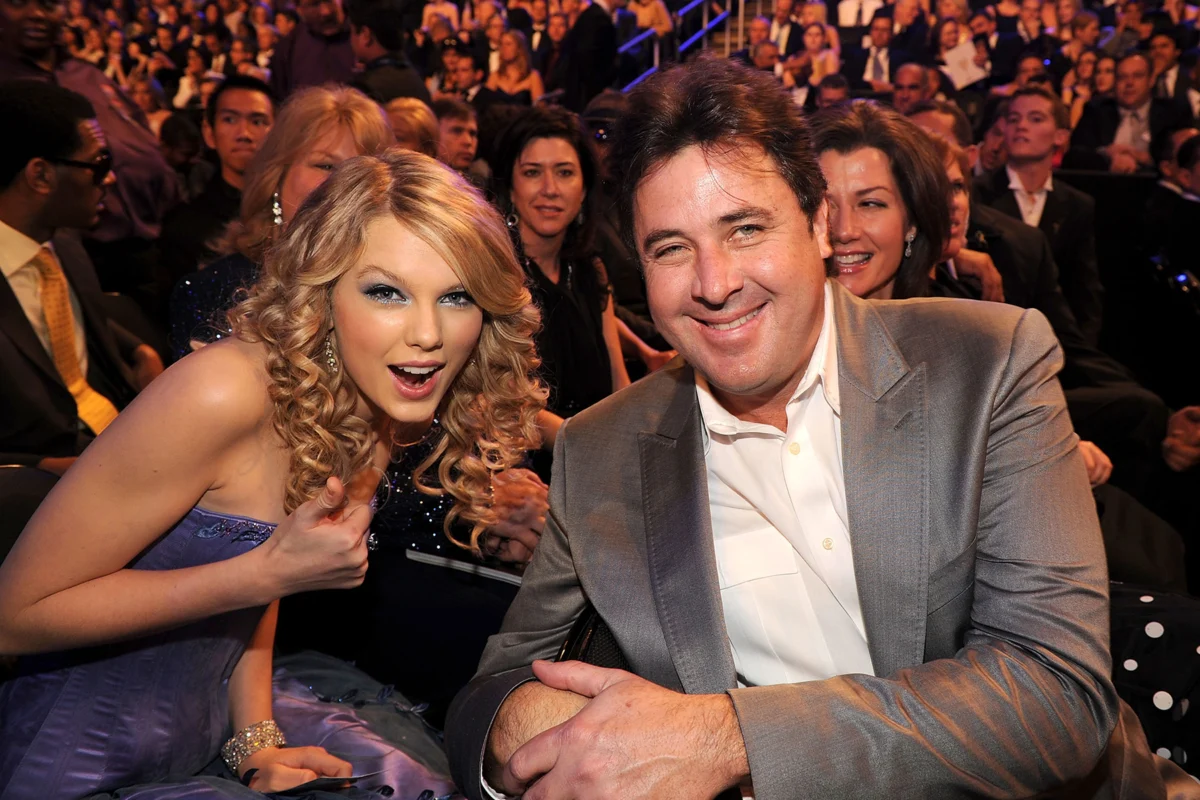
Country music icon Vince Gill has publicly advocated for pop superstar Taylor Swift’s induction into the Country Music Hall of Fame, a move that could see Swift become the youngest honoree in the institution’s esteemed history. Gill, himself the second-youngest inductee at the time of his 2007 recognition, shared his fervent support in a recent interview, emphasizing Swift’s profound impact on the genre and her significant philanthropic contributions to the Hall. This endorsement reignites discussions about Swift’s enduring legacy within country music and the criteria for entry into its most hallowed institution.
Vince Gill’s Endorsement and Reflection
Vince Gill, a celebrated figure in country music with a career spanning five decades, expressed his strong belief that Taylor Swift is a deserving candidate for the Country Music Hall of Fame. During an episode of Rolling Stone‘s podcast Nashville Now, Gill recounted his own induction experience, which occurred when he was 50 years old. He admitted to a momentary apprehension at the time, feeling the honor might have come "a little early." However, this sentiment fueled a renewed commitment to his craft, as he stated, "What I wanted to do after the fact was earn it." Gill has undeniably fulfilled this pledge, amassing 63 Billboard Hot Country Songs hits, five of which reached number one, and seeing 16 of his albums chart on the Billboard 200. His ongoing dedication is evident in his current work on the EP series, 50 Years From Home.
It is from this perspective of an artist who has not only achieved immense success but also continually strived for excellence that Gill’s advocacy for Swift gains particular weight. His admiration for Swift is clear, stating, "I’m crazy about her. I fully support that." He also revealed a less-publicized aspect of her connection to the institution, noting that Swift is one of the Country Music Hall of Fame’s largest donors, underscoring her commitment to preserving and promoting country music heritage.
Taylor Swift’s Eligibility and Early Country Roots
The Country Music Hall of Fame’s Modern Era category, for which Swift could be eligible, stipulates that an artist must have achieved "20-plus years since national prominence." Taylor Swift’s self-titled debut album, featuring her breakthrough single "Tim McGraw," was released in October 2006. This places the current year, 2026, as the potential first year of her eligibility, depending on the precise interpretation of "national prominence" by the Hall’s selection committees.
Swift’s journey to superstardom undeniably began in the country music landscape. Her early career was marked by a series of unprecedented achievements that redefined the expectations for young artists in the genre. Her debut album, released when she was just 16, quickly became a multi-platinum success, spending 24 weeks at number one on the Billboard Top Country Albums chart. It generated five Top 40 singles on the Billboard Hot Country Songs chart, including the aforementioned "Tim McGraw," "Teardrops on My Guitar," "Our Song" (her first number one), "Picture to Burn," and "Should’ve Said No" (her second number one).
Her subsequent albums, Fearless (2008), Speak Now (2010), and Red (2012), continued this trajectory, blending country storytelling with increasingly pop-friendly hooks. Fearless became the best-selling album of 2009 and earned her the Grammy Award for Album of the Year, making her the youngest solo artist to win the top honor at the time. It also garnered her numerous Country Music Association (CMA) and Academy of Country Music (ACM) Awards, including Entertainer of the Year for two consecutive years from both organizations (2009, 2010 for CMAs; 2009, 2011 for ACMs). These accolades firmly established her as a dominant force within the genre before her full pivot to pop music with 1989 in 2014. Her meticulous songwriting, often drawing from personal narratives, resonated deeply with a new generation of country music fans, expanding the genre’s demographic reach significantly.
The Country Music Hall of Fame: A Prestigious Institution
The Country Music Hall of Fame and Museum, located in Nashville, Tennessee, is one of the most revered institutions in American music. Its mission is to collect, preserve, and interpret the evolving history and traditions of country music. Induction into the Hall of Fame is considered the highest honor in country music, recognizing individuals who have made significant and lasting contributions to the genre.
The induction process is rigorous and confidential. Each year, three new members are typically inducted across three categories:
- Modern Era Artist: For artists who achieved national prominence 20 or more years prior to induction.
- Veterans Era Artist: For artists who achieved national prominence 45 or more years prior to induction.
- Non-Performer/Recording and/or Touring Musician: Recognizing individuals who have made significant contributions behind the scenes.
A panel of anonymous industry experts, historians, and artists selects the nominees, with a final confidential vote by an electoral college. The strict eligibility criteria and the secrecy of the selection process ensure that only those with undeniable and profound impacts on country music are chosen.
The current youngest inductees in the Hall’s history are Johnny Cash and Eddy Arnold, both of whom were 48 years old at the time of their inductions. Cash was inducted in 1980, recognized for his revolutionary sound and iconic status. Arnold, a pioneer of the "Nashville sound," was inducted in 1966. Their inductions at relatively young ages reflected their early and significant contributions to country music that had already stood the test of time.
If Taylor Swift, currently 36 years old, were to be inducted this year or at any point within the next decade (i.e., before turning 47), she would unequivocally shatter this record, becoming the youngest person ever to receive the honor. This would mark a significant moment not only for Swift but for the Hall itself, acknowledging the rapid ascent and far-reaching influence of contemporary artists.
Supporting Data: Swift’s Unprecedented Impact on Country Music
Taylor Swift’s statistical impact on country music is irrefutable and provides compelling evidence for her Hall of Fame consideration.
- Chart Dominance: Her early albums consistently topped the Billboard Top Country Albums chart. Taylor Swift spent 24 weeks at No. 1, Fearless spent 35 weeks, Speak Now spent 13 weeks, and Red spent 16 weeks. These albums collectively spent 88 weeks at the pinnacle of the country charts, an astonishing feat for any artist, let alone one so young.
- Record Sales: Her country-era albums sold millions of copies. Taylor Swift (released 2006) achieved 7x Platinum certification by the RIAA. Fearless (2008) is 10x Platinum (Diamond-certified), making it one of the best-selling albums of all time. Speak Now (2010) is 6x Platinum, and Red (2012) is 7x Platinum. These figures demonstrate an unparalleled commercial success within the genre during her active years.
- Awards Recognition: Beyond her Grammy for Album of the Year, Swift collected numerous major country awards. She won the CMA Award for Female Vocalist of the Year in 2009, and the coveted Entertainer of the Year award from both the CMAs (2009, 2010) and ACMs (2009, 2011). These awards signify broad industry recognition and fan appeal within the country music community.
- Songwriting Prowess: Swift was the sole writer on every track of her Speak Now album, a rarity for artists of her stature, further highlighting her creative control and genuine connection to the songwriting tradition central to country music.
- Philanthropy: As Vince Gill noted, Swift has been a significant financial contributor to the Country Music Hall of Fame and Museum. In 2010, she donated $4 million to fund the Taylor Swift Education Center, a 7,500-square-foot facility dedicated to educational programs for children and families. This substantial contribution demonstrates her ongoing commitment to the preservation and future of country music.
Even after her widely publicized shift to pop, Swift has maintained ties to her country roots, notably through her "Taylor’s Version" re-recordings, which have brought her early country catalog back into the spotlight for a new generation of listeners, reinforcing her foundational country identity.
Broader Impact and Implications of a Potential Induction
A potential induction of Taylor Swift into the Country Music Hall of Fame would carry significant implications for the institution, her legacy, and the broader music industry.
- Modernizing the Hall: Inducting an artist like Swift at a younger age would signal the Hall’s recognition of country music’s evolving landscape and its openness to artists who have pushed genre boundaries. It would acknowledge that impact and influence can be achieved at an accelerated pace in the digital age, without necessarily requiring decades of traditional touring and recording. This could set a precedent for future inductions of younger, boundary-pushing artists who emerged in the 21st century.
- Solidifying Her Country Legacy: Despite her global pop dominance, an induction would definitively cement Taylor Swift’s place as a pivotal figure in country music history. It would validate her foundational contributions to the genre and underscore that her pop crossover did not erase her country origins but rather amplified them to a global stage. This would be a powerful statement against any attempts to diminish her country credentials.
- Bridging Genre Divides: Swift’s career has famously blurred the lines between country and pop. Her induction would symbolize the fluidity of modern music genres and acknowledge the interconnectedness of different musical styles. It would affirm that an artist’s impact on one genre can be profound, even if their career eventually spans multiple musical landscapes. This could encourage a more inclusive view of genre identity within the music industry.
- Attracting New Audiences: Taylor Swift’s immense global fanbase, known as "Swifties," extends far beyond traditional country music enthusiasts. Her induction would undoubtedly draw unprecedented attention to the Country Music Hall of Fame, potentially introducing new, younger audiences to the rich history and traditions of country music, thus furthering the Hall’s educational and cultural mission.
- Debate and Discussion: While many would laud her induction, it could also spark debate among purists who might argue that her extensive pop career overshadows her country contributions or that the "20-plus years" criteria should be applied more stringently to an artist’s exclusive country prominence. However, such discussions are inherent to any significant cultural institution and ultimately serve to highlight the importance of the Hall’s role in defining country music heritage.
Conclusion
Vince Gill’s impassioned endorsement of Taylor Swift for the Country Music Hall of Fame is a powerful statement from a highly respected voice within the genre. Swift’s remarkable early career within country music, characterized by groundbreaking chart success, unprecedented album sales, numerous major awards, and significant philanthropic support for the Hall, presents a compelling case for her induction. If the Hall’s selection committee were to recognize her eligibility in the coming years, Taylor Swift would not only secure her place among country music’s legends but also make history as the youngest inductee ever. This move would not only celebrate her unique journey but also underscore the evolving nature of country music and its most prestigious institution. The anticipation surrounding this potential induction highlights the enduring relevance of both Taylor Swift’s legacy and the timeless appeal of country music itself.
