

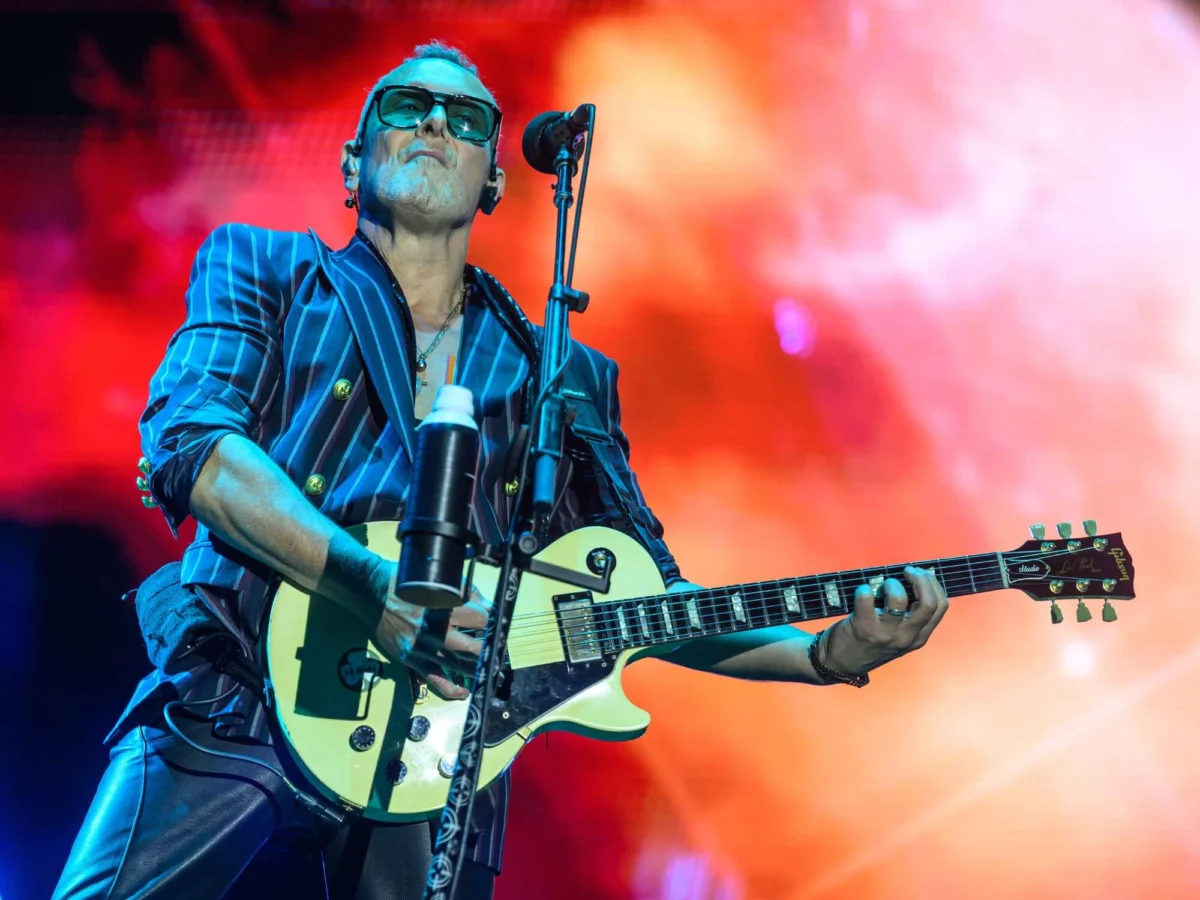
Vivian Campbell, the esteemed guitarist for rock legends Def Leppard, has publicly disclosed that his battle with Hodgkin’s lymphoma has entered a new phase, with the cancer having returned despite a prior donor stem cell transplant. Speaking with unwavering resolve, Campbell affirmed his commitment to continuing treatment while maintaining an aggressive touring schedule with Def Leppard and pursuing other personal passions, embodying his philosophy of "not slowing down." This announcement marks a significant moment in the musician’s decade-long health journey, underscoring his remarkable resilience and dedication to both his craft and his life.
A Decade-Long Battle: A Medical Chronology
Vivian Campbell’s initial diagnosis of Hodgkin’s lymphoma in 2013 sent a ripple of concern through the rock music community and among Def Leppard’s devoted fanbase. Hodgkin’s lymphoma is a type of cancer that originates in white blood cells called lymphocytes, which are part of the body’s immune system. While often highly treatable, especially when caught early, the journey through diagnosis and treatment can be arduous and fraught with uncertainty. Campbell’s initial treatments, which included several rounds of chemotherapy and a brief period of remission, highlighted the aggressive nature of his specific case and the need for more intensive intervention.
Following the initial diagnosis, Campbell underwent a series of medical procedures designed to combat the cancer. By 2015, after extensive chemotherapy, he announced that he was in remission. However, the respite was temporary, and the cancer returned, prompting further rounds of treatment. This pattern of remission and recurrence led to the critical decision to pursue a donor stem cell transplant, a more radical approach typically reserved for cases where standard therapies have proven insufficient or when the cancer has returned after initial success.
The period leading up to the transplant was particularly challenging. In the winter of 2023, Campbell experienced a profound moment of fear and realization regarding the escalating pace of his illness. He openly admitted, "There’s only been one time that I felt it was gonna kill me; in the winter of 2023, I got really scared about what was happening and the pace at which it was happening. And I realised at that point that I had to do a donor transplant. It was my only hope to survive." This stark admission underscores the severity of his condition at that time and the life-or-death decision he faced. The allogeneic (donor) stem cell transplant was ultimately performed in January 2025, offering a beacon of hope for a long-term cure.
The news of his remission in June of last year, following the transplant, was met with widespread relief and celebration. It appeared that Campbell had successfully navigated the most challenging phase of his health battle. However, in a recent interview with Francisco Sigüenza of El Salvador’s Radio YSKL FM, reported via Blabbermouth, Campbell revealed the disheartening news: the transplant "didn’t stick." This medical term signifies that the transplanted stem cells, intended to rebuild his immune system and eradicate the cancer, were ultimately unsuccessful in preventing the disease’s return. Consequently, Campbell confirmed that the cancer has indeed returned, and he is currently undergoing continuous treatments to manage its progression. He also indicated the possibility of needing another transplant in a few years, illustrating the ongoing nature of his fight.
Understanding Hodgkin’s Lymphoma and the Nuances of Stem Cell Transplants
To fully appreciate the gravity of Campbell’s situation and the complexities of his treatment, it’s essential to understand Hodgkin’s lymphoma and the role of stem cell transplants. Hodgkin’s lymphoma, specifically, is characterized by the presence of Reed-Sternberg cells, a distinctive type of cancerous cell. It primarily affects lymph nodes but can spread to other organs. The survival rate for Hodgkin’s lymphoma is generally high, with overall five-year survival rates exceeding 80% to 90% for many stages. However, recurrence, particularly after initial aggressive treatments, presents a more challenging clinical picture.
Standard treatments for Hodgkin’s lymphoma typically involve chemotherapy regimens (e.g., ABVD, escalated BEACOPP) and radiation therapy. For patients whose cancer is refractory (does not respond to initial treatment) or relapses (returns after remission), high-dose chemotherapy followed by an autologous stem cell transplant (using the patient’s own stem cells) is often the next step. However, when an autologous transplant fails or the cancer recurs after it, an allogeneic (donor) stem cell transplant becomes a viable, albeit more complex and risky, option.
An allogeneic stem cell transplant involves receiving healthy blood-forming stem cells from a matched donor. The goal is to replace the patient’s diseased bone marrow with healthy cells, and crucially, to leverage a "graft-versus-tumor" effect, where the donor’s immune cells recognize and attack residual cancer cells. While offering a potential cure, allogeneic transplants carry significant risks, including graft-versus-host disease (GVHD), infections, and organ damage. The fact that Campbell’s transplant "didn’t stick" implies either a failure of engraftment (the donor cells didn’t establish themselves) or, more commonly in such cases, a relapse where the cancer cells resurfaced despite the new immune system. The recurrence of Hodgkin’s lymphoma after an allogeneic transplant is a serious challenge, often requiring novel therapies, clinical trials, or potentially another transplant, as Campbell alluded to.
An Unbreakable Spirit: Campbell’s Philosophy on Life and Illness
Amidst the challenging medical updates, Vivian Campbell’s unwavering spirit and defiant outlook shine brightest. His philosophy on confronting cancer is rooted in an active, life-affirming approach, starkly contrasting with what he describes as the passive resignation he has witnessed in others. "Unfortunately, I have met people in my life who, when they’ve gotten a cancer diagnosis, they’ve only focused on that. They think, ‘I can’t do anything. I need to stay in bed…’ I’ve never felt that way. I’ve always felt like I’m gonna continue to live my life as much as possible. In fact, even more so…" This declaration is not merely a statement but a testament to his lived experience, transforming adversity into an impetus for intensified living.

Campbell’s proactive stance extends beyond his musical career. He highlighted his passion for rally driving, a high-octane sport that demands precision, focus, and courage – qualities that mirror his approach to his health battles. "I’m also rally driving, ’cause I always wanted to do that. So I’ve been doing that more and more, ’cause I love cars and I love driving." This pursuit of new experiences and long-held dreams exemplifies his belief that life should be embraced to its fullest, regardless of the obstacles.
His message transcends personal resilience, evolving into a broader advocacy for public health and mental fortitude. "Life is for the living," he proclaims, urging everyone to prioritize their health. For those who receive a cancer diagnosis, his advice is profound: "overcome the fear. Fear is inevitable when you’re first told those words. But once you get over that, you gotta realise just how to manage it and how to deal with it as best as possible, and just don’t give in." This counsel speaks to the psychological burden of cancer, emphasizing that managing fear is as crucial as managing the disease itself. His early detection of his cancer is also a point he often emphasizes, highlighting the importance of vigilance and regular health check-ups.
Musical Legacy and Continued Contributions
Vivian Campbell’s illustrious career spans several iconic bands before his long tenure with Def Leppard. He first rose to prominence with Dio, contributing to classic albums like Holy Diver and The Last in Line, where his aggressive yet melodic guitar work became a hallmark. Following his departure from Dio, he lent his talents to Whitesnake for a brief but impactful period, notably on the Slip of the Tongue tour, and also toured with Thin Lizzy, further cementing his reputation as a versatile and powerful guitarist.
His most enduring role, however, began in 1992 when he joined Def Leppard, stepping into the formidable shoes of the late Steve Clark. For over three decades, Campbell has been an integral part of Def Leppard’s continued success, contributing to their studio albums, including Slang, Euphoria, X, Songs from the Sparkle Lounge, Def Leppard, and Diamond Star Halos, and, perhaps most significantly, their relentless touring schedule. Def Leppard remains one of the highest-grossing touring acts in rock, consistently selling out arenas and stadiums worldwide. Campbell’s commitment to the band’s demanding schedule, even amidst ongoing cancer treatments, is a testament to his professional dedication and passion for live performance.
Beyond Def Leppard, Campbell co-founded the supergroup Last In Line in 2012, alongside original Dio members Vinny Appice and Jimmy Bain, and vocalist Andrew Freeman. This project was initially conceived as a tribute to Ronnie James Dio, performing songs from the early Dio albums that Campbell himself played on. Last In Line quickly evolved into an original recording and touring act, releasing albums like Heavy Crown and II, further showcasing Campbell’s enduring creative vitality. His ability to manage two active bands while navigating a severe health condition speaks volumes about his drive and love for music.
Def Leppard is scheduled for extensive touring in October and November of this year, a commitment Campbell intends to honor. The band’s official website provides details on their upcoming dates, signaling their continued presence on the global stage. This ongoing touring schedule necessitates careful management of his treatments, a logistical and personal challenge that Campbell has, remarkably, managed to integrate into his professional life.
Reactions and Broader Implications
The news of Vivian Campbell’s cancer recurrence has predictably elicited an outpouring of support from Def Leppard bandmates, fellow musicians, and fans across the globe. While specific statements from band members like Joe Elliott, Rick Savage, Phil Collen, and Rick Allen are often private or subtly conveyed, the deep camaraderie within Def Leppard is well-documented. The band has consistently rallied around Campbell throughout his previous health battles, demonstrating a familial bond that transcends professional obligations. Their continued touring schedule with Campbell is a strong indicator of their collective support and belief in his ability to perform.
The fan community, a vast and dedicated network, has flooded social media platforms with messages of encouragement, admiration, and prayers. For many, Campbell’s public journey has made him an accidental but powerful advocate, a visible embodiment of courage in the face of illness. His willingness to share his struggles openly humanizes a rock icon, making his experiences relatable and inspiring to countless individuals facing their own health challenges.
Campbell’s narrative carries significant broader implications. As a public figure, his candid discussions about cancer, treatment, recurrence, and the psychological impact of diagnosis contribute immensely to public health awareness. He demystifies the disease, encouraging dialogue and emphasizing the critical importance of early detection and proactive health management. His message about overcoming fear is particularly potent in a society where cancer often carries a heavy stigma and provokes profound anxiety. By demonstrating that a full, vibrant life is possible even with a chronic illness, he serves as a powerful role model, challenging preconceived notions about living with cancer.
Looking ahead, Campbell’s journey underscores the unpredictable nature of chronic illness. While he continues to manage his treatments and maintain an active lifestyle, the possibility of future interventions, such as another stem cell transplant, remains. His story highlights the ongoing advancements in cancer treatment and the complex decisions patients and their medical teams must make. It also reminds us that behind the glitz and glamour of the music industry are individuals facing very real, very human struggles.
In conclusion, Vivian Campbell’s ongoing battle with recurrent Hodgkin’s lymphoma is a testament to his indomitable spirit. Far from being defined by his illness, he continues to define his life through his music, his passions, and his profound message of resilience. As Def Leppard prepares to embark on another tour, Campbell stands as a beacon of hope and determination, reminding us all that life, even in the face of adversity, is truly for the living, and that courage, persistence, and a positive mindset can help navigate even the darkest of challenges. His commitment to "not slowing down" is more than a personal vow; it is an anthem for anyone facing life’s toughest trials.
