

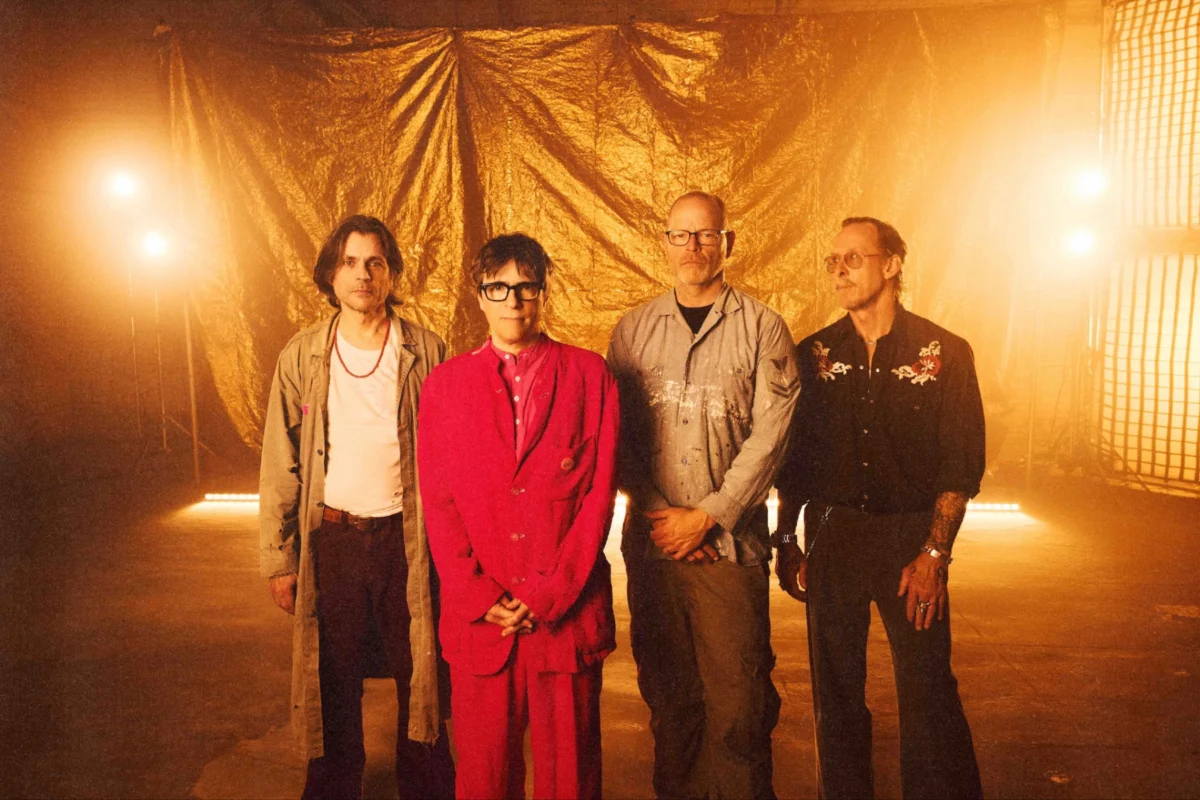
At the stroke of midnight, alternative rock titans Weezer ushered in a new chapter in their illustrious career, releasing their 20th studio album, a self-titled collection affectionately dubbed The Gold Album by fans and the band alike. This highly anticipated release marks a significant pivot, as frontman Rivers Cuomo and his bandmates – Patrick Wilson, Brian Bell, and Scott Shriner – deliberately embraced an "old fashioned way" of music creation, harkening back to the foundational methods that defined their earliest successes. The unveiling of The Gold Album also coincides with the announcement of the extensive "Weezer: The Gathering" tour, set to commence in September, promising a comprehensive celebration of their expansive discography and the fresh sounds of their latest endeavor.
A Golden Era Dawns: Weezer’s 20th Studio Album
For decades, Weezer has charted its creative journey through a distinctive palette of colors, with iconic albums like The Blue Album (1994), The Green Album (2001), The Red Album (2008), The White Album (2016), The Teal Album (2019), and The Black Album (2019) serving as landmark identifiers for different phases of their evolving sound. With the arrival of The Gold Album, the band signals not just a fresh sonic direction but potentially a symbolic era of maturity, refinement, or a return to the purest essence of their artistry. The choice of "gold" could be interpreted as a nod to their enduring legacy, the timeless quality they aimed for in this recording, or simply another playful twist in their idiosyncratic catalog. Reaching their 20th studio album is a remarkable milestone for any band, underscoring Weezer’s sustained creativity and relevance in a constantly shifting music industry, particularly after more than three decades since their formation in 1992.
Embracing the Analog: A Blast from the Past Production
The core narrative surrounding The Gold Album is its unconventional, or rather, traditional, production methodology. In an era dominated by digital recording, remote collaboration, and sophisticated post-production, Weezer consciously chose a path that emphasized live performance, communal creativity, and the raw energy of musicians interacting in real-time. This approach, described as a "blast from the past," saw the four band members convene in a rehearsal space nestled in Orange County, California, for an extended period. These sessions were particularly noteworthy as they marked the first time since their seminal 1994 debut that Rivers Cuomo and drummer Pat Wilson had collaboratively fleshed out the fundamental frameworks of songs together in a shared physical space. This return to basics stands in stark contrast to many contemporary recording practices where individual tracks are often recorded in isolation and assembled later.
The decision to record "the old fashioned way" was not arbitrary. It followed a highly successful 30th-anniversary tour, which saw the band reconnect with their early material and the vibrant energy of their live performances. This retrospective journey seemingly reignited a desire to capture that organic synergy in the studio. For a band known for its meticulous songwriting and Cuomo’s often solitary creative process, this collaborative, in-person development of ideas signifies a deliberate shift. It fosters a sense of vulnerability and immediate responsiveness among the musicians, allowing for spontaneous contributions and a more fluid evolution of musical ideas, elements often prized in classic rock recordings. The emphasis on live takes and minimal digital manipulation suggests an album that prioritizes authenticity and the tangible chemistry of the band over pristine, engineered perfection.
The Visionary Producers: Ahlund’s Precision, Blume’s Intensity
Guiding Weezer through this intentional creative process were two distinct yet complementary producers: Klas Ahlund and Kenneth Blume, better known as Kenny Beats. Ahlund, a Swedish producer celebrated for his work with artists like Robyn and Katy Perry, brought a "more mathematical, stringent approach" to the sessions. This suggests an emphasis on structural integrity, precision in arrangement, and perhaps a refined sonic clarity. Ahlund’s influence might have steered the band towards a tighter, more disciplined execution of their ideas, ensuring that the "old fashioned" feel didn’t descend into looseness but rather maintained a polished edge.
In stark contrast, Kenny Beats, a renowned hip-hop producer who has collaborated with artists ranging from Vince Staples to Denzel Curry, arrived with the ambitious directive to craft the "most violent Weezer album ever." This seemingly provocative goal indicates a desire to inject a raw, aggressive energy into the band’s sound, pushing their boundaries beyond their typical melodic alternative rock comfort zone. Kenny Beats’ involvement, a testament to Weezer’s perennial openness to diverse influences, could manifest in heavier guitar tones, more dynamic drumming, or an overall heightened intensity in the album’s sonic landscape. The juxtaposition of Ahlund’s methodical precision and Blume’s raw, visceral ambition likely forged a unique sonic identity for The Gold Album, blending meticulous craftsmanship with an untamed rock spirit. This collaborative dynamic between band and producers is a crucial element in understanding the potential sound and impact of this new collection.
Featured Tracks and High-Profile Appearances
The Gold Album comprises ten tracks, a concise length that further aligns with the classic LP format, prioritizing quality and cohesion over expansive tracklists common in the streaming era. The album was preceded by two lead singles that offered a glimpse into its diverse sonic tapestry: "Shine Again" and "We Might As Well Be Strangers." The latter track features a collaboration with the indie rock band Wednesday, a notable partnership that introduces a fresh dynamic to Weezer’s sound. Collaborations with contemporary artists often serve to bridge generational gaps and introduce a band to new audiences, while also allowing for creative cross-pollination. The specific contribution of Wednesday, whether through vocals, instrumentation, or songwriting, undoubtedly adds another layer of intrigue to the album.

The band took to a national stage to showcase their new material, stopping by NBC’s The Tonight Show Starring Jimmy Fallon on Wednesday night (August 19). During their appearance, the rockers performed "We Might As Well Be Strangers" live, offering a public debut of the collaboration and demonstrating the album’s live potential. Such high-profile television appearances are critical for generating buzz and connecting with a broad audience, signaling the band’s active presence in the contemporary music scene.
The Human Element: A Stand Against AI in Music
A particularly poignant and timely statement emerged from Rivers Cuomo during the Tonight Show interview, shedding light on the philosophical underpinnings of The Gold Album‘s production. When discussing the collaborative process, Cuomo emphasized, "What you hear on the record is something that could only be created by humans coming together and being vulnerable and creating something together. It just can’t be created by AI or a somebody on their own working on a computer or something." This declaration resonates deeply within the current music industry landscape, where the rise of artificial intelligence in music creation and production is a subject of intense debate and concern.
Cuomo’s assertion highlights the irreplaceable value of human interaction, vulnerability, and collective effort in the artistic process. It underscores the belief that the intangible chemistry forged when musicians physically collaborate, sharing ideas, reacting to each other’s performances, and navigating the inherent imperfections of live creation, results in a unique artistic output that algorithms cannot replicate. This stance positions The Gold Album not just as a musical release but also as a statement piece, advocating for the preservation of human artistry in an increasingly digital and automated world. It invites listeners to appreciate the album not only for its sound but also for the very human journey of its making, fostering a deeper connection between the art and its creators.
"Weezer: The Gathering" Tour: A Summons to the Faithful
To celebrate the release of The Gold Album and to reconnect with their dedicated fanbase, Weezer has announced "Weezer: The Gathering" tour, an extensive North American trek scheduled to kick off in September. The tour title itself, "The Gathering," was elucidated by Rivers Cuomo during his Tonight Show appearance, offering a mystical and inclusive vision for the upcoming shows. "The gathering has something to do with summoning sorcerers from all corners of the world to come into this," Cuomo explained, adding, "And I think this tour is something like that. We’re summoning all the different kinds of Weezer fans from around the world to come rock out with us."
This explanation frames the tour as more than just a series of concerts; it’s an invitation for a diverse community of fans, spanning various "eras" of Weezer’s sound, to come together and experience the band’s collective energy. The tour itinerary includes multiple stops across major North American cities, providing ample opportunity for fans to witness the band perform new tracks from The Gold Album alongside their extensive catalog of hits. Notably, the tour will feature an impressive lineup of supporting acts, including indie rock stalwarts The Shins and alternative rock favorites Silversun Pickups. The inclusion of such respected bands enhances the overall concert experience, promising a full evening of high-quality alternative music and reinforcing Weezer’s standing within the broader rock community. The tour’s immediate launch following the album release is a strategic move to capitalize on the new music’s momentum, driving both album sales and fan engagement through the unparalleled experience of live performance.
Weezer’s Enduring Legacy and Future Implications
Weezer’s journey from their 1994 debut, The Blue Album, which became a cornerstone of ’90s alternative rock, to their 20th studio album, The Gold Album, is a testament to their adaptability, resilience, and unwavering commitment to their craft. Over three decades, the band has navigated changing musical trends, experimented with diverse sounds, and maintained a prolific output, all while retaining a distinct identity that resonates with millions worldwide. Their ability to consistently reinvent themselves, whether through genre exploration, album concepts, or production methods, has cemented their status as one of rock’s most enduring and influential acts.
The Gold Album represents a significant statement for Weezer. By embracing an "old fashioned way" of recording and championing the irreplaceable value of human collaboration against the backdrop of emerging AI technologies, the band has delivered not just a new collection of songs, but a philosophical declaration. This approach, combined with the contrasting visions of producers Klas Ahlund and Kenny Beats, suggests an album that is both meticulously crafted and imbued with raw, aggressive energy. The "Weezer: The Gathering" tour, with its inclusive invitation to all fans, further reinforces the band’s dedication to its community and the power of live music. As The Gold Album streams across platforms, it will be fascinating to observe how this deliberate return to roots resonates with critics and fans, and how it shapes the ongoing legacy of one of alternative rock’s most iconic bands.
