

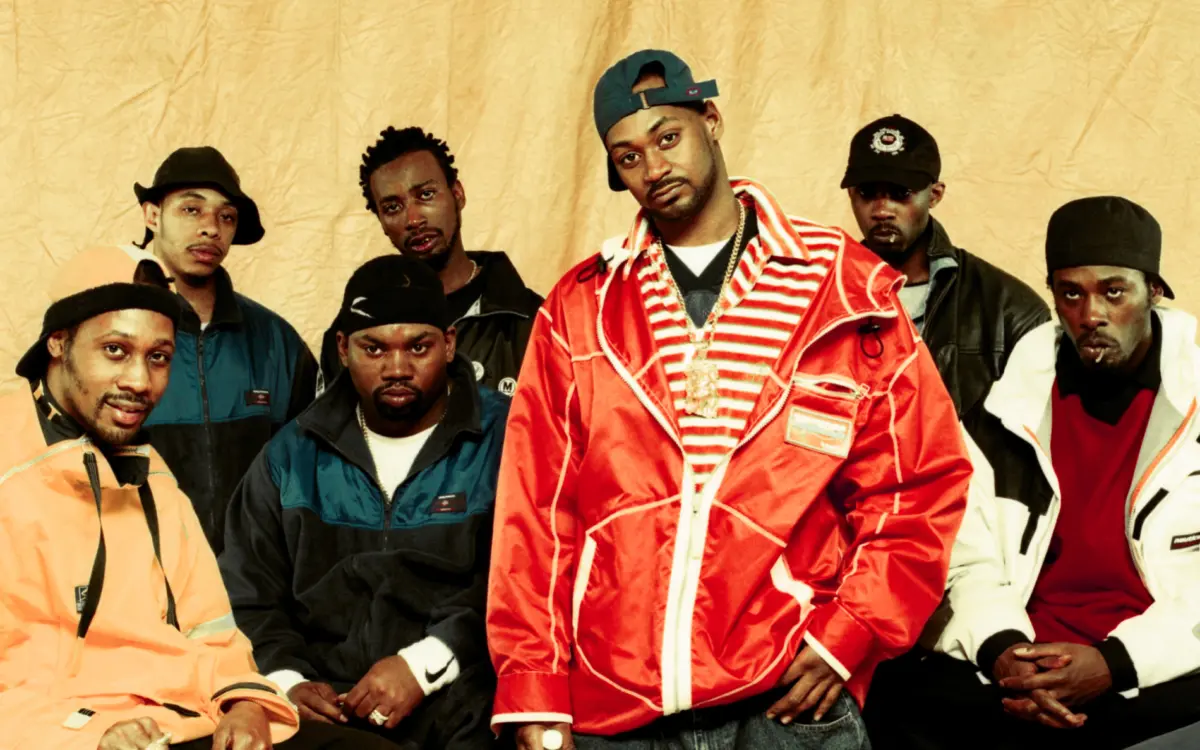
The iconic hip-hop collective Wu-Tang Clan has officially secured their place in the annals of music history, having been voted into the prestigious Rock & Roll Hall of Fame as part of the Class of 2026. The highly anticipated announcement, made on Monday, April 13, marks a significant milestone for the Staten Island group, cementing their profound impact on popular culture and music. Alongside Wu-Tang Clan, the esteemed Class of 2026 will also feature a diverse array of musical titans, including the legendary Sade, the soulful Luther Vandross, the anthemic British band Oasis, the pioneering heavy metal act Iron Maiden, the prolific Phil Collins, the rebellious Billy Idol, and the influential post-punk group Joy Division, which later evolved into New Order.
This induction represents a powerful affirmation of hip-hop’s enduring influence and its rightful place within the broader landscape of rock and roll, a genre historically dominated by white, male artists. The inclusion of Wu-Tang Clan, known for their gritty lyricism, innovative production, and distinctive East Coast sound, signifies a crucial step in recognizing the genre’s transformative power and its deep roots in American musical heritage.
Adding further weight to hip-hop’s representation, fellow rap pioneers Queen Latifah and MC Lyte will also be honored with the "Early Influence" award. This special recognition underscores their pioneering contributions to the genre and their indelible mark on music and culture, celebrating their roles as trailblazers who paved the way for future generations of artists.
The formal induction ceremony is scheduled to take place on November 14 at the Peacock Theater in Los Angeles. This landmark event will be broadcast in December on ABC and will also be available for streaming on Disney+, allowing fans worldwide to witness this momentous occasion.
RZA, the mastermind behind Wu-Tang Clan’s sonic architecture and a key architect of their enduring legacy, expressed his profound emotions in a heartfelt Instagram post. "In all Humility. This announcement filled me with joy, proudness, profound achievement, and awe," he wrote. "I’m grateful to all my brothers and those who helped us on the path. Thank you Rock & Roll Hall of Fame. This is a true Triumph – Wutang Forever." His words reflect the collective sentiment of gratitude and the immense pride associated with this ultimate acknowledgment of their artistic contributions.
Fellow Wu-Tang member Raekwon, known for his vivid storytelling and distinctive flow, shared his elation, stating, "History books will know this club! this my grammy. what we talking bout! haaaaaaaaaaa. shout out to all our mothers who birth these men. they won tonite." His declaration of this induction being equivalent to a Grammy highlights the immense significance it holds within the hip-hop community, often viewing the Hall of Fame as a pinnacle of artistic achievement. GZA, another pivotal member, echoed this sentiment, emphasizing the collaborative spirit and the support system that propelled them to this point: "We couldn’t have reached this milestone without our hip hop predecessors, fans, collaborators, friends and family. We thank you."
The selection process for the Rock & Roll Hall of Fame is rigorous, involving a global voting body of over 1,200 inductees, music historians, and industry professionals. This year’s nominations also included formidable artists such as Lauryn Hill, Mariah Carey, and Shakira. However, they did not garner sufficient votes from the international electorate to secure induction in the main categories for 2026.
Wu-Tang Clan’s induction brings the total number of hip-hop acts enshrined in the Rock & Roll Hall of Fame to 18. This growing representation is a testament to the genre’s evolution from a niche subculture to a dominant force in global music. The journey began in 2007 with the groundbreaking inclusion of Grandmaster Flash and the Furious Five. Since then, a pantheon of hip-hop royalty has followed, including Run-DMC, Beastie Boys, Public Enemy, and N.W.A. The list of hip-hop inductees further boasts titans such as JAY-Z, Eminem, 2Pac, The Notorious B.I.G., OutKast, Missy Elliott, and A Tribe Called Quest. Additionally, pioneers like LL Cool J, Salt-N-Pepa, and DJ Kool Herc have been recognized through the "Early Influence" or "Musical Excellence" awards, further solidifying hip-hop’s multifaceted contribution to the musical tapestry.
The Genesis of a Hip-Hop Dynasty: Wu-Tang Clan’s Unprecedented Rise
The Wu-Tang Clan emerged from the unforgiving streets of Staten Island, New York, in the early 1990s, a period marked by significant creative ferment in the hip-hop scene. Comprised of nine core members – RZA, GZA, Ol’ Dirty Bastard, Inspectah Deck, Raekwon, U-God, Ghostface Killah, Method Man, and Masta Killa, along with producer and DJ Allah Mathematics – the group was united by a shared vision of artistic authenticity and a desire to break free from the prevailing trends of the time. Their debut album, "Enter the Wu-Tang (36 Chambers)," released in 1993, was a seismic event. It was a raw, uncompromising masterpiece that eschewed the polished production and often party-centric themes of its contemporaries, opting instead for a dark, cinematic soundscape infused with martial arts philosophy, complex lyricism, and a palpable sense of street wisdom.
The album’s success was not merely commercial; it was a critical triumph that redefined the possibilities of hip-hop. It introduced a unique narrative framework, a complex mythology drawn from martial arts films, comic books, and Five-Percent Nation teachings, which provided a rich tapestry for their individual storytelling. The Wu-Tang Clan’s innovative approach extended to their business model as well. They famously secured a groundbreaking record deal that allowed individual members to sign with other labels, a move that fostered a prolific output of successful solo albums and side projects, further expanding their collective reach and influence without diluting their core identity.
A Legacy of Innovation and Cultural Impact
The impact of Wu-Tang Clan extends far beyond their impressive discography. They have been instrumental in shaping the sound and aesthetic of modern hip-hop, influencing countless artists across generations. Their lyrical dexterity, intricate rhyme schemes, and vivid imagery have set a high bar for MCs, while RZA’s production, characterized by its gritty loops, soulful samples, and cinematic scope, has become a blueprint for a generation of producers.
Beyond music, the Wu-Tang Clan has transcended their genre to become a cultural phenomenon. Their distinctive logo, their slang, and their philosophical underpinnings have permeated popular culture, appearing in fashion, film, and even academic discourse. The group’s ability to maintain artistic integrity while achieving mainstream success is a rare feat, and their continued relevance speaks to the timeless quality of their work and their unwavering commitment to their artistic vision.
The "Early Influence" award for Queen Latifah and MC Lyte further underscores the Rock & Roll Hall of Fame’s increasing recognition of hip-hop’s foundational figures. Queen Latifah, a rapper, actress, and entrepreneur, has been a powerful voice for female empowerment and social consciousness in music since the late 1980s. Her album "All Hail the Queen" and hits like "U.N.I.T.Y." addressed complex social issues with grace and strength. MC Lyte, another pioneering female rapper, broke barriers with her assertive lyrical style and intelligent storytelling, becoming the first female rapper to release a full album. Their inclusion acknowledges their pivotal roles in establishing hip-hop as a legitimate artistic and cultural force.
The Evolving Landscape of the Rock & Roll Hall of Fame
The Rock & Roll Hall of Fame has faced scrutiny over the years regarding its perceived bias against certain genres and artists, particularly those from hip-hop and R&B. However, in recent decades, there has been a noticeable shift towards greater inclusivity. The induction of Wu-Tang Clan, Queen Latifah, and MC Lyte is a clear indication of this evolving landscape, acknowledging that the spirit of "rock and roll" encompasses a broader spectrum of music that has pushed boundaries and redefined cultural norms.
This year’s induction class, with its diverse representation of genres and eras, reflects a more comprehensive understanding of music’s historical continuum. The inclusion of artists like Sade and Luther Vandross alongside rock and metal giants highlights the interconnectedness of musical styles and the shared influence that transcends traditional genre classifications.
The Rock & Roll Hall of Fame’s mission is to "recognize and celebrate the history of rock and roll music and the artists, producers, engineers and other individuals who have influenced the music genre." With the induction of Wu-Tang Clan, the institution is demonstrably broadening its definition of what constitutes this influential genre, embracing the revolutionary impact of hip-hop as an integral part of its narrative. This recognition is not just an honor for the artists involved, but a crucial step in ensuring that the history of popular music is told with greater accuracy and inclusivity. The Class of 2026 stands as a powerful testament to the enduring power of music to connect, inspire, and transcend boundaries.
