

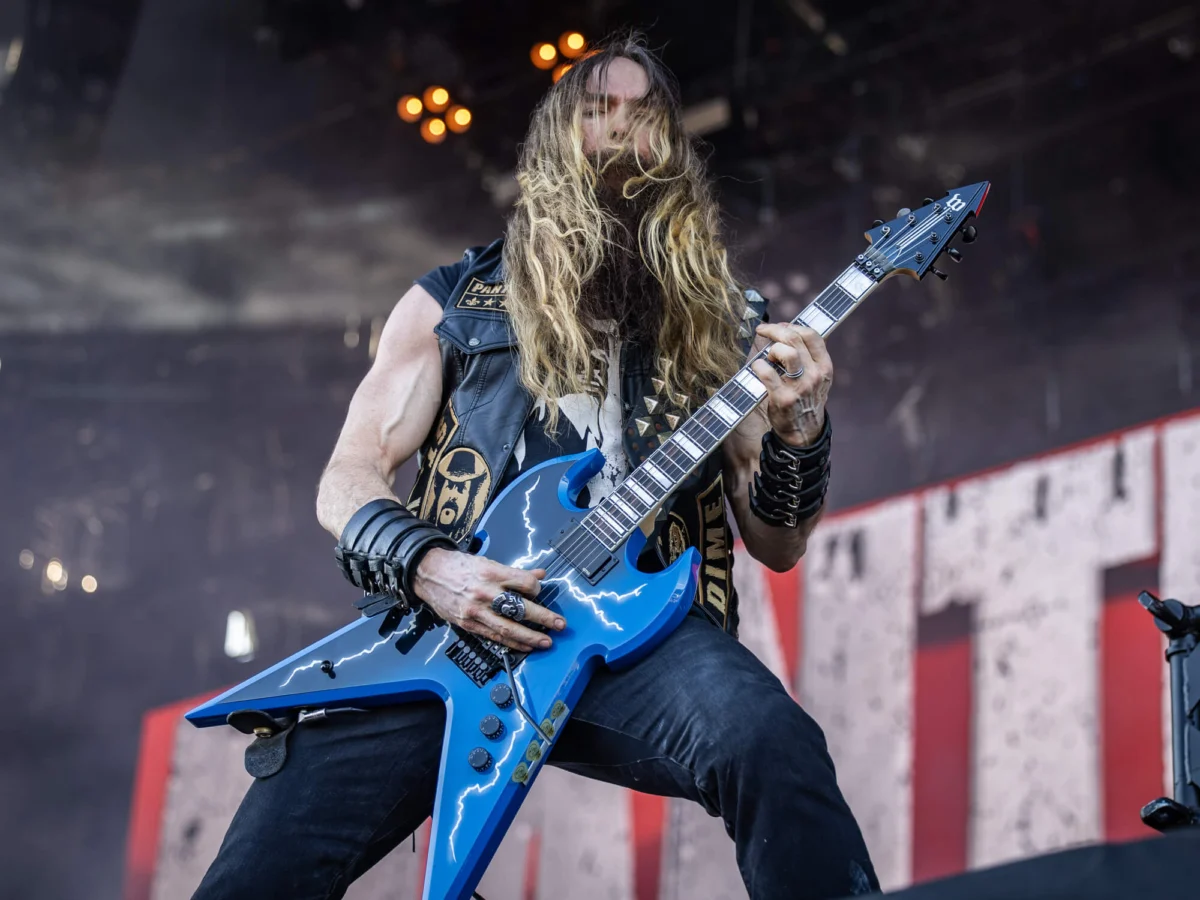
The intricate tapestry of musical creation often weaves together threads from various sources, a phenomenon recently highlighted by legendary guitarist Zakk Wylde regarding his longtime collaborator, Ozzy Osbourne. In a revealing February interview on the Garza Podcast, Wylde, renowned for his work with Osbourne and his band Black Label Society, delved into the Prince of Darkness’s creative process, specifically pointing to an iconic Jimi Hendrix track as the direct inspiration for one of Osbourne’s 1980s hits. This insight opens a broader conversation about how seminal artists draw from their predecessors, transforming existing ideas into new, groundbreaking works.
The Genesis of "Miracle Man": A Hendrix Echo
Wylde disclosed that the distinctive riff for Ozzy Osbourne’s 1988 track, "Miracle Man," found its genesis in Jimi Hendrix’s electrifying 1967 classic, "Foxey Lady." "Miracle Man" served as the lead single from Osbourne’s fifth studio album, No Rest for the Wicked, which marked Wylde’s debut as Osbourne’s lead guitarist. Released on October 22, 1988, the album was a critical and commercial success, eventually achieving double-platinum status in the United States. The track itself, co-written by Osbourne, Wylde, and bassist Bob Daisley, is known for its driving rhythm and powerful guitar work, embodying the quintessential heavy metal sound of the late 1980s.
Jimi Hendrix’s "Foxey Lady," from The Jimi Hendrix Experience’s groundbreaking debut album Are You Experienced, released in the UK in May 1967 and the US in August 1967, is a cornerstone of psychedelic rock and blues-rock. Its raw energy, innovative guitar techniques, and memorable riff cemented Hendrix’s status as a guitar visionary. The song’s central riff, characterized by its sharp, aggressive attack and bluesy swagger, became instantly recognizable. According to Wylde, Osbourne, a lifelong admirer of Hendrix, found himself particularly captivated by this riff, which subsequently sparked the creative impulse for "Miracle Man." This revelation underscores the profound and often subconscious influence that musical heroes exert on subsequent generations of artists, even those who achieve legendary status themselves.
A Wider Lens: Black Sabbath and Cream’s "N.I.B."
Wylde’s observations extended beyond Osbourne’s solo career, reaching back to the formative years of Black Sabbath, the band that Osbourne fronted to global acclaim. He cited "N.I.B.," a track from Black Sabbath’s eponymous 1970 debut album, as another prime example of musical inspiration at play. Wylde noted how "N.I.B." subtly twists elements of Cream’s seminal 1967 hit, "Sunshine of Your Love."
Cream, a British blues-rock supergroup featuring Eric Clapton on guitar, released "Sunshine of Your Love" in December 1967 as a single from their album Disraeli Gears. The song’s iconic, cyclical bass riff and driving rhythm became one of the most recognizable in rock history, influencing countless musicians. Black Sabbath, emerging from Birmingham, England, were pioneers of heavy metal, transforming blues-rock structures into a darker, heavier, and more foreboding sound. Their debut album, released on Friday the 13th in February 1970, is widely considered a foundational text for the genre. "N.I.B." showcases Geezer Butler’s distinctive bassline and Tony Iommi’s heavy guitar work, contributing to the album’s ominous atmosphere. Wylde’s assertion suggests that even in the nascent stages of heavy metal, the genre was actively reinterpreting and "mutating" the blues-rock vocabulary established by bands like Cream, demonstrating a continuous evolutionary process in popular music. The transformation was so profound that, as Wylde points out, the resulting Black Sabbath track becomes "a whole new song," highlighting the creative power of adaptation.
The Art of Transformation: Zakk Wylde’s Philosophy on Songwriting
Wylde articulated his perspective on songwriting using a relatable analogy, stating, "That’s why I always tell kids [songwriting] is just like cooking." This analogy, shared via Ultimate Guitar, posits that just as a chef learns techniques and recipes from others, a songwriter absorbs influences and structures from existing music. "You learn how other songs are written, and you’re inspired or influenced by them. Or you remember it, and then you tweak it and bend it [to make a new song]," Wylde elaborated.
This "cooking" philosophy underscores the iterative and accumulative nature of creative work. It suggests that originality doesn’t necessarily mean conjuring ideas from a vacuum, but rather skillfully reinterpreting, combining, and modifying existing elements to forge something distinct. This process of learning, internalizing, and then personalizing musical ideas is a cornerstone of artistic development across all genres and art forms. It emphasizes the importance of understanding musical lineage and the dialogue between past and present creators.
Echoes Across Genres: More Notable Examples of Inspiration
The phenomenon Wylde describes is far from unique to Osbourne or Black Sabbath; it is a pervasive aspect of music history. Wylde himself recounted an anecdote involving the late Pantera axeman, Dimebag Darrell. Darrell once pointed out an inspirational origin for one of his tracks, to which Wylde responded, "If you didn’t tell me that, I would have never got it, because you changed it around a bit." This anecdote further illustrates that the "spark of inspiration" can lead to a radically different final product, often unrecognizable to the casual listener, yet deeply rooted in an earlier influence. Dimebag Darrell, a titan of groove metal, was known for his highly distinctive and innovative guitar style, yet even he, like many virtuosos, found starting points in the work of others.
Numerous other celebrated artists have openly or subtly engaged in this creative borrowing and twisting:
-
Metallica and David Bowie: The iconic thrash metal band Metallica reportedly drew inspiration from David Bowie’s 1971 track "Andy Warhol" for a riff in their monumental 1986 album title track, "Master of Puppets." Bowie’s "Andy Warhol," from Hunky Dory, features an acoustic guitar riff that, when recontextualized and electrified by Metallica’s James Hetfield and Kirk Hammett, took on a dramatically different, heavier character, serving as a powerful component of one of metal’s most complex and enduring compositions. The shift from Bowie’s art-rock sensibility to Metallica’s aggressive thrash demonstrates the profound transformative power of interpretation.
-
Red Hot Chili Peppers and Tom Petty: One of the most widely discussed instances involves the Red Hot Chili Peppers’ 2006 smash hit, "Dani California," and Tom Petty and the Heartbreakers’ 1993 single, "Mary Jane’s Last Dance." Upon its release, "Dani California," the lead single from the double album Stadium Arcadium, achieved immense commercial success, topping multiple charts worldwide. However, many listeners and critics quickly noted a striking similarity between its main guitar riff and vocal melody and that of "Mary Jane’s Last Dance." The two songs share a similar tempo, key, and chord progression, particularly in their verses.
-
The Strokes and Tom Petty: Tom Petty himself acknowledged another instance involving his work. He noted how The Strokes’ 2001 hit "Last Nite," from their acclaimed debut album Is This It, bore a strong resemblance to his 1977 song "American Girl." The Strokes, pivotal figures in the early 2000s garage rock revival, openly admitted the influence in interviews, which Petty found amusing, stating, "That made me laugh out loud. I was like, ‘OK, good for you!’" This casual acceptance from Petty highlights a certain generosity among artists regarding recognized influences.
-
Chuck Berry’s Enduring Influence: Petty further contextualized these instances by referencing Chuck Berry, a foundational figure in rock and roll. "A lot of rock and roll songs sound alike," Petty added, "Ask Chuck Berry!" Berry’s innovative guitar riffs and song structures from the 1950s became the blueprint for countless rock and roll artists, from The Beatles and The Rolling Stones to generations of musicians who followed. His contributions, such as the opening riff to "Johnny B. Goode," are arguably the most borrowed and reinterpreted musical phrases in history, demonstrating that the building blocks of popular music are often shared and reassembled.
The Legal and Ethical Landscape of Musical Influence
The discussions surrounding musical similarities inevitably touch upon the often-contentious issues of copyright infringement versus artistic inspiration. In the case of "Dani California" and "Mary Jane’s Last Dance," rumors circulated in 2006 that Tom Petty was contemplating legal action against the Red Hot Chili Peppers. However, Petty swiftly dismissed these claims in an interview with Rolling Stone. "I seriously doubt that there is any negative intent [from the Red Hot Chili Peppers]," he affirmed. "It doesn’t bother me. If someone took my song note for note and stole it maliciously, then maybe. But I don’t believe in lawsuits much. I think there are enough frivolous lawsuits in this country without people fighting over pop songs."
Petty’s stance reflects a nuanced understanding of musical creation, acknowledging that subconscious influence and shared musical vocabulary are inherent to the process. His distinction between "negative intent" and outright malicious theft is critical. While some high-profile copyright cases, such as the Marvin Gaye estate’s successful lawsuit against Robin Thicke and Pharrell Williams for "Blurred Lines" (2013) over similarities to Gaye’s "Got to Give It Up" (1977), or George Harrison’s "My Sweet Lord" (1970) being found to subconsciously infringe on The Chiffons’ "He’s So Fine" (1963), demonstrate the legal complexities, Petty’s view champions a more collegial approach among artists. He implicitly suggests that as long as the inspiration leads to a distinct, creative output, it falls within the acceptable bounds of artistic homage rather than theft.
The Legacy of Inspiration: Shaping Musical Evolution
The revelations from Zakk Wylde and the broader examples across music history underscore a fundamental truth about creative endeavors: nothing truly exists in a vacuum. Every artist, no matter how original they may seem, stands on the shoulders of giants. This continuous dialogue between generations of musicians is not merely about imitation; it is the very engine of musical evolution. Genres like heavy metal, rock and roll, and hip-hop, for instance, have all developed by artists taking existing forms, sounds, and ideas, and then "mutating," "tweaking," and "bending" them into something new and expressive.
This process ensures that music remains vibrant and dynamic. It allows for the preservation of foundational elements while simultaneously pushing boundaries and fostering innovation. When a classic riff from Jimi Hendrix sparks an idea for Ozzy Osbourne, or a blues-rock rhythm from Cream is transmuted into heavy metal by Black Sabbath, it illustrates a lineage of creativity that transcends individual artists and speaks to a collective cultural unconscious. It highlights that the "spark of inspiration" is often a connection to the past, fueling a trajectory into the future.
Conclusion: The Enduring Dialogue of Riffs
Zakk Wylde’s candid insights into Ozzy Osbourne’s songwriting, linking "Miracle Man" to Jimi Hendrix’s "Foxey Lady," offer a fascinating glimpse into the mechanics of artistic creation. It serves as a potent reminder that even the most legendary figures in music are participants in an ongoing, intergenerational conversation. From the pioneering blues of Chuck Berry to the heavy metal anthems of Black Sabbath and Ozzy Osbourne, and the modern rock of the Red Hot Chili Peppers and The Strokes, artists continuously draw from a shared wellspring of musical ideas. This process of absorption, transformation, and reinterpretation is not merely acceptable; it is essential to the vitality and evolution of music itself, ensuring that new sounds are perpetually forged from the echoes of the past, enriching the global soundscape for generations to come.
