

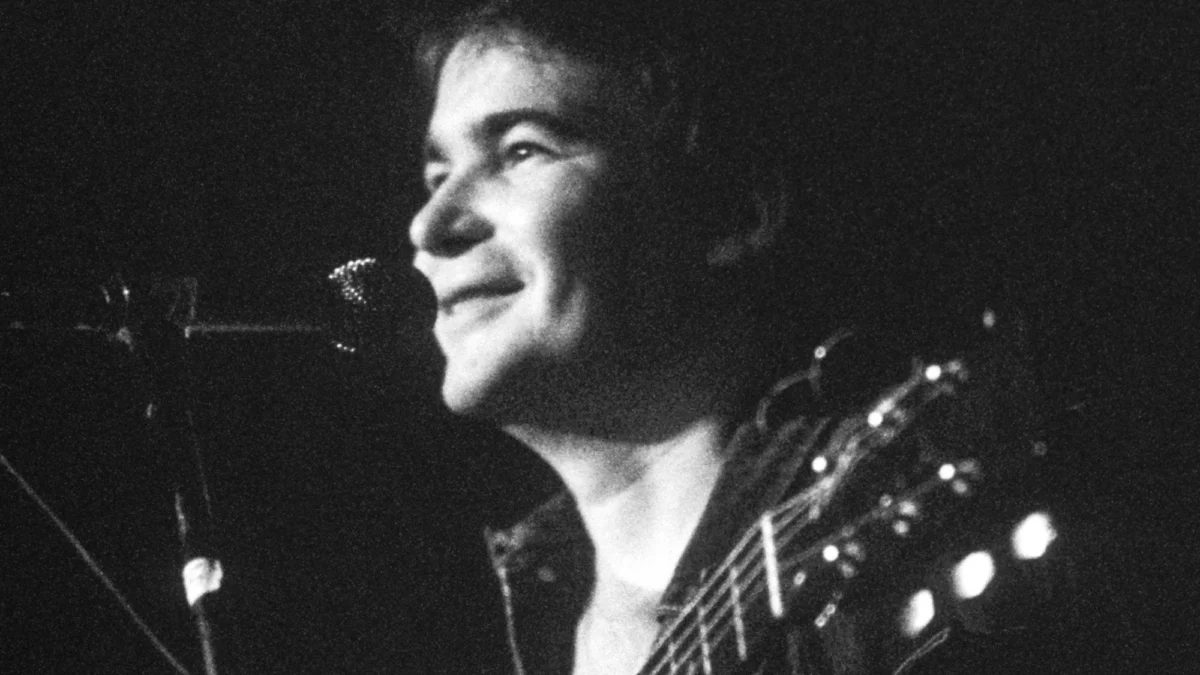
The 1970s represented a transformative decade for the American musical landscape, characterized by a decisive shift from the high-decibel experimentation of the late 1960s toward a more grounded, introspective mode of storytelling. As the political fervor of the previous decade gave way to a period of national reflection, the "singer-songwriter" emerged as a central figure in popular culture. This era was defined by a specific lyrical philosophy: the belief that the most profound human truths are often best expressed through the most economical language. By utilizing minimalist phrasing and acoustic arrangements, artists like John Prine, Joni Mitchell, and John Denver managed to craft compositions that transcended their folk origins to become permanent fixtures of the global songbook. These works demonstrate how "simple" lines, when paired with authentic emotional resonance and precise observation, can achieve the status of high art, addressing complex themes such as geriatric isolation, ecological degradation, and the existential yearning for home.
The Cultural Pivot of the Early 1970s Folk Revival
The transition into the 1970s saw a burgeoning demand for authenticity in music. Following the disillusionment of the Vietnam War and the social upheavals of 1968, audiences began to gravitate toward artists who provided a sense of intimacy and directness. This movement, often termed the "New Folk" or "Singer-Songwriter" era, prioritized the lyricist’s voice as a primary instrument of truth. Unlike the traditional folk music of the early 1960s, which often relied on reinterpreting centuries-old ballads, the 1970s iteration was deeply personal and observational.
During this period, the record industry saw a significant rise in the commercial viability of acoustic-based music. Labels like Atlantic, Reprise, and RCA began investing heavily in artists who could command an audience with nothing more than a guitar and a well-turned phrase. The success of these artists was not merely a matter of aesthetic preference but reflected a broader societal need for connection and clarity. The three songs analyzed below serve as the quintessential examples of this movement, each utilizing a deceptively simple lyrical hook to anchor a narrative of immense scope.
John Prine and the Architecture of Empathy: Hello In There
Released in 1971 as part of his self-titled debut album, John Prine’s "Hello In There" is frequently cited by musicologists and fellow songwriters as a masterclass in empathetic writing. At the time of its composition, Prine was a young man in his early twenties working as a mail carrier in Chicago. His observations of the elderly residents on his route provided the raw material for a song that would become a definitive statement on the dignity of aging.
The song’s central hook—"Hello in there, hello"—is a phrase of staggering simplicity. Yet, within the context of the narrative, it functions as an urgent plea for human recognition. Prine meticulously builds the world of an aging couple, Loretta and the narrator, whose lives have slowly emptied as their children moved away and their friends passed on. The lyrics do not rely on complex metaphors; instead, they use plain language to describe the "hollow" feeling of a quiet house and the slow passage of time.
From a critical perspective, the song’s power lies in its refusal to patronize its subjects. Prine avoids the sentimentality often associated with songs about the elderly, opting instead for a stark, journalistic realism. The line "Old people just grow lonesome / Waiting for someone to say / ‘Hello in there, hello’" serves as both a social critique and a call to action.
The industry response to Prine’s debut was immediate. Bob Dylan, in a later interview with Rolling Stone, remarked on Prine’s ability to find "pure Proustian" detail in the everyday. "Hello In There" has since been covered by numerous artists, including Bette Midler and Joan Baez, illustrating its universal appeal across different musical genres. The song’s legacy is found in its ability to force the listener to confront a segment of society that is frequently rendered invisible, proving that a three-word greeting can carry the weight of a societal manifesto.
Joni Mitchell and the Environmental Anthem: Big Yellow Taxi
While John Prine explored the internal landscape of human loneliness, Joni Mitchell turned her gaze outward toward the changing physical world. Recorded in 1970 for her third studio album, Ladies of the Canyon, "Big Yellow Taxi" is perhaps the most recognizable environmental song in the history of popular music.
The origin of the song is well-documented: during Mitchell’s first trip to Hawaii, she woke up in her hotel room and looked out at the lush, green mountains in the distance. However, when she looked down, she saw a massive, paved parking lot as far as the eye could see. This jarring contrast between the natural world and industrial "progress" led to the creation of the song’s iconic chorus: "They paved paradise and put up a parking lot."
The lyrical structure of "Big Yellow Taxi" is notable for its brevity and its use of irony. Mitchell pairs a bouncy, upbeat melody with lyrics that address the poisoning of the environment and the commercialization of nature. The mention of DDT—"Hey farmer farmer / Put away that DDT now"—placed the song directly into the contemporary political discourse of the time, following the 1962 publication of Rachel Carson’s Silent Spring and the subsequent rise of the modern environmental movement.
Data regarding the song’s impact highlights its enduring commercial and cultural relevance. While it initially reached No. 67 on the Billboard Hot 100, its influence grew exponentially through cover versions and sync licensing. The 2002 cover by the Counting Crows reached the top 20 on several global charts, and the song has been sampled by artists as diverse as Janet Jackson and Kanye West. Mitchell’s ability to distill a complex global crisis into a simple, singable hook allowed the message of conservation to reach a mainstream audience in a way that academic or political rhetoric could not.
John Denver and the Myth of the Homeland: Take Me Home, Country Roads
If Prine represented empathy and Mitchell represented observation, John Denver represented the 1970s folk movement’s connection to place and nostalgia. Released in 1971 on the album Poems, Prayers & Promises, "Take Me Home, Country Roads" became an immediate sensation, eventually reaching No. 2 on the Billboard Hot 100 and becoming one of the most beloved songs in the American canon.
The songwriting process behind the track reveals an interesting facet of its "simplicity." It was co-written by Bill Danoff, Taffy Nivert, and Denver. Curiously, at the time of the song’s inception, Danoff had never actually been to West Virginia; he had been inspired by roads in Maryland. However, the phonetics and the mythic quality of "West Virginia" fit the meter and the emotional tone of the song perfectly. This highlights a key aspect of folk art: the "simple" line "Take me home, country roads" does not need to be geographically accurate to be emotionally true.
The song resonates because it taps into a universal human archetype—the "home" as a place of spiritual restoration. The lyrics "I hear her voice in the mornin’ hour, she calls me / The radio reminds me of my home far away" utilize common sensory experiences to build a sense of longing. For the listener, "country roads" are not necessarily literal dirt paths in Appalachia; they are any path that leads back to a sense of belonging.
The broader impact of the song is measurable in its institutional adoption. In 2014, the West Virginia Legislature officially designated "Take Me Home, Country Roads" as one of the state’s four official state songs. Beyond the United States, the song has become a staple of global culture, frequently sung at events ranging from German Oktoberfest to sporting matches in Japan. Its success proves that a simple, repetitive chorus can create a collective identity for millions of people.
Statistical Analysis and Industry Trends of the 1970s Folk Era
The commercial performance of these three tracks reflects the broader market trends of the 1970s. According to historical RIAA data, the early 1970s saw a surge in "Gold" and "Platinum" certifications for acoustic-heavy albums.
| Artist | Song Title | Year Released | Initial Chart Peak (US) | Cultural Milestone |
|---|---|---|---|---|
| John Prine | Hello In There | 1971 | N/A (Album Track) | Inducted into Grammy Hall of Fame (2015) |
| Joni Mitchell | Big Yellow Taxi | 1970 | No. 67 (Re-entry at No. 24) | Library of Congress National Recording Registry |
| John Denver | Take Me Home, Country Roads | 1971 | No. 2 | Official State Song of West Virginia |
The data suggests that while these songs may have had varying levels of initial chart success, their "long-tail" value is immense. Unlike the pop hits of the era that relied on temporary trends, these folk compositions have maintained high levels of airplay and streaming numbers decades after their release. This longevity is directly attributed to the "pure art" of their simplicity; because the lyrics are not cluttered with dated slang or overly specific cultural references, they remain accessible to new generations of listeners.
Broader Impact and Lyrical Implications
The legacy of these three songs extends into the modern "Americana" and "Indie-Folk" genres. Modern artists such as Jason Isbell, Brandi Carlile, and Phoebe Bridgers frequently cite the 1970s folk masters as their primary influences. The "simple line" technique pioneered by Prine, Mitchell, and Denver has become a standard tool for songwriters looking to achieve maximum emotional impact.
In a journalistic analysis of these works, it is evident that their "simplicity" is not a lack of effort, but rather the result of rigorous distillation. To take a concept as broad as environmentalism and condense it into a metaphor about a parking lot requires a deep understanding of communication. Similarly, to address the crisis of elderly loneliness through a simple greeting requires profound empathy.
The enduring power of these 1970s folk songs lies in their ability to act as mirrors. They do not tell the listener how to feel; instead, they provide a simple framework—a greeting, a parking lot, a country road—and allow the listener to fill in the emotional details from their own lives. This transition from simple lines to "pure art" is what defines the decade’s contribution to music history, ensuring that as long as people feel lonesome, concerned for the earth, or homesick, these songs will remain relevant.
