

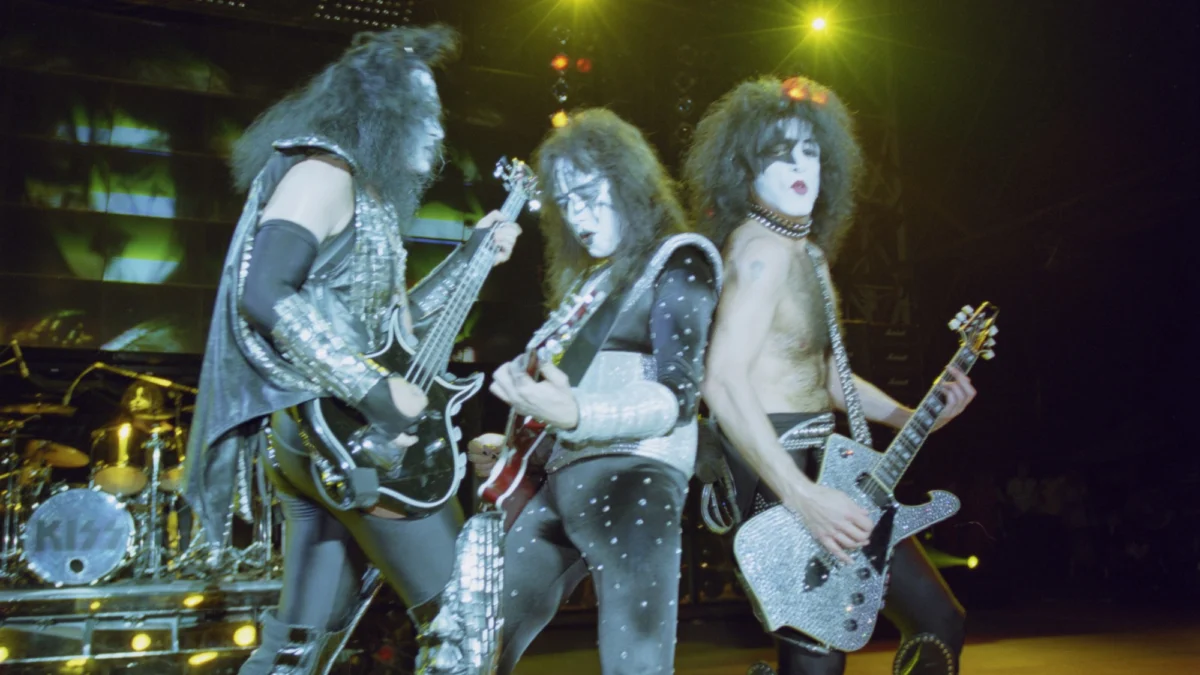
In the volatile ecosystem of the music industry, the trajectory of an artist’s career is rarely linear. Commercial success is often a fragile commodity, susceptible to shifting cultural tastes, internal band conflicts, or the weight of underwhelming sales. While many artists fade into obscurity after a series of failed releases, history identifies a rare subset of performers who managed to reverse their downward momentum through the sheer power of a single live performance. These watershed moments do more than entertain; they serve as a proof of concept to record labels, a manifesto to critics, and a renewal of vows with the public. By examining the specific instances of Bruce Springsteen in 1974, Johnny Cash in 1968, and KISS in 1995, one can observe the mechanics of the "career-saving" performance and its lasting impact on the cultural landscape.
The Prophecy of Rock and Roll: Bruce Springsteen at Harvard Square Theater (1974)
By the spring of 1974, Bruce Springsteen was an artist on the verge of being dropped by his label, Columbia Records. Despite significant critical buzz surrounding his 1973 debut, Greetings from Asbury Park, N.J., and its follow-up, The Wild, the Innocent & the E Street Shuffle, the albums were commercial failures. Neither record had managed to crack the Billboard Top 40, and the "New Dylan" marketing strategy employed by the label had failed to resonate with a mainstream audience. Springsteen was viewed as a regional curiosity from the Jersey Shore rather than a national superstar.
The Context of the Performance
On May 9, 1974, Springsteen and the E Street Band were booked as the opening act for folk-blues singer Bonnie Raitt at the Harvard Square Theater in Cambridge, Massachusetts. The venue was small, but the stakes were immense. Columbia Records executives were skeptical about funding a third album, and Springsteen’s management knew that the artist needed a definitive endorsement to maintain his recording contract.
In the audience that night was Jon Landau, a prominent music critic for The Real Paper and Rolling Stone. Landau had previously written a somewhat critical piece about Springsteen, but the May 9 performance fundamentally altered his perspective. The set was a high-octane display of R&B-infused rock, featuring early versions of songs that would define Springsteen’s career, including "Rosalita (Come Out Tonight)."
The Landau Review and Its Aftermath
Following the show, Landau penned an article that contained perhaps the most famous sentence in the history of music journalism: "I saw rock and roll future and its name is Bruce Springsteen." Landau described the performance as a transcendent experience, noting that Springsteen "is a rock ‘n’ roll punk, a Latin street poet, a ballet dancer, an actor, a joker, bar band leader, hot-shot guitar player, cherry-top singer, and a cool dancer."
This review was not merely a piece of criticism; it became a marketing weapon. Columbia Records seized the quote and used it in a massive national advertising campaign. The momentum generated by the Cambridge show provided Springsteen with the leverage and time necessary to record Born to Run. Released in 1975, the album reached number three on the Billboard 200 and secured Springsteen’s place as a global icon. The 1974 performance effectively bridged the gap between a failing cult act and a commercial powerhouse.
Redemption in the Shadows: Johnny Cash at Folsom Prison (1968)
In the mid-1960s, Johnny Cash was a man in decline. Although he had been a titan of country and rockabilly in the 1950s, his career was being derailed by severe amphetamine and barbiturate addiction. His chart presence had diminished, his behavior was increasingly erratic, and his marriage was collapsing. By 1967, Cash was seen by many industry insiders as a relic of a previous era, a "has-been" whose best days were buried under a mountain of legal troubles and missed concert dates.
The Strategic Pivot to Folsom State Prison
Cash had been performing at prisons since the late 1950s, but he had never recorded a live album in one. Against the advice of several executives at Columbia Records who feared the controversial nature of performing for "criminals," Cash and producer Bob Johnston moved forward with a plan to record a set at Folsom State Prison in California on January 13, 1968.
The setlist was meticulously curated to resonate with the inmates. Cash opened with "Folsom Prison Blues," a song he had written over a decade earlier, but in the walls of the prison, the lyrics took on a visceral, immediate reality. The performance was characterized by a raw, gritty energy that stood in stark contrast to the polished "Nashville Sound" that dominated country music at the time.
Commercial and Cultural Impact
The resulting album, At Folsom Prison, was a massive success. It revitalized Cash’s career, reaching number one on the Country album charts and the Top 15 on the national pop charts. The lead single, a live version of "Folsom Prison Blues," became a Top 40 hit, a rare feat for a country artist in the late 60s.
Key Data Points of the Folsom Performance:
- Release Date: May 1968
- Certification: Eventually certified 3x Multi-Platinum by the RIAA.
- Chart Performance: Replaced Glen Campbell’s By the Time I Get to Phoenix at the top of the country charts.
- Legacy: The album is credited with creating the "Outlaw Country" archetype, providing a blueprint for artists like Waylon Jennings and Willie Nelson.
The performance did more than sell records; it rehabilitated Cash’s public image. He was no longer just a struggling addict; he was a man of the people, a rebel with a conscience. This shift led to the commissioning of The Johnny Cash Show on ABC, which ran from 1969 to 1971, cementing his status as a legendary figure in American music.
Stripped Bare and Reborn: KISS on MTV Unplugged (1995)
By the mid-1990s, KISS found themselves in a difficult position. The band had spent the previous decade performing without their iconic makeup, attempting to fit into the hair metal and later the melodic hard rock scenes. While they maintained a loyal fan base, they were largely ignored by the MTV generation, which was currently obsessed with the "unplugged" aesthetic of grunge and alternative rock. The original lineup of Gene Simmons, Paul Stanley, Ace Frehley, and Peter Criss had not performed together in full since 1980.
The Unlikely Catalyst: MTV Unplugged
In 1995, KISS was invited to perform on the MTV Unplugged series. At the time, the band consisted of Simmons, Stanley, Bruce Kulick, and Eric Singer. However, during the taping on August 9, 1995, at Sony Music Studios in New York, the band orchestrated a surprise that would alter their trajectory. After performing several acoustic versions of their hits, Simmons and Stanley invited founding members Ace Frehley and Peter Criss onto the stage.
The sight of the four original members performing together—even without makeup—sent shockwaves through the industry. The chemistry was undeniable, and the audience reaction was overwhelming. The performance demonstrated that there was still a massive, untapped demand for the classic KISS lineup.
From the Stool to the Stadium: The Reunion Tour
The MTV Unplugged performance served as a "soft launch" for a full-scale reunion. The critical and fan reception was so positive that the band felt emboldened to put the makeup back on. In April 1996, the original lineup appeared in full costume at the Grammy Awards to announce the "Alive/Worldwide Tour."
The implications of the 1995 performance were staggering:
- Financial Success: The 1996-1997 reunion tour became the top-grossing tour of that year, earning over $143 million.
- Brand Revitalization: KISS moved from being a legacy act playing theaters to a stadium-filling powerhouse once again.
- Media Saturation: The Unplugged album was certified Gold, and the DVD became a staple of music television, introducing the band to a younger demographic.
Without the controlled environment of the Unplugged set to test the waters of the original lineup’s chemistry, it is unlikely the band would have risked a multi-million dollar stadium tour. The performance saved the band from fading into the nostalgia circuit of the 1980s and secured their financial future for the next three decades.
Broader Implications and Analysis
The success of these three performances highlights a fundamental truth about the music industry: the live experience remains the ultimate arbiter of an artist’s value. In the cases of Springsteen, Cash, and KISS, the live set functioned as a "pivot point."
For Springsteen, the performance provided critical legitimacy, turning a struggling songwriter into a "visionary." For Johnny Cash, the performance provided narrative redemption, transforming a personal crisis into a celebrated public persona. For KISS, the performance provided market validation, proving that their original brand still held immense commercial power.
The transition from a failing or stagnant career to legendary status often requires a moment of high-stakes vulnerability. Whether it is performing for inmates, playing in front of a cynical critic, or reuniting with estranged colleagues on a stripped-back stage, these artists used the live medium to strip away the artifice and reconnect with the core of their appeal. In doing so, they did more than just save their careers; they authored new chapters in the history of popular music that continue to be studied and celebrated today.
