

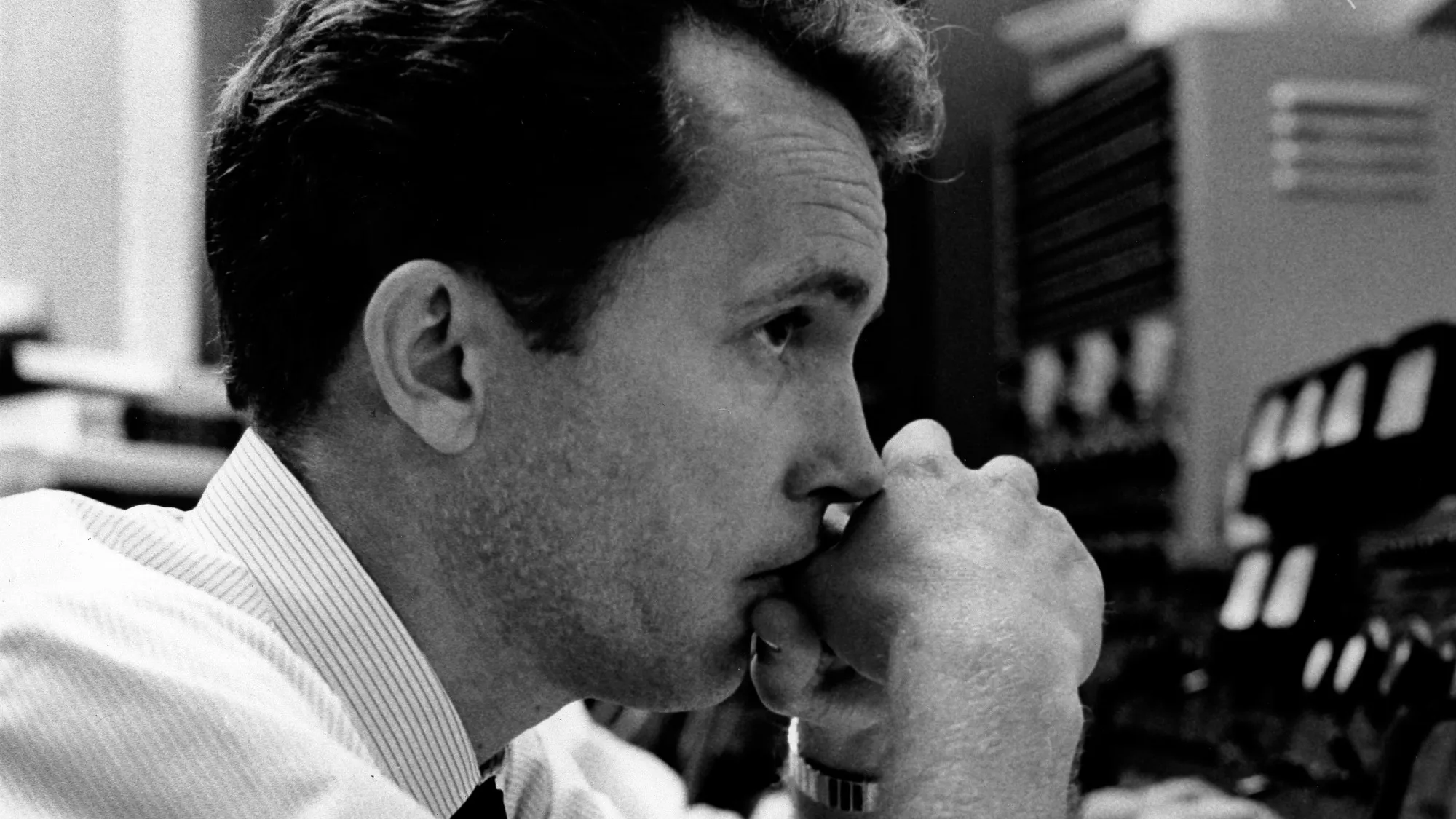
The history of American music is often defined by the visionaries who operate behind the glass of the recording booth, shaping the sonic textures that define entire eras. On August 4, 2015, the music industry lost one of its most influential figures when Billy Sherrill passed away in Nashville, Tennessee, at the age of 78 following a brief illness. As a producer, songwriter, and executive, Sherrill did more than just record hits; he engineered a fundamental shift in the identity of country music. By blending the raw emotionality of the genre with the sophisticated production values of pop and classical music, he became a primary architect of the "Countrypolitan" era, a movement that allowed Nashville to conquer the mainstream airwaves and global charts from the mid-1960s through the early 1980s.
The Formative Years and the Departure from Sacred Music
Billy Norris Sherrill was born on January 18, 1936, in Phil Campbell, Alabama. His musical journey began under the strict influence of his father, a traveling Baptist evangelist. From a young age, Sherrill was a prodigy on the piano, accompanying his father’s revival meetings and learning the power of music to move an audience emotionally. However, the rigid boundaries of sacred music could not contain his curiosity. As a teenager, he gravitated toward the burgeoning sounds of jazz, rhythm and blues, and rock and roll, playing in various regional bands across the South.
This diverse musical upbringing provided Sherrill with a unique palette. Unlike many of his contemporaries in Nashville who were steeped exclusively in bluegrass or Western swing, Sherrill understood the structural complexities of jazz and the visceral energy of R&B. After a brief and largely unsuccessful attempt to establish himself as a solo recording artist, he recognized that his true calling lay in the technical and creative aspects of production.
In 1960, Sherrill moved to Nashville, a city then in the midst of a transition. He initially found work at the Nashville studio of Sam Phillips, the legendary founder of Sun Records. This period served as a masterclass in independent production, but it was his move to Epic Records in 1963 as a staff producer that set the stage for his revolutionary career. At Epic, Sherrill was initially tasked with working with artists that the senior producers considered "difficult" or "unmarketable," a challenge that allowed him the freedom to experiment with new sounds.
Defining the Countrypolitan Sound and the Spector Influence
By the mid-1960s, the "Nashville Sound"—characterized by smooth strings and background vocals intended to make country music more palatable to urban audiences—had already been established by pioneers like Owen Bradley and Chet Atkins. Sherrill, however, took this concept to an operatic extreme. He was deeply influenced by Phil Spector, the pop producer famous for his "Wall of Sound." Sherrill adapted Spector’s technique of layering multiple instruments to create a dense, lush, and dramatic atmosphere, but he tailored it to the storytelling traditions of country music.
This style, which became known as "Countrypolitan," utilized soaring string arrangements, echoing percussion, and polished backing choirs. Critics at the time occasionally accused Sherrill of "diluting" the purity of country music, but the commercial results were undeniable. His productions possessed a cinematic quality that resonated with a broad demographic, effectively bridging the gap between rural listeners and the suburban middle class.
The first major validation of Sherrill’s vision came in 1966 with "Almost Persuaded," a song he co-wrote with Glenn Sutton and produced for David Houston. The track spent nine weeks at the top of the country charts and crossed over into the pop Top 30, earning Sherrill his first pair of Grammy Awards. This success established the "Sherrill formula": a focus on heartbreak, sophisticated arrangements, and a vocal performance that remained at the center of the orchestral storm.
The Partnership with Tammy Wynette: Creating a Legend
Perhaps no professional relationship better exemplifies Sherrill’s genius than his work with Tammy Wynette. When Wynette arrived in Nashville in 1966, she was a divorced mother of three looking for a break. Sherrill recognized the unique "tear" in her voice—a quality of vulnerability and strength that he knew how to frame perfectly.
Sherrill signed her to Epic Records and became her primary songwriter and sole producer. Together, they embarked on one of the most successful runs in music history. Sherrill helped craft Wynette’s persona as the "Queen of Heartbreak," producing hits such as "I Don’t Wanna Play House," "D-I-V-O-R-C-E," and the iconic "Stand by Your Man." The latter, co-written by Sherrill and Wynette in a mere 20 minutes, became one of the best-selling singles in the history of country music.
Throughout their collaboration, Sherrill’s production remained consistent: he used the orchestra to mirror the emotional stakes of the lyrics. When Wynette sang about the pain of a crumbling marriage, Sherrill’s strings swelled with a corresponding intensity. This partnership resulted in 20 No. 1 hits for Wynette, cementing both their legacies in the annals of American music.
Resurrecting the Career of George Jones
While his work with Wynette was characterized by the creation of a new star, Sherrill’s work with George Jones was a feat of career resurrection and artistic endurance. By the early 1970s, Jones was widely considered the greatest living country singer, but his personal life was in shambles due to substance abuse, and his chart performance had begun to wane.
Sherrill took over production duties for Jones in 1971, and the two began a tumultuous but creatively brilliant decade. Sherrill’s sophisticated production provided a stable foundation for Jones’s erratic genius. He produced some of Jones’s most enduring classics, including "The Grand Tour" and "A Picture of Me (Without You)."
The pinnacle of their collaboration—and arguably the pinnacle of country music production—was the 1980 hit "He Stopped Loving Her Today." The song had a notoriously difficult birth. Jones initially hated the track, famously telling Sherrill, "Nobody’s going to buy that morbid son of a bitch." Sherrill, however, was persistent. He spent over a year cajoling Jones into the studio, eventually recording the spoken-word bridge while Jones was reportedly struggling with sobriety.
Sherrill’s instincts were proven correct. The song became a massive hit, won the CMA Single of the Year in both 1980 and 1981, and is frequently cited by music historians as the greatest country song of all time. It revitalized Jones’s career and proved that Sherrill’s "pop" sensibilities could be used to enhance, rather than overshadow, the most traditional elements of the genre.
Crossover Success and Technical Mastery
Sherrill’s influence extended beyond the duo of Jones and Wynette. In the early 1970s, he performed a similar feat of rebranding with Charlie Rich. Rich had spent years bouncing between genres without finding a consistent audience. Sherrill leaned into Rich’s soulful, jazz-influenced piano playing and paired it with lush, romantic arrangements. The result was the 1973 album Behind Closed Doors, which produced two massive crossover No. 1 hits: the title track and "The Most Beautiful Girl." These songs dominated both the country and pop charts, further proving that Sherrill’s "Countrypolitan" sound was the most commercially viable force in the industry.
Technically, Sherrill was known for his precision in the studio. He often utilized the "Nashville A-Team"—a group of elite session musicians—but he was the undisputed director. He was known to spend hours perfecting a single string swell or the placement of a backing vocal. His ability to hear the finished product in his head before the tape even started rolling was legendary among his peers.
Chronology of Key Career Milestones
- 1936: Born in Phil Campbell, Alabama.
- 1960: Moves to Nashville; joins Sam Phillips’ studio.
- 1963: Joins Epic Records as a staff producer.
- 1966: Co-writes and produces "Almost Persuaded," his first major crossover hit.
- 1968: "Stand by Your Man" is released, becoming a global phenomenon.
- 1973: Produces Charlie Rich’s Behind Closed Doors, achieving peak crossover success.
- 1980: Produces "He Stopped Loving Her Today" for George Jones, widely considered the greatest country song ever recorded.
- 1984: Inducted into the Nashville Songwriters Hall of Fame.
- 2010: Inducted into the Country Music Hall of Fame.
- 2015: Passes away in Nashville at age 78.
Legacy and Impact on the Modern Industry
The death of Billy Sherrill in 2015 marked the end of an era, but his influence remains deeply embedded in the DNA of modern country music. The contemporary "stadium country" and "pop-country" sounds heard on today’s radio stations owe a direct debt to the groundwork laid by Sherrill. He was the first to prove that country music did not have to sound "small" or "regional" to be authentic; it could be grand, orchestral, and universal.
Upon his passing, industry leaders and artists offered reflections that underscored his importance. Sarah Trahern, CEO of the Country Music Association, noted at the time that "Billy Sherrill’s impact on our industry is immeasurable. He was a master of the craft who understood how to marry a great voice with a great song."
Sherrill’s legacy is preserved not only in the hundreds of hits he produced but in the very way Nashville operates as a global music hub. He helped transform a regional genre into a multi-billion-dollar international industry by refusing to accept the limitations previously placed on country music. His work remains a testament to the power of production as an art form, proving that with the right arrangement, a simple story of heartbreak can become a timeless masterpiece.
