

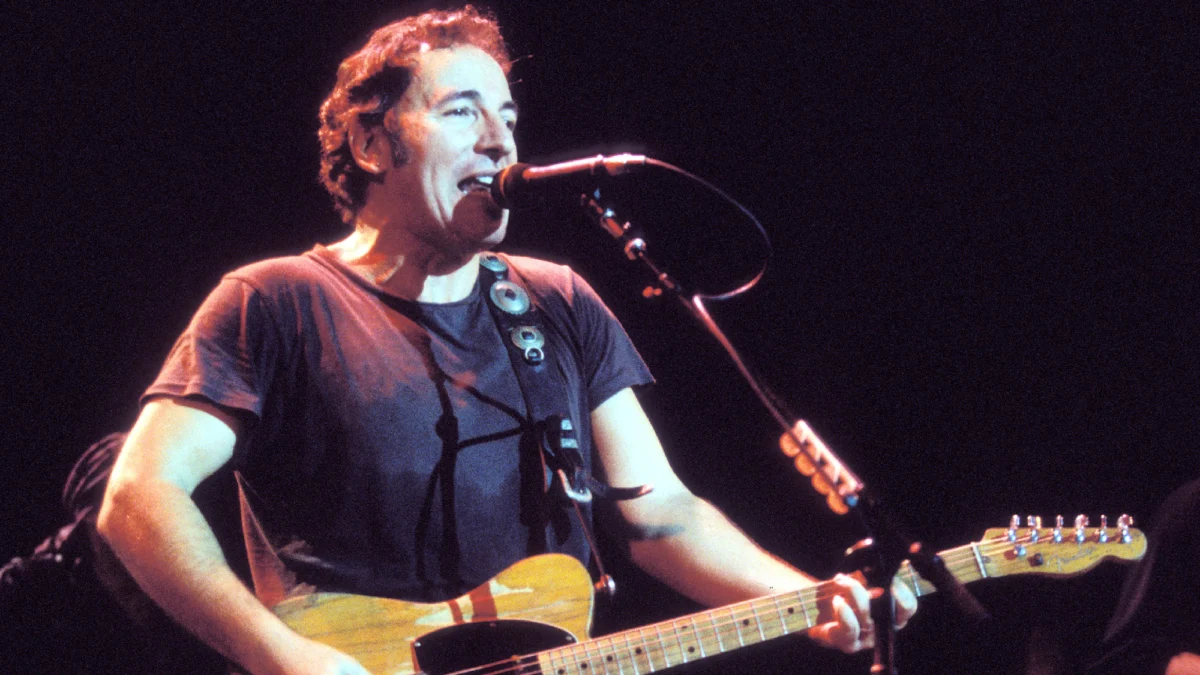
The transition of a popular music composition from a contemporary hit to a permanent fixture of the cultural canon is a process often measured in decades rather than years. In the landscape of 1980s rock, certain tracks have transcended their original commercial success to become profound meditations on time, mortality, and the American experience. As the artists who penned these anthems enter their later years, the lyrical content of their work has acquired a weight and authority that was perhaps inaccessible during the initial recording sessions. Works by Bruce Springsteen, Tom Petty, and U2 serve as primary examples of this phenomenon, where the passage of time has acted as a secondary collaborator, enriching the narrative depth of the songs.
The Socio-Economic Resonance of Bruce Springsteen’s My Hometown
Released in 1984 as the final single from the diamond-certified album Born in the U.S.A., "My Hometown" initially stood as a stark, synthesizer-driven ballad amidst a collection of high-energy rock tracks. At the time of its release, Bruce Springsteen was 35 years old, a point in life where one begins to balance youthful rebellion with the responsibilities of adulthood. The song reached number six on the Billboard Hot 100, cementing its status as a commercial powerhouse.
The narrative structure of "My Hometown" follows a generational cycle, beginning with a childhood memory of sitting on a father’s lap in a Buick and concluding with the protagonist preparing to move his own family away from a dying community. In 1984, the lyrics regarding "whitewashed windows and vacant stores" were a direct commentary on the deindustrialization of the American Rust Belt and the economic recession of the early 1980s.
However, as Springsteen transitioned into his 70s, the song’s implications shifted from contemporary social commentary to a poignant reflection on the inevitability of change. When Springsteen performed the song during his historic "Springsteen on Broadway" residency (2017–2018), the context was no longer just about the economic decline of Freehold, New Jersey, but about the ghosts of a vanished era. The lines "Son, take a good look around / This is your hometown" carry a different gravity when delivered by a performer who has witnessed the full arc of that town’s transformation over seven decades.
Data from the Recording Industry Association of America (RIAA) indicates that Born in the U.S.A. has sold over 17 million copies in the United States alone. The enduring popularity of "My Hometown" is attributed to its universal themes of belonging and loss, which resonate more deeply with an aging demographic that has experienced the same "reckoning with change" described in the lyrics.
Tom Petty and the Architecture of Defiance in I Won’t Back Down
In 1989, Tom Petty released "I Won’t Back Down" as the lead single from his debut solo album, Full Moon Fever. Produced by Jeff Lynne, the track is characterized by its minimalist arrangement and steadfast lyrical resolve. At the age of 39, Petty wrote the song following a traumatic period in which an arsonist set fire to his home while he and his family were inside. The lyrics—"You could stand me up at the gates of Hell / But I won’t back down"—were a literal and metaphorical response to that violation.
The song’s significance evolved as Petty aged, transforming from a personal manifesto into a universal anthem for resilience. The track’s gravitas was significantly bolstered in 2000 when Johnny Cash covered it for his American III: Solitary Man album. Cash, then 68 and facing declining health, imbued the words with the weary but unbroken spirit of an elder statesman. This version provided a bridge, allowing Petty’s original recording to be viewed through the lens of lifelong perseverance rather than just mid-career grit.
Tragically, following Petty’s death in 2017, "I Won’t Back Down" became a posthumous tribute to his career and character. The song was famously played at the University of Florida football games, where 90,000 fans sang it in unison, turning the track into a communal rite of passage. Analysis of the song’s structure reveals why it has aged so effectively: it lacks the trendy production flourishes of the late 80s, favoring a timeless folk-rock foundation. By the time Petty reached his 60s, his voice had developed a rasp that lent even more credence to the idea of standing one’s ground against the "naysayers" of life.
The Existential Journey of U2’s I Still Haven’t Found What I’m Looking For
The 1987 release of The Joshua Tree marked U2’s transition from post-punk aspirants to global rock icons. "I Still Haven’t Found What I’m Looking For," the album’s second track, reached number one on the Billboard Hot 100 and earned nominations for Record of the Year and Song of the Year at the 30th Grammy Awards. Influenced by American gospel and roots music, the song explored themes of spiritual yearning and the dichotomy between faith and doubt.
For a group of musicians in their late 20s, the song was an ambitious exploration of existentialism. However, as Bono, The Edge, Adam Clayton, and Larry Mullen Jr. continued their career into the 21st century, the song’s "thesis statement" became more profound. During the 2017 Joshua Tree 30th Anniversary Tour, the band performed the song to audiences of multiple generations. The lyrics—"I have climbed highest mountains / I have run through the fields / Only to be with you"—no longer sounded like a youthful quest, but like the summary of a life’s work.
Musicologists have noted that the song’s enduring power lies in its refusal to provide a resolution. It acknowledges that the search for meaning is a lifelong endeavor rather than a destination to be reached. This lack of closure makes the song increasingly relevant as the artists and their audience age; the "searching" described in 1987 remains a permanent fixture of the human condition. The inclusion of the Harlem Gospel Choir in various live versions over the years has further underscored the song’s status as a modern hymn, reinforcing its importance as a piece of "legendary art" that grows in stature as its creators grow in years.
Chronology of Influence: From Hits to Heritage
The evolution of these songs can be tracked through a timeline of cultural milestones that reinforced their importance:
- 1984–1989: Original releases. These songs established the artists as voices of their generation, focusing on themes of community, resilience, and spirituality.
- 1990s: The "Classic Rock" transition. As grunge and alternative rock took over the airwaves, these 80s tracks began to be viewed as the foundation of the modern rock songbook.
- 2000–2010: The Legacy Era. Covers by artists like Johnny Cash and the use of these songs in significant cultural moments (such as post-9/11 benefit concerts) solidified their status as "important" art.
- 2017–Present: The Reflection Period. Anniversary tours and autobiographical projects (like Springsteen’s book and Broadway show) allowed the artists to recontextualize these songs for a modern, aging audience.
Broader Impact and Songwriting Implications
The longevity of these three tracks provides a data-backed argument for the value of narrative songwriting. Unlike many "bubblegum" hits of the 1980s that relied on fleeting trends, these songs utilized classic structures—the storytelling of Springsteen, the defiant simplicity of Petty, and the spiritual inquiry of U2.
From a journalistic and analytical perspective, the survival of these songs suggests that the most successful rock compositions are those that allow for "re-interpretation by the self." When an artist can sing a lyric at 70 that they wrote at 30 and find new, deeper meaning within it, the song has achieved a level of craftsmanship that warrants study in academic settings.
Furthermore, the commercial impact of these songs remains significant. Digital streaming platforms report that tracks like "I Still Haven’t Found What I’m Looking For" and "I Won’t Back Down" consistently rank among the most-streamed songs from the 1980s, frequently appearing on "essential" rock playlists. This data confirms that the songs have not only aged well for the artists but have maintained a vital connection with new listeners who find the themes of home, persistence, and searching to be timeless.
In conclusion, the 1980s provided a fertile ground for rock songs that were capable of growing alongside their creators. As Bruce Springsteen, Tom Petty, and U2 navigated the decades following their initial stardom, their work transformed. What were once radio hits have become legendary pieces of art, serving as mirrors for the artists’ own aging processes and as anthems for an audience navigating the same temporal journey. The importance of these songs in the current era is a testament to the power of songwriting that prioritizes human experience over temporary artifice.
