

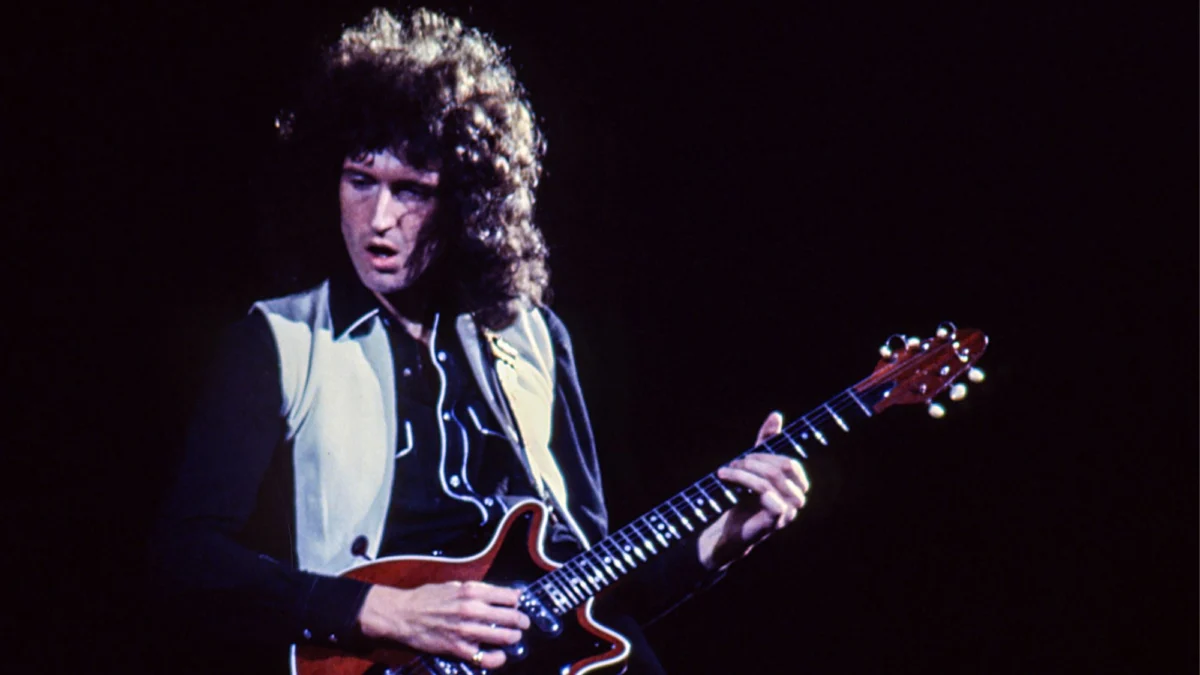
The history of rock and roll is punctuated by figures who defined the sound of generations, but few possess a portfolio as diverse and intellectually rigorous as Sir Brian Harold May. As the legendary guitarist of Queen celebrates his 79th birthday, the global music community reflects on a career that spans over five decades, encompassing chart-topping anthems, groundbreaking technical innovations, and significant contributions to the field of astrophysics. Born on July 19, 1947, in Hampton, Middlesex, May has navigated the transition from a suburban student of physics to a global icon whose "Red Special" guitar helped create the sonic architecture of one of the most successful bands in human history.
May’s journey is not merely a chronicle of musical success but a testament to the intersection of art and science. While his role in Queen alongside Freddie Mercury, Roger Taylor, and John Deacon earned him a place in the Rock and Roll Hall of Fame, his secondary career as a scientist and his unwavering commitment to animal welfare have solidified his status as a modern polymath. On this milestone birthday, the industry looks back at the specific milestones that shaped the man often referred to as "The Wizard" of the electric guitar.
The Genesis of the Red Special and Early Technical Ingenuity
The foundation of Brian May’s unique sound can be traced back to 1963. Unlike his contemporaries who often sought out manufactured instruments from Fender or Gibson, a young May collaborated with his father, Harold, an electronics engineer, to build a custom electric guitar. This instrument, famously known as the "Red Special" or "The Old Lady," was born out of necessity and ingenuity.
The materials used were remarkably humble. The neck of the guitar was carved from a 100-year-old mahogany fireplace mantel that a neighbor was discarding. The body was constructed from blockboard, oak, and plastic shelf edging, while the tremolo system was fashioned from a bicycle saddlebag holder and a knitting needle. Perhaps most famously, May opted not to use a traditional plectrum, instead choosing a six-pence coin to strike the strings, a choice that contributed to the distinctive, metallic "scratched" attack that characterizes his solos.
This technical curiosity was mirrored in his academic life. While developing his musical style, May was an exceptional student at Hampton Grammar School, eventually earning a BSc (Hons) degree in Physics and Mathematics from Imperial College London in 1968. This period was a critical crossroads; while he was being offered opportunities to pursue a PhD in interstellar dust, the burgeoning London music scene was beginning to pull him toward a different destiny.
The Formative Years: From 1984 to Smile
Before Queen became a household name, May cut his teeth in the London underground circuit. His first serious band, 1984—named after George Orwell’s dystopian novel—featured his school friend Tim Staffell. The group achieved a moderate level of local success, notably opening for Jimi Hendrix at the Saville Theatre in 1967. This exposure to Hendrix’s avant-garde approach to the guitar left a lasting impression on May, influencing his interest in feedback, sustain, and the "orchestral" layering of guitar parts.
By 1968, May and drummer Roger Taylor formed the progressive rock trio Smile, with Staffell on lead vocals and bass. Smile signed to Mercury Records in 1969 and recorded several tracks at Trident Studios, but the group struggled to find a mainstream audience. When Staffell departed in 1970 to join the band Humpy Bong, the future of the remaining members was uncertain. However, a close friend and fervent fan of the band, Farrokh Bulsara, saw an opportunity. Bulsara, who would soon rename himself Freddie Mercury, persuaded May and Taylor to reinvent the band under a new, more regal moniker: Queen.
The Ascent of Queen and the Architecture of Anthems
The formation of Queen was completed in 1971 with the recruitment of bassist John Deacon. Over the next decade, the quartet would redefine the boundaries of rock music, blending opera, vaudeville, heavy metal, and pop. Brian May’s role in this evolution was pivotal. While Freddie Mercury provided the theatrical focal point, May provided the harmonic backbone and some of the band’s most enduring compositions.
May’s songwriting credits include some of the most recognizable songs in the rock canon. "We Will Rock You" (1977), characterized by its stomp-stomp-clap rhythm, was designed by May to be a participatory anthem for stadium crowds—a concept that was revolutionary at the time. His other contributions, such as "Fat Bottomed Girls," "Tie Your Mother Down," "I Want It All," and the power ballad "Who Wants to Live Forever," demonstrated a range that moved seamlessly from hard-driving riffs to delicate, emotive melodies.
In the studio, May’s "guitar orchestrations" became a hallmark of the Queen sound. Using multi-tracking techniques, he would layer dozens of guitar parts to create a wall of sound that mimicked brass sections or choirs. This is most evident in the middle section of "Bohemian Rhapsody" and the intricate arrangements of the album A Night at the Opera. His ability to make the guitar "sing" allowed Queen to bridge the gap between classical complexity and rock accessibility.
Academic Interruption and the Return to Astrophysics
One of the most remarkable aspects of Brian May’s biography is his return to academia after a 30-year hiatus. In 1971, May had abandoned his PhD studies as Queen’s career began to take flight. However, he never lost his passion for the stars. In 2006, at the age of 59, he re-registered at Imperial College to complete his thesis.
His research, titled "A Survey of Radial Velocities in the Zodiacal Dust Cloud," focused on the motion of dust particles in the solar system. In 2007, he was officially awarded his PhD, proving that intellectual curiosity does not have an expiration date. Since then, Dr. Brian May has become a respected figure in the scientific community. He has served as a collaborator on NASA’s New Horizons mission to Pluto and provided stereoscopic imaging for the OSIRIS-REx mission, which successfully returned a sample from the asteroid Bennu.
Advocacy and the Save Me Trust
Beyond the stage and the laboratory, May has dedicated the latter part of his life to animal welfare. In 2010, he co-founded the Save Me Trust, an organization named after the Queen song he wrote in 1980. The trust focuses on protecting British wildlife, specifically campaigning against the legal return of fox hunting and the government-mandated culling of badgers.
May’s activism is often described as evidence-based; he frequently cites scientific data to challenge agricultural policies, arguing that culling is an ineffective method for controlling bovine tuberculosis. His work has made him a polarizing but respected figure in British social policy, and in 2023, he was knighted by King Charles III for his services to music and charity, officially becoming Sir Brian May.
Broader Impact and the Legacy of a Legend
As Brian May enters his 80th year, his influence remains pervasive. The 2018 biopic Bohemian Rhapsody, for which May served as a creative consultant, introduced Queen’s music to a new generation of fans, resulting in a massive surge in streaming numbers and a renewed interest in his guitar techniques. He continues to tour globally with Roger Taylor and vocalist Adam Lambert, performing to sold-out arenas that mirror the scale of Queen’s legendary 1985 Live Aid performance.
Industry analysts point to May as a rare example of a "thinking man’s rock star." His career provides a blueprint for how artists can utilize their platform for diverse interests—ranging from historical stereoscopic photography (through his London Stereoscopic Company) to environmental conservation.
The legacy of Brian May is not just found in the records he sold or the awards he won, but in the unique bridge he built between the humanities and the sciences. He proved that one could be a master of the "Red Special" while also mastering the complexities of the cosmos. As he celebrates his 79th birthday, the man who once used firewood to create music continues to inspire millions to look toward the stars and listen for the harmonies in between.
