

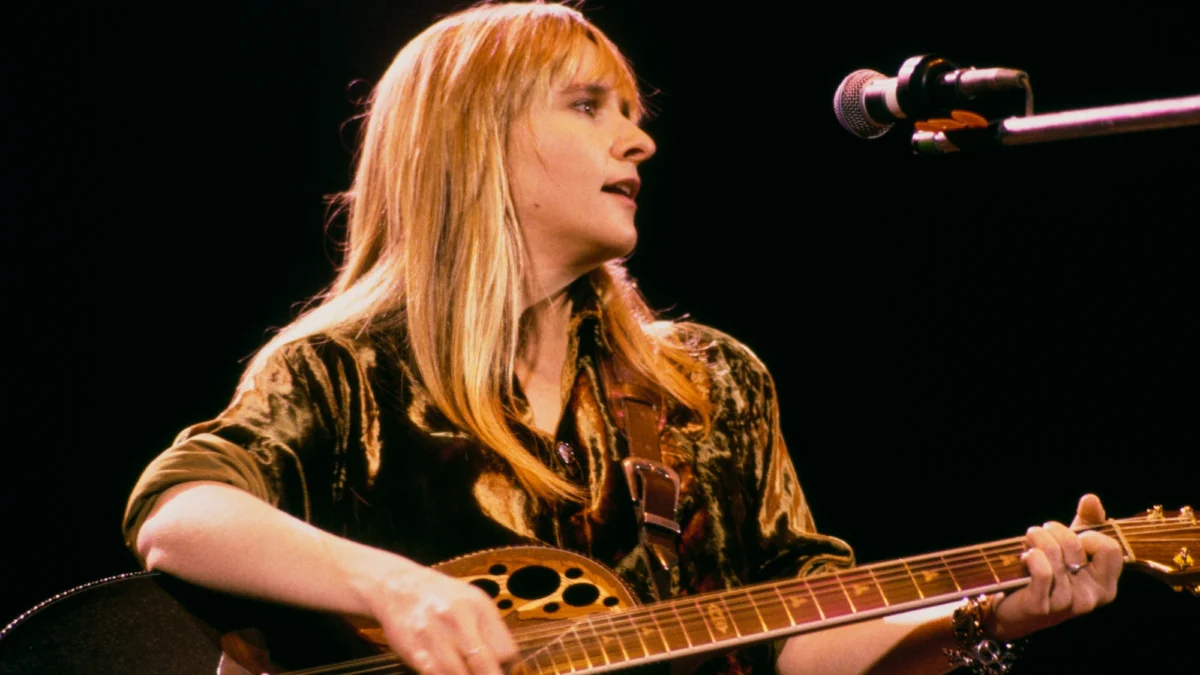
Melissa Etheridge stands as a definitive figure in the landscape of American rock and roll, a position she has fortified since the release of her self-titled debut album in 1988. While the music industry often relies on extensive collaborative writing rooms and polished production teams to manufacture hits, Etheridge has distinguished herself through a rare and rigorous commitment to solo songwriting. This autonomy has not only defined her sonic identity—characterized by raspy, soulful vocals and driving guitar arrangements—but has also established her as one of the most respected singer-songwriters of her generation. Her ability to translate raw, personal experiences into universal anthems without the intervention of co-writers has garnered her multiple Grammy Awards and a dedicated global following. Among her extensive discography, four specific tracks stand out as quintessential examples of her solo penmanship, marking pivotal moments in both her career and the broader history of 1990s rock.
The Genesis of a Solo Powerhouse: Background and Early Career
Before analyzing the specific hits that defined her career, it is essential to understand the context in which Melissa Etheridge emerged. Born in Leavenworth, Kansas, Etheridge’s musical foundations were built on a blend of country, blues, and heartland rock. After a brief stint at the Berklee College of Music, she relocated to Los Angeles, where she performed in local clubs. It was here that she caught the attention of Chris Blackwell, the founder of Island Records.
From the outset, Etheridge insisted on a level of creative control that was uncommon for new female artists in the late 1980s. Her 1988 debut was recorded in just a few days, capturing a live, visceral energy that stood in stark contrast to the heavily synthesized pop of the era. This commitment to authenticity became her trademark. By the time she reached her fourth studio album, Yes I Am (1993), she had become a household name, using her platform to not only deliver chart-topping hits but also to advocate for social change, most notably after publicly coming out as a lesbian at the Triangle Ball in early 1993.
I’m The Only One: The Breakthrough of 1993
"I’m The Only One" serves as the lead single from Etheridge’s monumental 1993 album, Yes I Am. While she had previously seen success with tracks like "Bring Me Some Water," this song propelled her into a new echelon of stardom. It reached No. 8 on the Billboard Hot 100 and spent 40 weeks on the chart, eventually becoming her first No. 1 single on the Adult Contemporary chart.
The song is a masterclass in tension and release, built around a bluesy guitar riff and a vocal performance that oscillates between a whisper and a roar. Lyrically, Etheridge explores the agonizing experience of watching a lover choose someone else, despite the narrator’s conviction that they are the only one capable of true devotion. The chorus—"But I’m the only one / Who’ll walk across the fire for you"—resonated with a massive audience, tapping into a universal sense of unrequited loyalty.
Statistically, "I’m The Only One" was a juggernaut. It helped Yes I Am achieve 6x Platinum status in the United States, selling over six million copies. The song’s success was also bolstered by its heavy rotation on VH1 and MTV, where the music video showcased Etheridge’s commanding stage presence. Critics at the time noted that the song’s success was a testament to the "confessional rock" movement, where artists like Etheridge and Sheryl Crow were reclaiming the airwaves from the grunge dominance of the early 90s.
Come To My Window: An Anthem of Resilience and Identity
Following the success of "I’m The Only One," Etheridge released "Come To My Window," a track that would go on to earn her a Grammy Award for Best Female Rock Vocal Performance in 1995. Also featured on Yes I Am, the song is arguably her most recognizable work.
The inspiration for "Come To My Window" was deeply personal. In various retrospectives, including an interview with Entertainment Weekly, Etheridge described the song as a product of a tumultuous period in her life. During her twenties and thirties, she grappled with the complexities of fidelity, honesty, and the emotional toll of "poor choices" in relationships. The lyrics—"I would stand inside my hell and hold the hand of death / You don’t know how far I’d go to ease this precious ache"—convey a level of desperation and passion that felt revolutionary at the time.
The music video for the song, directed by Samuel Bayer and featuring actress Juliette Lewis, depicted a woman in a psychiatric ward, further emphasizing the themes of mental anguish and the healing power of love. Beyond its commercial success (peaking at No. 25 on the Hot 100), "Come To My Window" became a cultural touchstone for the LGBTQ+ community. Coming on the heels of her public coming out, the song was interpreted as a plea for private sanctuary in a world that was often hostile to marginalized identities.
I Want To Come Over: The Pinnacle of the Confessional Style
In 1996, Etheridge continued her streak of solo-written hits with "I Want To Come Over," the second single from her fifth studio album, Your Little Secret. By this point, Etheridge had perfected the "slow burn" song structure—beginning with a steady, rhythmic acoustic guitar and building toward a climactic, distorted electric finish.
"I Want To Come Over" reached No. 22 on the Billboard Hot 100 and Top 10 on the Mainstream Rock and Adult Contemporary charts. The song captures the obsessive, almost reckless nature of desire, with lyrics like, "I want to come over / To hell with the consequence." It reflected a more mature, yet no less intense, exploration of the themes found in her earlier work.
Industry analysts have often pointed to this era as the peak of Etheridge’s commercial influence. Your Little Secret debuted at No. 6 on the Billboard 200, her highest debut at that time. The album was produced by Hugh Padgham, known for his work with The Police and Phil Collins, but Etheridge’s raw songwriting remained the focal point. The song’s success proved that her formula of self-penned, emotionally transparent rock was not a fluke of the Yes I Am era but a sustainable and evolving artistic vision.
You Can Sleep While I Drive: The Cult Classic and Fan Favorite
While not as commercially dominant as the aforementioned tracks, "You Can Sleep While I Drive" remains one of the most beloved songs in Etheridge’s catalog. Released in 1990 as part of her sophomore album, Brave and Crazy, the song demonstrates her ability to craft narrative-driven "road songs" in the vein of Bruce Springsteen or Joni Mitchell.
The song’s premise is simple: an invitation to escape the confines of a small town and hit the open road. "I got a full tank of gas / With the top rolled down," she sings, offering a sense of freedom and partnership. Despite its lower chart performance compared to her later hits, the song has endured as a staple of her live performances.
Analysis of fan data and setlists over the last three decades shows that "You Can Sleep While I Drive" is frequently cited as the song that solidified her "heartland rock" credentials. It showcased a softer, more melodic side of her songwriting that balanced the grit of her harder-hitting singles. The track also highlighted her skill as an arranger, using a driving acoustic rhythm to mimic the sensation of a moving vehicle, a technique that would become a signature of her live acoustic sets.
Chronology of Major Career Milestones (1988–1996)
To understand the impact of these four songs, one must look at the timeline of Etheridge’s rise during this formative decade:
- 1988: Release of the self-titled debut, Melissa Etheridge. It earns her a Grammy nomination and establishes her as a "musician’s musician."
- 1989: Brave and Crazy is released, featuring "You Can Sleep While I Drive." The album goes Gold and later Platinum.
- 1992: Never Enough is released. Etheridge wins her first Grammy for "Ain’t It Heavy."
- 1993: A watershed year. Etheridge comes out publicly and releases Yes I Am. "I’m The Only One" and "Come To My Window" dominate the airwaves.
- 1995: Wins a second Grammy for "Come To My Window." Yes I Am is certified 6x Platinum.
- 1995/1996: Releases Your Little Secret, featuring the hit "I Want To Come Over." She embarks on massive world tours, cementing her status as a premier live act.
Data and Industry Impact
The data surrounding Etheridge’s career during this period is a testament to the viability of the solo singer-songwriter in a rock context. Between 1988 and 1996, Etheridge sold over 15 million albums in the U.S. alone. Her success paved the way for a wave of female artists who also took significant control of their writing and production, including Alanis Morissette, Fiona Apple, and later, artists like Brandi Carlile.
Market analysis from the mid-90s suggests that Etheridge’s "brand" was built on reliability. Fans knew that a Melissa Etheridge song would be written by her, played with conviction, and centered on real-world emotional stakes. This authenticity created a high level of "listener loyalty," which allowed her to maintain a successful touring career even during periods when her radio presence was less pronounced.
Official Responses and Critical Legacy
Reflecting on her songwriting process, Etheridge has often stated that she writes out of necessity. In her memoir, The Truth Is…, she noted that songwriting was her way of "processing the world when it didn’t make sense." Critics have lauded this approach; Rolling Stone once described her voice as "a parched-throat roar that can make a simple confession sound like a life-or-death proclamation."
Her peers have also acknowledged her singular talent. During her 2005 Grammy performance—where she famously performed "Piece of My Heart" while bald from chemotherapy treatments—the industry reaction was a standing ovation that recognized not just her bravery in the face of illness, but her decades of contribution to the rock canon.
Broader Implications and Long-term Influence
The legacy of these four songs—"I’m The Only One," "Come To My Window," "I Want To Come Over," and "You Can Sleep While I Drive"—extends beyond mere chart positions. They represent a period in music history where the "confessional" became "commercial" without losing its soul.
Etheridge’s insistence on writing her own material served as a blueprint for artistic integrity. In an era where the "pop factory" model is increasingly dominant, her body of work stands as a reminder of the power of the individual voice. Furthermore, her role as an activist, fueled by the visibility these songs provided, helped shift the cultural needle on LGBTQ+ representation in mainstream media.
Today, Melissa Etheridge remains an active and influential figure, continuing to release new music and tour globally. However, the quartet of songs written during her first decade remain the pillars of her legacy—a testament to what can be achieved when an artist possesses the courage to write their own story, word for word, note for note. Through these tracks, Etheridge did more than just create hits; she created a soundtrack for a generation seeking truth, passion, and the freedom of the open road.
