

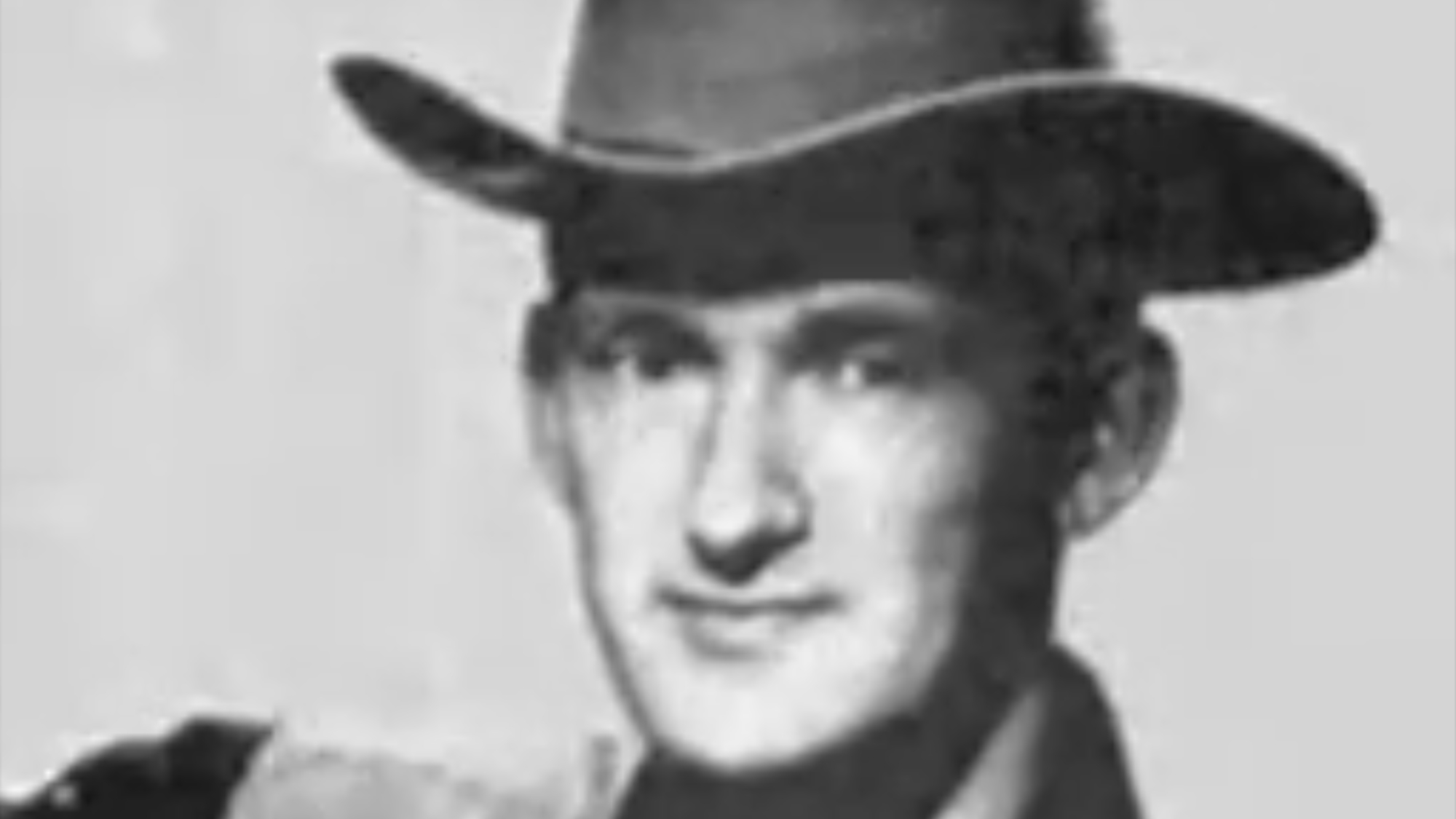
Lawton Williams, born on July 24, 1922, in Troy, Tennessee, stands as a cornerstone of the mid-20th-century country music landscape, a self-taught virtuoso whose lyrical contributions reshaped the genre’s narrative depth. While his name may not always resonate with the same immediate recognition as the legends who performed his songs—such as George Jones, Bobby Helms, and Hank Locklin—Williams was the creative engine behind some of the most enduring compositions in the American songbook. His journey from a self-taught teenager in rural Tennessee to a World War II veteran, and eventually to a revered songwriter in the heart of Texas, mirrors the evolution of country music itself as it transitioned from regional "hillbilly" music into a sophisticated, nationally recognized art form. On the 102nd anniversary of his birth, the music industry reflects on a career defined by resilience, military service, and an uncanny ability to capture the human condition in three-minute vignettes.
The Formative Years and the Catalyst of World War II
The early life of Lawton Williams was characterized by the humble circumstances typical of the American South during the interwar period. Born into a musical family, Williams demonstrated an innate aptitude for stringed instruments, teaching himself the guitar during his teenage years. Despite this talent, a career in the arts was not his initial objective. Like many young men of his generation, the trajectory of his life was irrevocably altered by the outbreak of World War II. Williams enlisted in the United States Army, a move that would serve as the unexpected catalyst for his musical career.
While stationed in the military, Williams crossed paths with Floyd Tillman, a burgeoning country music star and a pioneer of the Western Swing and Honky Tonk genres. Tillman, who would later be inducted into the Country Music Hall of Fame, took Williams under his wing. This mentorship was pivotal; Tillman’s sophisticated approach to songwriting—blending jazz-influenced chords with the raw emotion of country lyrics—deeply influenced Williams’ stylistic development. The military environment, where soldiers from disparate geographic backgrounds shared their regional musical traditions, provided Williams with a broad palette of influences that he would later utilize to craft songs with universal appeal.
Post-War Transition and the Rise of Slim Williams
Upon his honorable discharge from the Army, Williams settled in the Southwest, a region that was rapidly becoming a secondary hub for country music outside of Nashville. He began his professional recording career under the pseudonym "Slim Williams," a common practice for artists of the era seeking a catchy stage persona. During the late 1940s and early 1950s, he recorded for several independent labels, honing his craft as both a vocalist and a songwriter.
In 1951, Williams achieved a significant milestone by securing a contract with a major label, marking his debut with the dual-sided release "Everlastin’ Love" and "Lovin’ Overtime." While these early recordings demonstrated his vocal capability and his adherence to the traditional honky-tonk sound, they struggled to achieve significant commercial traction on the national charts. However, this period of relative obscurity as a performer allowed Williams to focus on his true strength: songwriting. He began to develop a reputation within the industry as a "writer’s writer," someone who could construct melodies that were both commercially viable and emotionally resonant.
The Golden Era of Songwriting: Fraulein and Geisha Girl
The mid-1950s marked the zenith of Lawton Williams’ influence as a songwriter. In 1957, Williams penned "Fraulein," a song inspired by the experiences of American servicemen stationed in post-war Germany. Recorded by Bobby Helms, the song became a cultural phenomenon. It reached the No. 1 spot on the country charts and remained on the charts for an unprecedented 52 weeks. The song’s impact was so profound in the Southwest that legendary songwriter Bobby Braddock famously referred to it as the "Texas national anthem." Its success was indicative of Williams’ ability to tap into the zeitgeist of the era, addressing the themes of long-distance longing and the international experiences of the American working class.
Following the success of "Fraulein," Williams continued his streak of hits with "Geisha Girl," recorded by Hank Locklin. The song reached No. 4 on the Billboard country charts in 1957. Much like "Fraulein," "Geisha Girl" explored themes of international romance, a recurring motif in Williams’ work that reflected the expanding horizons of post-war America.
Perhaps his most prestigious collaboration occurred with the legendary George Jones. Together, they co-wrote "Color of the Blues," a song that has since become a standard in the country music canon. Jones’ recording of the track reached the Top 10 in 1958 and is frequently cited by musicologists as a definitive example of the "hard country" sound. Williams’ ability to collaborate with a talent as singular as Jones solidified his status as a premier architect of the Nashville and Texas music scenes.
Chronology of Career Milestones
To understand the scope of Lawton Williams’ impact, it is essential to view his career through a chronological lens of his most significant contributions:
- July 24, 1922: Born in Troy, Tennessee.
- 1942–1945: Service in the U.S. Army; mentorship under Floyd Tillman.
- 1940s (Late): Records as "Slim Williams" for independent labels.
- 1951: Major label debut with "Everlastin’ Love."
- 1957: "Fraulein" (performed by Bobby Helms) hits No. 1; "Geisha Girl" (performed by Hank Locklin) hits No. 4.
- 1958: "Color of the Blues" (co-written with George Jones) becomes a Top 10 hit.
- 1962: Williams achieves his highest-charting solo hit as a performer with "Anywhere There’s People," reaching No. 13.
- 1964: "Everything’s OK On The LBJ" reaches the Top 40, reflecting the political climate of the Lyndon B. Johnson administration.
- 1970s–2000s: Continued involvement in the Fort Worth music scene as a DJ, performer, and mentor.
- July 27, 2007: Passes away in Fort Worth, Texas, at the age of 85.
Performance Career and Political Commentary
While Williams was primarily recognized for his songwriting, he never entirely abandoned his aspirations as a performer. In 1962, he achieved a breakthrough as a vocalist with the song "Anywhere There’s People." Interestingly, this hit was not one of his own compositions, but was written by Steve Karliski. The song’s success, peaking at No. 13, proved that Williams possessed the charisma and vocal talent to compete with the stars for whom he wrote.
In 1964, Williams released "Everything’s OK On The LBJ," a song that leveraged the political prominence of fellow Texan and then-President Lyndon B. Johnson. The track reached the Top 40 and showcased Williams’ versatility, moving away from the sentimental ballads of the 1950s toward the more topical and sometimes humorous "novelty" style that was popular in the mid-1960s. Throughout this period, Williams remained a fixture on the radio, often working as a disc jockey in the Dallas-Fort Worth area, which allowed him to maintain a direct connection with the country music audience.
Industry Impact and Analytical Perspective
Lawton Williams’ legacy is defined by his role as a bridge between the traditional and the modern. In an era when country music was beginning to split between the polished "Nashville Sound" and the grittier "Texas/Bakersfield Sound," Williams successfully navigated both. His songs possessed the melodic sophistication required for the pop-crossover market (as seen with Bobby Helms) while retaining the lyrical authenticity demanded by the honky-tonk traditionalists.
Data from the era highlights the sheer dominance of his compositions. "Fraulein" was not merely a hit; it was a structural anomaly in the charts due to its longevity. In a market where songs typically cycled through the Top 40 in 10 to 12 weeks, its year-long residency demonstrated a level of audience saturation rarely seen. This longevity provided a financial and professional foundation that allowed Williams to remain active in the industry for over six decades.
Furthermore, Williams’ influence extended to the way songwriters were perceived within the industry. He was one of the early examples of the "professional songwriter" in country music—an individual who could consistently provide high-quality material for a variety of different artists, rather than writing solely for themselves. This helped establish the songwriting infrastructure that still defines Nashville today.
Final Years and Enduring Legacy
Lawton Williams spent the final decades of his life in Fort Worth, Texas, where he was regarded as a patriarch of the local music community. He remained active in the industry well into his 80s, continuing to write and perform. According to accounts from his family, his dedication to the craft never wavered. His daughter noted that even in his final days in July 2007, he was actively working on new lyrics, embodying the spirit of a lifelong artist who viewed songwriting not as a job, but as a calling.
Williams passed away on July 27, 2007, just three days after his 85th birthday. His death was met with tributes from across the music world, with many acknowledging that the "Texas national anthem" had lost its creator. Today, his songs continue to be covered by new generations of artists, and his influence is felt in the works of songwriters who prioritize narrative clarity and emotional honesty.
The broader implication of Lawton Williams’ career is the reminder that the history of American music is often written by those behind the scenes. While the performers may capture the spotlight, it is the songwriters like Williams who provide the cultural fabric that binds the audience to the art. His life’s work remains a testament to the power of a well-crafted song to transcend borders, eras, and the limitations of the charts, securing his place as an unsung, yet essential, hero of country music.
