

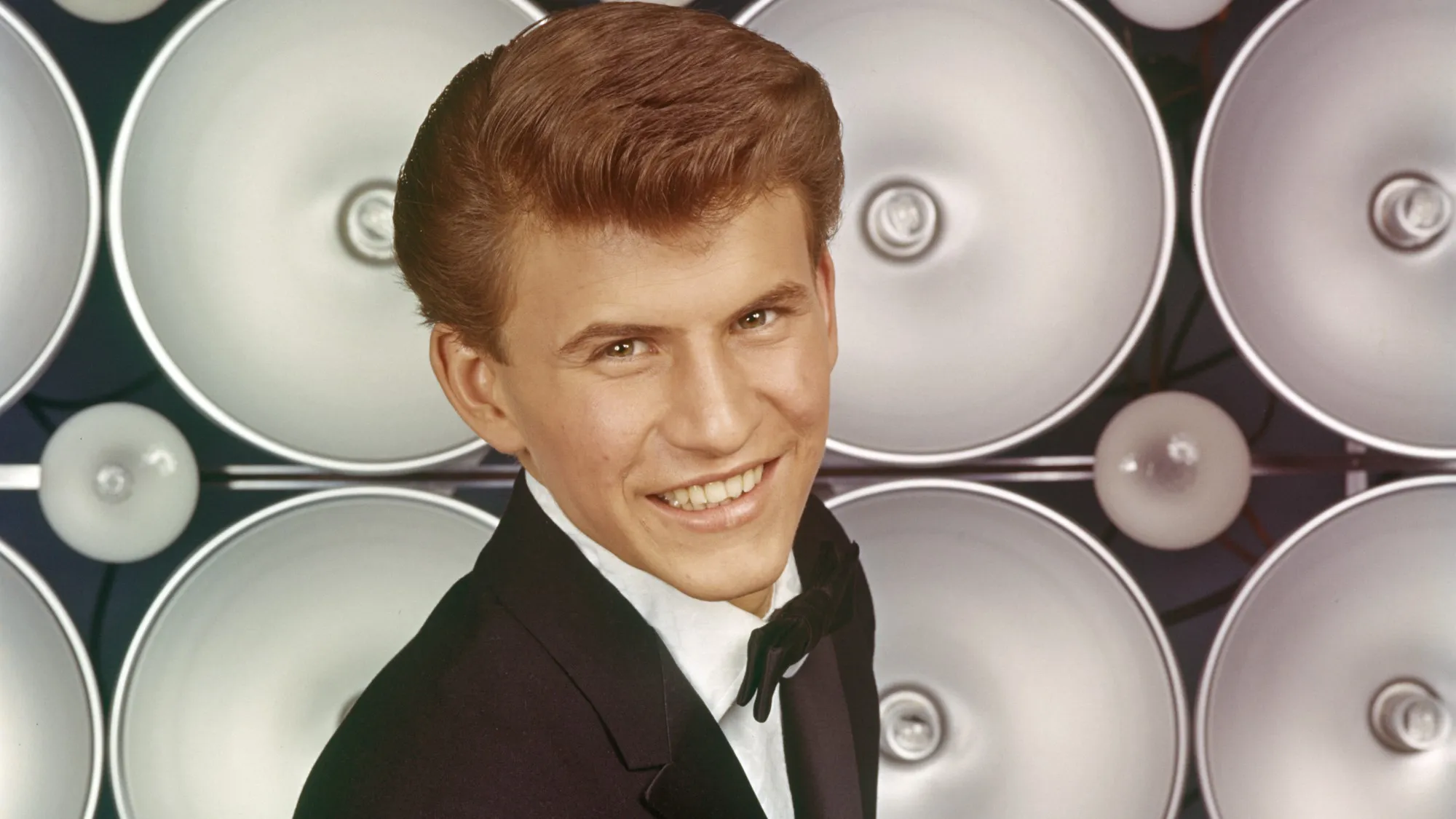
The Rise of the Teen Idol: Bobby Rydell and the Philadelphia Sound
In early 1960, Philadelphia emerged as a central hub for the American music industry, largely due to the influence of Dick Clark’s American Bandstand and the local Cameo-Parkway record label. Bobby Rydell, a Philadelphia native, became one of the decade’s first major stars with the release of "Wild One." Written by the songwriting powerhouse of Dave Appell, Kal Mann, and Bernie Lowe, the track was released in January 1960 and quickly ascended the charts.
"Wild One" represented a shift in the lyrical content of the era. While earlier rock songs focused on dance crazes or car culture, "Wild One" introduced a narrative of romantic reform. The lyrics, including lines such as "I’ll clip your wings and them things," were considered mildly suggestive for the time, hinting at a taming of the rebellious spirit that had characterized 1950s youth culture. Musically, the song featured the driving beat characteristic of rock-and-roll but was tempered by orchestral arrangements and a clean vocal delivery that appealed to both teens and their parents.
The track peaked at No. 2 on the Billboard Hot 100, becoming Rydell’s first Top 5 single and a staple of the "Teen Idol" era. Industry analysts note that Rydell’s success was a precursor to the "British Invasion" soloists, as he demonstrated the commercial power of a charismatic solo male lead backed by professional session musicians.
Multimedia Stardom: Ricky Nelson and the Integration of Television
While Rydell found his footing through radio and live performance, Ricky Nelson utilized the power of television to cement his status as a rock icon. By 1960, Nelson was already a household name due to his role on the sitcom The Adventures of Ozzie and Harriet. This unique platform allowed Nelson to debut new music to millions of viewers weekly, a marketing strategy that was revolutionary at the time.
"Young Emotions," written by Jerry Livingston and Mack David, was released in April 1960. Unlike many of Nelson’s previous hits, it was initially released as a standalone single rather than as part of a studio album. The song captured the zeitgeist of adolescent uncertainty, with lyrics describing a world where "love and confusion reign." This thematic focus on the emotional complexity of youth became a hallmark of the 1960s ballad.
The track reached No. 12 on the Billboard Hot 100. Despite its success, "Young Emotions" is often viewed by music historians as a transitional piece. It bridged the gap between Nelson’s rockabilly roots and the more mature, country-inflected rock he would master with his 1961 No. 1 hit, "Travelin’ Man." Nelson’s ability to maintain chart relevance during the 1960 transition demonstrated the increasing importance of cross-media promotion in the entertainment industry.
Filling the Void: Bobby Vee and the Legacy of the Midwest
The story of Bobby Vee and his 1960 hit "Devil Or Angel" is inextricably linked to the tragedy of "The Day the Music Died." Vee’s career began when he and his band filled in for Buddy Holly at a scheduled performance in Moorhead, Minnesota, following Holly’s fatal plane crash in February 1959. By 1960, Vee had signed with Liberty Records and was being positioned as a successor to the clean-cut rock style of the late 1950s.
"Devil Or Angel," written by Blanche Carter, was a cover of a 1956 R&B track by The Clovers. Vee’s version, released in mid-1960, was a polished reinterpretation that featured lush backing vocals and a prominent string section. This "sweetened" version of R&B became a defining sound of the 1960 pop charts. The song became Vee’s first gold-certified single, reaching No. 6 on the Billboard Hot 100.
The success of "Devil Or Angel" signaled a shift in consumer preference toward "safe" rock-and-roll. As the industry grappled with the Payola scandal—an investigation into DJs taking bribes to play specific records—labels sought out artists like Vee who maintained a wholesome image. Furthermore, the track’s inclusion on his debut album, Bobby Vee Sings Your Favorites, highlighted the industry’s move toward the long-play (LP) format as a primary vehicle for artist branding.
Harmonic Innovation: The Everly Brothers and the Transition to Warner Bros.
The Everly Brothers entered 1960 as one of the most successful duos in music history, but they were also at a professional crossroads. That year, they signed a landmark ten-year, multimillion-dollar contract with the newly formed Warner Bros. Records, leaving their previous label, Cadence. Their first release for Warner Bros., "Cathy’s Clown," was a massive No. 1 hit, but it was the follow-up, "When Will I Be Loved," that showcased the enduring power of their rock-and-roll roots.
Written by Phil Everly, "When Will I Be Loved" was actually recorded in 1960 but drew on the duo’s signature close-harmony style developed in the late 50s. The song’s structure—a blend of country-style vocalizing with a rock-and-roll backbeat—influenced a generation of musicians, most notably the Beatles, who frequently cited the Everly Brothers as their primary vocal inspiration.
"When Will I Be Loved" reached No. 7 on the Billboard Hot 100. Its legacy was further cemented in 1975 when Linda Ronstadt released a cover version that became a No. 2 hit on the pop charts and a No. 1 hit on the country charts. This crossover success underscores the song’s fundamental strength in composition, a hallmark of the songwriting quality that emerged in 1960 as artists began writing more of their own material.
Chronology of the 1960 Music Scene
To understand the impact of these four songs, it is necessary to examine the timeline of events that shaped the music industry throughout 1960:
- January 1960: The U.S. House of Representatives begins formal hearings into the "Payola" scandal, leading to the downfall of major DJs like Alan Freed and forcing a restructuring of how radio stations select music.
- March 1960: Elvis Presley is honorably discharged from the U.S. Army. His return signals a move toward operatic ballads and movie soundtracks, leaving the "teen idol" lane open for Rydell, Nelson, and Vee.
- April 1960: The Everly Brothers release "Cathy’s Clown," which stays at No. 1 for five weeks, proving that rock duos could maintain dominance in the new decade.
- August 1960: "The Twist" by Chubby Checker enters the charts, sparking a worldwide dance craze that would dominate the early 60s and change the way rock music was consumed in social settings.
- Late 1960: The "Brill Building" sound begins to take hold in New York, with professional songwriters like Carole King and Neil Sedaka providing hits for the artists mentioned above.
Data and Chart Performance Analysis
The commercial performance of these four tracks in 1960 reflects a highly competitive market. According to Billboard archives, the year 1960 saw 19 different songs reach the No. 1 spot, indicating a high turnover rate and a diverse range of listener tastes.
| Song Title | Artist | Peak Chart Position | Weeks on Chart | RIAA Status (Initial) |
|---|---|---|---|---|
| Wild One | Bobby Rydell | #2 | 16 | Gold |
| Young Emotions | Ricky Nelson | #12 | 11 | Silver (UK/US Sales) |
| Devil Or Angel | Bobby Vee | #6 | 18 | Gold |
| When Will I Be Loved | The Everly Brothers | #7 | 14 | Gold |
Data suggests that while "rock-and-roll" was the dominant genre, it was increasingly being categorized by industry trade magazines as "Top 40 Pop." This rebranding was essential for the survival of the genre following the conservative backlash against the "wild" rock of the mid-50s.
Broader Impact and Implications for Modern Music
The success of these four songs in 1960 had lasting implications for the structure of the music industry. First, they solidified the role of the "Producer" as a creative force. The lush arrangements on Bobby Vee’s and Bobby Rydell’s tracks showed that the studio environment was becoming as important as the live performance. This paved the way for the "Wall of Sound" techniques of Phil Spector and the experimental production of the mid-60s.
Second, these artists helped bridge the racial divide in American music. By covering R&B tracks (as Bobby Vee did with The Clovers) or incorporating blues-based guitar riffs into pop melodies, these performers brought diverse musical traditions to a mainstream audience during the height of the Civil Rights Movement.
Finally, the songwriting of Phil Everly and the sophisticated lyrical themes explored by Ricky Nelson elevated the "teen song" from simple novelty to a respected form of artistic expression. The themes of heartbreak, confusion, and romantic pursuit found in these 1960 hits remain the bedrock of modern pop and rock lyricism. As the decade progressed, the foundation laid by the "Class of 1960" allowed for the more radical musical shifts of the mid-to-late 60s, proving that 1960 was not merely an end to the 50s, but a vital beginning for everything that followed.
