

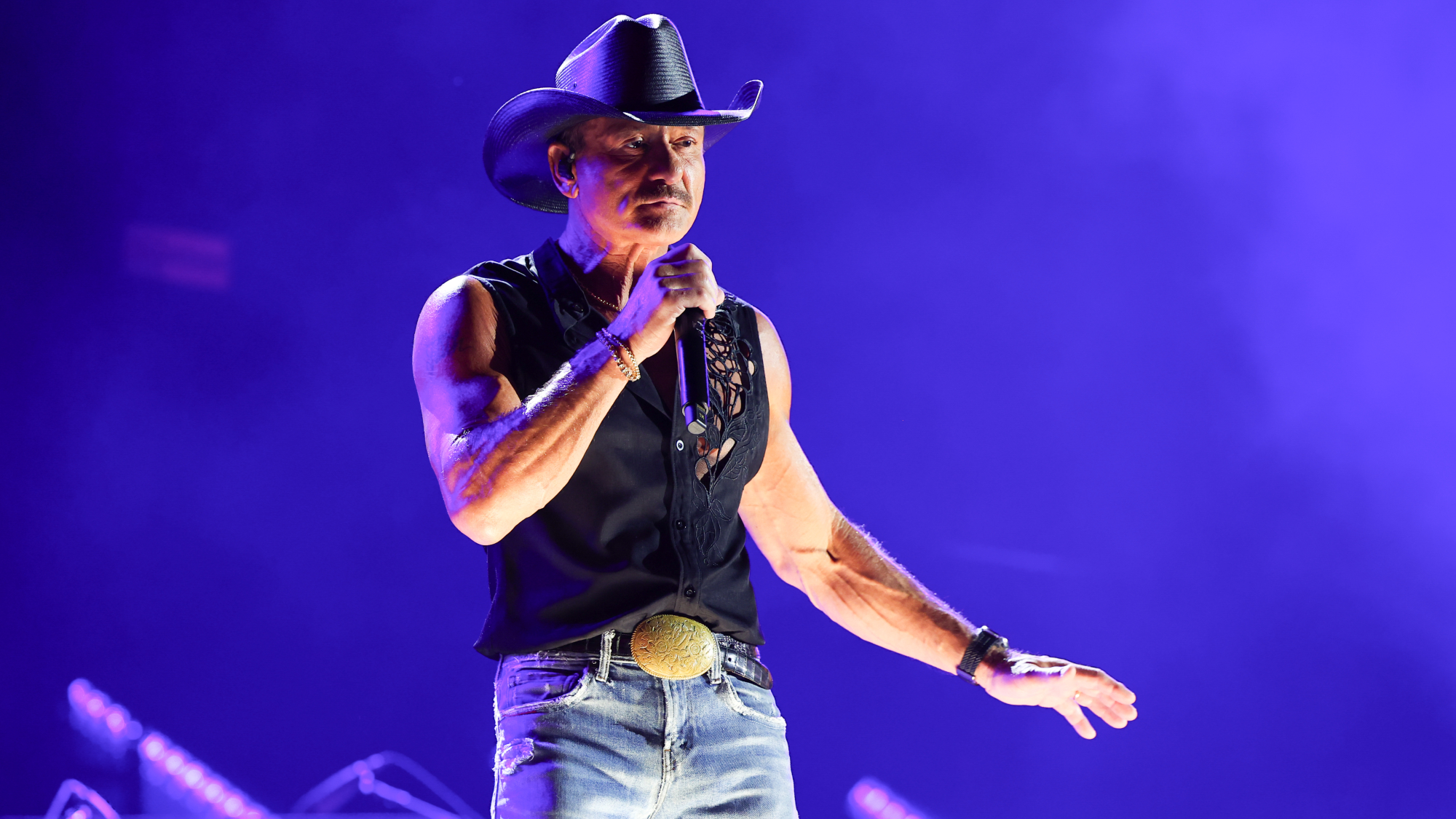
The high-energy environment of a live country music performance often brings with it a degree of physical risk, a reality that multi-platinum artist Tim McGraw experienced firsthand during a recent stop on his current concert tour. During a performance in Cincinnati, Ohio, the veteran singer suffered a significant tumble while attempting to interact with the crowd from an elevated position. While the fall itself became an immediate talking point for its dramatic nature and McGraw’s subsequent lighthearted recovery, a new controversy has emerged regarding the digital afterlife of the incident. A concert attendee, Sheena Wethington, has publicly accused McGraw’s social media team of "stealing" her original footage of the accident, re-editing it, and publishing it to the singer’s official accounts without providing attribution or seeking prior consent. This development has sparked a broader conversation regarding the ethics of user-generated content (UGC), intellectual property in the age of viral social media, and the professional boundaries between celebrities and their fan bases.
The Anatomy of the Incident: A Slip in Cincinnati
The incident occurred during the Cincinnati leg of McGraw’s "Pawn Shop Guitar Tour," a trek characterized by its focus on more intimate settings and a raw, back-to-basics musical approach compared to his previous stadium runs. As is customary for McGraw, who is known for his rigorous fitness and athletic stage presence, the singer was moving dynamically across the stage during one of his signature hits. In an effort to get closer to the audience, McGraw stepped onto a sub-woofer speaker located at the edge of the stage.
Eyewitness accounts and video footage indicate that McGraw lost his footing as he attempted to transition back to the main stage floor. The singer performed a full-body tumble, landing on the floor in front of the front-row fans. Despite the potential for serious injury, the 57-year-old artist displayed the professionalism of a seasoned performer. He remained on the ground for a brief moment to collect himself, laughed off the embarrassment, and continued to sing without missing a beat, eventually standing up and shaking hands with the fans who had just witnessed the fall from inches away.
The moment was instantly captured by hundreds of smartphones, a standard feature of the modern concert experience. However, one specific video, captured by Sheena Wethington, gained significant traction on the video-sharing platform TikTok. Wethington’s clip, which utilized a popular comedic audio trend, quickly amassed over 360,000 views, becoming one of the primary sources for news outlets and fans looking to view the mishap.
The Allegation of Content Theft
The transition from a viral fan moment to a point of contention began several days after the concert. Wethington took to TikTok to post a follow-up video, alleging that Tim McGraw’s official digital marketing team had appropriated her content. In her video, she stated, "Tim McGraw stole my video. Well, maybe not him specifically, but someone in his team. You’ve probably seen the video of him falling. It probably was my video."
Wethington’s grievance centers not just on the use of the visual footage, but on the appropriation of her creative editing choices. She noted that when she originally posted the clip, she prefaced the fall with a specific audio clip—a popular TikTok "sound" featuring the line, "Yep, that’s me. You’re probably wondering how I ended up in this situation," a trope frequently used to introduce comedic or disastrous backstories.
According to Wethington, the video subsequently posted on Tim McGraw’s official TikTok account was identical in perspective and utilized the exact same audio concept. "So, they took my video, re-edited it, and then did the same exact sound that I used, stole my idea, and then reposted it on Tim McGraw’s page," she claimed. Her primary frustration stems from the lack of communication; she alleges that while other media entities and creators asked for permission or provided a "clear tag" to her original post, McGraw’s team did neither.
Digital Rights and the "Nature of the Beast"
The situation involving Wethington and McGraw highlights a complex legal and ethical gray area in the digital age. Under most social media platforms’ Terms of Service (ToS), users often grant the platform a non-exclusive, royalty-free, transferable, sub-licensable, worldwide license to host, use, distribute, modify, run, copy, publicly perform or display, and translate their content. However, this license typically applies to the platform itself and its partners, not necessarily to other individual users or commercial entities for independent use.
In the realm of intellectual property, a fan-shot video of a public performance occupies a unique space. While the fan owns the copyright to the specific recording they made, the artist often holds the rights to their likeness and the performance itself. When a celebrity’s team "reposts" fan content, it is generally considered a gesture of engagement. However, the line between "engagement" and "unauthorized commercial use" becomes blurred when the content is downloaded, edited, and re-uploaded as original content without credit.
Wethington herself expressed a degree of uncertainty regarding the social norms of the platform, asking her followers if her anger was justified or if such incidents are simply "the nature of the beast" when posting content publicly. The response from the digital community has been divided, with some arguing that McGraw’s team should have followed standard influencer etiquette by tagging the source, while others suggest that by posting the video to a public forum, Wethington effectively entered the video into the public domain of viral trends.
Contextualizing the "Pawn Shop Guitar Tour"
The "Pawn Shop Guitar Tour," which serves as the backdrop for this incident, represents a specific phase in Tim McGraw’s storied career. Launched on July 9, the tour was designed to evoke the feeling of McGraw’s early days in the industry, focusing on smaller venues and a stripped-back production. This setting often brings the artist into much closer physical proximity to the audience than a traditional arena tour, which increases the likelihood of both intimate fan interactions and physical mishaps like the one seen in Cincinnati.
The tour is scheduled to run through the end of September, concluding with a final performance on September 26 in West Palm Beach, Florida. Throughout the run, McGraw has been praised for his vocal consistency and his ability to connect with audiences, though the Cincinnati fall and the subsequent social media fallout have dominated recent headlines more than the musical performances themselves.
The Broader Implications for Artist-Fan Relations
This controversy is not an isolated incident in the music industry. As artists increasingly rely on social media to maintain relevance and engage with younger demographics, the pressure to produce "relatable" and "viral" content has led to a surge in the use of user-generated content. Many artists, such as Taylor Swift and Luke Combs, have built reputations for "boosting" fan content, often resulting in massive follower growth for the original creators.
When a team fails to credit a source, it can damage the parasocial relationship between the artist and their most dedicated supporters. For a fan like Wethington, who attended the concert and shared a moment of excitement, the feeling of having her "idea" co-opted by a multi-million dollar brand can feel exploitative rather than celebratory.
From a marketing perspective, the decision by McGraw’s team to use the footage was likely an attempt at "damage control" through humor. By leaning into the fall and using a self-deprecating trend, the team effectively neutralized the potential for the fall to be used as a "fail" video at the artist’s expense. However, the failure to acknowledge the source of the footage has instead created a new narrative of corporate overreach.
Chronology of Events
To understand the full scope of the controversy, a timeline of the events is essential:
- Early July: Tim McGraw kicks off the "Pawn Shop Guitar Tour," emphasizing a closer, more "unplugged" connection with fans.
- The Cincinnati Performance: During the show, McGraw falls while standing on a speaker. He recovers quickly and finishes the set.
- The Viral Upload: Sheena Wethington uploads her perspective of the fall to TikTok, using the "Yep, that’s me" audio. The video goes viral.
- The Official Post: Tim McGraw’s official social media accounts post a version of the fall using the same editing style and audio cues.
- The Accusation: On the following Friday, Wethington discovers the post and uploads a "call-out" video, alleging her content was stolen without credit.
- Public Reaction: The story is picked up by various entertainment news outlets, leading to a debate over digital ethics and fan rights.
Conclusion and Industry Outlook
As of this writing, Tim McGraw’s representatives have not issued a formal statement regarding Wethington’s claims. The video remains on McGraw’s official page, and the "Pawn Shop Guitar Tour" continues as scheduled.
This incident serves as a cautionary tale for celebrity digital management teams. In an era where "clout" and "attribution" are the primary currencies of social media, the unauthorized use of fan content can quickly turn a viral marketing win into a public relations liability. For fans, it underscores the reality that once a moment is uploaded to the cloud, control over that narrative—and the footage itself—becomes increasingly difficult to maintain.
The resolution of this specific dispute may remain private, but the conversation it has sparked regarding the "nature of the beast" in social media content creation is far from over. As technology continues to bridge the gap between the stage and the smartphone, the need for clear ethical guidelines in the use of user-generated content has never been more apparent. For now, Tim McGraw continues his tour, perhaps with a bit more caution when stepping onto speakers, and certainly with a more scrutinized social media presence.
