

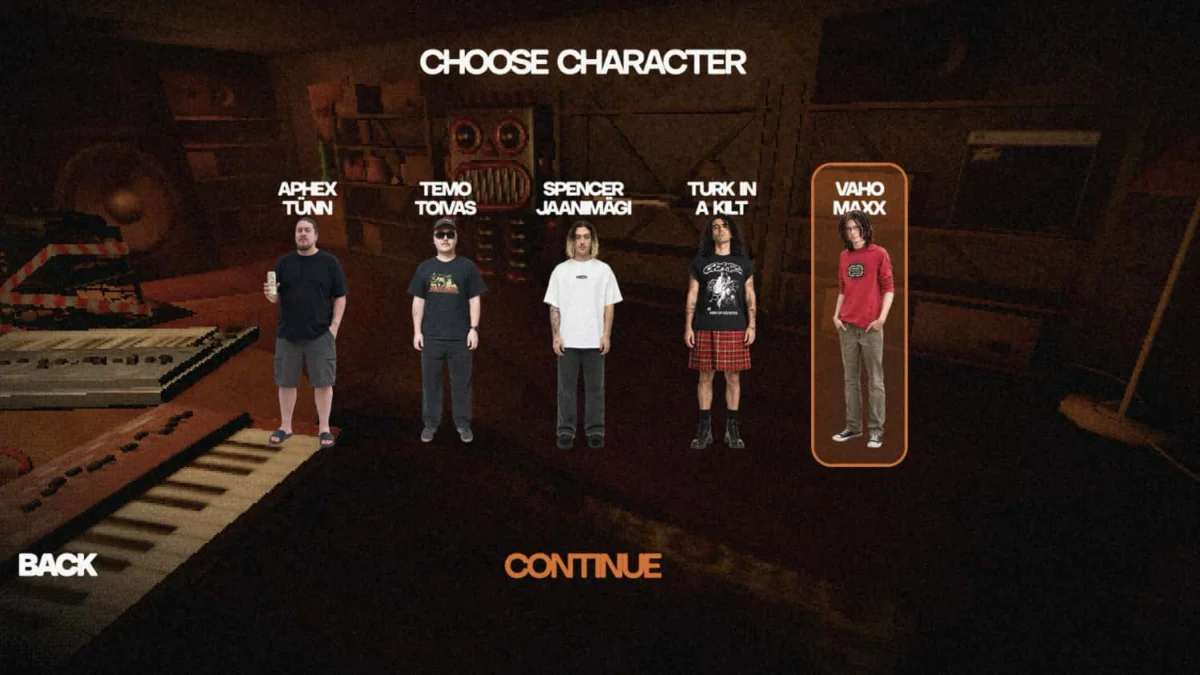
The landscape of digital music production has undergone a significant transformation with the introduction of Normal By Proxy, a browser-based virtual band practice room designed to facilitate real-time collaborative jamming. Developed by Sanel Mittal, this new platform offers a unique, first-person perspective within a virtual environment, allowing users to interact with a suite of synthesizers and drum machines alongside friends or colleagues. By removing the traditional barriers to entry associated with professional digital audio workstations (DAWs), Normal By Proxy provides a streamlined, accessible solution for musicians seeking to collaborate without the complexities of high-latency software or expensive hardware setups.
The platform distinguishes itself through its "frictionless" approach to user engagement. Unlike many contemporary music collaboration tools that require extensive registration processes, software downloads, or subscription fees, Normal By Proxy is entirely free and requires no sign-up. Users are able to create a virtual room instantaneously and invite participants by sharing a unique room number. This immediacy reflects a growing trend in web-based creative tools that prioritize accessibility and spontaneous creativity over administrative overhead.
Technical Infrastructure and the Virtual Jamming Experience
At its core, Normal By Proxy utilizes advanced web technologies to synchronize multiple musical instruments across different geographical locations. The platform provides a first-person interface, immersing the user in a digital "jam space" populated with various synthesizers and rhythm generators. This visual and spatial representation is more than aesthetic; it serves to ground the collaborative experience in a manner that mimics physical studio environments.
One of the most notable features of the platform is the integration of proximity chat. In a virtual environment, proximity chat adjusts the volume and spatial positioning of a participant’s voice based on their distance from other users within the digital room. This feature is intended to enhance the social aspect of jamming, allowing for natural communication. As developer Sanel Mittal noted, the intent was to allow musicians to "start jamming on synced-up machines while talking to each other through proximity chat," creating a social dynamic that is often lost in traditional remote recording sessions.
The synchronization of drum machines and synthesizers is a critical technical achievement for any browser-based music tool. In typical online collaboration, latency—the delay between a sound being produced and it being heard by another person—is the primary obstacle to rhythmic cohesion. Normal By Proxy addresses this by utilizing a shared clock system that ensures all machines within a room stay in sync, regardless of the individual users’ internet speeds. This allows for the creation of complex, rhythmically locked patterns that are essential for electronic music and experimental jamming.
The Evolution of Remote Music Collaboration
The release of Normal By Proxy comes at a pivotal moment in the history of music technology. For decades, remote collaboration was limited to the exchange of files, often referred to as "asynchronous collaboration." Musicians would record a track in their local DAW, export the file, and send it via email or cloud storage to a collaborator. While effective, this process lacked the spontaneity and immediate feedback of a live rehearsal.
The shift toward real-time remote jamming began in the early 2000s with specialized software like Ninjam and JackTrip, which focused on minimizing audio latency. However, these tools often required significant technical expertise to configure. The COVID-19 pandemic accelerated the demand for more user-friendly solutions, leading to the rise of platforms like BandLab and Soundtrap. Normal By Proxy represents the next step in this evolution, moving the experience entirely into the web browser and adding a spatial, gamified element that enhances the feeling of presence.
By leveraging the WebAudio API and WebRTC (Web Real-Time Communication) protocols, developers are now able to achieve low-latency audio processing that was previously only possible in standalone desktop applications. Normal By Proxy utilizes these browser capabilities to deliver a high-fidelity experience without requiring users to leave their web navigation environment.
Market Trends and the Democratization of Music Production
The global music production software market is currently valued at several billion dollars, with a projected compound annual growth rate (CAGR) of over 7% through 2030. Within this market, there is a clear shift toward "lite" and "mobile-first" applications. While professional studios will always require high-end DAWs like Ableton Live, Logic Pro, or Pro Tools, there is a massive and growing demographic of "prosumers" and hobbyists who value speed and social connectivity.
Normal By Proxy enters this market as a tool for the "DAW-less" movement—a subculture of musicians who prefer working with hardware-style interfaces and immediate tactile feedback rather than complex menu diving. By emulating the experience of standing in a room full of gear, the platform appeals to both veteran electronic musicians and newcomers who may find traditional software interfaces intimidating.

Furthermore, the "no-cost" model of Normal By Proxy addresses a significant gap in the market. Many collaborative platforms operate on a "freemium" model, where essential features such as high-quality export or unlimited room hosting are locked behind a paywall. By offering a fully functional suite of tools for free, Mittal’s platform democratizes access to collaborative music-making, making it a viable option for students, amateur bands, and experimental artists worldwide.
Social Implications and the Future of Digital Spaces
The inclusion of proximity chat in a music-making context suggests a broader interest in the "metaverse" or social-spatial internet. Rather than seeing music production as a solitary, clinical task, Normal By Proxy frames it as a social event. This has implications for how music is taught and how communities are formed.
In an educational setting, a teacher could host a room and invite students to experiment with synthesis and rhythm in a shared environment. Because there is no sign-up required, the barrier to entry for a classroom setting is virtually non-existent. Similarly, for global communities of electronic music enthusiasts, the platform serves as a digital third space—a place outside of home and work where individuals can gather to create and converse.
The "talking shit" aspect mentioned by the developer, while phrased informally, highlights a crucial component of creative chemistry: the informal banter and interpersonal connection that often leads to unexpected musical breakthroughs. By facilitating this through proximity chat, Normal By Proxy attempts to capture the "vibe" of a physical rehearsal space, which is often the missing ingredient in digital collaboration.
Technical Analysis of Browser-Based Audio
From a technical standpoint, the success of a platform like Normal By Proxy depends on its ability to handle "clock jitter" and audio buffer management within the browser. Modern browsers like Chrome, Firefox, and Safari have significantly improved their handling of the WebAudio API, allowing for sub-millisecond timing accuracy.
The instruments provided in the virtual room—synths and drum machines—are likely implemented as WebAudio nodes. This means the sound is generated locally on each user’s computer, while only the "control data" (notes played, knob movements, and clock pulses) is transmitted over the network. This "data-only" transmission strategy is the key to maintaining perfect sync across long distances, as the amount of data required to trigger a drum sound is a fraction of the data required to stream the actual audio of that drum.
This architectural choice suggests that Normal By Proxy is optimized for performance. Even users with modest hardware can participate in a jam session, as the heavy lifting of audio synthesis is handled efficiently by the browser’s engine.
Future Outlook and Potential Expansion
As Normal By Proxy gains traction within the synthesis and electronic music communities, there are several avenues for potential growth. The integration of MIDI support would allow users to connect their physical controllers to the browser, further bridging the gap between the tactile and the virtual. Additionally, the ability to record sessions directly to the cloud or export multitrack audio could transition the platform from a "practice room" into a legitimate production tool.
There is also the possibility of expanded virtual environments. While the current version offers a specific jam space, future updates could include different "rooms" with varying acoustic properties or different selections of gear. The modular nature of web development allows for rapid iteration, meaning the platform could evolve based on direct user feedback.
The launch of Normal By Proxy is a testament to the power of modern web standards and the vision of independent developers like Sanel Mittal. By prioritizing the human element of music—collaboration, conversation, and spontaneity—the platform offers a refreshing alternative to the often-isolating world of computer-based music production. As high-speed internet becomes more ubiquitous and web-based audio technology continues to mature, tools like Normal By Proxy are poised to become a staple of the modern musician’s toolkit.
For now, the platform stands as a free, accessible, and innovative experiment in digital social interaction. It challenges the notion that professional-grade collaboration requires professional-grade investment, proving that all one needs to start a band in the 21st century is a web browser and a link to share with a friend.
