

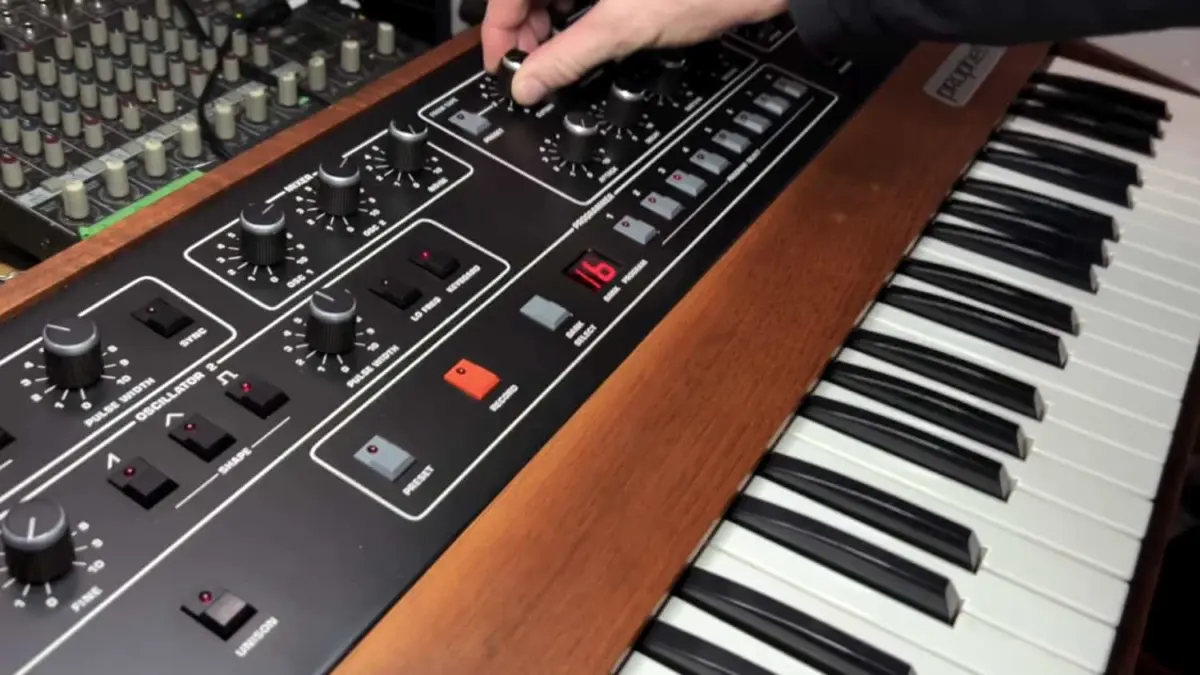
The landscape of modern analog synthesis is witnessing a significant shift as community-driven software developments begin to bridge the gap between vintage-inspired hardware and contemporary performance requirements. In a notable development for the synthesizer community, a new third-party firmware project titled "prophet-rev4-mods" has been released, offering a substantial feature set expansion for the Sequential Prophet-5 and Prophet-10 Rev4. This open-source initiative introduces several high-demand functions—including an integrated arpeggiator and a polyphonic step sequencer—to instruments that were originally designed to prioritize traditional subtractive synthesis over digital performance utilities.
The Sequential Prophet-5, originally released in 1978, is widely considered one of the most influential instruments in the history of electronic music. When Sequential, under the leadership of the late Dave Smith, released the Rev4 in 2020, the goal was to create the "best of all Prophets," combining the various filter revisions and the raw analog power of the original units with modern reliability. However, in keeping with the historical accuracy of the original design, the Rev4 lacked certain features found in Sequential’s more modern offerings, such as the Prophet-6 or the OB-6. The "prophet-rev4-mods" project aims to rectify this by utilizing the existing digital control systems within the Rev4 architecture to host new performance tools without requiring any physical modifications to the hardware.
Technical Overview of the Prophet-Rev4-Mods Project
The prophet-rev4-mods project is an unofficial, community-led firmware modification distributed via GitHub under the MIT license. The primary objective of the modification is to unlock the latent potential of the synthesizer’s internal microprocessor, which manages the instrument’s voice allocation, tuning, and MIDI communication. By patching the official Sequential Main OS 2.1.0 firmware, the developer, identified by the pseudonym "dangerous," has managed to inject new code that interprets panel commands and MIDI data in ways the original factory software did not.
The most prominent addition is the inclusion of a fully functional arpeggiator. While the Prophet-5 Rev4 is celebrated for its lush pads and aggressive leads, the absence of an internal arpeggiator has often required users to rely on external MIDI controllers or Digital Audio Workstations (DAWs) to achieve rhythmic patterns. The new firmware allows for classic arpeggiation modes—including up, down, and random—integrated directly into the instrument’s workflow.
Furthermore, the firmware introduces a polyphonic step sequencer. This feature is particularly significant given the Prophet-10’s ten-voice polyphony, allowing for complex, layered sequences that can be triggered and manipulated in real-time. According to the project documentation, the sequencer supports patch-level memory, meaning that sequences are saved alongside individual patches, a feature that significantly enhances the instrument’s utility in live performance settings.
Historical Context and the Evolution of the Prophet-5
To understand the impact of this firmware, one must look at the chronology of the Prophet-5’s development. The original Revision 1 and 2 units utilized SSM (Solid State Microtechnology) chips, known for their volatile but characterful sound. The Revision 3 moved to CEM (Curtis Electromusic Specialties) chips, which offered greater stability. When the Rev4 was announced in October 2020, it featured a "Vintage" knob that allowed users to cycle through the behaviors of these different revisions by adjusting the behavior of the oscillators, filters, and envelopes.
Despite these advancements, Sequential maintained a "purist" approach to the Rev4. Unlike the Prophet-6, which was a modern reimagining with a built-in sequencer and digital effects, the Prophet-5 Rev4 was a faithful recreation. For many users, this purity was a selling point, but for a growing segment of the market used to the "all-in-one" capabilities of modern workstations, the lack of an onboard sequencer was a notable omission. The emergence of prophet-rev4-mods represents a middle ground, providing modern functionality to a purist hardware platform.
Chronology of Development and Testing
The development of the prophet-rev4-mods project follows a timeline of increasing community interest in "jailbreaking" or modifying modern synth firmware. While the project is currently available to the public, the developer has noted specific milestones in the testing phase. Documentation indicates that the modification was successfully tested on a Prophet-10 Rev4 hardware unit as recently as October 2026. Interestingly, while the Prophet-5 Rev4 shares almost identical internal architecture with the Prophet-10 (the primary difference being the number of voice cards), the developer has stated that the modification remains officially "untested" on the five-voice version.
This distinction is crucial for early adopters. The Prophet-10 and Prophet-5 Rev4 both utilize the same Main OS firmware files provided by Sequential, suggesting that the patch should, in theory, function identically on both machines. However, the risk of "bricking" or rendering a high-value instrument inoperable remains a concern for those without experience in firmware recovery.

Detailed Feature Set and User Interface Integration
The implementation of these features without adding new buttons or screens to the hardware requires a clever use of existing controls. The firmware utilizes "shift" functions and specific key combinations to access the new menus and settings.
- Integrated Arpeggiator: The arpeggiator syncs to the internal clock or external MIDI clock. It includes various rhythmic divisions and gate time adjustments, allowing the Prophet-5 to compete with more modern rhythmic synthesizers.
- Polyphonic Step Sequencer: This allows for the recording of up to 64 steps with multiple notes per step. The sequencer is designed to be intuitive, mimicking the workflow found on the Sequential Prophet-6 and OB-6.
- Octave Shifting: A requested feature for the Rev4 was a more accessible way to shift octaves without diving into MIDI menus. The mod provides a streamlined method for shifting the keyboard range during live play.
- Patch-Level Sequence Memory: Perhaps the most technically impressive feat of the mod is the ability to store sequence data within the existing patch architecture. This ensures that when a user recalls a specific sound, the associated melodic or rhythmic sequence is recalled instantly.
Installation Process and Risk Assessment
The installation of prophet-rev4-mods is not a standard update procedure and requires a specific technical workflow. Users must first obtain the official Sequential Main OS 2.1.0 firmware file. The "prophet-rev4-mods" utility then applies a binary patch to this file to create a modified version. This modified file is then transmitted to the synthesizer via MIDI System Exclusive (SysEx) data using a utility such as MIDI-OX for Windows or SysEx Librarian for macOS.
The developer has been transparent regarding the risks involved. As this is not an official Sequential release, installing the firmware likely voids the manufacturer’s warranty. Sequential, now a part of the Focusrite Group, has a history of providing excellent customer support for their official software, but they do not provide support for third-party modifications.
To mitigate these risks, the GitHub repository includes a comprehensive recovery guide. This allows users to "revert" to the factory-standard firmware if they encounter bugs or if they wish to sell the instrument in its original state. The use of the MIT license ensures that the code is open for audit by other developers, which adds a layer of community-driven quality control to the project.
Broader Implications for the Synthesizer Industry
The release of prophet-rev4-mods is part of a larger trend in the music technology industry where the line between hardware and software continues to blur. Instruments are no longer static "black boxes"; they are evolving platforms. We have seen similar movements with the Korg Volca series, where third-party developers created custom firmware to add MIDI Out functionality and new oscillator types. Similarly, the Arturia MicroFreak has seen its capabilities nearly double since its release through official firmware updates that were influenced by community feedback and "hacker" culture.
For Sequential, this project presents an interesting dilemma. While they are not affiliated with the project, the added functionality makes the Prophet-5 and Prophet-10 more attractive to a broader range of musicians. It effectively increases the value proposition of the hardware at no cost to the manufacturer. However, it also introduces variables in stability that could lead to increased support inquiries.
Industry analysts suggest that this trend of "aftermarket" firmware will only grow as more synthesizers move toward ARM-based processing and standardized digital control systems. When a manufacturer ceases active development on a product line, the community often takes over, ensuring the longevity of the instrument. In the case of the Prophet-5, a synth that has already survived for nearly half a century, these digital enhancements ensure it remains relevant in the modern production environment.
Conclusion and Future Outlook
The prophet-rev4-mods project is a testament to the enduring legacy of Dave Smith’s designs and the passion of the community that surrounds them. By adding an arpeggiator, polyphonic sequencer, and octave shifting to the Prophet-5 and Prophet-10 Rev4, the modification transforms these "modern classics" into even more versatile tools for composition and performance.
As of late 2024, the project continues to gain traction on synthesis forums and code repositories. While the "untested" status on the Prophet-5 Rev4 may give some users pause, the successful implementation on the Prophet-10 serves as a proof of concept for the viability of third-party firmware in high-end analog hardware. Owners of these instruments now face a choice: maintain the historical purity of their factory-spec Prophet, or embrace the expanded horizons offered by the open-source community. Regardless of the choice, the existence of such projects ensures that the Prophet-5 remains not just a museum piece of the past, but a living, breathing part of the future of music.
