

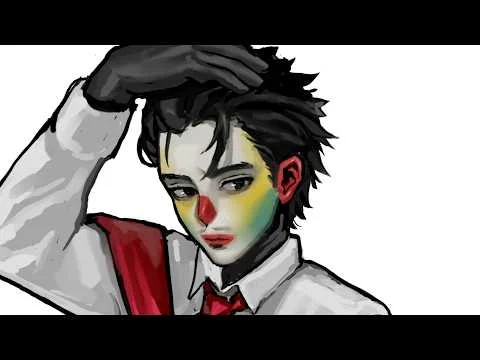
Crash United has officially announced the release of klattsch, a specialized vocal synthesizer designed for desktop and Android platforms that seeks to revive the distinctive auditory aesthetics of early 1980s speech technology. Unlike modern vocal synthesis tools that rely on high-resolution samples or neural networks to mimic human biology, klattsch is a dedicated formant synthesizer modeled after the pioneering work of Dr. Dennis Klatt at the Massachusetts Institute of Technology (MIT). By focusing on the specific mathematical and acoustic frameworks developed over four decades ago, the software offers a unique bridge between historical computer science and contemporary music production.
The development of klattsch represents a significant departure from standard "retro" plugins. Rather than serving as a simple emulation of the commercially successful DECtalk hardware—famously used by theoretical physicist Stephen Hawking—the developers at Crash United conducted extensive research into the original proof-of-concept designs that preceded commercialization. These designs, which were once confined to laboratory environments, form the core architecture of the klattsch engine. This approach allows users to access a "buzzy" and intentionally artificial sound that is deeply rooted in the limitations and innovations of early digital signal processing.
Technical Architecture and the Formant Synthesis Method
At the heart of klattsch is a synthesis chain that eschews digital recordings entirely. The engine operates on the principle of formant synthesis, a method that models the human vocal tract as a series of resonators. In the early 1980s, when memory and processing power were severely limited, this was the most efficient way to generate intelligible speech. The klattsch architecture utilizes a series of oscillators, noise generators, and resonators to create sound from scratch.
By manipulating the "formants"—the spectral peaks of the sound spectrum of the voice—users can define the vowel characteristics and tonal qualities of the output. The software exposes these synthesis parameters directly, allowing for a high degree of customization that was often hidden behind the user interfaces of 20th-century hardware. The result is a sound that is unmistakably mechanical, providing a specific "lo-fi" or "vaporwave" aesthetic that has seen a resurgence in modern electronic music, indie pop, and experimental sound design.
The implementation includes four distinct foundational speech synthesis engines. While the primary engine is based on Dr. Klatt’s 1980 research, the developers integrated three additional engines derived from other pioneering research papers in the field. This multi-engine approach provides a chronological survey of speech technology, offering variations in timbre and "crunchiness" that reflect the evolution of the medium from the late 1970s through the mid-1980s.
Historical Context: From MIT Labs to the Public Domain
The historical significance of klattsch is inextricably linked to Dr. Dennis Klatt, a researcher whose work at the MIT Research Laboratory of Electronics (RLE) revolutionized how machines communicate. In 1980, Klatt published "Software for a cascade/parallel formant synthesizer," a landmark paper that provided the mathematical blueprint for what would become the industry standard for speech synthesis.
Dr. Klatt’s "Klattgrid" or "Klatt Synthesizer" was notable for its ability to produce highly intelligible speech by carefully controlling the frequencies and bandwidths of resonators. This technology eventually powered the DECtalk system, which was adopted by various industries, including telecommunications and assistive technology. Perhaps the most famous application of this technology was the "Perfect Paul" voice, which Stephen Hawking chose to represent him for decades, even as more realistic alternatives became available.
Crash United’s decision to return to these original sources is a move toward "digital archeology." By implementing the designs from the original research papers, the developers have bypassed the commercial filters of the 1980s, giving modern creators access to the raw, unpolished versions of the algorithms that defined the era of early computing.
Workflow, Features, and Language Support
The user interface of klattsch is designed to balance historical accuracy with modern usability. The software features a piano roll editor where users can draw notes, much like a standard Digital Audio Workstation (DAW) or MIDI sequencer. However, the complexity lies in the phonetic input. Users can input text directly or use specific phonemes to craft precise vocal performances.
Key features of the full version include:
- Polyphonic Capabilities: Unlike many original 1980s hardware units that were strictly monophonic, klattsch allows for the layering of multiple voices to create synthetic choirs or complex harmonic structures.
- Bi-lingual Support: The engine supports both English phonemes and Japanese kana, making it a versatile tool for international producers and those involved in the Vocaloid-adjacent music scenes.
- Pitch Curve Editing: Users can draw pitch curves by hand, allowing for expressive slides, vibrato, and the "robotic" inflections characteristic of early computer-generated speech.
- Editable Parameters: The synthesis parameters, including the noise floor and resonator widths, are fully accessible, enabling sound designers to push the engine into distorted or experimental territories.
The software also supports sharing via unique links, allowing users to send their creations—including the text, notes, and synthesis settings—directly to others through a web browser interface.
Market Positioning and Community Response
The release of klattsch comes at a time when the music industry is experiencing a bifurcated interest in vocal technology. On one side, AI-driven "deepfake" voices and hyper-realistic vocal cloning are becoming mainstream. On the other, there is a growing niche for "character" synthesis—sounds that do not attempt to hide their artificiality but rather embrace it as a creative texture.
Initial reactions from the electronic music community highlight the "nostalgic yet fresh" quality of the klattsch engines. Sound designers have noted that the lack of samples gives the software a "reactive" feel that is often missing from modern ROMplers. Because the sound is generated in real-time based on mathematical formulas, it responds to pitch and parameter changes with a fluidity that sample-based systems cannot replicate without artifacts.
The inclusion of an Android version also positions klattsch as a powerful tool for mobile music production, a sector that has seen rapid growth. By offering a lightweight yet deep synthesis engine, Crash United is catering to the "on-the-go" producer who values unique sound palettes over massive, gigabyte-heavy sample libraries.
Availability, Pricing, and Future Development
Crash United has implemented a tiered availability model to ensure the technology is accessible to a wide audience while supporting further development.
- Web Browser Version: A "classic" version of klattsch is available for free. This version serves as a functional demonstration of the core technology, though it lacks the advanced piano roll editor, polyphony, and the additional three voice engines found in the paid versions.
- Android Version: The app is available for free on the Google Play Store, utilizing a "freemium" model where a one-time "pro" unlock provides access to the full suite of features.
- Desktop Bundle: A DRM-free bundle for Windows, macOS, Linux, and Android is available via itch.io for $9.99. This version is aimed at professional users and enthusiasts who require offline access and the most stable performance.
Looking ahead, Crash United has confirmed that they are currently developing a dedicated DAW plugin (VST/AU/AAX) based on the klattsch engines. A beta version is expected in the near future, and the developer has announced a crossgrade option for those who have already purchased the itch.io bundle. This move into the plugin market will allow producers to integrate the 1980s formant sound directly into their professional mixing environments without the need for external routing or manual file imports.
Broader Implications for Audio Synthesis
The launch of klattsch signifies more than just a new tool for musicians; it reflects a broader movement toward the preservation of digital heritage through functional software. As original hardware from the 1980s becomes increasingly rare and difficult to maintain, the recreation of these algorithms in modern code ensures that the unique "voice" of early computing is not lost to time.
Furthermore, klattsch challenges the prevailing trend of "perfection" in digital audio. By offering a tool that is "unmistakably artificial," Crash United provides a counterpoint to the trend of seamless AI integration. In an era where it is becoming difficult to distinguish between human and machine recordings, the transparently synthetic nature of formant synthesis offers a form of aesthetic honesty that resonates with a variety of genres, from retrowave and synthwave to experimental glitch and industrial music.
As the software moves into its next phase of development with the upcoming DAW plugin, it is poised to become a staple for creators looking to capture the haunting, buzzy, and strangely emotive qualities of the machines that first taught computers how to speak.
