

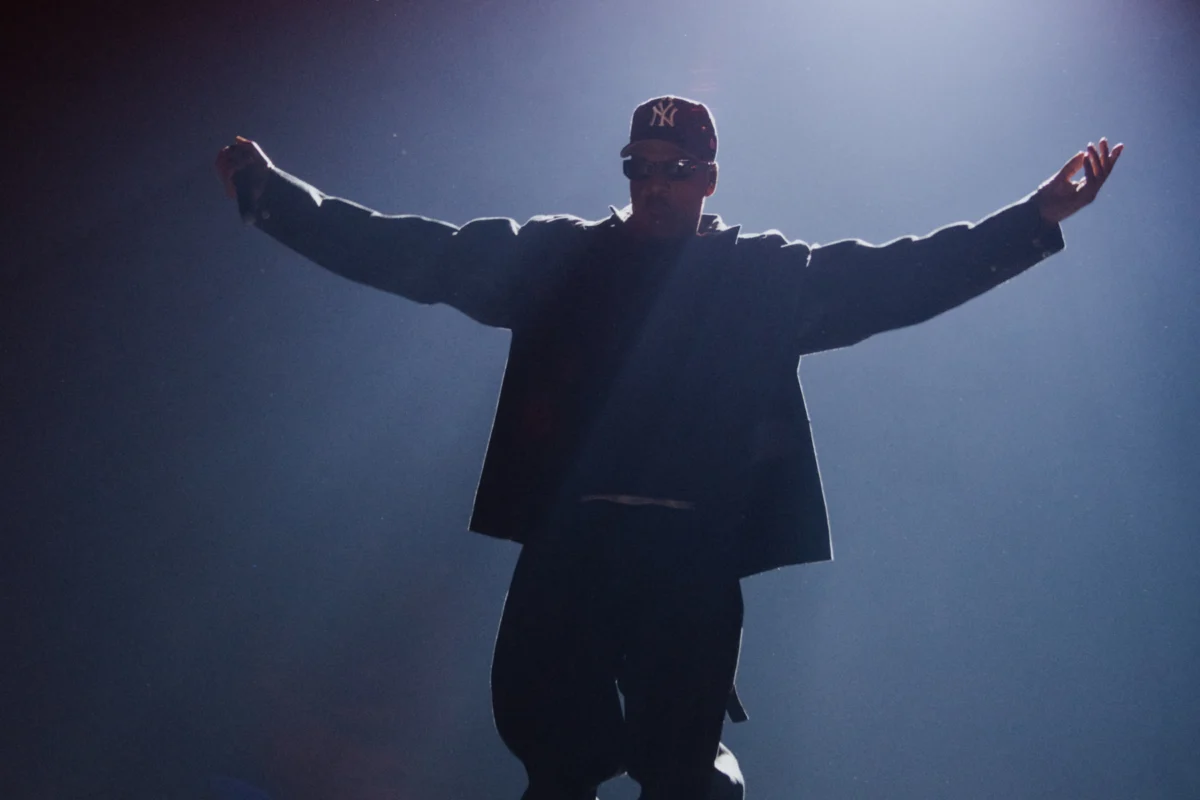
The iconic rap mogul, Shawn "Jay-Z" Carter, culminated a monumental year of career retrospectives with two sold-out performances at London’s state-of-the-art Tottenham Hotspur Stadium on September 4 and 5, 2026. These highly anticipated shows marked his only United Kingdom appearances for the year, drawing tens of thousands of fervent fans and underscoring his enduring global appeal and unparalleled influence in music and culture. While the first night delivered a star-studded spectacle, the second evening, September 5, saw Jay-Z command the colossal venue with a more focused, yet equally potent, display of his lyrical mastery and three decades of refined stagecraft, proving unequivocally that his catalog and presence alone are sufficient to captivate an arena.
A Summer of Celebration: Honoring a Storied Career
The London concerts served as a powerful conclusion to a summer-long narrative that saw Jay-Z meticulously building a compelling case for his indelible legacy. This journey began in July 2026 with an unprecedented three-night takeover of New York City’s Yankee Stadium. Those homecoming shows were not merely concerts but grand celebrations, commemorating the 30th anniversary of his groundbreaking debut album, Reasonable Doubt, and the 25th anniversary of his critically acclaimed masterpiece, The Blueprint. Released in 1996, Reasonable Doubt is widely regarded as a quintessential hip-hop album, a gritty and introspective narrative that introduced the world to Jay-Z’s sophisticated wordplay and street-smart entrepreneurship. It defied initial commercial expectations to become a foundational text in the genre, eventually earning platinum certification and securing its place in the Library of Congress’s National Recording Registry. Five years later, The Blueprint, released on September 11, 2001, cemented his status as a mainstream superstar while simultaneously pushing the artistic boundaries of hip-hop, blending soulful samples with sharp, confident lyricism. It debuted at number one on the Billboard 200 and has since sold over two million copies in the U.S., becoming a touchstone for a generation of artists and fans.
The Yankee Stadium series featured an "eye-watering selection" of music’s biggest names, transforming each night into a historic event. Guests included his wife, global icon Beyoncé, alongside industry titans such as Alicia Keys, Usher, Eminem, Nas, Pharrell Williams, Rihanna, and hip-hop pioneer Slick Rick. Billboard‘s Angel Diaz, reporting from the New York run, aptly described it as "a masterclass show," setting an extraordinarily high benchmark for the subsequent London dates. The sheer scale and ambition of these anniversary events reflected Jay-Z’s unique position in the music industry – not just as a performer but as a cultural architect, capable of uniting diverse artists and generations of fans under the banner of his monumental discography.
Jay-Z’s Deep Roots in the UK Music Scene
London, a city with a vibrant and discerning music audience, is far from unfamiliar territory for the Brooklyn-born artist. His connection to the capital spans several decades, illustrating the deep cultural exchange between American hip-hop and the British music landscape. Jay-Z first graced London’s shores in 1989, a formative visit alongside his mentor and fellow rapper Jaz-O, long before his mainstream breakthrough. This early exposure to the burgeoning international scene undoubtedly shaped his global outlook.
His return in 1997 saw him performing at the iconic Notting Hill Carnival, an event steeped in Afro-Caribbean culture and a significant platform for urban music. His presence there marked an early integration of hip-hop into one of the UK’s most celebrated street festivals, signaling the genre’s growing influence beyond its American origins. By the mid-2000s, Jay-Z had ascended to an undisputed global superstar status, culminating in his controversial yet ultimately triumphant headline slot at Glastonbury Festival’s legendary Pyramid Stage in 2008.
This booking was met with initial skepticism, most notably from Oasis frontman Noel Gallagher, who publicly questioned hip-hop’s suitability for the traditionally rock-centric festival. Jay-Z, with characteristic defiance and wit, famously opened his Glastonbury set with a cover of Oasis’s "Wonderwall," turning the criticism into a powerful statement about artistic boundaries and genre inclusivity. His performance was not only a resounding success, silencing critics and winning over a vast, diverse audience, but also a watershed moment that irrevocably shifted perceptions of hip-hop’s place in mainstream festival culture. It demonstrated the genre’s universality and its capacity to command any stage, anywhere in the world. This moment is often cited as a pivotal point in the global acceptance of hip-hop.
Following his Glastonbury triumph, Jay-Z maintained a strong presence in the UK. His "Magna Carta World Tour" in 2013, which famously involved a groundbreaking partnership with Samsung for its album release, brought him back for solo arena dates. Then, in 2018, he returned with his wife Beyoncé for the "On The Run II" tour, a stadium-filling spectacle that celebrated their joint musical empires and solidified their status as music’s most powerful couple. The 2026 Tottenham Hotspur Stadium concerts, therefore, were not just standalone events but the latest chapter in a long, rich history of Jay-Z’s engagement with his dedicated British fanbase, marking his first solo dates in the UK since 2013 and first performances since the 2018 joint tour.
Tottenham Hotspur Stadium: A Modern Colosseum for a Modern Icon
The choice of Tottenham Hotspur Stadium as the venue for these landmark shows further underscored the magnitude of the event. Opened in 2019, the state-of-the-art stadium is one of London’s premier multi-purpose venues, boasting a seating capacity of 62,850. Its cutting-edge acoustics, advanced lighting systems, and immense scale provide an ideal setting for global superstars. Hosting Jay-Z for a double-header not only highlighted the stadium’s versatility beyond its primary function as a football ground but also positioned it as a significant player in London’s competitive live music landscape. The meticulous planning and logistical coordination required to host an artist of Jay-Z’s stature, with his elaborate production and extensive catalog, speak volumes about the venue’s capabilities and the promoter’s confidence in the demand for these shows.
The London Double-Header: A Tale of Two Nights
The two nights at Tottenham Hotspur Stadium offered distinct, yet equally compelling, experiences for the tens of thousands of attendees.
Night One: The Grand Spectacle (September 4)
The inaugural night set an exceptionally high bar for what a Jay-Z concert could be, reminiscent of the star-studded Yankee Stadium extravaganzas. The evening commenced with a powerful spoken-word introduction by acclaimed British actor and DJ, Idris Elba, a cultural figure known for his deep ties to music and his own artistic pursuits. His commanding presence added a layer of gravitas and local flavor to the opening.
The highlight for many was the rare and highly anticipated reunion of Lauryn Hill and Wyclef Jean, who performed a selection of Fugees songs. The Fugees, an iconic hip-hop group from the 1990s, are celebrated for their critically acclaimed album The Score. Their appearances together are exceedingly rare, making this performance a truly special and nostalgic moment for fans. The inclusion of such legendary figures underscored the historical weight of Jay-Z’s career celebrations.
Further amplifying the local connection, UK grime and drill icon Giggs joined Jay-Z on stage to perform his seminal track "Talkin’ Da Hardest." Giggs’ presence was a powerful nod to the thriving British urban music scene and demonstrated Jay-Z’s respect for and connection to contemporary UK artists. The night also featured a heartwarming, spontaneous stadium-wide rendition of "Happy Birthday" for Beyoncé, who was reportedly watching the performance from a private suite, adding a personal and celebratory touch to the grand event. This night was a testament to Jay-Z’s ability to curate a celebratory, communal experience, leveraging his extensive network of collaborators and cultural influencers.
Night Two: The Master of the Mic (September 5)
By comparison, the second night on September 5, while equally impactful, adopted a more "subdued" approach in terms of guest appearances. Instead of a revolving door of superstars, Jay-Z focused on a more intimate, albeit still expansive, presentation of his own formidable catalog. He was joined by two critically acclaimed British artists: the soulful vocalist Sampha and the prodigious rapper Dave.
Sampha, known for his ethereal vocals and introspective electronic music, brought a unique texture to the stage, likely collaborating on tracks that benefited from his distinct sound. Dave, a Mercury Prize-winning artist and one of the most respected voices in contemporary UK rap, represents the pinnacle of modern British lyrical prowess. His presence alongside Jay-Z was a symbolic passing of the torch and a recognition of his significant contributions to the genre.
The decision to feature fewer, yet highly respected, guests allowed Jay-Z to put his three decades of "well-honed performance" front and center. Critics and fans observed that he "didn’t need the spectacle of the night before." His commanding stage presence, razor-sharp lyricism, and an extensive catalog of hits – ranging from early classics like "Can’t Knock the Hustle" and "Hard Knock Life (Ghetto Anthem)" to later anthems such as "Empire State of Mind" and "Numb/Encore" – were more than enough to carry the evening. The performance was a testament to his artistry, showcasing his ability to connect with an audience through sheer talent and the undeniable power of his music. He navigated through the narrative arc of his career, delivering powerful verses and engaging the crowd with his signature blend of confidence and charisma. The audience, a diverse tapestry of ages and backgrounds, reflected the universal appeal of his music, singing along to every word and demonstrating an unwavering devotion.
The Broader Implications: Legacy, Longevity, and Global Hip-Hop
The success of Jay-Z’s 2026 global tour, culminating in the London double-header, carries significant implications for the music industry and the cultural landscape of hip-hop.
Unrivalled Longevity and Relevance: At 56 years old (as of 2026), Jay-Z continues to headline massive stadium tours, a feat few artists, regardless of genre, can achieve after three decades in the industry. His sustained relevance is a testament to his artistic evolution, his keen business acumen, and his consistent ability to connect with new generations while retaining his loyal fanbase. He has transcended mere celebrity to become a cultural institution, a billionaire entrepreneur who built an empire from the ground up, all while maintaining his artistic integrity. His tours are not just concerts; they are cultural events that celebrate the journey of an artist who defied expectations and redefined success.
The Economic Impact of Mega-Concerts: Major stadium events like Jay-Z’s London shows have a substantial economic ripple effect. With over 120,000 tickets sold across the two nights, the direct revenue generation for the artist, promoters, and venue is immense. Beyond ticket sales, these concerts stimulate local economies through increased tourism, hotel bookings, dining, transportation, and retail spending. The influx of international and domestic visitors supports countless jobs and contributes significantly to the cultural vibrancy and economic prosperity of the host city. Industry estimates for events of this scale often place the economic benefit in the tens of millions of pounds for London.
Hip-Hop’s Global Dominance: The enthusiastic reception in London further solidifies hip-hop’s undeniable status as a global musical phenomenon. What began as a subculture in the Bronx has grown into the most commercially dominant genre worldwide, and artists like Jay-Z have been at the forefront of this expansion. His ability to draw such immense crowds in diverse markets underscores the universal appeal of hip-hop’s storytelling, rhythms, and cultural narratives. It also highlights the UK’s pivotal role as a major hub for global music, embracing and amplifying sounds from around the world.
The Enduring Power of the Artist’s Catalog: Jay-Z’s decision to lean heavily on his extensive catalog, particularly on Night Two, emphasizes the enduring power of well-crafted songs and a storied discography. In an era often dominated by viral hits and fleeting trends, his ability to fill a stadium purely on the strength of his body of work serves as a powerful reminder of the lasting impact of artistic depth and consistent quality. His career is a masterclass in building a timeless repertoire that resonates across generations.
A Legacy Cemented
As Jay-Z concluded his London run, the nine best moments, while not explicitly detailed in the original report, would undoubtedly have included powerful renditions of his most iconic tracks, poignant crowd interactions, and showcases of his legendary freestyle ability. These concerts were more than just performances; they were declarations. They were a vivid demonstration that Shawn Carter, the kid from Marcy Projects, has not only etched his name into the annals of music history but continues to write new chapters, influencing, inspiring, and dominating the global stage. The Tottenham Hotspur double-header was not merely the end of a tour; it was a powerful affirmation of an unrivalled legacy, a testament to an artist who continues to set the bar for excellence in music, business, and cultural impact.
