

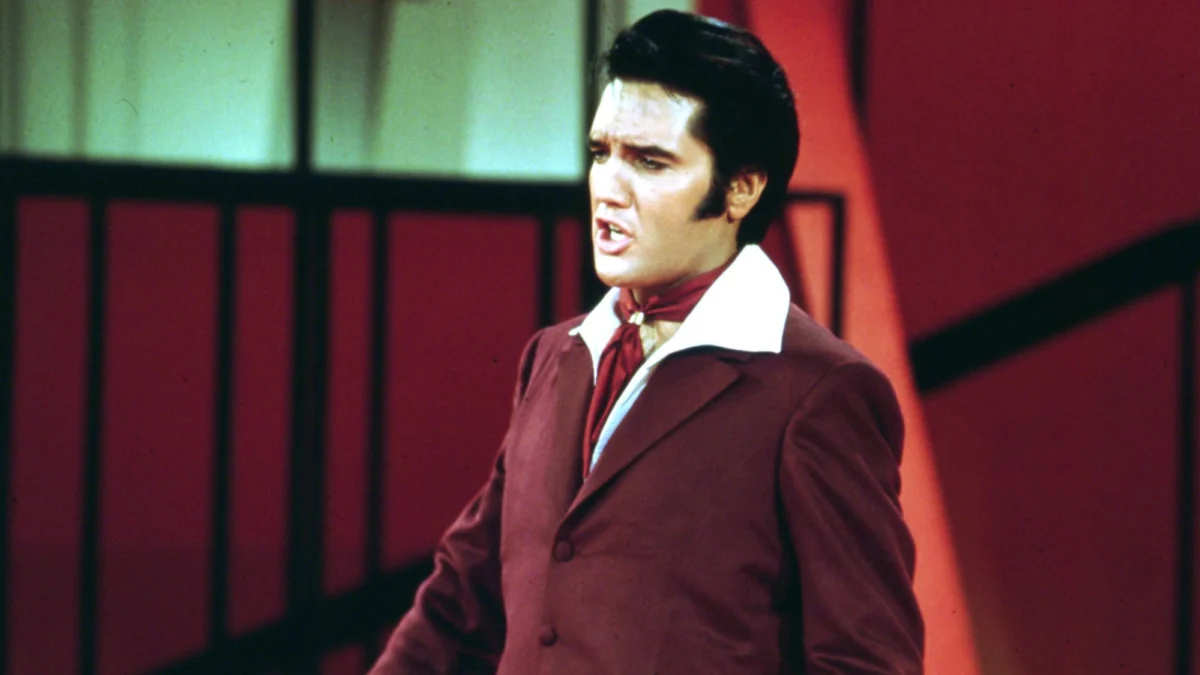
While the name Elvis Presley is forever etched into the annals of music history as the primary architect of rock and roll, his artistic foundation was built upon the red clay of the American South and the soulful strains of country, gospel, and rhythm and blues. Born in Tupelo, Mississippi, and raised in Memphis, Tennessee, Presley’s identity remained that of a country boy throughout his life, a fact often overshadowed by his status as a global pop icon. His first public performance, at the age of ten during the Mississippi-Alabama Fair and Dairy Show, was a rendition of Red Foley’s lachrymose hillbilly hit "Old Shep." This early affinity for the storytelling and emotional resonance of country music never left him. Over the course of his career, Presley would summit the Billboard Hot Country Songs chart 11 times, but perhaps no country-adjacent recording in his catalog carries more historical weight than his 1967 cover of Jerry Reed’s "Guitar Man." Recorded at Nashville’s legendary RCA Studio B on September 10, 1967, the session not only produced a hit but also signaled a pivotal shift in Presley’s creative trajectory, facilitated by a chance collaboration with the "Alabama Wild Man" himself, Jerry Reed.
The Artistic Stagnation of the Mid-Sixties
By 1967, Elvis Presley’s career was at a crossroads. While he remained a massive commercial entity, his creative output had become increasingly formulaic. Bound by restrictive contracts with Colonel Tom Parker and various film studios, Presley had spent much of the decade starring in a series of "musical travelogues"—films like Paradise, Hawaiian Style and Double Trouble—that featured soundtracks increasingly detached from the burgeoning rock revolution led by The Beatles and Bob Dylan. The "Nashville Sound," characterized by polished production and background choruses, had become the standard for his sessions at RCA Studio B, but Presley was reportedly growing restless.
It was during the sessions for the soundtrack to the film Clambake that Presley encountered "Guitar Man." The song, written and recently released by Jerry Reed, was a gritty, driving narrative about a traveling musician’s journey through the honky-tonks of the South. It was a stark contrast to the lighthearted pop fare Presley had been recording for his movies. The song resonated with Presley’s own history, mirroring the early days when he, Scotty Moore, and Bill Black traveled the "Chitlin’ Circuit" in a beat-up Chevrolet.
The Technical Challenge at RCA Studio B
When Presley arrived at RCA Studio B on September 10, he was determined to record "Guitar Man." However, the session proved unexpectedly difficult. Presley’s regular stable of elite Nashville session musicians, often referred to as the "A-Team," were masters of their craft, but they struggled to replicate the specific, percussive "thump" of the original recording. Jerry Reed’s version of the song relied on a unique finger-picking style and an unconventional guitar tuning that the session players, who were primarily "straight pickers" using plectrums, could not emulate.
Felton Jarvis, Presley’s producer and a man who would become one of the King’s most trusted creative partners, realized that the missing ingredient was the songwriter himself. Jarvis knew that without Reed’s specific acoustic-electric "gut string" guitar work, the track would lose its essential grit. The problem was locating Reed, who was an avid outdoorsman and had recently retreated to the Cumberland River for a fishing expedition.
The Arrival of the Alabama Wild Man
The story of Jerry Reed’s arrival at the studio has become a piece of Nashville lore. After Jarvis finally tracked him down, Reed agreed to abandon his fishing trip and head to the studio. He arrived looking exactly like a man who had been on a riverbank for days—unshaven, disheveled, and wearing old clogs. According to accounts from Jarvis and others present, Presley was momentarily taken aback by Reed’s "wild man" appearance, reportedly exclaiming, "Lord, have mercy, what is that!"
Despite the initial shock, the chemistry between the two men was instantaneous. Reed, never one to be intimidated by celebrity, began setting up his equipment while engaging in good-natured banter with Presley. The technical secret to "Guitar Man" lay in Reed’s setup. He utilized an electric guitar with nylon strings (a "gut string" electric) and employed a unique tuning: he tuned the B-string up a whole tone and the low E-string down a whole tone. This allowed him to "bar" straight across the fretboard, creating a drone-like, driving rhythm that served as the song’s heartbeat.
As soon as Reed struck the opening chords of the intro, the atmosphere in the studio shifted. Presley’s eyes reportedly lit up, recognizing that they finally had the "grease" the track required. The resulting recording was a masterclass in country-funk, featuring Presley’s most energized vocal performance in years.
Chronology of the Guitar Man Legacy
The impact of the September 10 session extended far beyond the Clambake soundtrack. To understand the full scope of "Guitar Man" in the Presley canon, one must look at the timeline of its evolution:
- July 1967: Jerry Reed releases the original version of "Guitar Man" on his album The Unbelievable Guitar and Voice of Jerry Reed. It peaks at a modest No. 53 on the Billboard Country chart.
- September 10, 1967: Elvis Presley records his version at RCA Studio B with Reed on lead guitar.
- November 1967: Presley’s version is released as a single and included on the Clambake soundtrack. While it performs respectably, its true cultural impact is delayed.
- December 1968: Presley uses "Guitar Man" as the framing device for his NBC television special, now known as the "’68 Comeback Special." The song opens the show, with Elvis clad in black leather, re-establishing his "dangerous" rock and roll persona.
- August 1977: Elvis Presley passes away at Graceland.
- October 1980 – January 1981: Felton Jarvis embarks on a posthumous project to "modernize" Presley’s sound. He re-records the backing tracks for several songs, including "Guitar Man."
- March 1981: The re-recorded "Guitar Man," featuring a new, even more prominent guitar track by Jerry Reed, reaches No. 1 on the Billboard Hot Country Songs chart.
Statistical and Chart Performance Data
The commercial trajectory of "Guitar Man" serves as a microcosm of Presley’s enduring popularity within the country music genre. When Presley first recorded the song in 1967, it reached No. 43 on the Billboard Hot 100 and No. 45 on the Country charts. While these were respectable numbers, they did not reflect the song’s eventual status as a classic.
The 1981 "remix" or "re-imagining" of the track was a different story. By the early 1980s, the "Urban Cowboy" movement had brought a more polished, crossover sound to country music. Felton Jarvis’s decision to strip away the 1960s orchestration and replace it with a contemporary, guitar-heavy arrangement resonated deeply with radio programmers. The 1981 version spent a total of 15 weeks on the Hot Country Songs chart, eventually claiming the No. 1 spot. This achievement was significant, as it marked Presley’s 11th and final No. 1 country hit, nearly four years after his death. It solidified his standing alongside country legends like Eddy Arnold and George Jones in terms of chart longevity.
Implications for Presley’s Career and the Music Industry
The "Guitar Man" sessions had profound implications for Elvis Presley’s career. It was the first time in years that he had asserted his creative will over a recording session, insisting on a specific sound and a specific collaborator. This newfound assertiveness carried over into his 1968 Comeback Special and his subsequent sessions at American Sound Studio in Memphis in 1969, which produced hits like "Suspicious Minds" and "In the Ghetto."
Furthermore, the collaboration helped launch Jerry Reed into the mainstream. While Reed was already a respected "musician’s musician" in Nashville, his association with Presley gave him a new level of visibility. He would go on to become a major star in his own right, both as a singer ("Amos Moses," "When You’re Hot, You’re Hot") and as an actor in films like Smokey and the Bandit.
From a technical standpoint, "Guitar Man" remains a landmark in the "country-rock" crossover movement. The blend of Presley’s rock-inflected vocals with Reed’s intricate, swampy finger-picking predated much of the Southern Rock movement of the 1970s. It proved that country music could be "cool" and "dangerous" without losing its roots.
Conclusion: A Legacy Refined by Authenticity
The story of "Guitar Man" is more than just a footnote in the biography of Elvis Presley; it is a testament to the power of artistic authenticity. In 1967, Presley was a man trapped by his own fame, searching for a way back to the raw energy of his youth. He found that path through the music of Jerry Reed and the hallowed halls of RCA Studio B.
By insisting on the presence of the original creator and embracing a sound that was unconventional for the time, Presley created a piece of work that bridged the gap between his rock and roll crown and his country heart. The fact that the song eventually became his final No. 1 hit posthumously is a fitting tribute to a performer who, despite his status as the King of Rock and Roll, never truly left the hills of Mississippi behind. The collaboration between the polished superstar and the "Alabama wild man" remains one of the most fruitful and culturally significant moments in the history of the Nashville recording scene.
