

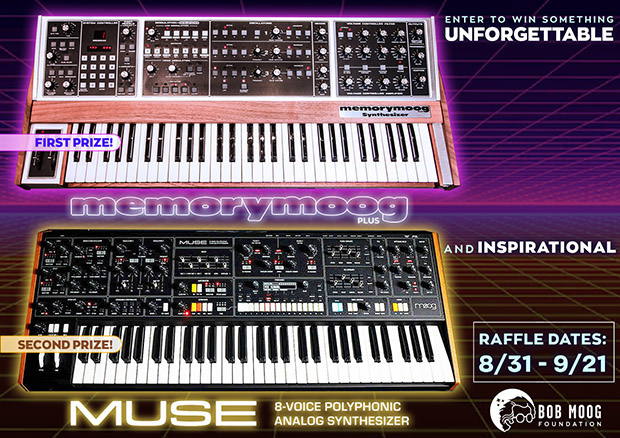
The Bob Moog Foundation has officially launched its latest major fundraising initiative, offering synth enthusiasts and collectors the chance to win two of the most significant instruments in the history of electronic music. The raffle, which serves as a primary source of funding for the foundation’s educational and archival programs, features a meticulously restored vintage Memorymoog Plus as the first prize and the recently released Moog Muse as the second prize. This event marks a rare opportunity for the public to acquire instruments that represent the bookends of a four-decade-long evolution in analog synthesis, spanning from the final days of the original Moog Music, Inc. in the early 1980s to the brand’s modern innovations in the mid-2020s.
The raffle began in early September and is scheduled to conclude at 11:59 pm (EDT) on Monday, September 21, 2026. Participation is open to international entrants, with ticket prices structured to encourage broad support: individual tickets are available for $25, while bundles are offered at five for $100, 12 for $200, and 35 for $500. All proceeds are directed toward the Bob Moog Foundation’s ongoing mission to ignite creativity at the intersection of music, history, science, and education.
The Grand Prize: A Fully Restored Memorymoog Plus
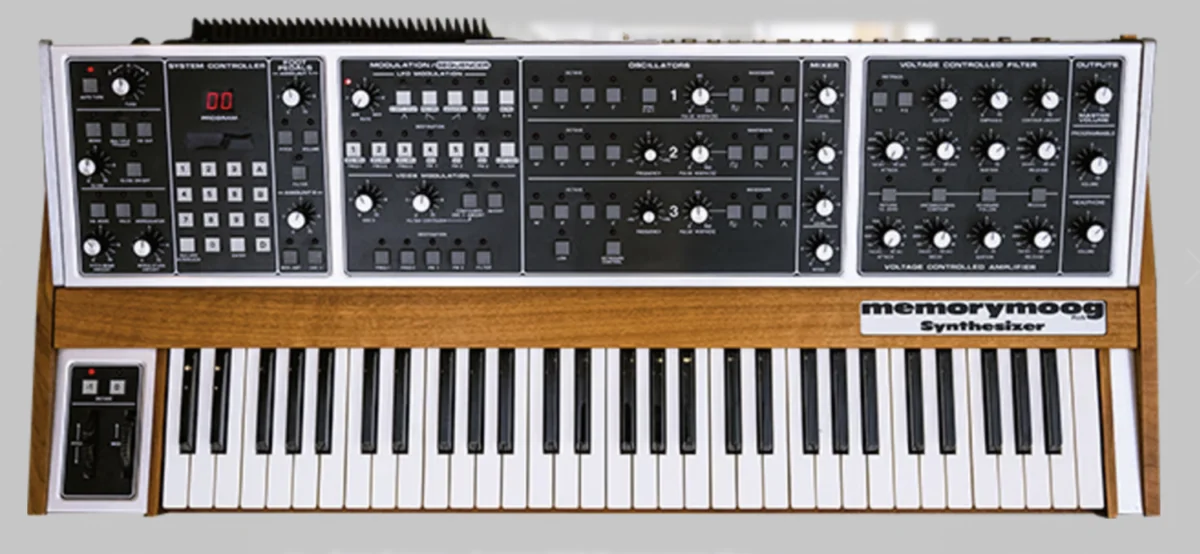
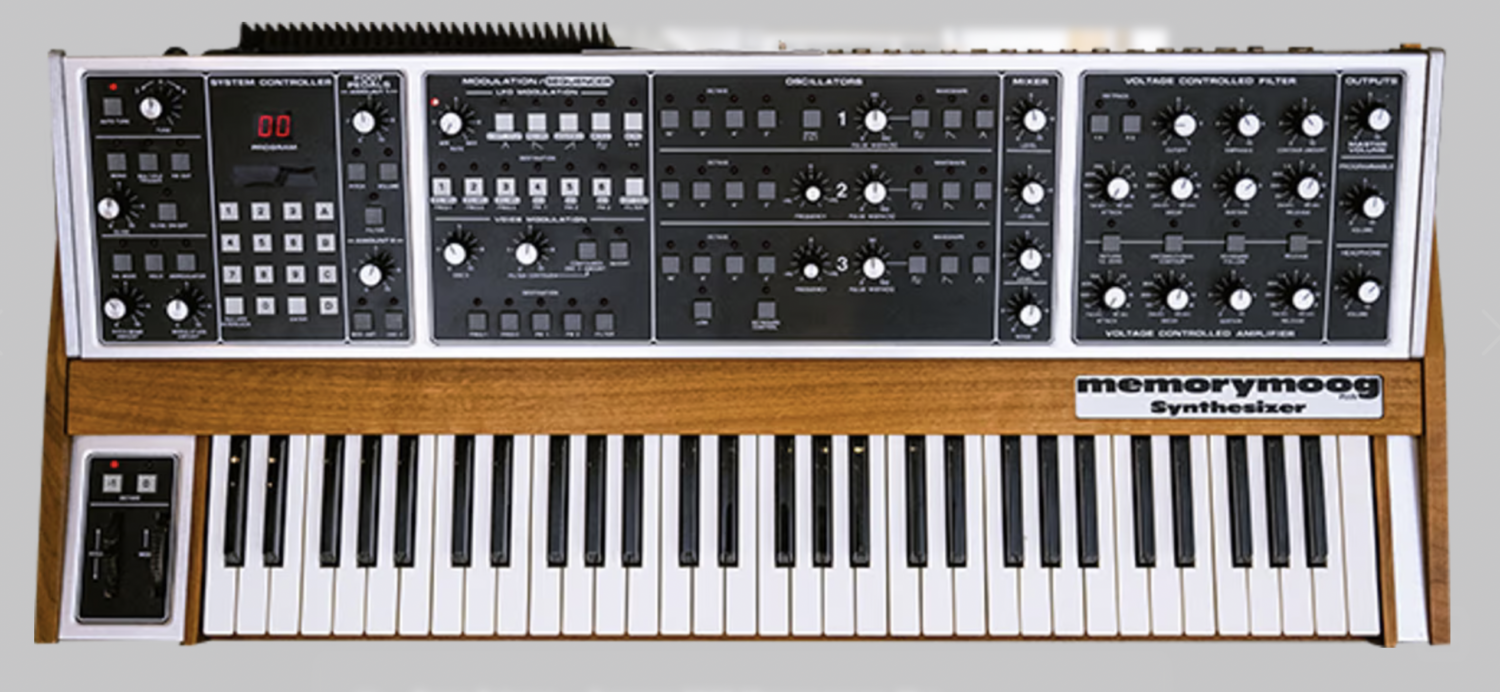
The first prize in the raffle is a vintage Memorymoog Plus, serial number 3067, an instrument widely regarded as one of the most powerful analog polyphonic synthesizers ever manufactured. Valued at approximately $12,500, this particular unit has undergone extensive servicing and upgrades to ensure it meets contemporary standards of reliability and performance.
The Memorymoog Plus was introduced in 1983 as an enhanced version of the original Memorymoog released the previous year. At a time when the synthesizer industry was rapidly shifting toward digital technology and the burgeoning MIDI standard, the Memorymoog Plus sought to provide the ultimate analog experience. It is famous for its massive sonic architecture, featuring six-voice polyphony with three voltage-controlled oscillators (VCOs) per voice. This 18-oscillator configuration allows for a density and richness of sound that few other instruments can replicate. For comparison, contemporary rivals of the era, such as the Sequential Circuits Prophet-5 or the Roland Jupiter-8, typically offered only two oscillators per voice.
The "Plus" designation in this model signifies several critical factory additions that were revolutionary in 1983, including a built-in basic sequencer and, most importantly, MIDI functionality. This allowed the instrument to communicate with other digital hardware and computers, a feature that was just beginning to emerge in the professional audio market.
The unit offered by the Bob Moog Foundation has been enhanced with the Bell Tone Synth Works Liberator F-RAM Upgrade. This modification is highly prized by collectors as it replaces the original volatile memory system—which required a battery that could eventually leak and damage the circuit boards—with modern non-volatile Ferroelectric RAM. This ensures that user-programmed patches are preserved indefinitely without the risk of hardware corrosion. Furthermore, the synthesizer has been professionally serviced by Rob Rosen of Rosen Sound, a leading expert in vintage Moog restoration. It comes housed in a heavy-duty Anvil flight case and includes an original manual authored by Dominic Milano, a respected figure in the history of music journalism and synthesizers.
The Second Prize: The Moog Muse Modern Polysynth
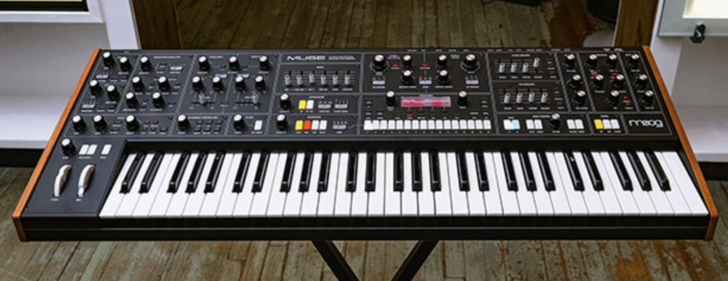
While the first prize celebrates the heritage of the Moog brand, the second prize focuses on its current trajectory. The Moog Muse, valued at $3,500, was released in the summer of 2024 to critical acclaim. It represents a "return to form" for the brand, offering a high-performance, eight-voice bitimbral polyphonic analog synthesizer designed for the demands of the modern studio and stage.
The Muse integrates the classic Moog sound—characterized by its ladder filters and rich oscillators—with a sophisticated digital control layer. This hybrid approach provides musicians with the best of both worlds: the raw, organic warmth of analog circuitry and the precision and flexibility of digital modulation and storage. Key features of the Muse include a powerful "Diffusion Delay" effect, which draws inspiration from vintage golden-era rack processors, and an intuitive sequencer and arpeggiator system.
Physically, the Muse is built to professional standards, featuring a 61-note semi-weighted Fatar keyboard and a rugged chassis. The interface is designed for immediate tactile interaction, boasting 44 knobs, 16 sliders, and 129 buttons. An integrated OLED screen provides visual feedback for deeper parameter editing, though the instrument is designed to be largely "knob-per-function," minimizing the need for menu diving. The inclusion of the Moog Muse in this raffle highlights the foundation’s commitment to showcasing how Bob Moog’s original concepts continue to be refined and reinterpreted for new generations of musicians.
Chronology of the 2026 Fundraising Event
The 2026 raffle follows a tradition of successful fundraising efforts by the Bob Moog Foundation, which has previously raffled iconic instruments such as the Minimoog Model D and the Moog One. The timeline for the current event is as follows:
- Launch Date: Early September 2026 – Ticket sales commenced via the foundation’s secure online portal.
- Active Period: September 2026 – The foundation engaged in a multi-channel marketing campaign to raise awareness, featuring demonstrations of the Memorymoog Plus and the Moog Muse.
- Closing Deadline: September 21, 2026, at 11:59 pm EDT – The final window for ticket purchases.
- Winner Announcement: Typically, the foundation conducts the drawing within one week of the closing date, notifying the winners via telephone or email before a public announcement.
Supporting the Foundation’s Three Pillars
The significance of this raffle extends beyond the hardware prizes. The Bob Moog Foundation is a 501(c)(3) non-profit organization that operates independently of Moog Music, Inc. Its survival depends on public donations and fundraising events like this one. The proceeds are earmarked for three hallmark projects:
1. Dr. Bob’s SoundSchool
This innovative educational program teaches the science of sound to elementary school students. Using a curriculum that integrates music and technology, the program explains how sound is made, how it travels, and how it is heard. Since its inception, Dr. Bob’s SoundSchool has reached over 30,000 children, providing them with a foundational understanding of physics through the lens of electronic music.
2. The Bob Moog Foundation Archives
The foundation maintains a massive collection of historical documents, photos, schematics, and vintage instruments. These archives serve as a primary resource for researchers and historians looking to understand the development of the synthesizer industry. Preservation efforts include digitizing fragile documents and restoring rare prototypes that would otherwise be lost to time.
3. The Moogseum
Located in Asheville, North Carolina, the Moogseum is a physical space dedicated to celebrating Bob Moog’s life and work. It features interactive exhibits, a "young inventor’s" station, and rotating displays of historical hardware. The Moogseum serves as a hub for the synthesizer community and a destination for tourists interested in the history of electronic innovation.
Official Commentary and Industry Context
Michelle Moog-Koussa, Executive Director of the Bob Moog Foundation and daughter of Bob Moog, emphasized the symbolic importance of this particular raffle. "The Bob Moog Foundation is proud to be offering two massive synthesizers representing a continuum of Moog ingenuity over a 40-year period," Moog-Koussa stated. "We are especially pleased to provide an opportunity to win these synths to two very lucky winners."
Her comments reflect a broader sentiment within the music technology industry regarding the preservation of legacy. As vintage instruments become increasingly expensive and difficult to maintain, organizations like the Bob Moog Foundation play a vital role in ensuring these tools remain accessible and functional. The inclusion of the Moog Muse also serves to validate the ongoing relevance of analog synthesis in a market that is often dominated by software-based solutions.
Market Analysis and Implications
The decision to pair a vintage masterpiece with a modern powerhouse is a strategic move that appeals to two distinct segments of the synthesizer community: the "purists" who value the history and unique character of 1980s hardware, and the "performers" who require the reliability and modern connectivity of current production models.
From an economic perspective, the $12,500 valuation of the Memorymoog Plus is reflective of a surging vintage market. Prices for top-tier analog polyphonics have increased significantly over the last decade, driven by their scarcity and their foundational role in the sounds of 1980s pop and film scores. By offering a unit that has been fully "future-proofed" with F-RAM and expert servicing, the foundation is providing a prize that is not only a musical instrument but also a high-value asset.
The raffle also serves as a critical bridge between the past and the future. By funding programs like Dr. Bob’s SoundSchool, the foundation ensures that the next generation of engineers and musicians understands the principles that Bob Moog championed. In an era where digital tools are ubiquitous, the foundation’s focus on the "science of sound" remains a vital contribution to STEM (Science, Technology, Engineering, and Mathematics) education.
As the September 21 deadline approaches, the foundation expects a surge in ticket sales from the global community of electronic musicians. For the winners, the prizes will be life-changing additions to their creative setups; for the foundation, the funds raised will secure the legacy of one of the 20th century’s most influential inventors for years to come.
