

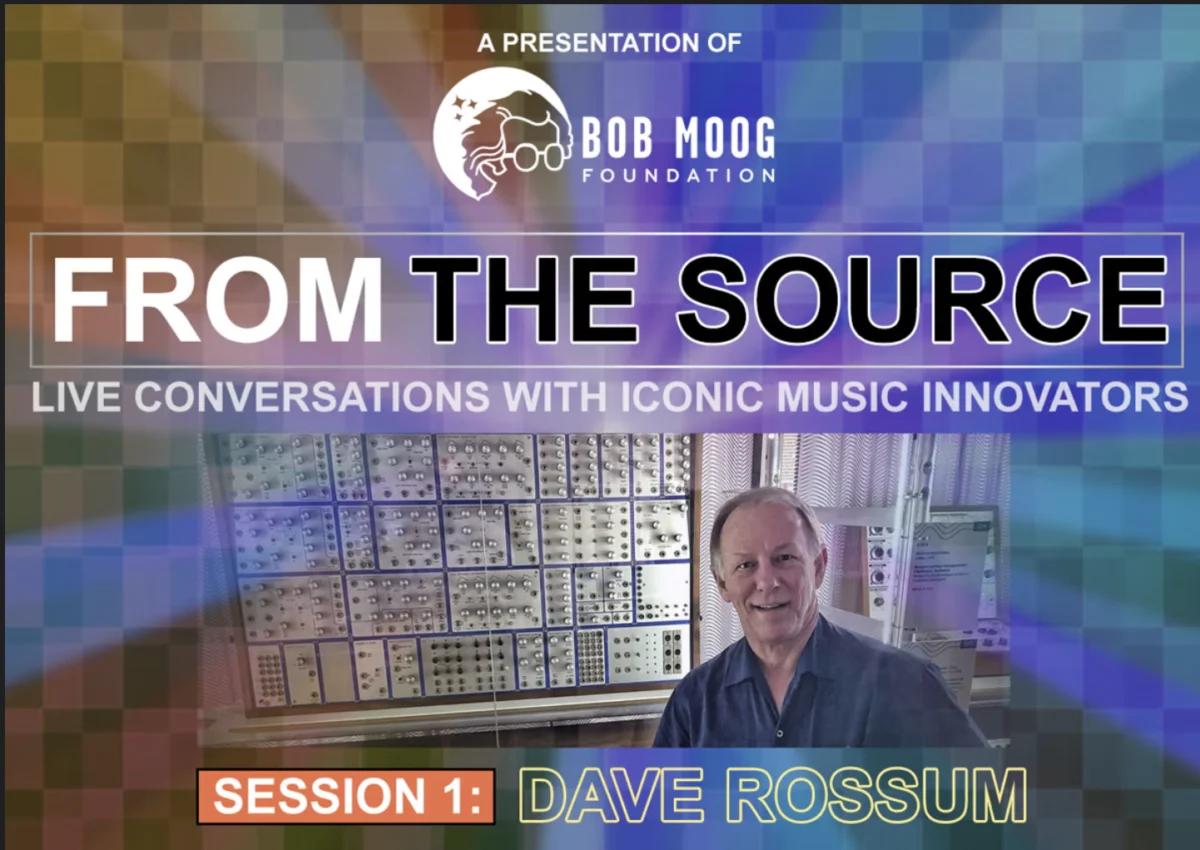
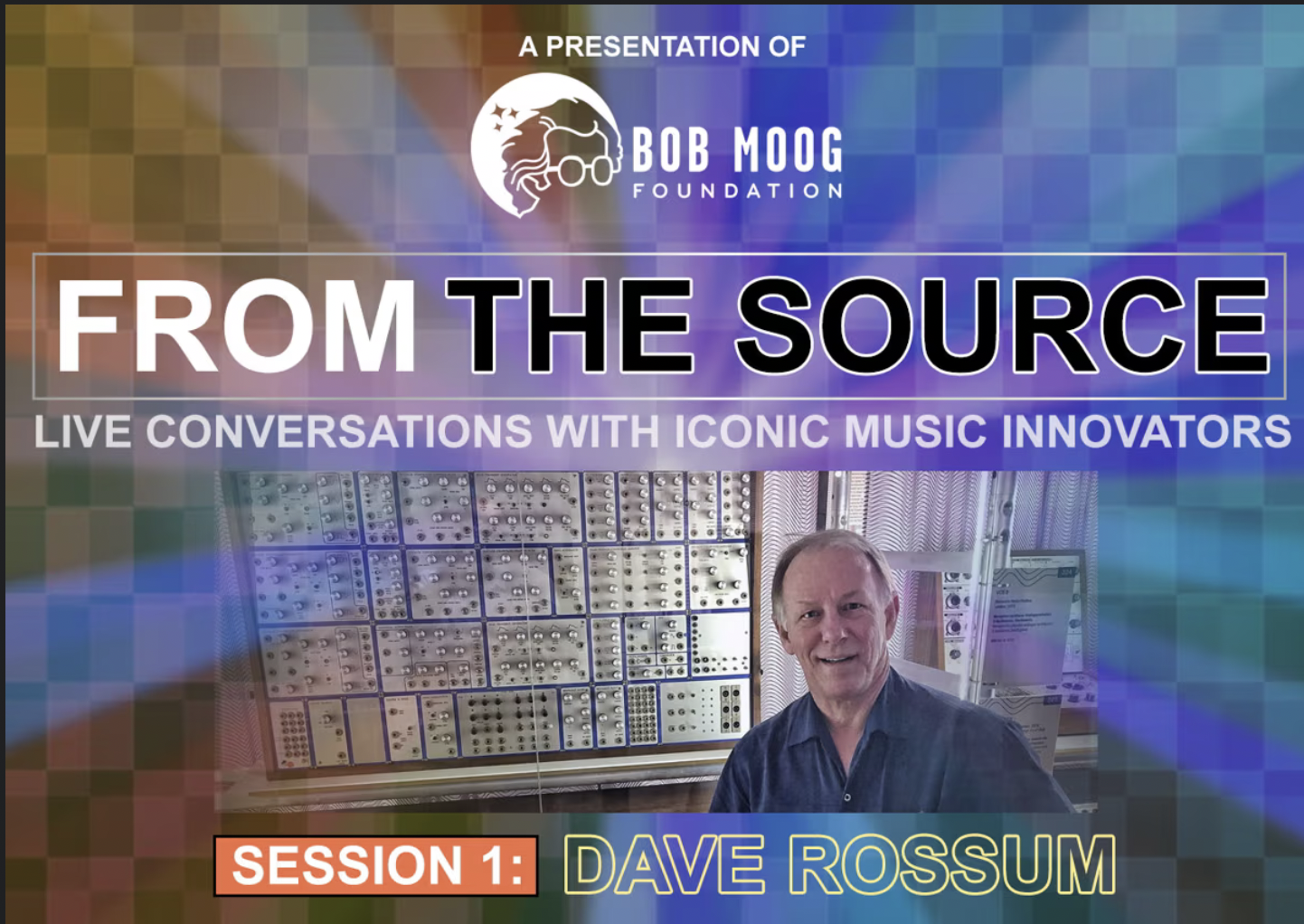
The Bob Moog Foundation has officially unveiled a new landmark educational and fundraising initiative titled From the Source: Live Conversations with Iconic Music Innovators. This series of livestreamed events is designed to bridge the gap between the pioneers of music technology and the global community of synthesists, engineers, and historians. By offering a direct line of communication to the individuals who engineered the foundations of modern electronic sound, the foundation aims to preserve the oral history of the industry while raising critical funds for its ongoing educational programs.
The inaugural session of the series is scheduled for Saturday, October 24, 2026, at 5:00 pm ET. It will feature Dave Rossum, a seminal figure in the development of synthesizer technology and the founder of E-mu Systems. The event will be moderated by Marcus Ryle, an esteemed innovator in his own right and the co-founder of Line 6 and Fast Forward Designs. This pairing represents a rare convergence of two minds that have collectively influenced decades of recorded music, from the early days of analog modular systems to the digital modeling revolution.
A Legacy of Innovation: The Career of Dave Rossum
Dave Rossum’s entry into the world of electronic music began in 1970 at the University of California, Santa Cruz. Under the mentorship of Dr. Harry Noller, Rossum was introduced to the Moog Synthesizer, an encounter that would redefine his professional trajectory. By December of that year, Rossum, alongside his high school friend Scott Wedge, founded E-mu Systems. The company initially focused on developing modular synthesizer components, but it quickly became a powerhouse of intellectual property and technical refinement within the burgeoning industry.
Rossum’s contributions to the field are multifaceted, ranging from hardware architecture to complex digital signal processing (DSP) algorithms. One of his most significant early achievements was the invention of the polyphonic synthesizer keyboard. Before this development, synthesizers were largely monophonic, capable of playing only one note at a time. Rossum’s work on keyboard scanning and voice assignment logic allowed for the creation of instruments that could play chords, a fundamental shift that enabled the synthesizer to compete with traditional keyboard instruments like the piano and organ.
Furthermore, Rossum was a pioneer in the integration of microprocessors into musical instruments. While many of his contemporaries remained focused on purely analog circuitry, Rossum recognized the potential for digital control to enhance stability and functionality. This foresight led to the development of the SSM (Solid State Microtechnology) family of synthesizer chips. These integrated circuits—including the SSM2040 filter and the SSM2030 oscillator—became the sonic backbone of legendary instruments such as the Sequential Circuits Prophet-5 (Revision 1 and 2), the Korg Polysix, the Korg Mono/Poly, the Fairlight CMI II, and the PPG Wave 2.
The Evolution of Sampling and Digital Audio
As the music industry transitioned from analog synthesis to digital sampling in the late 1970s and early 1980s, Rossum remained at the forefront of innovation. Under his leadership, E-mu Systems developed the Emulator series, which brought high-quality sampling technology to a broader market of professional musicians. The technical hurdles of the era—limited memory, slow processing speeds, and the need for efficient interpolation algorithms—were addressed through Rossum’s proprietary designs.
His influence extended beyond his own company. Rossum’s collaborative spirit saw him working with other industry titans, including Tom Oberheim, Dave Smith of Sequential Circuits, and Roger Linn. These collaborations often involved sharing technology or refining standards that would eventually lead to the democratization of music production.
Following the acquisition of E-mu Systems by Creative Labs in 1994, Rossum transitioned into the role of Chief Scientist. In this capacity, he oversaw the development of audio chips and algorithms that were integrated into millions of personal computers via the Sound Blaster line. His later work at Audience, Inc. focused on multi-core audio DSP chips for mobile communication, demonstrating the versatility of his engineering expertise. Today, he continues his work through Rossum Electro-Music, producing high-end Eurorack modules, and as a Technical Fellow for Universal Audio. With over 40 US patents to his name, Rossum’s impact on the sound of the 21st century is indisputable.
Moderation by Industry Peer Marcus Ryle
The selection of Marcus Ryle as the moderator for the inaugural From the Source session adds a layer of technical depth to the conversation. Ryle’s career began at Oberheim Electronics, where he contributed to the design of the OB-8, Xpander, and Matrix-12 synthesizers. He later co-founded Fast Forward Designs, a consultancy that developed products for brands like Alesis, including the ADAT digital multitrack recorder—a device that revolutionized the recording industry by making professional-grade digital recording affordable for home studios.
In 1996, Ryle co-founded Line 6, a company that pioneered digital modeling technology for guitarists. His deep understanding of both the analog history and the digital future of music technology makes him a uniquely qualified interlocutor for Dave Rossum. The dialogue between these two innovators is expected to delve into the nuances of circuit design, the transition from analog to digital, and the philosophy of instrument design.
Supporting the Bob Moog Foundation’s Mission
The From the Source series serves a dual purpose: it provides an educational platform for the public and functions as a critical fundraiser for the Bob Moog Foundation. The foundation, a 501(c)(3) non-profit organization, is independent of Moog Music, Inc., and is dedicated to preserving the legacy of Dr. Bob Moog.
A primary beneficiary of the funds raised through this event is Dr. Bob’s SoundSchool. This innovative curriculum teaches children the science of sound through the medium of electronic music. By integrating physics, mathematics, and music, the program inspires students to explore STEM (Science, Technology, Engineering, and Math) fields. Since its inception, the program has reached thousands of students, providing them with hands-on experience with theremins, synthesizers, and oscilloscopes.
In addition to its educational outreach, the foundation maintains the Moogseum in Asheville, North Carolina. The Moogseum is a world-class facility that houses the Bob Moog Foundation Archives, a vast collection of schematics, photos, correspondence, and vintage instruments. Events like the livestream with Dave Rossum help ensure that these archives remain accessible to researchers and that the museum can continue to offer interactive exhibits to the public.
Event Logistics and Participation
The first session of From the Source is designed to be an intimate experience, limited to a private Zoom session with only 100 participants. This limitation ensures that the "Ask Me Anything" format remains manageable and that participants have a meaningful opportunity to engage with the speakers.
Tickets for the event are tiered to provide different levels of access:
- General Admission ($20): Provides access to the livestreamed discussion and the opportunity to observe the real-time Q&A.
- Priority Question Submission ($40): Allows participants to submit their questions in advance. These questions will be prioritized by the moderator, ensuring that the most technically or historically significant inquiries are addressed during the session.
Registration is handled through the foundation’s official website, and interested parties are encouraged to secure their spots early due to the strict capacity limit.
Analysis: The Importance of Oral History in Music Technology
The launch of the From the Source series comes at a time when the "Golden Age" pioneers of synthesis are increasingly being recognized as essential historical figures. As the technology they created becomes more integrated into every facet of modern life—from smartphones to film scores—the need to document their original intentions and methodologies becomes paramount.
Technical analysis of early synthesizers often focuses on the components themselves, but the human element—the "why" behind a specific design choice—is frequently lost. By facilitating these live conversations, the Bob Moog Foundation is creating a primary source record. For example, understanding why Dave Rossum chose specific filter slopes for the SSM chips or how he navigated the limitations of early microprocessors provides invaluable context for modern engineers who are currently designing the next generation of instruments.
Furthermore, the involvement of Marcus Ryle highlights the collaborative and often overlapping nature of the synthesizer industry during the 1970s and 80s. The industry was characterized by a small group of engineers who were often friends or competitors, sharing ideas and pushing the boundaries of what was possible with the electronics of the time. Capturing these stories through the From the Source series provides a more holistic view of the industry’s evolution.
Broader Impact on the Music Community
The implications of this series extend beyond the immediate participants. By fostering a deeper connection between the creators of technology and the users of that technology, the Bob Moog Foundation is strengthening the global community of music innovators. The insights shared by Dave Rossum are likely to resonate with the thriving Eurorack and boutique synthesizer markets, where many designers are currently revisiting the analog concepts pioneered by E-mu Systems and Moog.
Moreover, the series highlights the enduring relevance of Bob Moog’s vision. Moog believed that the synthesizer was not just a tool for making sound, but a means of exploring the very nature of physical reality. By continuing to support the intersection of science, music, and history, the Bob Moog Foundation ensures that this philosophical approach to innovation remains a guiding force for future generations.
The From the Source: Live Conversations with Iconic Music Innovators series represents a significant step forward in the preservation of music technology history. Through the participation of Dave Rossum and Marcus Ryle, the Bob Moog Foundation is offering a unique educational opportunity that honors the past while funding the future of music education. As the inaugural event approaches, the synth community remains poised to gain unprecedented insights into the minds that shaped the sound of the modern world.
