

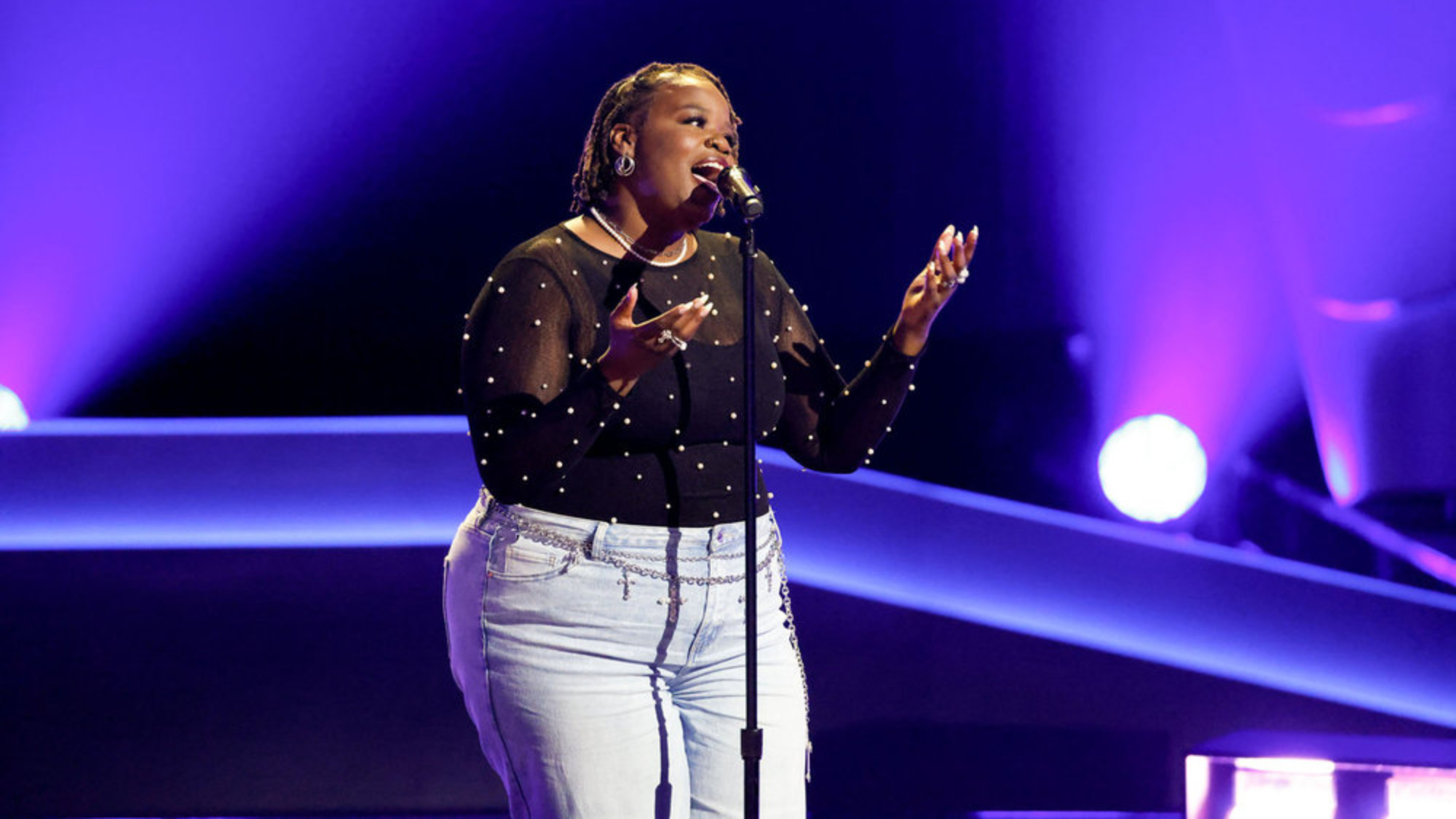
The landmark 30th season of the NBC vocal competition series The Voice concluded its premiere week with a standout performance that bridged the gap between raw vocal talent and the harsh realities of the modern pursuit of stardom. Amanda Mikkel, a 31-year-old vocalist, emerged as a definitive frontrunner during the final Blind Audition of the week, delivering a nuanced rendition of the 1961 classic “Moon River.” The performance prompted a rare four-chair turn from the coaching panel—comprising returning veteran Adam Levine, pop icon Kelly Clarkson, country star Riley Green, and multi-hyphenate entertainer Queen Latifah—before Levine utilized a high-stakes strategic maneuver to secure Mikkel for his roster.
The audition served as a centerpiece for the season’s opening narrative, highlighting the "First In Button," a new technical element introduced for Season 30. However, the technicalities of the competition were secondary to the personal narrative Mikkel shared prior to taking the stage. Her journey to the Los Angeles soundstage was characterized by significant personal and financial sacrifice, a theme that resonated deeply with both the coaches and the studio audience.
The Performance and Immediate Coaching Response
Mikkel’s choice of “Moon River,” originally composed by Henry Mancini with lyrics by Johnny Mercer, was noted by the coaches for its difficulty. The song requires a delicate balance of breath control, pitch precision, and emotional vulnerability—qualities that Mikkel demonstrated from the opening bars. As she moved through the melodic transitions of the standard, the coaches began to react to the clarity and "soulfulness" of her tone.
Adam Levine was the first to rotate his chair, followed in quick succession by Kelly Clarkson, Queen Latifah, and Riley Green. The four-chair turn is the highest honor a contestant can receive during the Blind Audition phase, indicating that the singer possesses the technical proficiency and marketability required to compete at the highest level of the program.
Levine, who returned to the series this season after a long hiatus, was vocal about his immediate connection to Mikkel’s vocal texture. He characterized her voice as possessing both "purity" and "luxury," noting that her ability to maintain softness without losing power was a rare trait in the current landscape of the competition. This assessment was echoed by Riley Green, who remarked that the audition transcended the typical competitive format, feeling more like a polished professional performance than a trial for a reality series.
A Narrative of Sacrifice: Housing Instability and the Pursuit of Art
Beyond the vocal mechanics, Mikkel’s appearance on The Voice brought to light the precarious economic conditions often faced by independent artists. During her pre-performance package, Mikkel revealed that she has been living in her vehicle for the last 18 months. This decision, she explained, was a calculated choice to bypass the high cost of traditional housing in order to funnel her limited resources into her musical career and "hustle."
“I keep all my things in storage, and I pack a bag I need for the week and I keep it moving,” Mikkel stated, describing a lifestyle of transient living that has become increasingly common among gig-economy workers and aspiring creatives in major metropolitan areas. She emphasized that while she had the option to return to a more stable living environment with family, she viewed her current situation as a necessary "mental and spiritual journey" to prove her dedication to her craft.
This revelation prompted a moment of vulnerability from coach Kelly Clarkson. The inaugural American Idol winner shared that she, too, had experienced a period of homelessness and had slept in her car during the early stages of her career in Los Angeles. Clarkson framed Mikkel’s housing instability not as a tragedy, but as a "testament" to her internal confidence and her willingness to forgo comfort for the sake of her professional aspirations.
Strategic Maneuvers: The "First In Button"
The competitive tension of the audition peaked when Adam Levine exercised the season’s newest rule: the "First In Button." This mechanism allows the coach who was the first to turn their chair for a contestant to essentially "lock" that contestant onto their team, bypassing the usual process where the singer chooses between the coaches who turned.
By pressing the button, Levine effectively neutralized the pitches from Clarkson, Green, and Queen Latifah. His decision to use this limited-use power on Mikkel during the premiere week underscores the high value he placed on her potential. Levine’s strategic move was met with a mixture of frustration from his fellow coaches and gratitude from Mikkel, who later admitted that Levine would have been her primary choice regardless of the intervention.
The "First In Button" represents NBC’s continued efforts to evolve the format of The Voice, which is currently in its 14th year of production. By introducing new stakes to the Blind Auditions, the producers aim to maintain viewership in an increasingly crowded reality television market.
Historical and Cultural Context: "Moon River"
The selection of “Moon River” for such a pivotal audition carries significant cultural weight. Since its introduction in the film Breakfast at Tiffany’s, where it was performed by Audrey Hepburn, the song has become a benchmark for vocalists. It won the 1962 Grammy Award for Record of the Year and Song of the Year.
For Mikkel, choosing a song with such a storied history was a gamble. Contemporary singing competitions often favor high-energy pop hits or belting ballads. By opting for a mid-century standard, Mikkel leaned into a "timeless" aesthetic, which Queen Latifah noted during her critique. Latifah praised the musical "journey" Mikkel took the audience on, suggesting that Mikkel’s style possesses a cross-generational appeal that could be a significant asset in the later rounds of the show, where public voting becomes the deciding factor.
Broader Implications for Season 30
The success of Amanda Mikkel’s audition highlights several key themes for Season 30 of The Voice. First, it reaffirms the show’s reliance on "triumph over adversity" narratives, which have been a staple of the genre since its inception. However, Mikkel’s story also touches on modern socio-economic issues, specifically the rising cost of living and the "starving artist" trope in a post-pandemic economy.
From a production standpoint, the premiere week has set a high bar for vocal talent. With a coaching panel that blends the show’s original DNA (Levine) with established star power (Clarkson, Latifah) and new genre representation (Green), the series is positioning itself to capture a broad demographic. The use of the "First In Button" on Mikkel suggests that the coaches are being more aggressive and tactical this season, anticipating a highly competitive field.
Data from previous seasons indicates that four-chair turn contestants who share a compelling personal backstory often have a higher retention rate among viewers. According to historical viewership trends for The Voice, episodes featuring high-stakes emotional reveals and technical coaching "battles" tend to see a spike in social media engagement and digital streaming numbers in the 24 hours following the broadcast.
The Path Forward for Team Adam
As Mikkel joins Team Adam, the focus will shift from her personal circumstances to her vocal development. Levine, known for his meticulous approach to song selection and arrangement, will likely look to capitalize on the "soulful softness" he identified during the Blind Audition. The upcoming Battle Rounds will test Mikkel’s ability to maintain her unique identity while performing in a duet format against other high-caliber vocalists on Levine’s roster.
Mikkel expressed a sense of honor regarding Levine’s use of the "First In Button," noting that his early belief in her talent provided a much-needed validation after a year and a half of living in her car. "He was going to be my first pick, but I feel honored that he would even want to use that on me," she told production cameras following the segment.
The Voice Season 30 will continue its search for the next breakout star as the Blind Auditions conclude. The series is scheduled to air every Monday on NBC, with subsequent episodes available for streaming on Peacock. As the competition progresses, Mikkel’s journey from her car to the national stage remains one of the most discussed arcs of the season, serving as a reminder of the lengths to which individuals will go to secure a foothold in the entertainment industry.
Official Reactions and Social Media Impact
Following the broadcast, social media platforms saw a surge in mentions of Mikkel’s performance. Fans and industry observers alike noted the technical proficiency of her "Moon River" rendition. NBC’s official digital channels highlighted the moment as a "must-watch," emphasizing the emotional resonance of the interaction between Mikkel and Clarkson regarding their shared experiences with housing instability.
Industry analysts suggest that Mikkel’s performance could lead to a renewed interest in classic American standards among younger viewers, a trend often seen when reality competitions feature "vintage" repertoire. Furthermore, the strategic use of the "First In Button" by Levine has sparked debate among the show’s fanbase regarding the fairness of the new rule, though most agree it adds a necessary layer of unpredictability to the veteran series.
As the premiere week draws to a close, the narrative established by Amanda Mikkel stands as a testament to the enduring appeal of The Voice: a platform where professional coaching and personal perseverance intersect to transform lives. The coming weeks will determine if Mikkel can translate her initial momentum into a sustained run toward the season finale.
