

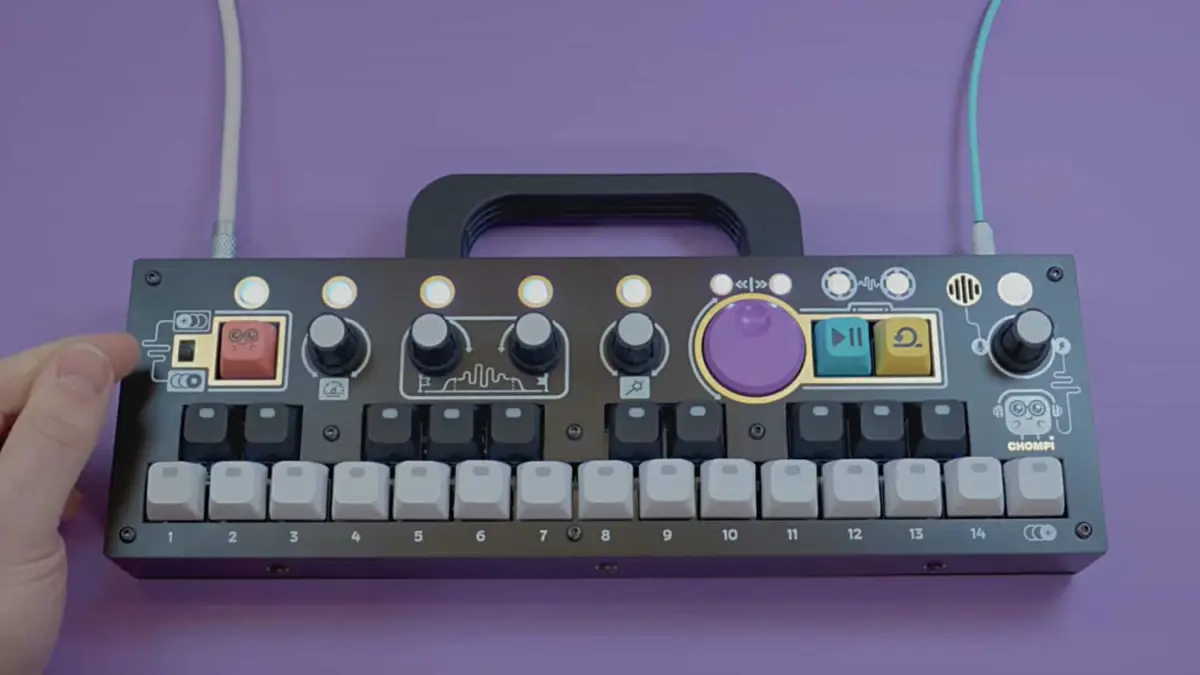
The landscape of boutique music technology underwent a significant shift this week as Chase Bliss and Chompi Club transitioned the Chompi sampling keyboard’s ecosystem from a closed hardware development cycle to an open-source software model. Following the official announcement that hardware-side development for the Chompi had reached its technical ceiling, the organizations released the underlying firmware to the public domain. This move has immediately borne fruit with the release of Nibbi, a free digital audio workstation (DAW) plugin developed by TemeculaDSP. Nibbi effectively ports the unique sonic architecture of the Chompi hardware into a software format, offering the sampler’s distinct lo-fi aesthetic and tape-style looping capabilities to a broader audience of producers and composers.
The Evolution and Hardware Limitations of the Chompi Platform
The Chompi sampling keyboard first entered the market as a collaborative project designed to simplify the often-complex world of granular synthesis and sampling. With its distinctive mechanical keyboard keys and a workflow centered on immediacy, it quickly gained a cult following among experimental musicians and hobbyists. However, the compact nature of the device and its specific internal architecture eventually presented insurmountable hurdles for further feature expansion.
Chase Bliss, a company renowned for its high-end effects pedals and innovative digital-analog hybrids, spearheaded the development alongside the Chompi Club. In a recent technical briefing, the developers noted that the hardware’s processing power and memory allocation had been pushed to their absolute limits. To continue adding the complex modulation and sampling features requested by the user base would have required a complete hardware redesign, a move that would have rendered existing units obsolete. Instead of abandoning the project, the decision was made to open-source the firmware, allowing the community to maintain and evolve the code independently.
The Emergence of Nibbi: Porting Hardware Soul to Software
Almost immediately following the release of the open-source code, TemeculaDSP announced the launch of Nibbi. This new plugin is a direct descendant of the Chompi’s internal engine, optimized for modern computing environments. By translating the firmware into VST, Audio Unit (AU), and AAX formats, TemeculaDSP has ensured that the "Chompi sound" remains accessible regardless of hardware availability or future component shortages.
Nibbi replicates the core functionality that made the original hardware a success. It allows users to record and sample sounds directly into the plugin, which can then be mapped across a MIDI keyboard for polyphonic playback. The software maintains the hardware’s signature "Magic" effects—a combination of lo-fi saturation, wow and flutter, and resonant filtering—that provide a nostalgic, tape-saturated quality to modern digital recordings. The inclusion of the tape-style looping mechanism is a centerpiece of the plugin, allowing for the layering of sound on sound in a manner that mimics vintage analog equipment.
A Chronology of Development: From Kickstarter to Open Source
The journey of the Chompi sampling keyboard is a testament to the volatility and creativity of the boutique instrument market. To understand the significance of the Nibbi release, one must look at the timeline of the platform’s development:
- Early 2023: The Chompi project is unveiled via a crowdfunding campaign on Kickstarter. It receives overwhelming support, raising over $1 million from thousands of backers, highlighting a massive demand for tactile, "fun" samplers.
- Late 2023: Initial units ship to backers. The device is praised for its build quality and unique "boutique" aesthetic, though some power users begin requesting more advanced MIDI implementation and longer sample times.
- Early 2024: Chase Bliss and Chompi Club release several firmware updates aimed at optimizing performance. However, internal reports suggest that the ARM-based processor within the unit is nearing 90% utilization during complex operations.
- July 2024: Official announcement from Chase Bliss confirming the end of internal hardware development. The company cites "hardware constraints" as the primary reason for the cessation of new features.
- Late 2024: The firmware is officially published under an open-source license. Within weeks, TemeculaDSP announces and releases Nibbi, the first major software iteration of the platform.
Technical Analysis of the Nibbi Engine
Nibbi is not merely a cosmetic emulation; it is a functional reconstruction of the Chompi’s digital signal processing (DSP) chain. The plugin features a robust sampling engine capable of handling various bit depths and sample rates, though it is specifically tuned to deliver the 12-bit-style grit associated with early digital samplers.
One of the most significant technical achievements of Nibbi is its handling of "Wow and Flutter." In the original hardware, these parameters were controlled via physical knobs that interacted with the digital clocking of the sample playback. TemeculaDSP has successfully modeled this behavior in the software domain, providing a non-linear pitch instability that feels organic rather than algorithmic. Furthermore, the plugin includes:
- Multi-Mode Filters: High-pass and low-pass filters with resonant peaks that allow for aggressive sound shaping.
- Integrated Delay and Reverb: Spatial effects that are hard-coded into the signal path to ensure the "all-in-one" feel of the original hardware.
- Variable Speed Playback: The ability to slow down or speed up loops in real-time, affecting both pitch and tempo, a hallmark of tape-based composition.
- Open Architecture: Because it is based on the open-source firmware, there is potential for third-party developers to create "skins" or "mods" for Nibbi, further extending its utility.
Industry Implications and the "Right to Repair" Philosophy
The decision by Chase Bliss and Chompi Club to open-source their firmware is being viewed by industry analysts as a progressive step in an era where "planned obsolescence" is a common concern. By releasing the code, the developers have ensured that the Chompi hardware will never truly become a "brick." Even if the original companies cease to exist, the community has the tools to fix bugs or adapt the software for new use cases.
Furthermore, the release of Nibbi as a free plugin challenges the traditional economic model of the music software industry. Typically, a company might charge between $99 and $199 for a plugin of this complexity. By offering it for free, TemeculaDSP and the original creators are prioritizing brand ecosystem and community goodwill over immediate per-unit profit. This strategy may serve to onboard a younger generation of producers who cannot afford $600 hardware instruments but who will eventually look to Chase Bliss for future hardware purchases.
Official Statements and Community Reaction
While official press releases have been concise, the underlying sentiment from the development teams suggests a bittersweet transition. A spokesperson for Chase Bliss noted that while it is difficult to stop development on a physical product, the "infinite headroom" of the software environment provides a more sustainable future for the Chompi’s unique workflow.
The community reaction has been largely positive. On forums such as Reddit and Gearspace, users have praised the transparency of the developers. "It’s rare to see a company admit they’ve hit a hardware wall and then give the keys to the kingdom to the users," noted one veteran sound designer. "The Nibbi plugin is a gift to those of us who loved the Chompi sound but needed the flexibility of a DAW integration."
Looking Ahead: The Future of Boutique DSP
The success of the Nibbi release may signal a new trend for boutique manufacturers. As digital components become more expensive and supply chains remain unpredictable, the "Hardware-to-Software" pipeline offers a viable secondary life for products. We may see more companies developing specialized hardware as "tactile controllers" for what is essentially an open-source software engine.
For now, Nibbi stands as a robust tool for the modern producer. It bridges the gap between the tactile, experimental world of boutique hardware and the precision of digital recording. By removing the barrier of entry—both in terms of cost and hardware availability—Chase Bliss, Chompi Club, and TemeculaDSP have ensured that the quirky, lo-fi spirit of the Chompi sampling keyboard will continue to resonate in studios across the globe.
Nibbi is currently available for download via the TemeculaDSP website. It is compatible with Windows and macOS and supports most major host applications. As an open-source-derived project, it remains to be seen how the user community will further modify the code, but for the moment, it represents one of the most significant free offerings in the contemporary music technology market.
