

The global music industry has undergone a radical transformation over the last decade, transitioning from a centralized, label-dominated landscape to a decentralized ecosystem where independent artists now command a significant share of the market. According to recent industry reports from MIDiA Research, the "independent artist-direct" segment is the fastest-growing part of the global recorded music market, with revenues exceeding $1.5 billion annually. However, this democratization of music production and distribution has led to an unprecedented saturation of content, with over 100,000 new tracks uploaded to streaming platforms every day. In this hyper-competitive environment, industry analysts and veteran performers alike argue that technical proficiency is no longer the sole determinant of success; rather, the ability to build and leverage strategic networks has become the primary driver of career longevity and creative expansion.
For the independent musician, the concept of networking often carries a connotation of corporate formality or transactional social climbing. Yet, a closer examination of the industry’s current trajectory reveals that the most successful independent ventures are rooted in community-driven collaboration. By moving beyond traditional self-promotion and embracing multi-disciplinary partnerships, artists can navigate the complexities of the modern market more effectively. This report examines five strategic avenues for networking that are currently reshaping the professional paths of independent creators.
The Rise of Trans-Disciplinary Collaboration in Local Art Scenes
While digital connectivity remains a cornerstone of the modern era, the economic and creative value of local art ecosystems cannot be overstated. Regional art scenes—encompassing visual arts, theater, and performance poetry—offer a fertile ground for "trans-disciplinary" collaboration. This approach involves musicians partnering with artists in non-musical fields to create immersive, multi-sensory experiences that stand out in a crowded digital marketplace.

Economic data from the creative economy suggests that multi-disciplinary events often attract a more diverse demographic than single-genre music shows. For instance, a musician collaborating with a local sculptor to provide a sonic landscape for a gallery opening does not merely "play a gig"; they tap into the sculptor’s existing patron base and professional network. These "cross-pollination" events often lead to high-value opportunities, such as sync licensing for theater productions or commissions for art installations. By attending gallery openings, open mic nights, and local festivals, musicians position themselves as integral components of a broader cultural fabric, rather than isolated service providers.
Formalizing Community Growth through Workshops and Jam Sessions
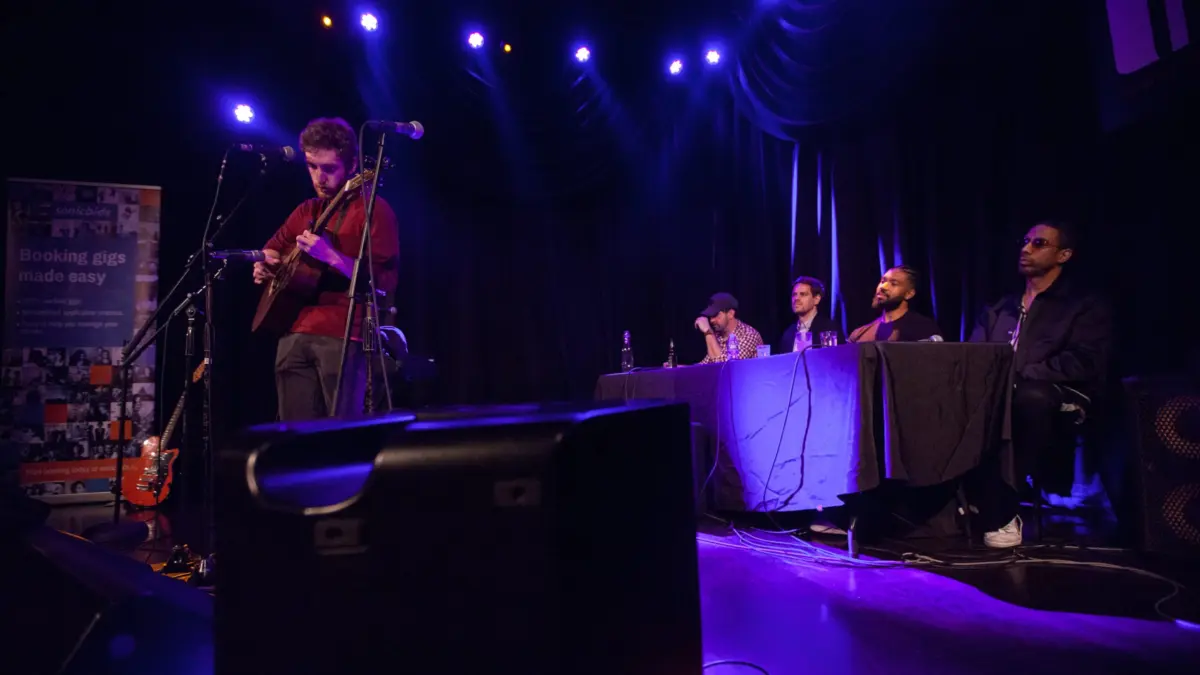
A significant trend observed in major music hubs like New York, Nashville, and London is the rise of the "Feedback Collective"—a structured approach to peer-to-peer networking. Organizations such as Sonicbids have pioneered these formats, hosting panel discussions and songwriting workshops that prioritize communal growth over individual competition. These events serve a dual purpose: they provide a "safe harbor" for creative experimentation and act as a vetting ground for future professional partnerships.
When an artist takes the initiative to host a jam session or a workshop, they shift their role from a passive participant to a community leader. This leadership position naturally attracts diverse talent, ranging from rock guitarists to jazz saxophonists. The resulting "genre-fluidity" is a hallmark of contemporary successful music; many of the top-charting tracks of the 2020s are the result of unexpected stylistic mergers. By facilitating these interactions, artists create a "social capital" that can be drawn upon for future recording projects, tour support, or co-writing sessions.
Leveraging Niche Digital Platforms for Strategic Engagement
While mainstream social media platforms like Instagram and TikTok are essential for brand visibility, they are often optimized for "broadcasting" rather than "collaboration." In contrast, niche platforms like BandLab and SoundCloud have evolved into sophisticated collaborative environments. BandLab, for example, reported a surge in its user base to over 60 million creators, driven largely by its cloud-based digital audio workstation (DAW) that allows musicians to collaborate on tracks in real-time regardless of geographic location.

The strategic use of these platforms involves more than just uploading finished products. It requires active participation in the "creative process" of others. Industry experts recommend a "value-first" approach: leaving constructive, technical feedback on a peer’s track or offering a specific instrumental contribution to an ongoing project. This methodology builds a digital rapport that is far more durable than a simple follow or like. These micro-communities often form the backbone of "digital collectives," which can collectively market their music to wider audiences, effectively pooling their fanbases for mutual benefit.
The Access Economy: Strategic Volunteering and Industry Integration
For many independent artists, the barrier to entry for high-level networking is often financial or social. Music festivals and major industry conferences can be prohibitively expensive to attend as a guest. Consequently, the "access economy"—the practice of volunteering one’s time in exchange for proximity to decision-makers—has become a vital strategy.
Volunteering at a music festival provides a behind-the-scenes look at the logistical and commercial realities of the industry. It places an artist in direct contact with stage managers, booking agents, and established performers in a professional context. Historical data on music industry careers shows that a significant number of tour managers and session musicians began their careers in volunteer or entry-level production roles. The key to success in this arena is the transition from "worker" to "colleague." By demonstrating reliability and a deep understanding of the festival ecosystem, volunteers can establish the trust necessary to introduce their own musical projects to industry veterans during the "down-time" of an event.
Fan-Sourced Networking and the 1,000 True Fans Theory
The most overlooked asset in an independent artist’s network is their existing audience. This concept aligns with Kevin Kelly’s "1,000 True Fans" theory, which posits that a creator only needs a relatively small number of dedicated supporters to sustain a career. However, in the modern context, fans are not just consumers; they are active agents in an artist’s professional network.

Utilizing digital tools to survey or poll a fanbase about potential collaborations does more than just drive engagement; it provides market data. If a significant portion of a fanbase expresses interest in a particular genre or a specific local artist, it provides a data-backed rationale for a collaboration. Furthermore, fans often possess their own professional networks. A fan who works in a local radio station, owns a printing shop, or knows a talented videographer can provide resources that would otherwise be cost-prohibitive for an independent artist. Involving the audience in the creative journey fosters a sense of "co-ownership," which significantly increases the lifetime value of a fan and expands the artist’s reach through word-of-mouth networking.
Chronology of an Independent Connection: From Encounter to Release
The lifecycle of a successful collaboration typically follows a specific chronological path that mirrors the professional networking strategies outlined above:
- The Discovery Phase: An artist encounters a potential collaborator at a local art event or via a niche digital platform.
- The Rapport Phase: Initial interaction occurs through low-stakes engagement, such as attending each other’s shows or providing feedback on digital demos.
- The Pilot Project: The parties engage in a small-scale collaboration, such as a one-off jam session or a guest feature on a single track.
- The Integration Phase: If the pilot is successful, the artists merge their resources, which may include co-hosting a workshop or a joint-headline local show.
- The Strategic Launch: The final collaborative product is released, supported by the combined marketing efforts of both artists and their respective fanbases.
Analysis of Implications: The Future of the Music Career
The shift toward a community-centric networking model has profound implications for the future of the music industry. As the traditional "gatekeeper" model continues to erode, the "network effect" becomes the primary currency of the independent artist. Success is increasingly measured by the "density" of an artist’s network—how many different creative and professional circles they intersect with.
This evolution suggests that the future "music professional" will need to be as much a community organizer and a digital strategist as they are a musician. The ability to navigate different artistic disciplines, manage digital communities, and build trust-based professional relationships will be the defining skills of the next generation of creators.

In conclusion, networking for the independent musician is not an auxiliary activity but a core business function. By embracing local art scenes, hosting community events, utilizing collaborative digital tools, volunteering for industry access, and empowering their fanbase, artists can build a resilient infrastructure for their careers. In an era where the "signal-to-noise" ratio is at an all-time high, it is the strength of one’s community—rather than the volume of one’s marketing—that will ultimately determine who is heard. The journey from independent creator to industry staple is paved with the connections made along the way, turning the daunting task of networking into a strategic adventure of creative discovery.
