

The global independent music sector has experienced an unprecedented transformation over the last decade, evolving from a peripheral niche into a dominant force within the international entertainment economy. According to recent industry reports, the "artist-direct" segment—musicians who release music without the backing of traditional record labels—is the fastest-growing part of the global recorded music market, now generating over $1.5 billion in annual revenue. This shift has necessitated a fundamental change in how artists approach professional development, moving away from traditional gatekeeper-led models toward decentralized, community-driven networking. For the modern independent musician, the ability to forge strategic partnerships is no longer a secondary skill but a primary requirement for career longevity and market penetration.
While the technical barriers to music production and distribution have effectively collapsed, the challenge of visibility in a saturated market remains significant. Data indicates that upwards of 100,000 new tracks are uploaded to streaming platforms daily, creating a "noise floor" that is difficult for individual artists to transcend in isolation. Consequently, the industry is seeing a return to localized and community-based collaboration as a means of building sustainable audiences. Industry analysts suggest that "cross-pollination"—the act of collaborating across different artistic disciplines and genres—is one of the most effective methods for expanding a listener base without the massive marketing budgets of major labels.
The Evolution of Networking in the Digital Era
Historically, the trajectory for a musician involved a linear path: local performances, the creation of a physical demo, and the pursuit of a contract with a major or mid-tier label. Networking was often confined to high-level industry mixers or the "pay-to-play" circuits of major metropolitan hubs like Nashville, Los Angeles, or London. However, the chronology of the industry has shifted toward a "social discovery" model. Since the mid-2010s, the rise of platforms that facilitate direct artist-to-artist interaction has democratized the ability to build a professional circle.

This evolution has been marked by several key milestones. The early 2000s saw the rise of MySpace as a rudimentary networking tool, followed by the professionalization of booking through platforms like Sonicbids. By the 2020s, the emergence of cloud-based digital audio workstations (DAWs) and collaborative social platforms allowed for asynchronous global partnerships. Today, networking is characterized by a "hybrid" approach, combining physical community engagement with sophisticated digital outreach. This multifaceted strategy allows artists to mitigate the risks of platform-dependency while maximizing their geographic and digital footprint.
Interdisciplinary Engagement: The Role of Local Art Scenes
One of the most underutilized assets for the independent musician is the broader local arts ecosystem. While musicians often gravitate toward other musicians, industry experts argue that the most innovative collaborations frequently occur at the intersection of different media. Local art galleries, theater companies, and performance poetry circles represent high-density environments of creative professionals who require auditory components for their work.
Statistical evidence from urban studies suggests that "creative clusters"—neighborhoods with high concentrations of diverse artists—foster higher rates of economic resilience for individual participants. For example, a visual artist hosting a gallery opening may require a curated soundscape, providing a musician with a captive, high-intent audience that is distinct from the typical bar or club demographic. Similarly, the growing demand for original scores in independent theater and short-form digital content provides a steady stream of "work-for-hire" opportunities that can fund an artist’s personal projects while expanding their professional network.
The Feedback Collective: A Case Study in Structured Collaboration
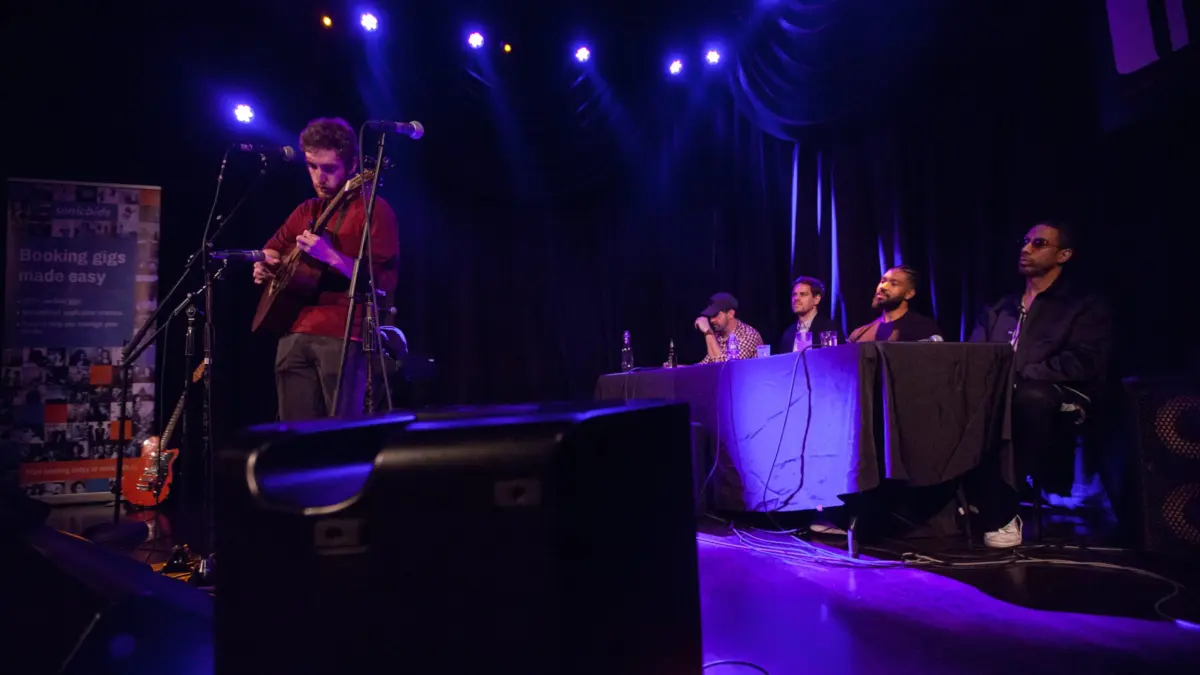
A prominent example of structured networking is the "Feedback Collective," a series of panel discussions and songwriting workshops recently hosted by Sonicbids. These events are designed to bridge the gap between emerging talent and established industry professionals. By creating a formalized environment for critique and collaboration, these workshops remove the social anxiety often associated with "cold" networking.

During a recent Feedback Collective Songwriting Workshop, participants were encouraged to engage in "forced-pair" collaborations, where musicians from disparate genres were tasked with creating a skeletal track in a limited timeframe. The results of such initiatives are often twofold: first, they produce "fresh sounds" that challenge the artists’ creative norms; second, they establish a high-trust relationship between participants. Official statements from event organizers highlight that these sessions often lead to long-term professional partnerships that extend far beyond the workshop itself. The "Feedback Collective" model demonstrates that when networking is framed as a shared educational experience rather than a transactional exchange, the quality of the resulting connections is significantly higher.
Leveraging Niche Digital Platforms and Asynchronous Tools
While mainstream social media platforms like Instagram and TikTok are essential for fan engagement, they are often less effective for professional B2B (business-to-business) networking within the music industry. Instead, professional musicians are increasingly turning to specialized ecosystems such as BandLab and SoundCloud. These platforms are built on a foundation of collaboration rather than mere consumption.
BandLab, for instance, reported surpassing 60 million users globally in 2023, with a significant portion of its growth attributed to its built-in collaborative features. These tools allow a producer in Tokyo to collaborate with a vocalist in Berlin in real-time or asynchronously. For the independent musician, these platforms serve as a global "jam session." Analysis of user behavior on these sites shows that "thoughtful engagement"—such as providing specific technical feedback on a track rather than generic praise—is the most reliable way to initiate a professional relationship. This data-driven approach to networking emphasizes the value of "creative capital" over social media follower counts.
The Backstage Economy: Volunteering and Festival Logistics
The music festival circuit remains one of the most concentrated networking opportunities in the world. However, for many independent artists, the barrier to entry as a performer is high. An alternative and highly effective strategy is participating in the "backstage economy" through volunteering or working in event production.

Volunteering at a festival provides an artist with a behind-the-scenes look at industry operations and direct access to event organizers, stage managers, and touring professionals. This immersive environment allows for "organic networking" during downshifts or shared tasks. Chronologically, many successful independent careers have been jumpstarted by a chance encounter in a festival’s production tent or artist catering area. By contributing to the success of an event, a musician demonstrates reliability and professional work ethic—traits that are often more highly valued by industry veterans than a flashy social media profile.
Direct-to-Fan (D2F) Networking and Community Management
A common oversight among independent musicians is the failure to recognize their existing fanbase as a networking resource. The modern music industry is increasingly moving toward a "community-led" growth model. In this framework, fans are not merely passive consumers but active participants in the artist’s career trajectory.
Surveys conducted by digital marketing firms show that fans feel a higher sense of loyalty when they are consulted on creative decisions. Utilizing polls or surveys to ask fans about potential collaborators can yield surprising results. Frequently, fans have personal or professional connections to other creatives that the artist may not be aware of. This "six degrees of separation" can be activated through simple community management techniques. Furthermore, involving fans in the networking process creates a "crowdsourced" promotional team, as they are more likely to share a collaboration that they feel they helped facilitate.
Broader Impact and Industry Implications
The shift toward these diverse networking strategies has profound implications for the future of the music industry. First, it is leading to the "de-marginalization" of independent artists. As musicians become more adept at self-organization and peer-to-peer collaboration, the necessity for traditional label intervention decreases. This leads to a more equitable distribution of royalties and greater creative control for the artist.

Second, these strategies are fostering a more genre-fluid musical landscape. When a rock guitarist jams with a jazz saxophonist at a local workshop, or a folk singer collaborates with an electronic producer via a digital platform, the resulting music often defies traditional categorization. This "genre-blurring" is reflected in current streaming trends, where "mood-based" and "vibe-based" playlists are outperforming traditional genre-based playlists.
Finally, the emphasis on community and collaboration is creating a more resilient creative class. In an era where AI-generated content and algorithmic curation pose challenges to human creators, the "human-to-human" connection fostered through networking remains a unique and irreplaceable value proposition. The independent musicians who thrive in the coming decade will be those who view networking not as a burden, but as a strategic pillar of their creative practice.
In conclusion, the path to success for the independent musician is paved with deliberate, strategic, and diverse connections. By embracing local art scenes, participating in structured workshops like the Feedback Collective, utilizing specialized digital tools, engaging in the festival ecosystem, and activating their own fanbases, musicians can build a robust professional network that supports both their artistic vision and their commercial goals. The democratization of the music industry has provided the tools; it is now up to the individual artist to build the community.
