

The global independent music sector has undergone a seismic shift over the last decade, transitioning from a marginalized segment of the industry into a dominant economic force. According to industry reports from Midia Research, the independent artist sector—often referred to as "artists direct"—is the fastest-growing segment of the global music business, generating over $1.2 billion in annual revenue. However, as the marketplace becomes increasingly saturated with over 100,000 tracks uploaded to streaming platforms daily, the ability to network and collaborate has moved from an optional skill to a fundamental business necessity. For the modern independent musician, the challenge of networking is often compounded by the "solopreneur" nature of the work, yet the data suggests that collaborative projects frequently outperform solo releases in terms of reach, algorithmic favorability, and audience retention.
The path to professional sustainability in music is no longer dictated solely by gatekeepers at major labels but is instead built through a complex web of peer-to-peer relationships and cross-disciplinary partnerships. By examining the logistical and strategic benefits of community-based growth, artists can move beyond the intimidation of networking to implement structured systems for career advancement. This report analyzes five core methodologies for professional networking, supported by industry trends and the evolving landscape of creative collaboration.
The Rise of Interdisciplinary Networking in Local Hubs
Traditional networking often focuses narrowly on industry-specific mixers or label showcases. However, contemporary market analysis suggests that some of the most lucrative and creatively fulfilling partnerships are found in interdisciplinary environments. Local art scenes—comprising visual artists, theater troupes, and digital designers—offer a fertile ground for musicians to find "blue ocean" opportunities where competition for sonic space is lower.

In these settings, a musician is not merely another performer in a crowded lineup but a potential solution to a creative problem. For example, the burgeoning field of immersive art installations frequently requires bespoke soundscapes. A sculptor or digital muralist seeking a soundtrack for a gallery opening provides the musician with a high-visibility platform that bypasses the standard "pay-to-play" or "low-draw" hurdles of traditional club booking. Furthermore, theater companies and independent filmmakers are increasingly looking for local composers to avoid the high costs of licensing established tracks. These collaborations do more than provide a one-off performance; they embed the musician’s work into a different medium, effectively doubling the potential audience reach through the collaborator’s own followers.
The Feedback Collective and the Efficacy of Participatory Spaces
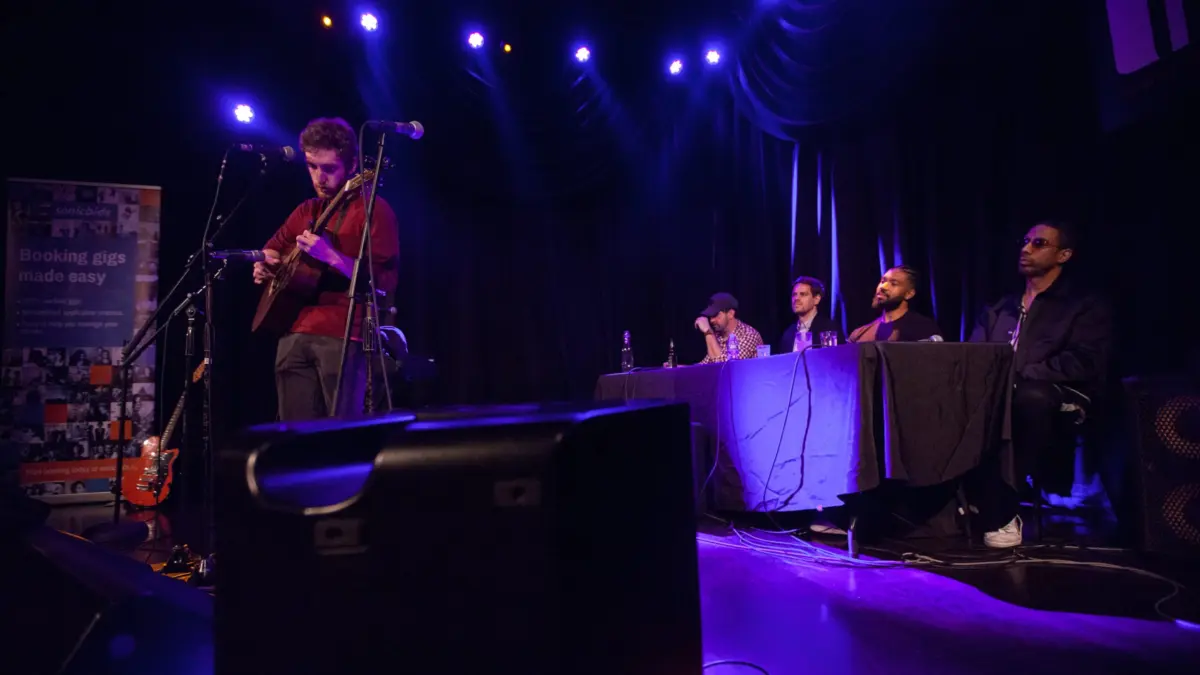
The emergence of structured participatory spaces, such as the Feedback Collective Panel Discussions and Songwriting Workshops hosted by Sonicbids, highlights a shift toward "co-opetition"—a model where competitors cooperate for mutual benefit. These events serve as a controlled environment for musicians to transition from isolated creators to active community members.
Data from creative workshops indicates that the "barrier to entry" for networking is significantly lowered when the interaction is centered on a shared task rather than a social hierarchy. When a rock guitarist engages in a jam session with a jazz saxophonist, the resulting "fusion" is not just a musical experiment; it is a strategic merger of two distinct demographics. By hosting these sessions, artists position themselves as facilitators and leaders within their local ecosystem. This "host" status confers a degree of social capital that is difficult to achieve through passive attendance. It creates a recurring touchpoint for industry professionals and peers to observe an artist’s technical proficiency and professional reliability in a low-pressure setting.
Digital Ecosystems and the Evolution of Remote Collaboration
While mainstream social media platforms like Instagram and TikTok are essential for discovery, they are often optimized for consumption rather than collaboration. In response, a secondary layer of the digital music economy has emerged, centered on platforms like BandLab, SoundCloud, and Discord. These environments are built on the premise of "active engagement," where the primary user base consists of creators rather than passive listeners.

The strategic use of these platforms involves moving beyond self-promotion toward proactive contribution. Industry analysts note that "comment-section networking"—when executed with genuine insight rather than "copy-paste" spam—can lead to high-level remote collaborations. This has birthed the "global bedroom" phenomenon, where an artist in London can provide vocals for a producer in Tokyo, with the resulting track being distributed globally. This model of collaboration is particularly effective for independent artists because it allows for the sharing of production costs and the pooling of marketing resources. When two artists collaborate on a single, the algorithms of streaming services like Spotify and Apple Music link both artists’ profiles, presenting the track to both sets of "Release Radar" and "Discovery" playlists, effectively doubling the organic reach.
The Backstage Economy: Volunteering as a Strategic Entry Point
Music festivals and large-scale industry events remain the primary nodes of high-level networking, but for the independent artist, the "front-of-house" experience can be prohibitively expensive and socially isolating. Volunteering offers a strategic "backstage" entry point that provides access to the industry’s inner workings. By working in logistics, artist relations, or production, musicians gain a firsthand view of the operational requirements of large-scale success.
The chronology of many successful independent careers includes a period of "service" to the industry. Volunteering allows an artist to interact with event organizers, sound engineers, and established performers as a peer in a professional context. These interactions are often more substantive than a brief introduction after a set. When a volunteer demonstrates reliability and a strong work ethic, they build a reputation that precedes their music. In an industry where "who you know" is often shorthand for "who trusts you," the social capital gained through volunteering can lead to future booking opportunities, mentorships, and internal referrals that are unavailable to the general public.
Leveraging the Fanbase as a Networking Engine
One of the most underutilized assets in an independent artist’s arsenal is their existing fanbase. The "1,000 True Fans" theory, popularized by Kevin Kelly, posits that an artist does not need global stardom to be sustainable; they need a dedicated core of supporters. In the context of networking, these fans often act as a decentralized street team and talent scouting network.

By involving fans in the collaborative process—through polls, surveys, or "A&R" style feedback sessions—artists can tap into a wealth of local knowledge. Fans are often the first to know about emerging local talent or under-the-radar venues. A fan’s recommendation of a local singer or a graphic designer carries the weight of a warm introduction. This "fan-sourced" networking also serves a secondary purpose: it increases the "stickiness" of the audience. When fans feel they have played a role in the creation or the professional trajectory of an artist, their loyalty shifts from passive listening to active advocacy. This emotional investment is the primary driver of successful crowdfunding campaigns and long-term career longevity.
Implications for the Future of the Independent Sector
The transition from a "lone wolf" mentality to a collaborative framework is not merely a social adjustment; it is an economic imperative in the modern creator economy. The data is clear: independent musicians who engage in regular collaborative activity see a more consistent growth trajectory than those who operate in isolation.
The broader implications of this shift suggest a move toward a "guild" model of music production, where local and digital collectives provide the support systems once offered by traditional record labels. These systems include peer-to-peer marketing, shared studio spaces, and collective bargaining for better performance rates. As the industry continues to decentralize, the "Feedback Collective" model of songwriting workshops and panel discussions will likely become the standard for professional development.
In conclusion, the modern independent musician must view networking as a form of "social R&D." Every interaction at a local gallery, every hour spent volunteering at a festival, and every collaborative comment on a digital platform is an investment in the artist’s professional infrastructure. By moving beyond the intimidation of the "networking" label and embracing these five strategies, musicians can build a resilient, multi-faceted career that is capable of navigating the complexities of the 21st-century music industry. The era of the isolated genius is being replaced by the era of the connected creator, and those who master the art of the partnership are the ones most likely to define the future of the medium.
