

The independent music sector has undergone a seismic shift over the last decade, evolving from a fringe movement into a multibillion-dollar powerhouse that currently accounts for a significant portion of global recorded music revenue. As the digital marketplace becomes increasingly saturated, with upwards of 100,000 tracks uploaded to streaming platforms daily, the traditional "lone wolf" approach to music production and promotion is being replaced by a sophisticated model of community-driven growth. For the modern independent artist, the ability to network and collaborate is no longer a peripheral skill but a core requirement for commercial viability and creative longevity. Recent industry analysis suggests that artists who engage in cross-disciplinary partnerships and localized community building see higher retention rates among their fanbases and more robust growth in their streaming metrics compared to those who rely solely on algorithmic discovery.
The Evolution of the Independent Music Economy
The current state of the music industry reflects a transition from the "gatekeeper era" to the "attention economy." According to MIDiA Research, independent artists—those not signed to major labels—are the fastest-growing segment of the music business, generating over $1.2 billion in 2023 alone. However, this growth has brought about a paradox of choice for listeners and a visibility crisis for creators. To navigate this, networking has moved beyond the exchange of business cards at industry conferences; it has become an integrated facet of the creative process itself.
Historically, networking for musicians was confined to specific geographic hubs like Nashville, London, or Los Angeles. The digital revolution of the early 2010s decentralized this, moving interactions to platforms like MySpace and later Instagram. However, the post-pandemic era of 2024 has seen a resurgence in the "hyper-local" movement. Artists are rediscovering that while digital reach is global, the most impactful collaborations often begin in physical, multi-disciplinary spaces. This shift is characterized by five distinct strategies that leverage community, technology, and fan engagement to bypass traditional industry bottlenecks.

Cross-Disciplinary Integration: The Role of Local Art Scenes
One of the most effective, yet frequently overlooked, avenues for musical networking lies within the broader arts community. By engaging with local art events—ranging from gallery openings to theater productions and performance poetry—musicians can tap into creative clusters that are often underserved by original soundtracks.
Data from urban development studies indicates that "creative clusters" thrive when different artistic disciplines intersect. For instance, a visual artist hosting an exhibition of sculptures may require a bespoke sonic environment to enhance the viewer’s experience. This creates a symbiotic relationship: the musician gains a new, captive audience and a unique portfolio piece, while the visual artist gains an immersive element for their work. These interactions often lead to high-concept projects that attract media attention more effectively than a standard single release. Industry observers note that "sync" opportunities—placing music in other media—are often born from these grassroots relationships rather than formal applications.
The Feedback Collective: Grassroots Leadership through Workshops
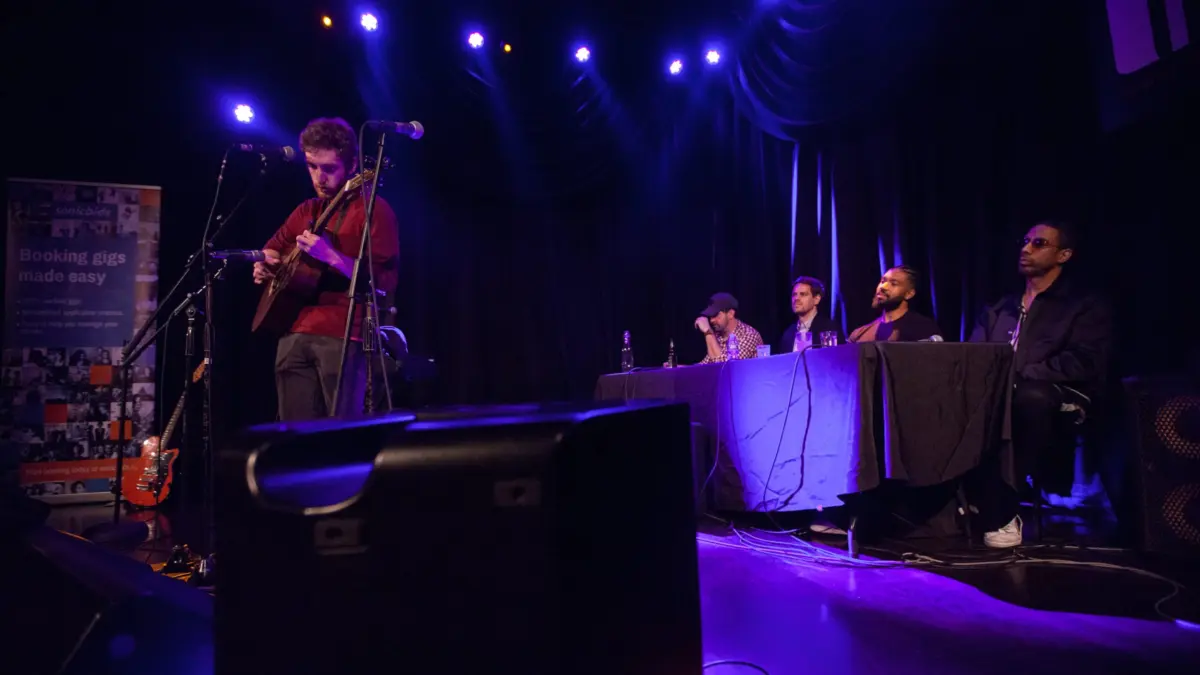
The rise of the "Feedback Collective" and artist-led workshops represents a move toward institutionalizing peer-to-peer support. Organizations like Sonicbids have pioneered this model, hosting panel discussions and songwriting workshops that prioritize direct interaction over passive learning. By hosting a jam session or a technical workshop, an artist shifts their position from a seeker of opportunities to a facilitator of them.
Chronologically, the trend of artist-led workshops began as a response to the isolation of home recording. As DAWs (Digital Audio Workstations) became more accessible, the physical "studio culture" began to fade. To reclaim this, independent musicians are now organizing "genre-blind" jam sessions. When a rock guitarist collaborates with a jazz saxophonist in a low-stakes environment, the result is often a hybrid sound that aligns with the current market trend toward genre-fluidity. These sessions serve as a natural vetting process for future professional partnerships, allowing artists to assess each other’s technical proficiency and interpersonal compatibility before committing to a commercial project.

Navigating Niche Digital Ecosystems and Collaborative Platforms
While mainstream social media platforms like TikTok and Instagram are essential for broad-scale marketing, they are often criticized for their "one-way" communication style. In contrast, platforms specifically designed for collaboration, such as BandLab, SoundCloud, and Splice, are fostering a global "virtual studio" environment. BandLab, for example, reported reaching over 60 million users, highlighting a massive appetite for collaborative creation.
The strategy for modern networking involves a move away from "broadcasting" toward "engaging." This involves leaving substantive feedback on the work of peers and proposing specific, actionable collaboration ideas. Journalistic analysis of digital music trends suggests that "remix culture" and "feature culture" are the primary drivers of discovery on streaming services. By contributing a verse, a beat, or a mix to another artist’s project, a musician effectively "ports" their brand into a new demographic. This lateral growth is often more cost-effective than paid advertising.
The Hidden Job Market: Volunteering and Industry Immersion
The "hidden job market" in the music industry refers to the vast majority of opportunities that are never posted on job boards but are instead filled through word-of-mouth and personal recommendations. Volunteering at music festivals or industry events provides a "backstage" perspective that is inaccessible to the general public.
A timeline of a typical festival cycle shows that the most critical networking occurs during the "load-in" and "soundcheck" phases, long before the first note is played for the public. Volunteers working in artist relations, stage management, or even logistics find themselves in close proximity to industry decision-makers, booking agents, and touring professionals. Statements from festival organizers indicate that they frequently look to their pool of reliable volunteers when seeking local talent for future lineups. The "shared goal" environment of a festival breaks down the social barriers that often make cold-calling or emailing industry professionals ineffective.

Fan-Led A&R: Utilizing the Fanbase as a Collaborative Resource
The most significant shift in 2024 is the democratization of the A&R (Artists and Repertoire) process. Independent musicians are increasingly utilizing their fanbases not just as consumers, but as consultants. Through tools like Patreon, Discord, and Instagram polls, artists can involve their audience in the decision-making process of networking.
A survey-based approach—asking fans which other artists they are listening to—serves two purposes. First, it provides the artist with data-driven leads for potential collaborators who already share a common audience. Second, it increases fan "investment" in the artist’s career. If a fan introduces a musician to a local collaborator, and that collaboration results in a successful track, the fan becomes a brand advocate. This model of "community-sourced growth" is a direct response to the diminishing returns of traditional PR and represents a move toward a more sustainable, loyalty-based music economy.
Economic Implications and Professional Analysis
The broader impact of these networking strategies is reflected in the diversification of income streams for independent artists. Collaboration is no longer just about the music; it is an economic hedge. By sharing the costs of production, marketing, and touring with a partner, independent musicians can achieve a scale that would be financially impossible alone.
Furthermore, the "collaborative multiplier effect" is visible in streaming data. When two artists collaborate on a track, the song is typically pushed to both artists’ "Release Radar" and "Discover Weekly" algorithms on Spotify. This doubles the initial data points the algorithm receives, significantly increasing the likelihood of the track being picked up by editorial playlists. Professional analysts suggest that in the current market, a "collaborative single" has a 40% higher chance of reaching a broader audience than a solo release by an artist of the same stature.

Conclusion: The Future of the Collaborative Economy
As the music industry continues to fragment into niche micro-communities, the ability to build and navigate networks will remain the primary differentiator between hobbyists and professionals. The strategies outlined—from cross-disciplinary art events to fan-led A&R—point toward a future where the "music industry" is less a centralized hierarchy and more a decentralized web of interconnected creators.
The "Feedback Collective" model, as demonstrated by Sonicbids and similar organizations, proves that there is a profound hunger for authentic connection in a digital-first world. By stepping outside the confines of the home studio and engaging with the physical and digital world with intentionality, independent musicians can transform networking from a source of anxiety into a powerful engine for creative and commercial growth. The independent music revolution is not being led by those with the largest budgets, but by those with the strongest communities. In 2024 and beyond, the most successful instrument an artist can play is the network they build around them.
