

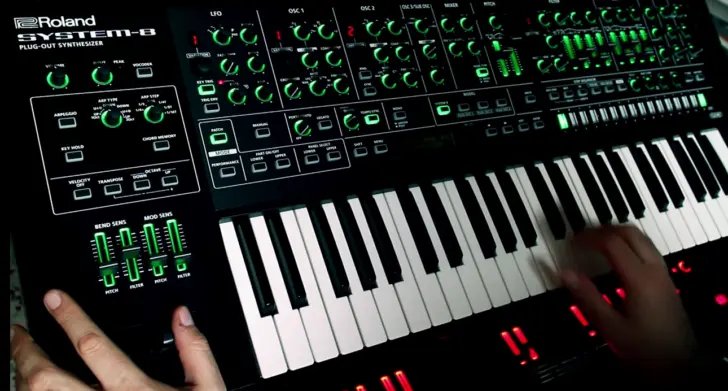
The landscape of digital music hardware is undergoing a significant transformation as independent developers begin to dismantle the proprietary barriers established by major manufacturers. In a landmark development for the electronic music community, developer Emilio Norrmann has released the Roland Custom Plug-Out Ecosystem and BMC DSP SDK, a comprehensive reverse-engineering project designed to unlock the untapped potential of Roland’s Aira series hardware. By providing the tools necessary to examine and program Roland’s proprietary Behavior Modeling Core (BMC) Digital Signal Processing (DSP) architecture, this project effectively transitions the SYSTEM-1 and SYSTEM-8 synthesizers from closed-loop systems into open platforms for third-party development.
The release, currently hosted as an open-source project on GitHub, represents a pivotal moment for owners of these instruments. Historically, the "Plug-Out" technology was a strictly controlled ecosystem. It allowed users to "load" software recreations of classic Roland hardware—such as the SH-101, SH-2, PROMARS, and Jupiter-8—into the internal memory of the SYSTEM-1 or SYSTEM-8. However, the creation of these Plug-Outs was reserved exclusively for Roland’s internal engineering teams. Norrmann’s SDK breaks this monopoly, documenting the underlying system and providing a framework for independent coders to build entirely new synthesis engines that run natively on the hardware’s processors.
Historical Context: The Evolution of the Plug-Out Concept
To understand the weight of this development, one must look back to the 2014 launch of the Roland Aira line. At the time, Roland was making a definitive move away from traditional analog circuitry toward a high-definition digital modeling technology known as Analog Circuit Behavior (ACB). The SYSTEM-1 was the flagship of this movement, offering a unique "Plug-Out" button that could host a single model of a vintage synthesizer alongside its internal engine.
The SYSTEM-8 followed in 2016, expanding this capability to host three simultaneous Plug-Outs with significantly increased polyphony and control options. Despite the success of these instruments, the ecosystem remained a "walled garden." While users could purchase and load various Roland-made engines, there was no official path for the community to contribute or for the hardware to evolve beyond what Roland’s marketing and engineering departments deemed profitable. Over time, as Roland shifted its focus toward the Zen-Core synthesis system and the Cloud-based software model, the SYSTEM series saw fewer updates, leading to concerns regarding the long-term viability and "abandonware" status of the hardware.
Technical Breakthroughs and the BMC Architecture
The core of Norrmann’s achievement lies in the successful reverse-engineering of the BMC DSP architecture. This is the proprietary silicon that powers Roland’s modern digital instruments. Unlike general-purpose CPUs found in computers, these DSP chips are optimized for low-latency, high-precision audio calculations. Accessing them requires a deep understanding of the specific microcode and memory mapping used by the manufacturer.
The SDK provides several working examples that demonstrate the practical application of this newfound access. One of the most striking findings involves the SYSTEM-1 hardware. Originally marketed and limited by Roland to a four-voice polyphony engine, Norrmann’s C-S1V8 implementation proves that the hardware is capable of supporting an eight-voice synthesizer engine. This discovery suggests that the original limitations may have been a design choice or a software-imposed constraint rather than a physical hardware ceiling. By optimizing the DSP programming through the new SDK, the developer was able to double the instrument’s utility.
For the SYSTEM-8, the project introduces the C-V4, a custom Plug-Out built with its own parameter model and six main DSP programs. While currently in an experimental phase—demonstrating a sawtooth oscillator with gate control—the C-V4 serves as a "proof of concept" for bypasses of Roland’s original microcode. The SDK also includes ports of notable open-source algorithms, such as the CSAW oscillator from Mutable Instruments, and experiments with six-voice string synthesis and wavetable engines.
A Chronology of Development and Community Efforts
The journey toward an open Roland ecosystem has been a gradual process driven by the synthesizer community’s desire for longevity.

- 2014–2015: Launch of the SYSTEM-1 and the first wave of ACB Plug-Outs (SH-101, SH-2). The community begins speculating on the possibility of user-created models, though no progress is made against the encrypted firmware.
- 2016–2017: The SYSTEM-8 is released, providing more DSP power. Roland expands the library to include the Juno-106 and Jupiter-8.
- 2018–2021: As Roland transitions to the Fantom and Jupiter-X lines using Zen-Core, updates for the SYSTEM series slow down. Users begin to look for ways to maintain their hardware’s relevance.
- 2023: Early reports of successful firmware analysis begin to circulate in developer circles, with enthusiasts looking at the similarities between various Roland hardware iterations.
- 2024: Emilio Norrmann officially releases the Roland Custom Plug-Out Ecosystem & BMC DSP SDK on GitHub, marking the first time the public has had the tools to compile and load custom code onto the BMC platform.
Supporting Data and Technical Features
The SDK is not merely a documentation file but a suite of tools designed for the modern developer. According to the repository data, the ecosystem includes:
- DSP Compiler Integration: Tools to compile C/C++ code into instructions that the BMC chips can execute.
- Memory Mapping Documentation: Detailed charts showing how the hardware addresses its internal RAM and flash storage.
- Installation Utilities: Software routines that allow the custom-built engines to be "flashed" onto the hardware in a manner similar to official Roland updates.
- Parameter Mapping: A framework for linking the physical sliders, knobs, and buttons on the SYSTEM-1 and SYSTEM-8 to the variables within the custom DSP code.
This data indicates that the project is aimed at "low-level" development. It is not yet a "drag-and-drop" application for the average musician, but rather a foundation upon which a new generation of firmware and instruments can be built.
Implications for Hardware Longevity and E-Waste
The broader implications of this project touch upon the "Right to Repair" and the environmental impact of electronic music production. In the modern era, hardware is often tied to software servers or proprietary licenses. When a manufacturer stops supporting a product, that hardware—no matter how functional the physical components—can become obsolete.
By opening the SYSTEM-1 and SYSTEM-8, Norrmann provides a roadmap for "second-life" hardware. This mirrors the success of the M-Vave FM-1 community, where enthusiasts took a budget synthesizer and transformed it through community-developed firmware. With the Roland hardware, the stakes are higher; these are professional-grade instruments with high-quality keys, interfaces, and converters. If independent developers can port granular synthesis, physical modeling, or advanced FM algorithms to these machines, the resale value and utility of the hardware could see a significant resurgence.
Industry Reaction and Comparison to Open Platforms
While Roland has not issued an official statement regarding this reverse-engineering project, the industry at large has seen a shift toward more open architectures. Korg, one of Roland’s primary competitors, successfully implemented the "logue SDK" for its Minilogue XD, Prologue, and NTS-1 synthesizers. This official SDK allowed users to load custom oscillators and effects, creating a thriving third-party marketplace for developers like Sinevibes.
Norrmann’s project essentially grants Roland users the same freedom that Korg users have enjoyed, albeit through unofficial channels. For Roland, this presents a complex challenge: while it may technically violate terms of service, it also increases the desirability of their older hardware, potentially keeping users within the Roland ecosystem rather than migrating to competitors.
Analysis of Future Potential
The current state of the SDK is a "developer preview." The immediate future will likely see a period of experimentation where coders attempt to port popular open-source Eurorack modules to the SYSTEM hardware. The prospect of having a "Polyphonic Braids" or "Clouds" running natively on a Roland SYSTEM-8 is a scenario that many in the synthesis community find highly compelling.
Furthermore, the documentation of the BMC architecture may lead to discoveries in other Roland products. Many of Roland’s contemporary boutique modules and grooveboxes utilize similar DSP foundations. While the current SDK is focused on the SYSTEM series, the knowledge gained here could theoretically be adapted for other instruments in the Aira and Boutique lines.
Conclusion
The Roland Custom Plug-Out Ecosystem and BMC DSP SDK represents a significant step forward in the democratization of music technology. By dismantling the proprietary barriers of the SYSTEM-1 and SYSTEM-8, Emilio Norrmann has not only provided a technical masterclass in reverse engineering but has also offered a vision for a future where the lifespan of an instrument is determined by its community rather than its manufacturer’s bottom line. As developers begin to explore the SDK, the electronic music world waits to see what new sounds will emerge from these "unlocked" Japanese classics.
