

In a significant development for the digital audio workstation (DAW) community, Inear Display, a developer known for its innovative and experimental audio tools, has announced that its entire suite of eleven creative audio plugins is now available under a pay-what-you-want (PWYW) model. This move effectively makes their full catalog accessible to anyone, including for free, lowering the barrier to entry for musicians, sound designers, and producers seeking unique sonic textures. The developer has suggested fair prices for each product to support ongoing development, but any value, including zero dollars, will be accepted.
This initiative positions Inear Display alongside a growing number of developers embracing flexible pricing strategies, a trend recently highlighted by similar announcements from other creators, such as the availability of the Complete Monkwind Effect Bundle and the Aqua Node open-source plugin suite. Such shifts underscore a broader industry movement towards greater accessibility and community engagement within the audio software landscape.
Understanding the Pay-What-You-Want Model in Software
The pay-what-you-want model is a pricing strategy where customers decide how much to pay for a product or service. While it can theoretically lead to zero revenue for the developer if all users choose to pay nothing, it is often employed to maximize user adoption, foster goodwill, and generate revenue through voluntary contributions from appreciative users. For creative software, particularly niche or experimental tools, this model can be highly effective. It allows aspiring artists or those with limited budgets to access high-quality tools they might otherwise be unable to afford, while simultaneously providing a mechanism for established professionals or supporters to contribute financially based on their perceived value and means. The success of a PWYW model often relies on the quality of the product, the generosity of the user base, and the developer’s ability to communicate the value of their work and the importance of financial support for future innovation.
Inear Display: A Profile in Experimental Sound Design
Inear Display has carved a distinct niche in the audio plugin market by focusing on tools that encourage sonic exploration and experimental sound design. Unlike developers who might prioritize emulating classic hardware or creating highly conventional effects, Inear Display’s philosophy appears to revolve around pushing the boundaries of sound, offering unique workflows, and providing instruments that inspire new creative directions. Their plugins are often characterized by intuitive interfaces, powerful randomization features, and a focus on generating sounds that are textural, evolving, and unconventional. This commitment to the avant-garde has garnered them a dedicated following among electronic musicians, film composers, and sound artists looking to infuse their work with distinctive sonic signatures. Their decision to adopt the PWYW model is consistent with this ethos, aiming to democratize access to these specialized tools and potentially expand their community of users who share a similar passion for sonic innovation.
Spotlight on Key Plugins: Ephemere, Amalgame, and Lancinantes
Among the eleven plugins now offered, three stand out for their unique capabilities and contribution to experimental sound design: Ephemere, Amalgame, and Lancinantes. These tools exemplify Inear Display’s commitment to providing instruments that transcend conventional boundaries.
Ephemere: The Experimental Drum Synthesizer
Ephemere, a drum synthesizer that has been a staple in Inear Display’s catalog for approximately a decade, underwent a significant refresh a few years ago, solidifying its position as a powerful and flexible tool for rhythmic sound creation. Unlike traditional drum machines that often rely on samples or emulate classic analog circuits, Ephemere embraces an experimental approach, leveraging FM synthesis to generate a vast array of percussive sounds.
The core of Ephemere features twelve distinct tracks, each meticulously designed with a dedicated FM oscillator. This allows for deep sonic sculpting, moving far beyond typical drum sounds into realms of metallic hits, abstract textures, and intricate percussive elements. Each track further includes an amplitude/pitch envelope, providing granular control over the transient and decay characteristics of the sound, enabling everything from sharp, snappy percussive hits to elongated, resonant tones. A multi-mode filter on each track offers further sound-shaping capabilities, allowing users to dial in the desired tonal qualities, from dark and resonant to bright and airy. Finally, an output module for each track ensures individual control over routing and mixing.
What truly sets Ephemere apart is its robust parameter randomization features. While many instruments offer some form of randomization, Ephemere integrates it as a core creative catalyst. Users can intelligently randomize various parameters across individual tracks or the entire kit, instantly generating unexpected and inspiring rhythmic textures. This capability encourages users to step away from conventional drum sounds and explore a much broader sonic palette, making it an invaluable tool for genres like IDM, experimental electronic music, and soundtrack design where unique percussive elements are paramount. Its longevity and recent updates attest to its enduring relevance and capability to inspire new rhythmic ideas.
Amalgame: The Multi-Effect Powerhouse for Sound Design
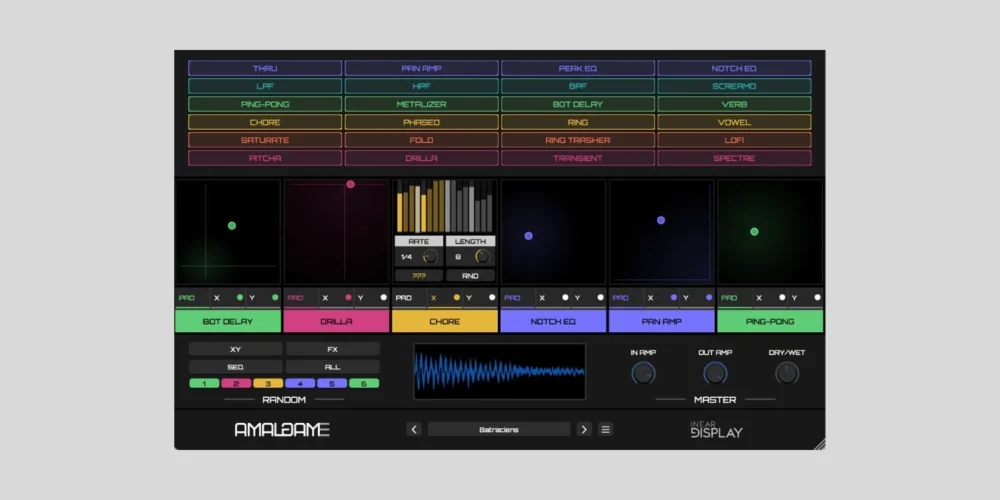
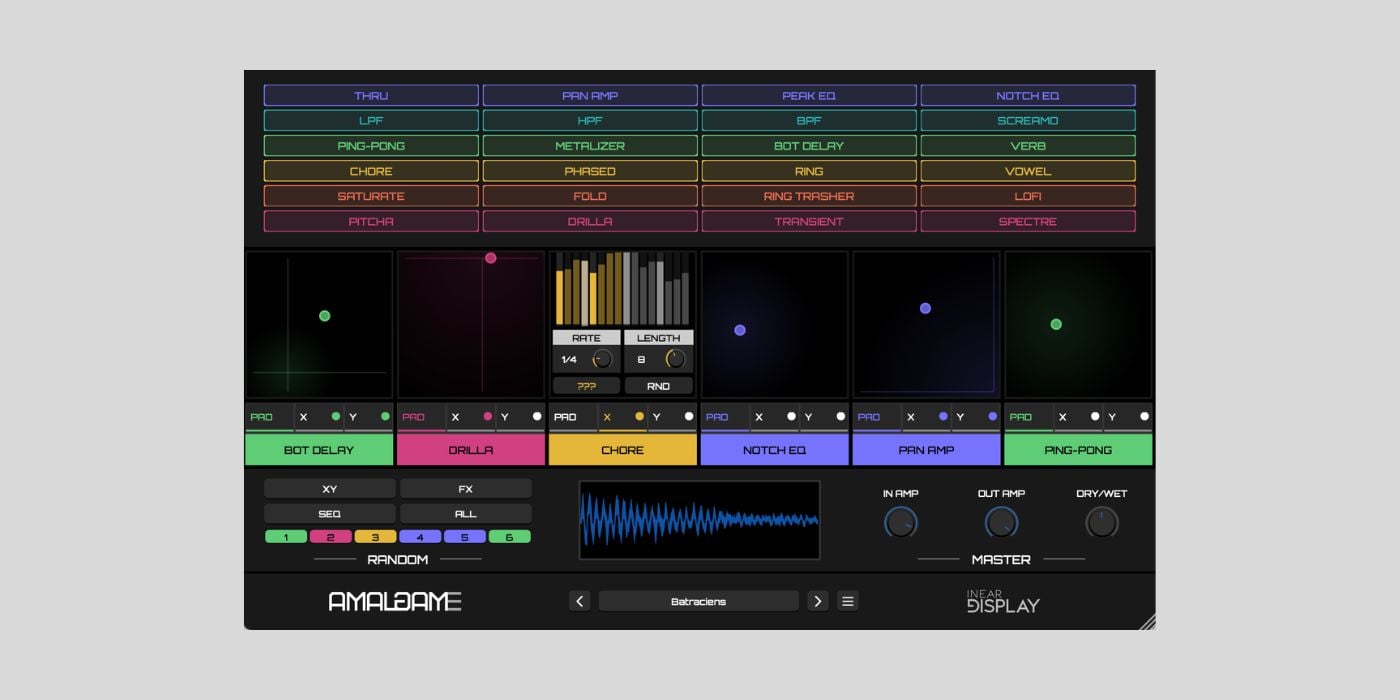
Amalgame is another flagship offering, presented as a multi-effect tool specifically tailored for experimental sound design. This plugin is a comprehensive sound mangling laboratory, featuring an impressive arsenal of 23 built-in effects. These effects range from fundamental tools like EQs and filters, which provide essential shaping capabilities, to a wide array of more transformative and experimental processors. This diverse collection allows users to embark on journeys from subtle sonic enhancements to radical sound transformations.
The design of Amalgame emphasizes flexibility and intuitive control. It features six available effect slots, into which users can drag and drop any of the 23 effects. Each slot is equipped with XY pads, offering dynamic and expressive control over two primary parameters of the loaded effect. This visual and interactive control mechanism allows for real-time manipulation and exploration of complex sonic evolutions.
Taking the concept of dynamic control a step further, Amalgame allows users to sequence the X and Y parameters of each pad. This advanced feature enables the creation of incredibly precise and complex modulation patterns over time, transforming static effects into evolving sonic landscapes. Imagine intricate filter sweeps choreographed with delay feedback, or modulated pitch shifts synchronized with distortion intensity—all programmed with a high degree of specificity.
Furthermore, mirroring Ephemere’s strength, Amalgame includes comprehensive randomization features. Users can randomize individual effects, entire sequences of X/Y modulation, or specific parameters across any or all of the six slots. This empowers users to quickly generate unexpected and inspiring effect chains, fostering serendipitous discoveries and accelerating the experimental sound design process. Amalgame is an indispensable tool for anyone looking to create unique textures, atmospheric soundscapes, or intricate sound effects for music, film, or game audio.

Lancinantes: The Evolving Drone Synthesizer
For those who appreciate the art of evolving soundscapes and cinematic foundations, Lancinantes presents a compelling solution as a dedicated drone synthesizer. While the concept of a "drone synth" might not immediately excite everyone, Lancinantes excels at making the creation of rich, sustained, and highly textural sounds remarkably accessible and inspiring.
At its core, Lancinantes features three layered, additive oscillators. This architecture allows for the construction of complex harmonic structures, enabling users to build dense and shimmering pads that evolve over time. A crucial feature for musical context is its ability to conform to musical scales. This ensures that even experimental drones maintain a sense of harmony and musicality, preventing dissonance unless intentionally desired. This makes Lancinantes particularly useful for creating classic harmonic backdrops or ambient textures that seamlessly integrate into a musical composition.
Beyond its powerful oscillators, the synth is equipped with a multi-mode filter, providing essential control over the tonal character of the drone, from dark and brooding to bright and ethereal. Built-in effects further enhance the sonic possibilities, allowing for the addition of reverb, delay, and other processors directly within the plugin, creating fully formed atmospheric sounds. As with other Inear Display offerings, a randomizer is included, facilitating instant generation of unique drone textures and inspiring new sonic directions with a single click.
Lancinantes is more than just a drone generator; it’s an instant cinematic foundation builder. Its capacity for creating rich, evolving soundscapes makes it an invaluable asset for composers scoring films, games, or any project requiring deep, atmospheric textures that can evoke a wide range of emotions and environments.
The Full Catalog and Technical Specifications
In total, Inear Display has made eleven distinct plugins available under the pay-what-you-want model. While the article highlights Ephemere, Amalgame, and Lancinantes, the complete collection is designed to offer a broad spectrum of tools for creative audio manipulation. These plugins collectively represent Inear Display’s vision for experimental sound design, offering various synthesis engines, effects processors, and utility tools tailored for unconventional sonic exploration.
From a technical standpoint, all plugins are offered in industry-standard formats, ensuring broad compatibility across various DAWs. They are available in AU (Audio Units) and VST3 (Virtual Studio Technology 3) formats, covering the most widely used plugin standards on macOS and Windows platforms. Specifically, the plugins support macOS versions 10.13 and upwards, and Windows versions 10 and upwards, ensuring that a vast majority of current computer audio setups can readily integrate these tools. This commitment to modern plugin formats and operating system compatibility underscores Inear Display’s dedication to providing a seamless user experience.
Developer’s Vision and Community Impact

The decision by Inear Display to transition to a pay-what-you-want model is a bold strategic move with multiple potential motivations and implications. While the immediate benefit to users is undeniable—access to high-quality, experimental audio tools at no mandatory cost—the developer’s stated aim is to support future development. By suggesting a fair price for each of the eleven products, Inear Display is appealing to the generosity and appreciation of its user base. This model fosters a direct relationship between creators and consumers, where users contribute not just for the product itself, but to enable the ongoing innovation and sustenance of the developer.
This approach aligns with a growing sentiment in the independent software development community: that fostering a strong, engaged community can be as valuable as traditional sales figures. By removing financial barriers, Inear Display can significantly increase its user base, potentially introducing its unique tools to a broader audience who might not have otherwise discovered them. This expanded reach can lead to more feedback, greater community engagement, and a more vibrant ecosystem around their products. For users, it represents an unparalleled opportunity to experiment with advanced sound design techniques without financial risk, encouraging creativity and skill development.
The Broader Landscape of Freeware Audio Tools
Inear Display’s move is part of a larger trend within the audio software industry, where freeware, open-source, and flexible pricing models are becoming increasingly prevalent. This trend is driven by several factors: the increasing accessibility of development tools, a desire from developers to give back to the community, and the recognition that a strong user base, even if many users pay nothing, can generate invaluable word-of-mouth marketing and foster loyalty.
Examples like the aforementioned Monkwind Effect Bundle and Aqua Node, along with countless other freeware plugins and open-source projects, demonstrate a vibrant sub-sector of the audio software market focused on democratizing access to creative tools. This landscape benefits everyone: new producers can build functional studios with minimal investment, experienced artists can experiment with novel tools, and the overall pace of innovation within the industry is accelerated. However, it also presents a challenge for developers to sustain themselves, making voluntary contributions and community support more critical than ever.
Conclusion: An Unprecedented Opportunity for Sonic Exploration
Inear Display’s decision to make its entire catalog of eleven plugins available under a pay-what-you-want model represents an unprecedented opportunity for musicians, sound designers, and audio enthusiasts. For those whose creative pursuits lean towards the experimental, the textural, and the unconventional, these tools offer a rich palette for sonic exploration. From the intricate rhythmic possibilities of Ephemere to the transformative multi-effects of Amalgame and the cinematic drone capabilities of Lancinantes, Inear Display provides a comprehensive suite for pushing creative boundaries.
Users are encouraged to explore the full collection, experiment with the unique workflows, and, if their means allow, contribute financially to support Inear Display’s continued development. This gesture of goodwill from the developer creates a reciprocal relationship, empowering artists while sustaining the innovative spirit that drives the creation of such unique audio tools. This moment marks not just a shift in pricing strategy, but a reinforcement of the community-driven ethos that continues to shape the future of digital audio production.
