

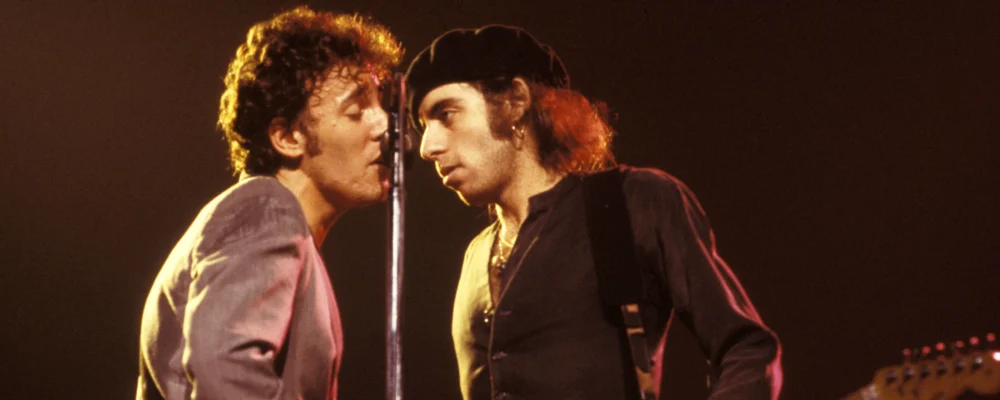
The history of rock and roll is often defined by serendipitous moments of collaboration that alter the trajectory of a recording, a career, or an entire genre. In the summer of 1975, Bruce Springsteen stood at a precarious crossroads. His first two albums, while critically respected, had failed to achieve commercial dominance, leaving his future with Columbia Records in a state of uncertainty. The sessions for his third album, Born to Run, were notoriously grueling, spanning over 14 months as Springsteen obsessed over every note, arrangement, and production detail. It was during this high-stakes period that Steven Van Zandt, a longtime friend and fellow veteran of the Asbury Park music scene, made two specific contributions that not only refined the album’s sound but solidified his place as the indispensable "Lieutenant" of the E Street Band.
The Foundations of a Jersey Shore Partnership
To understand the significance of Van Zandt’s contributions in 1975, one must look back at the shared history between the two musicians. Born in 1950, Steven Van Zandt—later known by the monikers "Miami Steve" and "Little Steven"—was a fixture in the burgeoning Jersey Shore music scene of the late 1960s. He and Springsteen first met at the Hullabaloo Club in Middletown, New Jersey, in 1965. Throughout the following decade, their paths crossed repeatedly in various local outfits, including Steel Mill and the Sundance Blues Band.
While Springsteen eventually secured a solo contract with Columbia Records under the management of Mike Appel, Van Zandt took a different path, honing his skills as a songwriter and producer for Southside Johnny and the Asbury Jukes. Despite their diverging professional trajectories, the two remained close confidants. Springsteen frequently sought Van Zandt’s creative counsel, viewing him as a musical peer who understood the "Jersey Shore sound"—a blend of R&B, soul, and high-energy rock and roll—better than anyone else.
The First Intervention: Refining the Born to Run Riff
By late 1974, Springsteen had been working on the title track of his upcoming album for months. "Born to Run" was intended to be his magnum opus, a sprawling "Wall of Sound" production inspired by Phil Spector. The recording process was exhaustive, involving layers of guitars, keyboards, and percussion. When Springsteen invited Van Zandt to the studio to hear an early mix of the song, the track was already a dense, operatic masterpiece, but it lacked a certain clarity in its most recognizable element: the opening guitar riff.
In the original version of the riff, Springsteen had included a specific note bend that moved from a minor to a major tonality. While Springsteen found the complexity interesting, Van Zandt immediately identified a problem. He noted that within the "thick stew" of the instrumentation, the note bend sounded cluttered and prevented the riff from having the anthemic, driving force it required. Van Zandt suggested that the note should remain static, emphasizing a cleaner, more direct melodic line.
Springsteen, who was famously protective of his arrangements, recognized the validity of Van Zandt’s ear. He simplified the riff based on this feedback. This subtle technical adjustment transformed the song’s introduction into one of the most iconic instrumental hooks in the history of rock music. It was a moment that demonstrated Van Zandt’s ability to see the "big picture" of a production, even when the primary artist was buried in the minutiae.
The Second Intervention: The Tenth Avenue Freeze-Out Horns
The second major contribution occurred in May 1975 at the Record Plant in New York City. Springsteen was recording "Tenth Avenue Freeze-Out," a song that served as a semi-autobiographical mythologizing of the E Street Band’s formation. The track required a soulful, punchy horn section to complement its R&B-influenced groove. To achieve this, Springsteen’s team hired several of the most elite session musicians in New York, including members of the Brecker Brothers.
Despite their technical proficiency, the session players were struggling to capture the specific "Asbury Park" soul that Springsteen envisioned. The arrangements were technically correct but lacked the grit and phrasing necessary for the track. Van Zandt happened to be visiting the studio that day, observing from the control room. Sensing the frustration in the room, he entered the studio floor to intervene.
Lacking written charts for the players, Van Zandt used his voice to sing the parts he heard in his head, dictating the exact phrasing, timing, and "stabs" the horns should execute. He famously directed the professional musicians with a blend of confidence and musical intuition that bridged the gap between formal session work and the raw energy of the Jersey Shore. Under his direction, the horn section finally "found the pocket," providing the triumphant, brassy foundation that defines the song. This impromptu session earned Van Zandt his nickname "Miami Steve"—a nod to his habit of wearing Hawaiian shirts to stay warm in the chilly New Jersey winters—and, more importantly, a formal invitation to join the band.
From Consultant to E Street Member: A Timeline of Integration
The timeline of Van Zandt’s official entry into the E Street Band is a testament to the organic nature of his partnership with Springsteen:
- 1965–1972: Shared development in the Asbury Park club circuit (The Upstage, etc.).
- Late 1974: Van Zandt provides feedback on the "Born to Run" title track riff.
- May 1975: Van Zandt arranges the horn section for "Tenth Avenue Freeze-Out."
- July 1975: Recognizing Van Zandt’s production instincts and leadership, Springsteen officially invites him to join the E Street Band as a guitarist and "lieutenant" just as the Born to Run tour is set to begin.
- August 25, 1975: Born to Run is released to universal acclaim, peaking at number three on the Billboard 200.
- October 1975: Springsteen appears on the covers of both Time and Newsweek in the same week, signaling his arrival as a global superstar.
Supporting Data: The Impact of Born to Run
The success of the Born to Run album, bolstered by Van Zandt’s contributions, cannot be overstated in terms of its commercial and cultural footprint.
- Sales and Certification: The album has been certified 7x Platinum by the RIAA, representing over seven million copies sold in the United States alone.
- Critical Standing: It is consistently ranked among the greatest albums of all time, appearing at number 20 on Rolling Stone’s "500 Greatest Albums of All Time" list in 2020.
- Touring Success: The 1975 tour marked the transition of the E Street Band from a regional opening act to a premier headlining attraction, setting the stage for the massive stadium tours of the 1980s.
Van Zandt’s presence on the tour provided Springsteen with a musical foil—a "brother-in-arms" who could handle the complexities of the arrangements while allowing Springsteen to focus on his role as a frontman and storyteller.
Analysis: The Role of the "Producer-Guitarist"
The significance of Van Zandt’s role extends beyond these two specific anecdotes. He brought a "producer’s ear" to the stage and the studio. While other members of the E Street Band were virtuosic players, Van Zandt acted as a bridge between Springsteen’s vision and the band’s execution.
His influence would continue to grow over the following decade. He was credited as a co-producer on The River (1980) and Born in the U.S.A. (1984), two of Springsteen’s most successful albums. His ability to identify when a song needed to be "stripped back" or "souped up" became a hallmark of the E Street sound. Even during his hiatus from the band between 1984 and 1995—during which he pursued a successful solo career and engaged in high-profile political activism with the "Sun City" project—his influence remained the benchmark for the band’s aesthetic.
Official Responses and Historical Reflection
In his 2016 autobiography, Born to Run, Bruce Springsteen reflected on Van Zandt’s arrival, noting that Steven was the only person who could truly tell him when he was wrong. Springsteen wrote that Van Zandt "knew the soul of the music" in a way that was instinctive rather than academic.
For his part, Van Zandt has often downplayed his role in the "Born to Run" sessions, describing himself as a friend who was simply in the right place at the right time. In various interviews, he has emphasized that his goal was always to serve the song and the artist. "I wasn’t looking for a job," Van Zandt once remarked. "I was looking to help my friend make the best record possible."
Broader Implications for the Music Industry
The story of Steven Van Zandt and Born to Run serves as a case study in the importance of creative chemistry in the recording studio. It highlights how minor technical adjustments—a note in a riff or the phrasing of a horn line—can have a disproportionate impact on the commercial viability and longevity of a work of art.
Furthermore, Van Zandt’s transition from an unofficial consultant to a core band member illustrates a unique model of musical partnership. Unlike many bands where roles are strictly defined, the Springsteen-Van Zandt dynamic was built on mutual respect and a shared history that predated fame. This foundation allowed the E Street Band to survive decades of industry shifts, personal changes, and the pressures of global stardom.
Today, Steven Van Zandt remains a central figure in the E Street Band, occupying his familiar spot to Springsteen’s left. His contributions to the 1975 sessions remain a defining chapter in the history of the Jersey Shore sound, proving that while Springsteen may have been the architect of Born to Run, Van Zandt was the master builder who ensured the structure could withstand the test of time.
