

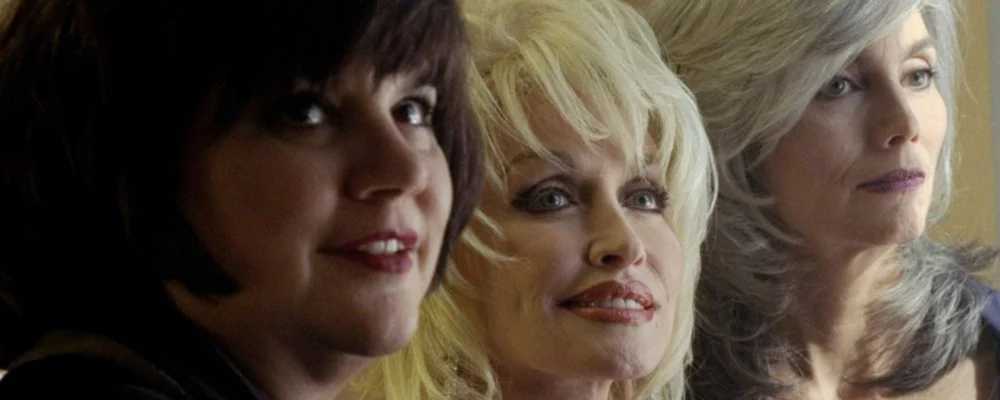
The concept of the musical supergroup often suggests a seamless fusion of talent, yet the history of "The Trio"—comprising Dolly Parton, Emmylou Harris, and Linda Ronstadt—reveals that even the most harmonious vocal blends are often forged through significant professional and personal friction. While the three women produced two of the most critically acclaimed and commercially successful country-folk albums of the late 20th century, their journey was marked by a twenty-year cycle of failed sessions, clashing work ethics, and the logistical nightmare of balancing three of the most prolific careers in American music. The story of The Trio serves as a case study in the complexities of creative collaboration, illustrating how individual excellence can both facilitate and hinder a collective vision.
The Genesis of a Supergroup and the 1970s False Start
The idea for a collaboration between Parton, Harris, and Ronstadt was first floated in the mid-1970s. At the time, each woman was at a different but equally vital stage of her career. Dolly Parton was transitioning from a Nashville darling to a global pop phenomenon; Emmylou Harris was the torchbearer for "cosmic American music" following her work with Gram Parsons; and Linda Ronstadt was arguably the most successful female rock star of the decade. The industry and the public viewed the potential union as the female equivalent of The Highwaymen, the legendary quartet of Johnny Cash, Willie Nelson, Kris Kristofferson, and Waylon Jennings.
In 1977, the three singers attempted to turn the rumor into reality. They convened for a ten-day recording session, hoping to capture their shared love for traditional Appalachian music and close-harmony singing. However, the constraints of their individual schedules proved insurmountable. Attempting to record a full-length album in less than two weeks while maintaining the high standards expected of their respective brands led to physical and vocal exhaustion.
Ronstadt later reflected on these sessions with a degree of critical detachment, noting that the group had not sufficiently defined the album’s artistic direction. The voices, usually pristine, became "ragged" under the pressure. Ultimately, the 1977 sessions were shelved. Rather than discarding the material entirely, the songs recorded during this period were disseminated across their solo projects. Tracks like "Mr. Sandman" appeared on Harris’s 1981 album Evangeline, while other recordings surfaced on Ronstadt’s and Parton’s solo releases, leaving fans to wonder if a cohesive collaborative album would ever manifest.
The 1987 Breakthrough: Perfection Through Persistence
It would take another decade for the stars to align. In 1986, the three musicians reconvened with a more structured approach and the assistance of producer George Massenburg. The result was the 1987 album Trio, a masterwork of acoustic arrangement and vocal harmony that bypassed the polished "country-politan" sound of the era in favor of traditionalism.
The album featured a mix of covers and original material, including a haunting rendition of Phil Spector’s "To Know Him Is To Love Him," which reached number one on the Billboard Hot Country Songs chart. Other notable tracks included "The Pain of Loving You," co-written by Parton and Porter Wagoner, and the traditional "Rosewood Casket." The commercial success of Trio was immediate and profound. It spent five weeks at the top of the Billboard Country Albums chart, peaked at number six on the Billboard 200, and was eventually certified Platinum by the RIAA.
Beyond sales, the album was a critical darling. It won the Grammy Award for Best Country Performance by a Duo or Group with Vocal in 1988 and was nominated for Album of the Year. At the 1987 Country Music Association (CMA) Awards, it took home the prize for Album of the Year. Despite this success, the internal dynamics of the group remained fraught with the same issues that had derailed them in the 1970s.
Analyzing the "Three Tempers" and Creative Dissonance
The friction within The Trio was not a product of animosity, but rather of fundamentally different professional temperaments. Dolly Parton, a self-described "workaholic," preferred a brisk, efficient pace in the studio. Her background in the rigorous Nashville "A-Team" recording system meant she was accustomed to tracking songs quickly and moving on. In contrast, Emmylou Harris was a meticulous perfectionist, often wanting to revisit vocal takes to ensure the emotional and technical nuances were exact. Linda Ronstadt occupied a third space, preferring to "live in the studio," taking a slow, exploratory approach to the recording process.
Parton famously dubbed the group "The Three Tempers," a play on "The Three Tenors," to describe the atmospheric tension generated by these clashing styles. This dissonance became particularly evident during the sessions for their follow-up album. In 1994, the group recorded what would eventually become Trio II. However, the project was nearly lost to history when Parton requested a delay in the album’s release to avoid competing with her own solo promotional commitments. This decision led to a significant rift, and the album was shelved for five years.
Parton’s retrospective comments to Ladies’ Home Journal in 1995 captured the frustration of the period. She described the shelving of the album as a "sin and a shame," attributing the difficulty to the fact that they were all "set in our ways" and dealing with the pressures of maintaining high-profile careers while aging in a youth-centric industry. The raw honesty of her assessment—referring to the group as "old, crotchety, cranky women"—highlighted the human element often airbrushed out of supergroup narratives.
Trio II and the Conclusion of a Twenty-Year Arc
The deadlock finally broke in the late 1990s. Recognizing the quality of the unreleased material, the group agreed to move forward with Trio II, which was finally released in 1999. The album mirrored the success of its predecessor, earning a Gold certification and another Grammy Award for Best Country Collaboration with Vocals for their cover of Neil Young’s "After the Gold Rush."
Trio II demonstrated that the passage of time had not diminished their vocal chemistry. The album’s tracklist, including "High Sierra" and "Feels Like Home," showcased a sophisticated blend of folk, country, and bluegrass that felt timeless. The successful release of the second album provided a sense of closure to a collaborative effort that had spanned nearly a quarter of a century.
Chronology of The Trio
- 1977: Initial recording sessions in Los Angeles. The project is abandoned due to scheduling conflicts and lack of focus.
- 1978–1981: Songs from the 1977 sessions appear on individual solo albums (e.g., Evangeline, Heartbreaker).
- 1986: The group reconvenes with producer George Massenburg to record Trio.
- 1987: Trio is released to massive commercial success and critical acclaim.
- 1988: The group wins a Grammy Award for Best Country Performance.
- 1994: Recording sessions for Trio II take place.
- 1995: The Trio II project is shelved following internal disagreements over release timing.
- 1999: Trio II is finally released, winning another Grammy and achieving Gold status.
- 2016: The Complete Trio Collection is released, featuring remastered versions of both albums and a third disc of previously unreleased outtakes and alternate takes.
Broader Impact and Industry Implications
The legacy of The Trio extends far beyond their two studio albums. Their collaboration was a pivotal moment for women in country music, proving that female artists could command the same "supergroup" status and commercial power as their male counterparts. By focusing on traditional acoustic sounds and complex vocal harmonies, they also played a crucial role in the "New Traditionalist" movement of the late 1980s, which sought to return country music to its roots after the pop-heavy "Urban Cowboy" era.
Furthermore, the difficulties faced by Parton, Harris, and Ronstadt underscore a broader truth about the music industry: talent alone does not guarantee a functional partnership. The "Three Tempers" dynamic illustrates that the very traits that make an artist a successful solo star—strong vision, uncompromising standards, and a distinct workflow—are often the same traits that make collaboration difficult.
The Trio’s influence can be seen in modern collective efforts like The Highwomen (Brandi Carlile, Natalie Hemby, Maren Morris, and Amanda Shires) and boygenius (Julien Baker, Phoebe Bridgers, and Lucy Dacus). These groups follow the blueprint laid by Parton, Harris, and Ronstadt: prioritizing vocal blend, honoring musical heritage, and navigating the complexities of individual stardom to create a collective work of art.
In the final analysis, the "ragged" voices of 1977 and the "hot flashes" of the 1990s were merely the price of admission for a musical union that remains one of the most celebrated in American history. The Trio’s discography stands as a testament to the idea that while the process of creation may be fraught with "tempers" and "shames," the resulting harmony is often worth the struggle.
