

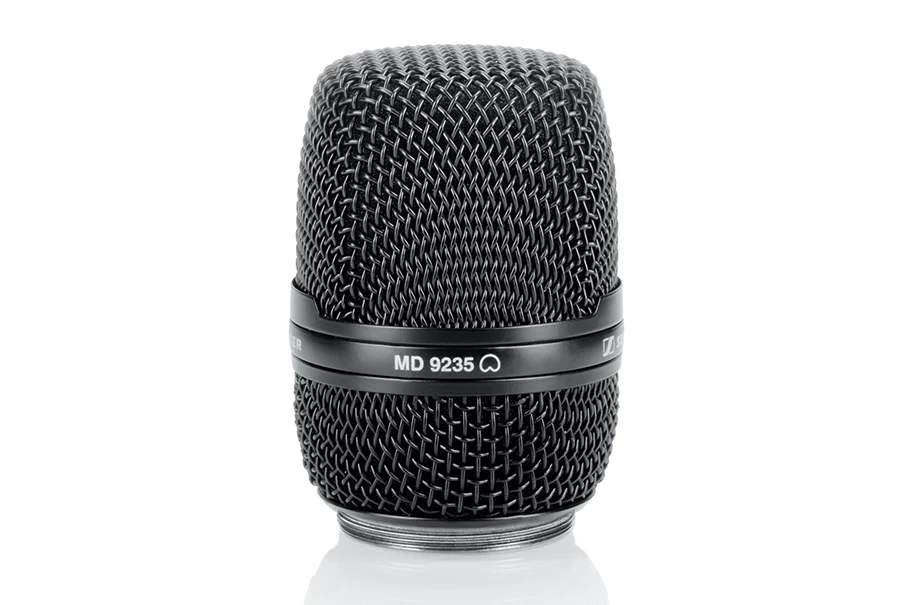
The professional audio landscape is defined by a constant evolution of technology, yet certain tools achieve a status that transcends the cycle of discontinuation and replacement. In a move that highlights the influence of end-user feedback on corporate strategy, Sennheiser has officially announced the return of the MD 9235 dynamic microphone capsule to its product portfolio. The decision comes several years after the model was phased out to make room for newer iterations, a transition that met with unexpected resistance from the global touring community. Professional sound engineers and vocalists continued to advocate for the specific sonic characteristics of the MD 9235, leading the German audio specialist to restart production of the cardioid head.
The MD 9235 is a dynamic microphone capsule designed specifically for high-pressure live performance environments. Known for its precision, power, and transparency, the capsule earned a reputation among front-of-house (FOH) engineers for its ability to cut through dense live mixes while maintaining a natural vocal texture. Its return marks a significant moment for Sennheiser, as it acknowledges that while newer technologies like the MM 435 and MM 445 offer advanced performance metrics, the unique "musicality" and rejection properties of the MD 9235 remain irreplaceable for a specific segment of the professional market.
A Chronology of the MD 9235 and the Evolution of Sennheiser Capsules
The journey of the MD 9235 began as a staple of Sennheiser’s high-end wireless systems, particularly the Digital 9000 series. It was engineered to provide a dynamic alternative to condenser capsules, offering the ruggedness and feedback resistance required for loud stages without sacrificing the detail typically associated with sensitive studio microphones.
In 2020, Sennheiser underwent a strategic refresh of its capsule lineup. The company introduced the MM 435, a large-diaphragm dynamic capsule with a cardioid pattern, and the MM 445, a high-rejection supercardioid model. These units were positioned as the spiritual and technical successors to the MD 9235. At the time, the move was seen as a logical progression, incorporating newer materials and updated acoustic designs intended to provide even greater clarity and frequency response.
However, the transition did not result in a total migration of the user base. While the MM 435 and MM 445 found immediate success and built their own dedicated following, a significant cohort of touring professionals remained loyal to the MD 9235. The feedback received by Sennheiser suggested that the MD 9235 possessed a specific "tonal weight" and a predictable off-axis rejection profile that engineers had spent years mastering. The persistent demand for the discontinued capsule led Sennheiser’s product management team to re-evaluate the market need.
Sebastian Schmitz, Product Manager at Sennheiser, noted that the company continued to receive inquiries about the MD 9235 long after its official retirement. The decision to "revive" the capsule involved a collaborative effort between development and manufacturing engineers to ensure that the new production run met the exact specifications of the original while integrating into modern manufacturing workflows. Before the official relaunch, prototypes from the new production series were sent to active touring engineers for rigorous field testing, confirming that the "new" MD 9235 retained the characteristics that made the original a favorite.
Technical Specifications and Engineering Excellence
The MD 9235 is defined by its dynamic transducer principle and cardioid polar pattern. In the context of live sound, the cardioid pattern is essential for isolating the intended sound source—the vocalist—from the surrounding environment. This is particularly critical on modern stages where high-volume monitor wedges, side-fills, and large-scale PA systems create a complex acoustic environment.
One of the standout technical features of the MD 9235 is its lightweight aluminum-copper voice coil. In traditional dynamic microphone design, the mass of the voice coil can limit the speed at which the diaphragm responds to sound waves (transient response). By using a specialized aluminum-copper alloy, Sennheiser engineers reduced the moving mass of the system. This allows the coil to move more rapidly and accurately than standard copper coils, resulting in a high level of detail and transparency that rivals some condenser microphones, but with the high sound pressure level (SPL) handling of a dynamic design.
The capsule’s acoustic design is optimized for "high rejection." This means it is exceptionally efficient at suppressing ambient noise coming from the sides and the rear. For artists who move dynamically across the stage or frequently perform in front of the PA system, this characteristic provides a vital safety margin against feedback. It also ensures a "cleaner" signal for the FOH engineer, reducing the amount of "bleed" from drums or guitars that enters the vocal channel.
Integration with Modern Wireless Ecosystems
While the MD 9235 is a legacy design in terms of its acoustic profile, it is fully integrated into Sennheiser’s contemporary wireless hardware ecosystem. The capsule utilizes the Sennheiser standard capsule interface, a mechanical and electrical connection point that has become an industry standard.
This compatibility ensures that the MD 9235 can be used across a vast range of handheld transmitters, from entry-level professional systems to flagship digital platforms. Compatible systems include:
- Spectera: Sennheiser’s latest wideband digital wireless technology, which offers unprecedented spectral efficiency and high-fidelity audio transmission.
- Digital 6000 and 9000: The gold standard for global touring and high-stakes broadcasting, known for their linear audio codecs and robust RF performance.
- EW-DX and EW-D: The modern workhorses of the Evolution Wireless Digital family, designed for ease of use and reliable performance in mid-to-large scale setups.
- 2000 Series and Evolution Wireless G4 (300/500): The reliable analog and hybrid systems that continue to be used in venues and touring racks worldwide.
By maintaining this interface, Sennheiser allows rental houses and touring companies to swap capsules based on the specific needs of a performer without having to invest in entirely new transmitter hardware.
Market Analysis and Industry Implications
The return of the MD 9235 reflects a broader trend in the pro-audio industry where "classic" sound profiles are increasingly valued alongside technical innovation. In an era where digital signal processing (DSP) can manipulate audio in near-infinite ways, many engineers still prefer to capture the "right" sound at the source. The MD 9235 is viewed by many as a "pre-equalized" solution; its frequency response is tailored to make vocals sit prominently in a mix with minimal processing.

From an economic perspective, the re-introduction of the MD 9235 at a Manufacturer’s Suggested Retail Price (MSRP) of €599 places it in the premium tier of dynamic capsules. This pricing reflects the specialized manufacturing processes required for the aluminum-copper coil and the high-quality materials used in the capsule’s housing and suspension.
Furthermore, the package includes five replacement foam inserts and a protective bag. This is a practical addition for the touring market, where hygiene and maintenance are paramount. The ability to easily replace foam inserts extends the lifespan of the capsule and ensures consistent acoustic performance over long tours.
Professional Reception and Future Outlook
The reinstatement of the MD 9235 has been met with praise from the audio engineering community. For many, it represents a "listening" approach from a major manufacturer. In professional audio, the relationship between the manufacturer and the end-user is often symbiotic; engineers rely on the tools provided by the brand, while the brand relies on the real-world data provided by the engineers.
The broader implication for Sennheiser is a reinforced reputation for supporting the "touring professional." By maintaining a catalog that includes both the latest innovations (like the MM 435/445 and the Spectera system) and proven legacy tools (like the MD 9235 and the classic MD 421/441 series), Sennheiser positions itself as a versatile partner for a diverse range of artistic and technical requirements.
As live events continue to grow in scale and complexity, the demand for reliable, high-rejection vocal microphones will only increase. The MD 9235, with its proven track record on some of the world’s largest stages, is well-positioned to resume its role as a preferred choice for vocalists who require power, clarity, and the freedom to move.
The MD 9235 is now available through authorized Sennheiser pro-audio dealers. Its return serves as a reminder that in the world of sound, the "best" tool is often the one that the community trusts most, and sometimes, the path forward involves looking back at the successes of the past.
