

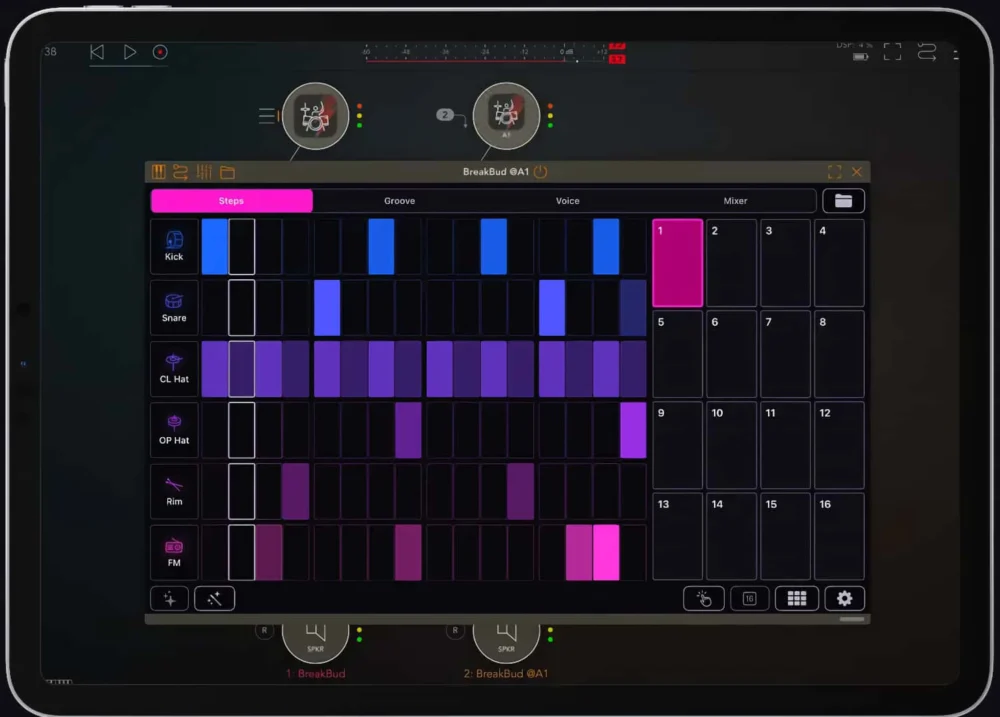
The landscape of mobile music production continues to expand with the official release of BreakBud, a dedicated breakbeat drum synthesizer developed by Cem Olcay. Designed specifically for the iOS and iPadOS ecosystems, BreakBud represents a specialized approach to percussive sound design, moving away from traditional sample-based workflows in favor of real-time synthesis. The application arrives at a time when mobile platforms are increasingly being utilized not just as sketchpads for musical ideas, but as primary environments for professional sound design and live performance. By focusing on the intricate requirements of breakbeat production—a genre characterized by syncopated rhythms and complex drum patterns—Olcay provides a tool that bridges the gap between classic drum machine aesthetics and modern digital flexibility.
Technical Architecture and Core Features
At its fundamental level, BreakBud is built around a 16-pad interface, a standard layout familiar to users of classic hardware samplers and modern MIDI controllers. However, unlike many contemporary drum apps that rely on pre-recorded audio files, BreakBud utilizes six distinct synthesized drum voices. This synthesis-first approach allows for a level of sonic malleability that is often difficult to achieve with samples. Each of the six voices is engineered to handle specific roles within a breakbeat structure, allowing users to sculpt the transient, body, and decay of their percussive sounds to fit the specific needs of a mix.
The integration of Audio Unit v3 (AUv3) support is perhaps the most critical technical feature for professional users. AUv3 compatibility allows BreakBud to function as a plugin within host applications such as Apple’s Logic Pro for iPad, Steinberg’s Cubasis, and modular hosting environments like AUM or Loopy Pro. This interoperability ensures that the drum synth can be integrated into complex signal chains, benefiting from external sequencing, external effects processing, and synchronized automation. In an ecosystem where "walled gardens" are increasingly being dismantled by standardized plugin formats, BreakBud positions itself as a versatile component of a larger production suite.
The Evolution of Breakbeat Production Tools
To understand the significance of BreakBud, one must look at the historical context of breakbeat music. Originally derived from the "breaks" of 1970s funk and soul records—most notably the "Amen Break" from The Winstons’ "Amen, Brother"—the genre evolved through the creative misuse of early digital samplers. Producers in the 1990s would pitch-shift, chop, and re-sequence these breaks to create the foundations of Jungle, Drum and Bass, and Breakcore.
While sampling remains a cornerstone of the genre, the limitations of audio files—such as artifacts introduced during extreme time-stretching or the inability to change the fundamental harmonic content of a snare—led to a demand for percussive synthesis. BreakBud addresses this by providing a "clean slate" for rhythm creation. Rather than fighting the baked-in room acoustics or compression of a vintage sample, producers can use BreakBud’s synthesized voices to create "synthetic breaks" that possess the rhythmic complexity of traditional breakbeats but with the clarity and punch of modern synthesis. This transition from "sampling the past" to "synthesizing the future" is a recurring theme in contemporary electronic music tool development.
Developer Profile: The Contributions of Cem Olcay
Cem Olcay has established a significant reputation within the iOS music community as a developer who prioritizes utility and creative workflow. His previous offerings often focus on MIDI manipulation, generative sequencing, and utility tools that solve specific problems for mobile musicians. BreakBud appears to be an evolution of this philosophy, combining his expertise in sequencing logic with a dedicated internal sound engine.
Industry observers note that Olcay’s entry into the drum synthesis market is a logical step. Most independent iOS developers tend to specialize in either "quirky" experimental apps or highly polished "workhorse" plugins. Olcay typically occupies a middle ground, providing professional-grade stability with interfaces that encourage experimentation. By releasing BreakBud, he provides a focused alternative to more generalized drum machines, catering specifically to the "break" aesthetic which requires faster envelopes and more aggressive tonal shaping than standard "four-on-the-floor" house or techno drum synths.
Market Context and Economic Accessibility
The pricing of BreakBud at $6.99 USD reflects a broader trend in the mobile software market. While desktop plugins for drum synthesis can often range from $50 to over $200, the iOS market remains highly competitive and accessible. This low barrier to entry has democratized high-quality sound design tools, allowing hobbyists and professionals alike to build powerful mobile rigs for a fraction of the cost of traditional hardware or desktop software.

The release also highlights the robustness of the "indie" developer movement within the Apple App Store. Unlike large corporations that may take years to iterate on a product, solo developers like Olcay can respond rapidly to community feedback and niche market demands. The $6.99 price point is strategically positioned to attract "impulse" buyers while still providing enough revenue to support ongoing updates and maintenance—a critical factor in the rapidly evolving iOS environment where operating system updates can frequently break software functionality.
Implications for Mobile Music Workflows
The introduction of BreakBud has several implications for the future of mobile music production. First, it reinforces the shift toward AUv3 as the industry standard. For years, iOS music production was hampered by the lack of a unified plugin format, requiring cumbersome workarounds like Inter-App Audio (IAA) or Audiobus. With BreakBud fully embracing AUv3, it simplifies the user experience, allowing for multiple instances of the plugin to run simultaneously, each with its own settings and routing.
Second, the focus on synthesis over sampling suggests a growing sophistication among mobile music creators. Sampling is often the first step for beginners, but synthesis requires a deeper understanding of sound physics—oscillators, filters, and modulation. By providing a 16-pad synth specifically for breakbeats, Olcay is encouraging a more hands-on approach to sound design. Users are not just choosing a sound; they are building it.
Finally, the portability of the iPad, combined with powerful synths like BreakBud, is changing the nature of live electronic music. Performers no longer need to carry heavy racks of hardware or delicate laptops to every gig. A single tablet, a MIDI controller, and a handful of specialized apps like BreakBud can provide a sonic palette that rivals a full studio setup.
Chronology of Release and Initial Reception
BreakBud was officially launched in early 2024, following a period of development where Olcay teased the interface and sound capabilities through social media and developer forums. The initial release included a comprehensive tutorial video, which has become a standard practice for developers to ensure users can navigate the features of the AUv3 format immediately upon purchase.
Early feedback from the user community has centered on the app’s "snappiness"—a crucial attribute for breakbeat production where the "attack" of the drum sound must be precise to maintain the groove at high tempos (often exceeding 160-170 BPM). Furthermore, the integration with external sequencers has been cited as a major strength, allowing users to bypass the internal pads and use complex algorithmic sequencers to trigger the internal voices.
Broader Impact on the iOS Ecosystem
As the mobile hardware continues to improve—with the introduction of M-series chips in iPads—the ceiling for what software can achieve continues to rise. BreakBud is part of a new generation of apps that treat the iPad as a "serious" instrument. The implications for the music industry are significant; we are seeing a decentralization of production. A hit record can now be started on a subway in New York, refined in a cafe in London, and finished in a professional studio in Tokyo, all using the same software tools.
In conclusion, Cem Olcay’s BreakBud is more than just another drum app; it is a specialized tool that addresses a specific aesthetic within the electronic music world. By combining the flexibility of synthesis with the convenience of the AUv3 format and the accessibility of the iOS platform, it provides a powerful resource for producers looking to explore the rhythmic complexities of breakbeat music. As the mobile ecosystem matures, the arrival of such focused, high-quality applications ensures that the platform remains at the cutting edge of musical innovation. The success of BreakBud will likely pave the way for further specialized synthesis tools from Olcay and other developers, continuing the trend of turning mobile devices into indispensable assets for the modern musician.
