

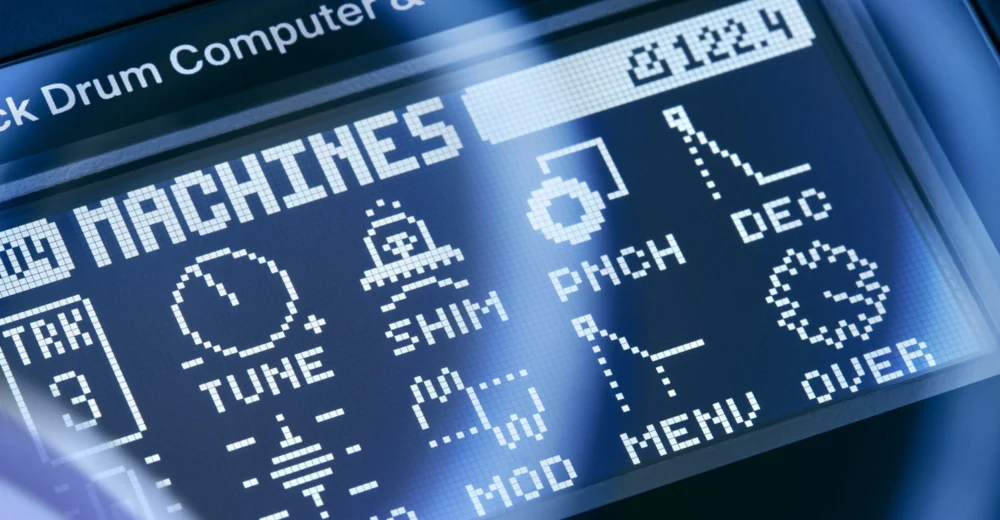
The release of the Elektron Syntakt OS 1.40 update marks a significant milestone in the evolution of the Swedish manufacturer’s hybrid drum computer and synthesizer, introducing a suite of features that fundamentally alter its sonic potential. Among the most notable additions is the "Twinshot" dual sample player machine, a tool that has quickly become a focal point for sound designers seeking to push the boundaries of the hardware’s digital tracks. Recent demonstrations, specifically those highlighted by the synthesis community and creators such as tubesockor, have revealed that the Twinshot machine allows the Syntakt to perform PPG-style wavetable synthesis—a functionality previously reserved for dedicated wavetable synthesizers or complex modular setups. By leveraging the dual sample playback engine to scan through single-cycle waveforms, users are now able to replicate the metallic, evolving textures synonymous with the early digital era of the 1980s, effectively transforming the Syntakt from a percussive powerhouse into a sophisticated wavetable workstation.
The Architecture of OS 1.40 and the Twinshot Machine
To understand the significance of this development, one must first examine the technical specifications of the OS 1.40 update. The Syntakt, which features a 12-track architecture—consisting of eight digital tracks and four analog tracks—has traditionally relied on "Machines," which are specialized synthesis models tailored for specific sounds like kicks, snares, or FM chords. The introduction of the Twinshot machine represents a shift toward a more flexible, sampler-oriented approach within the digital domain.
The Twinshot machine is a dual-voice sample player designed to trigger two independent samples simultaneously on a single track. While Elektron originally marketed this feature for layering percussive hits—such as combining a synthesized transient with a recorded acoustic tail—the synthesis community identified a deeper application. By loading "single-cycle waveforms"—microscopic loops of audio that represent a single vibration of a sound wave—the Twinshot can function as a traditional oscillator. When multiple single-cycle waveforms are arranged sequentially within a single audio file, they form a "wavetable." The Syntakt’s ability to modulate the start point and length of sample playback allows the user to "scan" through these waveforms in real-time, creating the shifting timbres that define wavetable synthesis.
Historical Context: The Legacy of PPG Wavetable Synthesis
The term "PPG-style synthesis" refers to the pioneering work of Wolfgang Palm and his company, Palm Products GmbH (PPG), in the late 1970s and early 1980s. The PPG Wave series, particularly the Wave 2.2 and 2.3, revolutionized the industry by moving away from the static oscillators of subtractive synthesis. Instead of choosing between a simple saw, square, or triangle wave, PPG users could move through a table of 64 different digital waveforms. This resulted in complex, harmonically rich sounds that could transition from a thin pulse to a thick, buzzy reed sound within a single note.
Recreating this on the Elektron Syntakt requires a precise understanding of the hardware’s modulation matrix. In the demonstrations provided by tubesockor, the process involves utilizing the Syntakt’s internal LFOs (Low-Frequency Oscillators) to target the "Sample Start" parameter of the Twinshot machine. As the LFO moves, it shifts the playback position through the loaded wavetable file. Because the Syntakt’s digital tracks benefit from high-resolution encoders and a robust internal clock, the transition between waveforms can be made to sound smooth or stepped, mimicking the "aliasing" and grit of vintage PPG hardware or the smoothness of modern digital plugins.
Technical Implementation and Workflow
The methodology for achieving wavetable synthesis on the Syntakt involves several distinct steps that highlight the versatility of the Elektron sequencer.
- Wavetable Preparation: Users must first import a wavetable consisting of single-cycle waveforms. These are typically small files where each "cycle" is exactly the same number of samples long (e.g., 256 or 2048 samples).
- Machine Assignment: The user assigns the Twinshot machine to one of the eight digital tracks.
- Parameter Modulation: By mapping LFO 1 to the "Start" parameter of the sample, the user creates the "scanning" motion. LFO 2 can then be used to modulate the "Pitch" or the "Filter Cutoff," adding further movement to the sound.
- Envelopes and Filtering: The Syntakt’s multi-mode digital filters and dedicated ADSR envelopes are then used to shape the resulting digital grit into usable musical patches, such as pads, leads, or evolving basslines.
The Twinshot machine’s dual-layer nature also allows for "thickening" the sound. A user can load the same wavetable into both slots of the Twinshot, slightly detuning one against the other to create a chorus effect, or shifting the start point of the second sample to create a complex, multi-timbral texture that would be impossible with a single oscillator.
Chronology of the Elektron Syntakt’s Evolution
The journey to OS 1.40 has been one of steady refinement for the Syntakt. Since its launch in April 2022, Elektron has positioned the device as the "middle child" of its "Digi-format" lineup, sitting between the sampling-focused Digitakt and the FM-focused Digitone.
- April 2022: Syntakt is released with 35+ machines, focusing heavily on drum synthesis and the "Digital/Analog" hybrid workflow.
- Late 2022 – 2023: Early updates focused on stability and minor workflow enhancements, such as the addition of the "Swarmer" machine and improved MIDI functionality.
- 2024: Updates began to blur the lines between the Digi-boxes, with the Syntakt receiving more melodic tools and expanded digital synthesis models.
- March 2026 (Per Source Context): The release of OS 1.40 introduces the Twinshot dual sample player. This update is seen as a direct response to user requests for more flexible sample handling without turning the device into a full-blown sampler like the Digitakt II.
Industry Implications and Competitive Landscape
The ability of the Syntakt to perform wavetable synthesis places it in a unique position within the hardware market. Traditionally, musicians looking for wavetable sounds would turn to instruments like the ASM Hydrasynth, the Waldorf Blofeld (the direct descendant of PPG technology), or the Arturia MicroFreak. By adding these capabilities via a free firmware update, Elektron has increased the "value-over-time" of the Syntakt, a strategy that has become a hallmark of the company’s business model.
Market analysts suggest that this move is designed to compete with the rising popularity of "all-in-one" grooveboxes. Devices like the Roland MC-707 or the Akai MPC series offer vast sample libraries and synthesis engines, but often lack the tactile, "step-sequencer-first" workflow that defines the Elektron experience. By expanding the Syntakt’s synthesis palette to include wavetables, Elektron ensures that users do not need to look elsewhere for complex digital textures, keeping them within the "Elektron Ecosystem."
Community Reaction and Expert Analysis
The reaction from the synthesizer community has been overwhelmingly positive. On platforms such as Gearspace and the Elektronauts forum, users have praised the "Twinshot" machine for its unexpected depth. "The Syntakt was always great for drums, but it felt a bit limited for melodic sound design compared to the Digitone," noted one prominent user. "With OS 1.40 and the ability to scan wavetables, it has become a legitimate monster for industrial and ambient textures."
Experts point out that the use of single-cycle waveforms is a "hack" that has been used on Elektron gear since the original Digitakt and even the Octatrack. However, the Twinshot machine makes this process more accessible and sonically richer due to the dual-layering capability. The fact that this can be sequenced using Elektron’s famous "Parameter Locks"—where every step of a sequence can have a different wavetable position—allows for a level of rhythmic complexity that is difficult to achieve on traditional wavetable synths.
Broader Impact and Future Outlook
The introduction of PPG-style synthesis to the Syntakt is more than just a new sound; it is a testament to the longevity of modern digital hardware. In an era where software plugins often dominate, Elektron’s commitment to "evergreen" hardware—where the instrument continues to grow years after purchase—sets a high bar for the industry.
Looking forward, the implications of OS 1.40 suggest that Elektron may continue to explore sample-based synthesis within the Syntakt framework. While the device will likely never feature the deep sampling and slicing capabilities of the Digitakt II, the Twinshot machine provides a "best of both worlds" scenario. It allows for the use of external sonic DNA (via samples) while maintaining the structured, machine-based workflow that makes the Syntakt unique.
As users continue to experiment with the Twinshot machine, the library of available wavetables for the Syntakt is expected to grow, with third-party sound designers already releasing packs specifically optimized for the OS 1.40 architecture. This synergy between manufacturer updates and community ingenuity ensures that the Syntakt remains at the forefront of the modern electronic music production landscape, proving that even a "drum machine" can find new life as a vintage-inspired digital synthesizer.
