

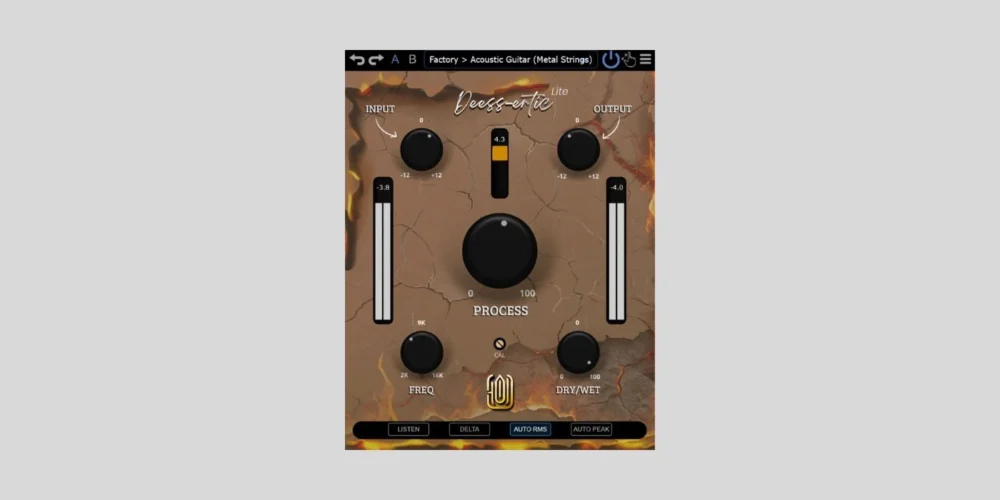
GARUC Audio has officially released Deess-ertic Lite, a free de-esser plugin designed for macOS and Windows operating systems. This introduction marks a notable contribution to the burgeoning landscape of accessible and high-quality audio processing tools available to music producers, sound designers, and audio engineers globally. The plugin, available in AAX, AU, and VST3 formats, is engineered to tackle harsh frequencies across various audio sources, from vocal recordings to instrumental tracks and full mixes, leveraging 64-bit floating-point processing for superior audio fidelity.
The Critical Role of De-Essing in Audio Production
De-essers are specialized dynamic processors primarily known for their ability to attenuate sibilance—the harsh, whistling, or hissing sounds produced by ‘s’, ‘sh’, ‘ch’, and ‘z’ consonants in vocal recordings. However, their utility extends far beyond just vocals. In the intricate world of sound design and mixing, de-essers prove invaluable for addressing a broader spectrum of problematic high-frequency content. They can be deployed to tame overly bright cymbals, mitigate harsh resonances in synthesizers or guitars, or even to subtly refine the top-end of an entire mix during the mastering stage.
Unlike static equalizers (EQs) that apply a fixed reduction across a frequency band, de-essers operate dynamically. This means they only engage and reduce specific frequencies when those frequencies exceed a predetermined threshold, allowing for a more transparent and natural-sounding correction. This dynamic approach ensures that the overall character of the audio remains largely untouched, with intervention occurring only precisely when and where it is needed. The precision afforded by a well-designed de-esser is crucial for achieving a polished, professional sound that prevents listener fatigue caused by abrasive high frequencies.
A Historical Perspective on De-Essing Technology
The concept of de-essing dates back to the analog era of audio production. Early methods involved complex routing configurations using compressors with side-chain EQs. Engineers would ‘side-chain’ an EQ to the compressor’s detector circuit, boosting the problematic sibilant frequencies in the side-chain signal. This would cause the compressor to react more strongly to those specific frequencies, thereby reducing their overall level in the main audio path. While effective, these setups were often cumbersome and required significant expertise to configure and fine-tune.
The advent of digital audio workstations (DAWs) and plugin technology revolutionized audio processing, making sophisticated tools like de-essers far more accessible. Dedicated de-esser plugins began to emerge, offering streamlined interfaces and advanced algorithms that automated many of the complex manual adjustments required in the analog domain. Over the years, these plugins have evolved, incorporating more sophisticated detection algorithms, phase-linear processing, and intuitive visual feedback to help engineers make more informed decisions. The release of Deess-ertic Lite continues this trend, offering modern features within a user-friendly package.
Deess-ertic Lite: Feature Breakdown and Technical Sophistication
GARUC Audio’s Deess-ertic Lite is engineered with a focus on both functionality and user-friendliness, embodying several key features that enhance its versatility and precision.
Core Processing Engine:
At the heart of Deess-ertic Lite is its 64-bit floating-point processing engine. This high-resolution architecture is critical for maintaining audio integrity throughout the processing chain. 64-bit floating-point precision minimizes quantization errors and provides an immense dynamic range, virtually eliminating the risk of digital clipping or noise floor issues, even during intensive processing. This ensures that the plugin can handle complex audio signals with exceptional clarity and detail, preserving the nuances of the original recording while effectively managing harsh frequencies.
Intuitive Control Interface:
The plugin’s primary control is the Process knob, which simultaneously manages the threshold and the intensity of the de-essing reduction. This consolidated control simplifies the workflow, allowing users to quickly dial in the desired amount of sibilance reduction without juggling multiple parameters. The Frequency selector is another critical component, enabling users to precisely define the cutoff frequency for the detector. This surgical targeting ensures that only the offending frequencies are addressed, leaving other desirable high-frequency content untouched.
For optimal gain staging, Input and Output knobs provide comprehensive control over signal levels entering and exiting the plugin. This is vital for maintaining consistent loudness and preventing unforeseen peaks or troughs in the audio chain. Additionally, the inclusion of a Dry/Wet mix knob facilitates parallel processing, a technique highly valued by experienced engineers. Parallel processing allows users to blend the de-essed signal with the original, unprocessed audio, achieving more transparent and natural-sounding results by subtly layering the correction rather than applying it completely.
Advanced Monitoring Capabilities for Precision Engineering
One of the standout aspects of Deess-ertic Lite is its robust suite of monitoring features, which are particularly beneficial when processing non-vocal material where problematic frequencies might be less obvious. These features empower users to make highly informed decisions, preventing over-processing and preserving the natural character of the audio.
Listen Mode: This mode allows users to audibly monitor the specific frequency content that is entering the detector circuit. By isolating and listening to the targeted frequencies, engineers can precisely identify the problematic range, ensuring that the de-esser is correctly focused on the undesirable elements. This granular control is indispensable for achieving surgical accuracy, especially when dealing with complex harmonic content in instruments or full mixes.
Delta Mode: Perhaps the most insightful monitoring feature, Delta mode enables users to hear only the signal that is being removed by the Process knob. This "difference" signal provides immediate and unambiguous feedback on the de-esser’s action. By listening exclusively to what is being attenuated, users can critically assess if the reduction is appropriate, too aggressive, or causing unwanted artifacts. This feature is crucial for avoiding the common pitfall of over-de-essing, which can lead to an unnatural, "lispy" or dull quality in the audio.
Automatic Gain Compensation: Deess-ertic Lite incorporates both Auto RMS (Root Mean Square) and Auto Peak gain compensation. These functions automatically adjust the output level to compensate for changes in perceived loudness or peak levels introduced by the de-essing process. Consistent loudness is paramount for objective decision-making during mixing and mastering. Without automatic compensation, a reduction in sibilance might mistakenly be perceived as a reduction in overall volume, leading engineers to apply more processing than necessary. By maintaining stable levels, these features enable users to focus purely on the sonic impact of the de-essing, facilitating more accurate and confident adjustments.
User Experience, Workflow, and Creative Potential
Beyond its core processing and monitoring features, Deess-ertic Lite integrates several quality-of-life enhancements that improve the user experience and streamline workflow:
A/B Comparison: This standard yet essential feature allows users to quickly toggle between two different settings, facilitating critical listening and objective evaluation of processing choices. This is particularly useful for comparing the effect of the de-esser with and without its application, or between different parameter settings.
Preset System: A comprehensive preset system provides users with a variety of starting points for different applications, from vocal de-essing to instrument shaping. This not only speeds up the workflow for experienced users but also serves as an educational tool for beginners, offering insights into effective de-essing configurations.
Resizable Interface and UI Themes: Modern audio production environments demand flexible user interfaces. Deess-ertic Lite offers a resizable interface, allowing it to fit seamlessly into various screen layouts. Furthermore, the inclusion of six distinct UI themes provides aesthetic customization options, enhancing visual comfort during long mixing sessions.
Saturation Modes: Unconventionally for a de-esser, Deess-ertic Lite includes two distinct saturation modes tucked away within its menu. While the primary function of a de-esser is corrective, the addition of saturation opens up creative possibilities. Saturation can add harmonic richness, perceived loudness, and a subtle warmth or aggression to the signal. When applied subtly in conjunction with de-essing, it could potentially help a vocal or instrument sit better in a mix, adding character where harshness has been removed. This unexpected feature highlights GARUC Audio’s commitment to providing versatile tools.
Competitive Landscape and Strategic Positioning
The market for audio plugins is highly competitive, with a vast array of both paid and free options available. The free plugin ecosystem, in particular, has seen significant growth, with developers offering high-quality tools that challenge the perception that professional-grade processing must come at a cost. GARUC Audio’s decision to offer Deess-ertic Lite for free positions it directly against other prominent free de-essers. For instance, Techivation’s T-De-Esser 2 is widely regarded as a leader in this category, known for its effectiveness and user-friendly interface.
The introduction of Deess-ertic Lite enriches this competitive landscape, providing users with another robust option. While T-De-Esser 2 may currently "lead the pack" in terms of widespread adoption, the availability of diverse tools encourages experimentation and allows users to find the de-esser that best suits their specific workflow and sonic preferences. Different de-essers often exhibit subtle variations in their algorithms and sonic characteristics, meaning that having multiple high-quality free options is a net positive for the audio production community. This strategy by GARUC Audio not only democratizes access to essential mixing tools but also serves as a potent method for brand building and showcasing their engineering capabilities. By offering a compelling free product, GARUC Audio can attract a broad user base, potentially leading to future engagement with their other offerings.
System Requirements and Broad Accessibility
Deess-ertic Lite is designed for broad compatibility across popular operating systems and plugin formats. It supports macOS versions 12 through 15, accommodating both Intel-based and Apple Silicon (M1/M2/M3) processors, ensuring seamless performance on modern Mac systems. For Windows users, the plugin requires Windows 10 or higher.
The availability in AAX, AU, and VST3 formats ensures compatibility with the vast majority of professional digital audio workstations (DAWs). AAX (Avid Audio eXtension) is the proprietary format for Avid Pro Tools, a staple in many professional studios. AU (Audio Unit) is Apple’s native plugin format for macOS, used by DAWs like Logic Pro X and GarageBand. VST3 (Virtual Studio Technology 3) is a widely adopted cross-platform standard developed by Steinberg, supported by DAWs such as Cubase, Ableton Live, FL Studio, Studio One, and Reaper. This comprehensive format support underscores GARUC Audio’s commitment to making Deess-ertic Lite accessible to a diverse user base, regardless of their preferred production environment.
Industry Commentary and Broader Implications
The release of high-quality free plugins like Deess-ertic Lite continues a significant trend in the audio software industry. Industry analysts suggest that this movement is a testament to the ongoing democratization of music production. A spokesperson for GARUC Audio, who wished to remain anonymous to focus on the product itself, commented, "Our goal with Deess-ertic Lite was to democratize access to professional-grade de-essing, ensuring that creators at all levels can achieve polished results without financial barriers. We believe that empowering artists with robust tools, regardless of their budget, fosters greater creativity and raises the overall quality of independent productions."
This sentiment resonates with the broader implications for the independent artist and "bedroom producer" communities. The proliferation of powerful, free tools significantly lowers the barrier to entry for aspiring musicians and engineers. It enables them to achieve a level of sonic polish previously reserved for those with access to expensive studio equipment and software. This shift not only impacts individual creators by enhancing their output but also contributes to an overall rise in the quality standard of user-generated content across platforms like YouTube, SoundCloud, and Bandcamp.
Furthermore, the "freemium" model, where a basic version is offered for free to encourage upgrades to a more feature-rich paid version, is a well-established strategy in software development. While Deess-ertic Lite is presented as a complete free offering, its quality and feature set could serve to establish GARUC Audio’s reputation and build a loyal user base, potentially paving the way for future commercial products. This model fosters community engagement and allows developers to gather valuable feedback from a wide array of users, driving further innovation.
Conclusion
GARUC Audio’s Deess-ertic Lite represents a significant and welcome addition to the arsenal of free audio production tools. Its blend of intuitive controls, advanced monitoring features, 64-bit floating-point processing, and unexpected creative options like saturation modes makes it a powerful and versatile de-esser. By offering this high-quality plugin completely free of charge, GARUC Audio is not only providing an essential tool for managing harsh frequencies in recordings but also actively contributing to the ongoing democratization of professional audio production. For creators seeking to refine their mixes and masters with precision and clarity, Deess-ertic Lite stands as a compelling and accessible solution, underscoring the continuous evolution of digital audio technology in empowering artists worldwide.
Download: Deess-ertic Lite by GARUC Audio (FREE)
Last Updated on March 11, 2026 by Tomislav Zlatic.
