

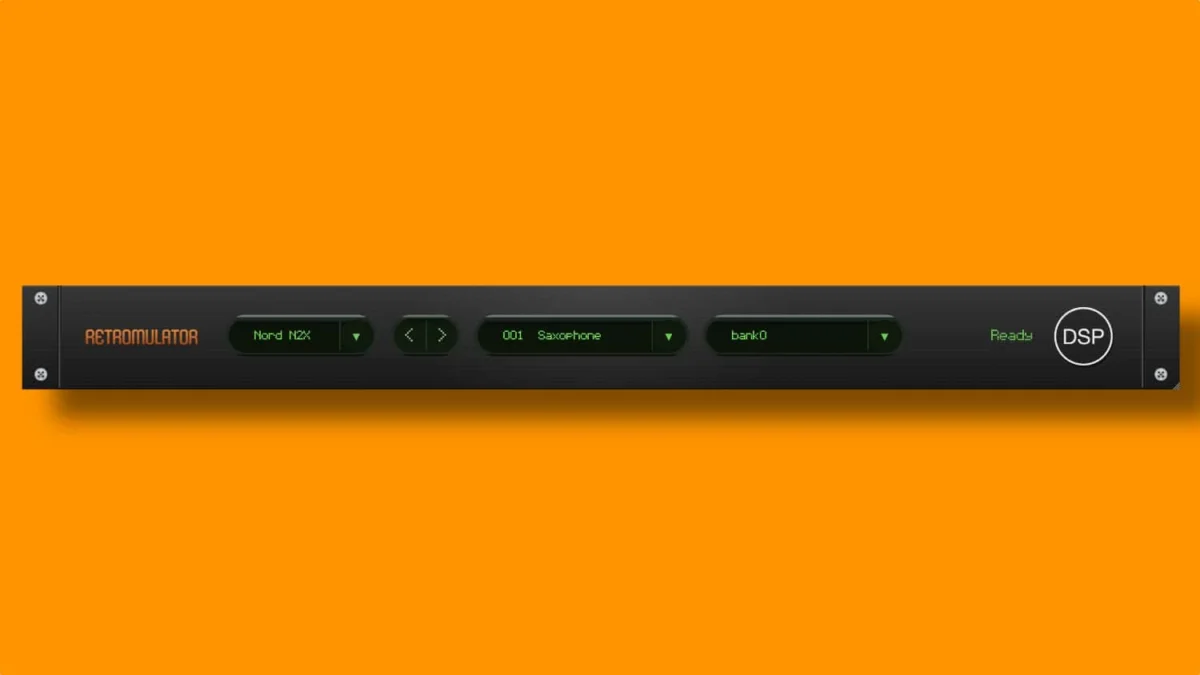
In a significant development for the digital music production industry, discoDSP has officially released Retromulator, a groundbreaking hardware synthesizer emulation plugin designed to provide near-perfect recreations of several legendary digital instruments. Unlike traditional software synthesizers that attempt to replicate the sound of hardware through mathematical modeling of audio signals, Retromulator utilizes cycle-accurate low-level emulation (LLE). This approach allows the plugin to mimic the behavior of the original integrated circuits at the hardware level, executing the authentic ROM firmware of the target machines. By leveraging the open-source Gearmulator project developed by the dsp56300 team, discoDSP aims to bridge the gap between vintage digital hardware and modern digital audio workstations (DAWs).
The Evolution of Digital Synthesis Emulation
For decades, the pursuit of "analog warmth" dominated the virtual instrument market, leading to a proliferation of subtractive synthesis plugins. However, as the industry enters an era where early digital synthesizers from the 1980s and 1990s are now considered "vintage," the demand for accurate digital recreations has surged. Many of these classic machines relied on specific Digital Signal Processing (DSP) chips, most notably the Motorola DSP 56300 family, which powered the flagship products of companies like Access Music, Waldorf, and Nord.
The challenge in emulating these units lies in the complexity of their proprietary code. Traditional algorithmic recreations often miss the subtle artifacts, aliasing characteristics, and specific timing nuances that define the "character" of a digital hardware synth. Retromulator addresses this by acting as a virtual host for the original firmware. Instead of writing new code to sound like an Access Virus, the developers have created a virtual environment that "tricks" the original Virus firmware into thinking it is running on its native Motorola hardware.
Technical Architecture and Chip-Level Precision
At the core of Retromulator is a sophisticated emulation engine that targets the specific silicon architectures of the late 20th century. For instruments like the Access Virus series and the Waldorf MicroQ, Retromulator emulates the Motorola DSP 56300. This 24-bit processor was the industry standard for high-end synthesis due to its efficiency in handling complex trigonometric functions and audio filtering.
The emulation of the Yamaha DX7, perhaps the most famous FM synthesizer in history, takes a different but equally rigorous approach. Retromulator provides a full emulation of the Hitachi HD6303R sub-CPU, which managed the instrument’s operations, alongside the Yamaha YM21280 (EGS) and YM21290 (OPS) chipsets. These chips were responsible for the envelope generation and operator calculations that gave the DX7 its distinctive, crystalline sound. By executing the original binary instructions from the DX7 ROM, Retromulator ensures that the phase relationships and operator interactions are identical to those found in the hardware manufactured in 1983.
Supported Hardware and Initial Launch Scope
Version 1.0 of Retromulator arrives with support for a prestigious roster of synthesizers that defined the sound of electronic music across three decades. The supported engines include:
- Yamaha DX7: The 1980s icon that introduced Frequency Modulation (FM) synthesis to the masses.
- Access Virus A, B, C, and TI: The "workhorse" of the trance and techno movements, known for its dense oscillators and powerful modulation matrix.
- Waldorf MicroQ and Microwave XT: German-engineered synths famous for wavetable synthesis and aggressive digital textures.
- Nord Lead 2X: A staple of the Virtual Analog (VA) revolution, prized for its immediacy and "raw" digital sound.
- Roland JP-8000: The instrument that introduced the "Supersaw" waveform, a fundamental element of modern dance music.
A critical aspect of the Retromulator ecosystem is the requirement for original ROM firmware. Because the plugin functions as a hardware emulator, it does not contain the copyrighted code of the original manufacturers. Users must provide their own ROM files, typically extracted from the hardware they own. This legal and technical framework mirrors the approach taken by the emulation community in the gaming industry, ensuring that the software remains a tool for preservation and utility rather than a vehicle for software piracy.
The Role of Open Source and the dsp56300 Project
The release of Retromulator is inextricably linked to the work of the dsp56300 team, a group of developers who spent years reverse-engineering the Motorola DSP architecture. Their project, Gearmulator, serves as the foundation for Retromulator. By bringing this technology to a commercial platform like discoDSP, the project gains a more accessible user interface, streamlined installation processes, and formal technical support.
Retromulator is distributed under the GNU General Public License v3 (GPL v3), reflecting its open-source heritage. While the plugin is available for use without feature restrictions or commercial use limitations, discoDSP offers a paid license. This licensing model is designed to fund ongoing research and development, as emulating additional chips and refining the performance of the current engines requires significant engineering resources.

Industry Implications and the Future of Sound Preservation
The shift toward low-level emulation represents a "final frontier" in software synthesis. For producers, the implications are profound. It allows for the integration of classic hardware sounds into a modern workflow with total recall, automation, and multiple instances—features that are often impossible or cumbersome with physical hardware. Furthermore, as original hardware components like capacitors, screens, and custom ICs fail due to age, LLE offers a path toward the permanent preservation of these instruments’ sonic identities.
Market analysts suggest that the rise of high-quality emulation could impact the secondary market for vintage digital synths. While collectors will always value physical hardware for its tactile interface and aesthetic appeal, the "sound" of these units is no longer locked behind aging circuitry. This democratization of high-end digital synthesis levels the playing field for independent creators who may not have the budget for a vintage Access Virus TI2 or a pristine Roland JP-8000.
Performance and System Requirements
Emulating hardware at a cycle-accurate level is a CPU-intensive task. Unlike standard VSTs that are optimized for modern x86 or ARM architectures, Retromulator must translate the instructions of legacy DSPs in real-time. discoDSP has optimized the plugin to run on macOS, Windows, and Linux, providing support for AU, VST3, and standalone formats.
Initial benchmarks indicate that while Retromulator requires more processing power than a typical subtractive synth plugin, modern multi-core processors are more than capable of handling multiple instances. The inclusion of Linux support is particularly noteworthy, as it provides a professional-grade synthesis option for the growing community of producers using open-source operating systems.
Chronology of Development
The journey toward Retromulator began several years ago within the niche communities of the dsp56300 project. The timeline of this technology’s evolution highlights the dedication required to achieve cycle-accurate emulation:
- 2021-2022: The dsp56300 team successfully emulated the Motorola chip, leading to the "Osirus" and "Vahalla" plugins, which targeted the Access Virus and Waldorf platforms respectively.
- 2023: The project expanded to include the "Gearmulator" framework, aiming to create a more unified codebase for various DSP architectures.
- Late 2024: discoDSP announced a partnership or adoption of the Gearmulator core to bring a polished, commercially supported version to the wider market.
- March 2026 (Projected/Current Release): Retromulator 1.0 is launched, integrating seven major synth engines into a single, cohesive plugin interface.
Expert Analysis: Accuracy vs. Convenience
Audio engineers have long debated the merits of "in-the-box" versus hardware processing. Retromulator effectively ends the debate regarding the "digital" part of the signal chain. While the analog-to-digital converters (ADCs) and digital-to-analog converters (DACs) of the original hardware contributed a small amount of coloration, the vast majority of the sound was generated within the digital domain of the DSP. By replicating that digital domain exactly, Retromulator provides a level of authenticity that was previously unattainable.
"We are seeing a paradigm shift," says one industry observer. "In the past, we were happy if a plugin got 90% of the way there. With cycle-accurate emulation, we are talking about 100% of the digital logic being identical. The only variables left are the user’s audio interface and their monitors."
Conclusion
The release of Retromulator by discoDSP marks a milestone in the history of virtual instruments. By prioritizing hardware-level accuracy and embracing the open-source spirit of the dsp56300 project, discoDSP has provided the music community with a powerful tool for both creative expression and historical preservation. As the plugin continues to evolve, it is expected that more legacy digital synths will be added to its library, further cementing its role as an essential utility for the modern electronic musician.
Retromulator is currently available for download on the discoDSP website. While the software is free to use under the GPL v3 license, professional users are encouraged to purchase a license to ensure the continued development of this ambitious emulation project.
