

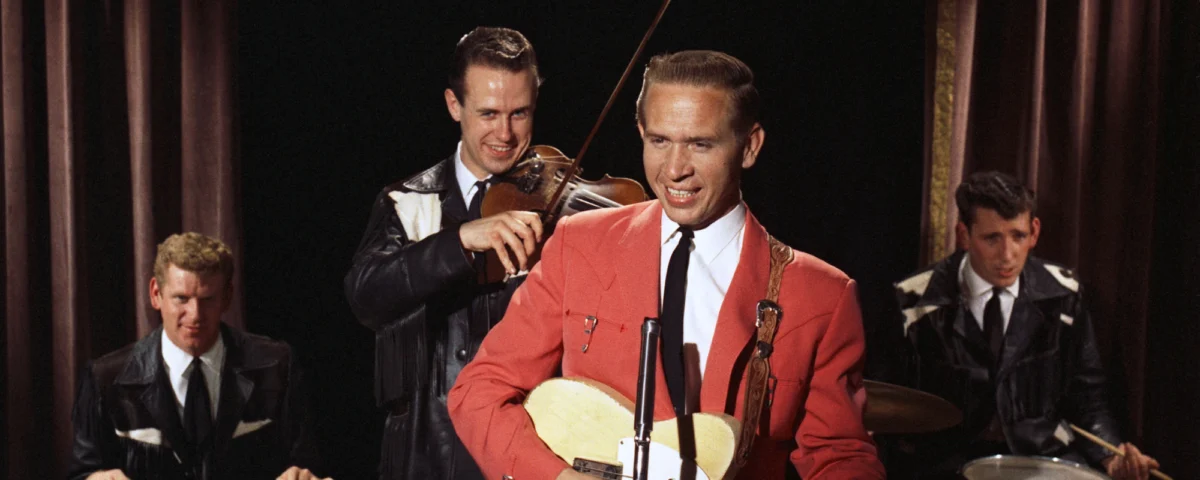
On March 18, 1965, the American country music landscape was firmly under the dominion of Alvis Edgar "Buck" Owens, who found himself in the third week of a formidable five-week residency at the summit of the Billboard Hot Country Songs chart with his hit single, "I’ve Got a Tiger by the Tail." This period represented the zenith of the "Bakersfield Sound," a subgenre of country music that Owens helped pioneer as a gritty, honky-tonk alternative to the polished, string-heavy "Nashville Sound" emanating from Tennessee. While Owens was no stranger to the number-one position, this specific track represented a unique milestone in his career: it became his only significant crossover hit, peaking at No. 25 on the Billboard Hot 100 and cementing his status as a mainstream cultural icon. The story behind the song involves a providential road trip, a ubiquitous corporate advertising campaign, and the deep-seated skepticism of one of Nashville’s greatest songwriters.
The Architect of the Bakersfield Sound
To understand the significance of "I’ve Got a Tiger by the Tail" in March 1965, one must examine the broader context of the country music industry during that decade. In the early 1960s, the "Nashville Sound," characterized by smooth background vocals and orchestral arrangements, dominated the airwaves. This style was designed to broaden country music’s appeal to middle-class audiences. Conversely, Buck Owens and his band, the Buckaroos, were refining a sharper, more rhythmic sound in Bakersfield, California. Utilizing the piercing "twang" of the Fender Telecaster guitar and a driving backbeat, Owens brought a raw, electric energy back to the genre.
By 1965, Owens was arguably the most successful artist in country music. He was in the midst of a historic run that would eventually see him score 14 consecutive No. 1 hits on the country charts. This streak included timeless classics such as "Act Naturally" (1963), which was later covered by The Beatles, and "Love’s Gonna Live Here" (1963), which spent an astonishing 16 weeks at the top of the charts. "I’ve Got a Tiger by the Tail" was the fifth entry in this uninterrupted string of chart-toppers, but its origins were rooted not in a studio session, but in a long drive across the Texas landscape.
A Providential Road Trip and the Esso Inspiration
The genesis of the song occurred during a songwriting excursion involving Owens and his longtime friend and collaborator, Harlan Howard. Howard, often referred to as the "King of Country Songwriters," was the man behind the famous definition of country music as "three chords and the truth." Despite their combined talent, the pair found themselves struggling for inspiration as they traveled through Texas in late 1964.
According to historical accounts and essays maintained by the Harlan Howard estate, the breakthrough came from an unlikely source: an Esso gas station. During the mid-1960s, Esso (the brand that would eventually become Exxon) was running a massive advertising campaign featuring the slogan "Put a Tiger in Your Tank." The campaign, created by the advertising agency McCann-Erickson, was a global phenomenon, utilizing a cartoon tiger to emphasize the power and performance of their fuel.
Owens was struck by the imagery of the tiger. He envisioned the metaphor of a man involved with a woman who was "too much to handle"—someone he couldn’t let go of, but who was also dangerous to hold onto. While Owens was immediately enthusiastic about the concept, Howard was significantly less impressed. Howard reportedly viewed the idea as gimmicky and feared it lacked the emotional depth required for a lasting country hit.
The Skepticism of Harlan Howard
The creative tension between the two men reached a head on the fifth day of their trip. Howard, resting in the backseat while Owens drove, grew weary of Owens’ insistence on the "tiger" theme. In an effort to silence the discussion, Howard quickly improvised several lines of lyrics to provide a structure for the song. He reportedly handed the lyrics to Owens with a sense of dismissal, believing the song was essentially a "joke" that would never see the light of day.
The skepticism did not end there. About a week after their trip, Owens contacted Howard to inform him that he had finalized the arrangement and was preparing to record the track at Capitol Records’ Studio B in Hollywood. Howard attempted to dissuade Owens, expressing concern that such a lighthearted, metaphor-heavy song might damage the "Bakersfield Legend" reputation Owens had worked so hard to build. Howard feared the song was too "pop" or too superficial for the hardcore country audience.
Recording and the Sound of the Buckaroos
Owens ignored Howard’s reservations and entered the studio on December 1, 1964. The recording session featured the classic lineup of the Buckaroos, including the legendary Don Rich on lead guitar and harmony vocals. Rich’s contribution was vital; his bright, trebly Telecaster fills and high-tenor harmonies provided the perfect counterpoint to Owens’ percussive vocal delivery.
The production of "I’ve Got a Tiger by the Tail" perfectly encapsulated the Bakersfield aesthetic. It featured a prominent drum beat—something that was still occasionally controversial in more traditionalist Nashville circles—and a rhythmic drive that invited listeners to dance. The song was released on December 28, 1964, as the lead single for the album of the same name.
Statistical Analysis and Chart Dominance
The commercial response to the single was immediate and overwhelming. When the January 23, 1965, issue of Billboard magazine was published, Harlan Howard searched the lower rungs of the Hot Country Songs chart, expecting the song to have made a modest debut. To his shock, the track had bypassed the lower positions entirely, debuting at No. 8.
The song’s ascent was rapid. By February 20, 1965, it reached the No. 1 spot, where it would remain for five weeks. This period, including the week of March 18, solidified the song as a cultural staple. Beyond the country charts, the song demonstrated significant "crossover" potential. In an era where country and pop charts were largely segregated, "I’ve Got a Tiger by the Tail" climbed to No. 25 on the Billboard Hot 100. This crossover success was a rarity for Owens and served as a precursor to the massive pop-country explosions of the 1970s and 80s.
The data from 1965 highlights Owens’ total dominance of the genre. During that year alone, Owens would spend a total of 15 weeks at No. 1 across various singles. "I’ve Got a Tiger by the Tail" also performed exceptionally well in international markets, notably reaching the top 10 in Canada, further proving that the Bakersfield Sound had a universal appeal that transcended regional American boundaries.
Broader Impact and Implications for Country Music
The success of "I’ve Got a Tiger by the Tail" had several long-term implications for the music industry. First, it validated Owens’ instinct to incorporate contemporary cultural references and more modern production techniques into country music. The use of a corporate slogan as a metaphorical device proved that country music could be topical and clever without losing its traditional soul.
Secondly, the song’s success helped bridge the gap between country music and the burgeoning rock and roll scene. The driving rhythm and electric guitar work influenced a generation of rock musicians. The Beatles’ interest in Owens—exemplified by Ringo Starr’s cover of "Act Naturally" later in 1965—was a testament to the respect Owens commanded across the musical spectrum.
For Harlan Howard, the song’s success was a lesson in the unpredictability of the commercial market. Despite his initial fears that the song would "ruin" Owens’ career, it became one of the most profitable and enduring entries in Howard’s extensive catalog. It served as a reminder that the "truth" in country music could sometimes be found in a joke or a clever metaphor just as easily as in a heartbreak ballad.
The Legacy of the Tiger
Decades after its 1965 peak, "I’ve Got a Tiger by the Tail" remains a definitive example of the Bakersfield Sound. It has been covered by dozens of artists across multiple genres, including the Dave Edmunds’ rockabilly revival band and various bluegrass outfits. The song also became a staple of Owens’ television career, particularly on the long-running variety show Hee Haw, where it helped introduce his music to new generations of viewers.
The week of March 18, 1965, serves as a historical marker for a moment when the rough-edged sounds of a California oil town officially conquered the national airwaves. Buck Owens did more than just "put a tiger in his tank"; he harnessed the energy of a shifting musical landscape and drove it to the top of the charts, forever changing the trajectory of American country music. The song stands as a monument to the collaborative power of Owens and Howard, the technical brilliance of the Buckaroos, and the enduring power of a simple, catchy idea that refused to be ignored.
