

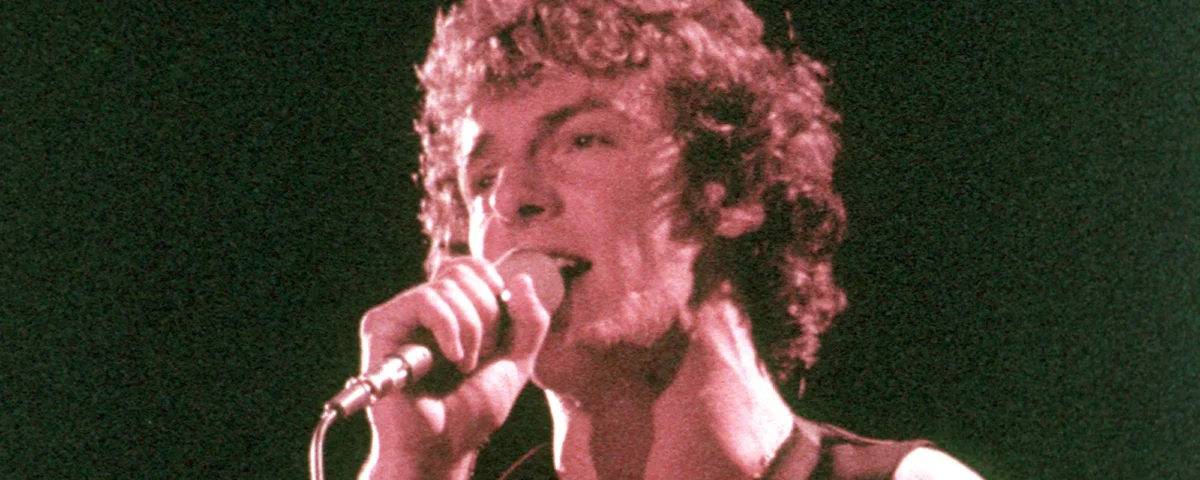
The phenomenon of creative stagnation, often referred to as writer’s block, remains one of the most significant hurdles for professionals within the music industry. In an era characterized by a constant demand for digital content and high-frequency releases, songwriters frequently report a sense of "creative fatigue," where melodic and lyrical patterns become repetitive and predictable. This professional exhaustion has led many creators to seek structured methodologies from historically successful artists to rejuvenate their output. Among the most scrutinized and emulated figures in this regard is Bruce Springsteen, whose career spans over five decades and includes 21 studio albums, 20 Grammy Awards, and an Academy Award. By deconstructing Springsteen’s specific approach to composition—characterized by narrative clarity, the romanticization of the mundane, and a disciplined relationship with simplicity—modern songwriters are finding a blueprint for sustainable creativity.
The Foundation of Narrative Clarity Over Technical Complexity
A primary pillar of the Springsteen methodology is the prioritization of clarity over complexity. In the contemporary music landscape, there is often a temptation to utilize intricate chord progressions and avant-garde production techniques to mask a lack of foundational substance. However, Springsteen’s body of work, much like that of his contemporary Tom Petty, demonstrates that emotional resonance is frequently achieved through a minimalist structural approach. Springsteen’s compositions often rely on a "three chords and the truth" philosophy, ensuring that the musical arrangement serves the narrative rather than competing with it.
Industry analysts note that this approach is not a rejection of musical sophistication but rather a strategic choice to enhance accessibility. By utilizing straightforward harmonic structures, Springsteen allows the listener to focus entirely on the lyrical delivery and the emotional arc of the song. This technique was most notably employed in his 1982 album Nebraska, which was recorded on a four-track cassette recorder. Despite the lack of high-fidelity production, the album is cited by critics as one of the most influential works in the American folk-rock canon, proving that technical simplicity can yield profound artistic depth.
Chronology of a Narrative Evolution: From the "New Dylan" to "The Boss"
To understand the efficacy of Springsteen’s methods, one must examine the chronological development of his songwriting style. In the early 1970s, Springsteen was often marketed as a "New Dylan," characterized by dense, verbose lyrics and complex imagery, as seen in his debut Greetings from Asbury Park, N.J. (1973). However, a significant shift occurred with the release of Born to Run (1975). During this period, Springsteen began to refine his focus, moving away from abstract wordplay toward cinematic storytelling.
The 1980s marked a further evolution into the "universal personal." Following the massive commercial success of Born in the U.S.A. (1984), Springsteen faced the challenge of maintaining his artistic integrity while operating at the peak of global superstardom. His response was to ground his writing in the specific struggles of the American working class. By 2013, in a landmark interview with Uncut magazine, Springsteen articulated the philosophy that has since become a mantra for aspiring writers: the necessity of starting with personal experience and "shading in" universal feelings. This trajectory shows a deliberate move from the specific to the general, allowing individual stories to serve as vessels for broader societal themes.
Blending Reality with Fiction: The "Universal Personal" Technique
One of the most difficult balances to strike in songwriting is the intersection of autobiography and fiction. Springsteen’s advice to "get personal first, then shade in universal feelings" serves as a technical guide for achieving this balance. This method involves identifying a core emotional truth—such as the desire for escape, the fear of stagnation, or the weight of familial duty—and then constructing a fictionalized narrative around it.
This technique allows the songwriter to remain emotionally connected to the material without being restricted by the literal facts of their life. For instance, while Springsteen did not spend his youth working in a refinery, his songs about blue-collar labor resonate because they tap into the universal human experience of seeking dignity through work. This "shading" process ensures that the song remains relatable to a global audience, regardless of their specific socioeconomic background. Data from streaming platforms indicates that Springsteen’s catalog maintains high listenership across diverse demographics, suggesting that his "universal personal" approach successfully transcends geographic and generational boundaries.
Romanticizing the Mundane: A Counter-Narrative to Pop Excess
In a modern music market often dominated by themes of extreme wealth, luxury, and digital artifice, the Springsteen method offers a stark counter-narrative: the romanticization of everyday life. Much of popular music focuses on the exceptional, yet the vast majority of the global population exists within the realm of the mundane. Springsteen’s ability to find drama in a "two-lane highway," a "working day," or a "small-town Friday night" provides a sense of validation to the listener’s own reality.
This approach has significant implications for the longevity of an artist’s career. While songs about transient luxury may age rapidly as trends shift, songs about fundamental human experiences—love, loss, and labor—possess a timeless quality. By focusing on the "drama in everyday life," a songwriter can create a catalog that remains relevant across decades. This is reflected in Springsteen’s commercial performance; in 2021, he sold his entire publishing catalog and master recordings to Sony Music for an estimated $500 million, one of the largest deals of its kind, underscoring the enduring financial and cultural value of his "mundane" narratives.
Psychological Resilience and the Management of Creative Blocks
A significant portion of Springsteen’s professional legacy involves his transparency regarding the psychological challenges of the creative process. During a 2024 appearance on The Howard Stern Show, Springsteen revealed that he once experienced a creative drought that lasted two years. This admission is critical for the industry at large, as it de-stigmatizes writer’s block and frames it as a natural phase of the artistic cycle.
The Springsteen approach to these "dry spells" is one of disciplined patience rather than forced output. By refusing to force ideas that are not ready to emerge, he preserves the quality of his work. Psychological studies on "flow state" suggest that high-pressure environments often inhibit the lateral thinking required for creative breakthroughs. Springsteen’s methodology encourages writers to step back and allow the subconscious to process experiences, ensuring that when the "dam breaks," the resulting work is of a higher caliber. This resilience is a key factor in his ability to remain a touring and recording powerhouse into his mid-70s.
The Creator-Audience Duality: Maintaining Perspective
In a 2020 conversation with producer Rick Rubin on the Broken Record podcast, Springsteen described a dual-perspective approach to songwriting: keeping one leg in the role of the creator and the other in the role of the audience. This perspective is vital for ensuring that a song achieves its intended emotional impact. It requires the songwriter to periodically detach from the technicalities of composition—the chords, the rhyme schemes, the production layers—and listen to the track as a passive observer.
This "audience-first" mindset helps prevent the common pitfall of over-engineering a song. If a track does not evoke a visceral reaction—the "chill-inducing effect" Springsteen often aims for—it may require simplification rather than additional complexity. By maintaining this duality, Springsteen ensures that his music remains grounded in the listener’s experience, fostering a deep, almost communal connection between the artist and the public.
Broader Impact and Implications for the Music Industry
The enduring influence of the Springsteen method has significant implications for the future of the music industry. As AI-generated music begins to permeate the market, the value of authentic, narrative-driven songwriting is expected to rise. AI can replicate complex chord progressions and polished production, but it struggles to replicate the nuanced "universal personal" shading that Springsteen mastered.
Furthermore, the "Springsteen model" of career longevity serves as a case study for labels and independent artists alike. It suggests that building a brand on emotional honesty and structural simplicity is more sustainable than chasing fleeting production trends. Artists such as Sam Fender, The Killers, and Hozier have all cited Springsteen’s influence, demonstrating how his 20th-century techniques are being adapted for 21st-century audiences.
In conclusion, the study of Bruce Springsteen’s songwriting is more than an exercise in nostalgia; it is a rigorous analysis of a functional creative system. By prioritizing clarity, blending reality with fiction, romanticizing the mundane, and maintaining a disciplined perspective on the creative process, songwriters can navigate the pressures of the modern industry while producing work of lasting substance. The "Boss’s" legacy proves that in an increasingly complex world, the most powerful tool a creator possesses is the ability to tell a simple story well.
