

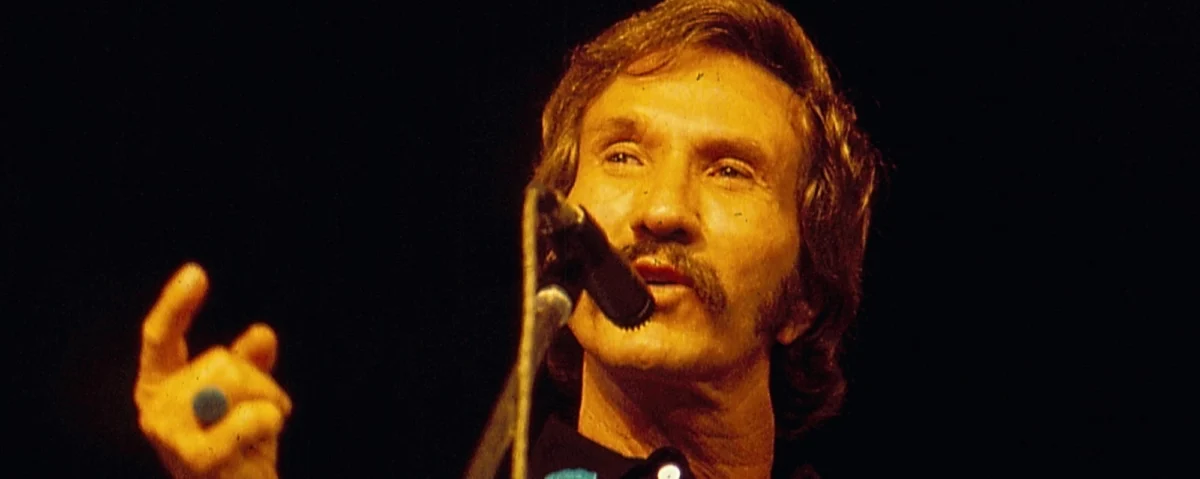
On March 19, 1961, the American country music landscape was dominated by a singular voice that bridged the gap between traditional Western ballads and the emerging "Nashville Sound." Marty Robbins, already a seasoned veteran of the Billboard charts, reached the summit of the Hot Country Songs chart with his single "Don’t Worry." While the track’s ten-week residency at the No. 1 position solidified Robbins’ status as a commercial powerhouse, the recording session for the song is now regarded as one of the most pivotal moments in the history of music technology. A technical malfunction during the session inadvertently birthed the "fuzz" guitar effect, a distorted sonic texture that would eventually define the sound of rock and roll, psychedelic music, and heavy metal.
The Success of Don’t Worry and the Nashville Sound
Released on February 6, 1961, as the second single from the album More Greatest Hits, "Don’t Worry" was an immediate critical and commercial success. Written by Robbins himself, the song featured the melancholic, heartfelt lyricism that had become his trademark. Within three weeks of its release, it ascended to the top of the country charts, but its impact was not limited to a single genre. The track peaked at No. 3 on the Billboard Hot 100, marking one of the most successful crossover hits of Robbins’ career.
The early 1960s represented a period of transition for Nashville. Producers like Chet Atkins and Don Law were moving away from the "honky-tonk" style of the 1940s and 50s, favoring smoother arrangements with strings and background vocals—a style known as the Nashville Sound. "Don’t Worry" fit this mold perfectly, featuring polished production and Robbins’ velvet-toned delivery. However, the song is best remembered for the jarring, gritty bass solo that appears midway through the track, a sound that stood in stark contrast to the era’s preference for pristine audio clarity.
The Technical Mishap: Grady Martin and the Blown Transformer
The session for "Don’t Worry" took place at the legendary Bradley Film & Recording Studio, often called the "Quonset Hut," in Nashville. The session featured Grady Martin, a member of the elite group of session musicians known as the "Nashville A-Team." Martin was tasked with playing a six-string bass, an instrument that provided a deeper, more resonant tone than a standard guitar.
During the recording of the solo, a transformer in the vacuum-tube preamplifier of the recording console began to fail. As the electrical component deteriorated, it clipped the audio signal, shearing off the peaks of the sound waves and creating a square-wave distortion. The result was a "fuzzy," buzzing sound that was entirely unintended.
Historical accounts from the session indicate that Grady Martin was initially displeased with the result. Having spent years perfecting a clean, professional tone, Martin viewed the distorted output as a technical failure and requested a re-recording of the track. However, producer Don Law, recognized for his keen ear for unique sounds, insisted on keeping the take. Law reportedly felt that the distortion added an emotional weight and a unique "growl" that complemented the song’s themes of heartbreak and resilience.
The distorted bass is heard twice in the final mix: a brief 20-second segment starting at the 1:26 mark and a longer section beginning at 3:03 that carries the song to its conclusion. At the time, listeners were confused by the sound, with some radio stations even calling the label to report that they had received "defective" copies of the record.
Engineering the Future: The Creation of the Maestro FZ-1
The "fuzz" sound proved to be a sensation among musicians who were eager to replicate the grit heard on Robbins’ hit. Initially, the effect could only be achieved by using the specific faulty preamp at the Quonset Hut. Grady Martin himself eventually embraced the sound, utilizing the failing equipment to record an instrumental track titled "The Fuzz" later that year.
As the preamp eventually failed completely, the need for a reliable, reproducible version of the effect became apparent. Glenn Snoddy, the recording engineer on the "Don’t Worry" session, and Revis Hobbs, an engineer at WSM radio, began experimenting with transistor circuits to mimic the sound of the failing vacuum tube. Unlike tubes, which were bulky and fragile, the newly emerging transistor technology allowed for the creation of small, portable electronic devices.
Snoddy and Hobbs successfully developed a circuit that produced a consistent distorted tone. They pitched the design to the Gibson Guitar Corporation, which saw the potential for a new type of musical accessory. In 1962, Gibson released the Maestro FZ-1 FuzzTone. It was the first commercially available distortion pedal, marketed as a tool that could allow a guitar to "mimic" the sound of brass instruments like the saxophone or tuba.
A Slow Start and the Rolling Stones Catalyst
Despite the innovation, the Maestro FZ-1 was not an immediate commercial success. Gibson’s marketing department struggled to explain the utility of a device that intentionally "ruined" a clean guitar signal. In 1962, the company shipped 5,000 units, but by 1963, sales had plummeted to nearly zero, and the product was widely considered a failure.
The trajectory of the fuzz pedal changed permanently in 1965. During a tour of the United States, Keith Richards of the Rolling Stones purchased an FZ-1 and used it to record a demo of a riff he had written in a hotel room. That riff became the foundation of "(I Can’t Get No) Satisfaction." Richards originally intended the fuzz effect to serve as a placeholder for a horn section, much like Gibson’s original marketing had suggested. However, the rest of the band and manager Andrew Loog Oldham insisted that the distorted guitar sound stay on the final record.
"Satisfaction" became a global phenomenon, reaching No. 1 in multiple countries. The distorted riff became the most recognizable sound in popular music, and suddenly, every guitar player in the world wanted a "fuzz box." Gibson sold out of its remaining stock of FZ-1 pedals within weeks, and the era of the effects pedal began in earnest.
Chronology of the Fuzz Revolution
To understand the impact of the "Don’t Worry" session, it is necessary to view it within the broader timeline of guitar amplification and distortion:
- Late 1950s: Guitarists like Link Wray and Willie Kizart began experimenting with "dirty" sounds. Wray famously poked holes in his amplifier speakers with a pencil to achieve the distorted tone heard on his 1958 hit "Rumble."
- February 1961: Marty Robbins records "Don’t Worry." The technical failure of a preamp transformer creates the first recorded instance of electronic fuzz distortion.
- 1961-1962: Glenn Snoddy and Revis Hobbs develop the transistor-based fuzz circuit.
- 1962: Gibson releases the Maestro FZ-1 FuzzTone, the first mass-produced guitar pedal.
- 1965: The Rolling Stones release "Satisfaction," turning the fuzz pedal into an essential tool for rock musicians.
- Late 1960s: The success of the FZ-1 leads to the creation of legendary pedals such as the Arbiter Fuzz Face (used by Jimi Hendrix) and the Electro-Harmonix Big Muff.
Analysis of Implications for the Music Industry
The accidental discovery during the Marty Robbins session had three major implications for the music industry that persist to this day.
First, it shifted the definition of "fidelity" in recording. Prior to 1961, the goal of audio engineering was the transparent reproduction of sound. The "Don’t Worry" session proved that "imperfections"—noise, clipping, and distortion—could be utilized as creative tools. This opened the door for the experimentation of the late 1960s, where feedback and studio manipulation became art forms.
Second, it birthed the multi-billion dollar music effects industry. Before the FZ-1, a guitarist’s sound was dictated by their instrument and their amplifier. The introduction of the "stompbox" allowed musicians to modularize their sound, leading to the vast landscape of pedals available today, from delays and reverbs to modern digital modeling.
Third, it bridged the gap between genres. It is a historical irony that one of the most important developments in rock music history occurred during a country music session in Nashville. The "fuzz" sound helped break down the walls between the polished world of Nashville and the rebellious energy of the British Invasion, proving that sonic innovation often comes from the most unexpected places.
Legacy and Conclusion
Today, Marty Robbins is remembered as a versatile entertainer—a member of the Country Music Hall of Fame who could sing everything from "El Paso" to "A White Sport Coat." However, his contribution to the technical evolution of music is often overlooked by casual listeners. "Don’t Worry" remains a staple of classic country radio, but for gear enthusiasts and music historians, it represents the "Big Bang" of the modern guitar sound.
The blown transformer in Grady Martin’s preamp did more than just provide a unique solo for a 1961 hit; it challenged the status quo of audio engineering. By choosing to keep a "mistake" on a record, Marty Robbins and Don Law inadvertently provided the blueprint for the next sixty years of popular music. The Maestro FZ-1, born from that Nashville session, paved the way for the sonic explorations of Jimi Hendrix, Jimmy Page, and countless others, ensuring that the "fuzzy" legacy of March 1961 continues to resonate in every distorted power chord heard today.
