

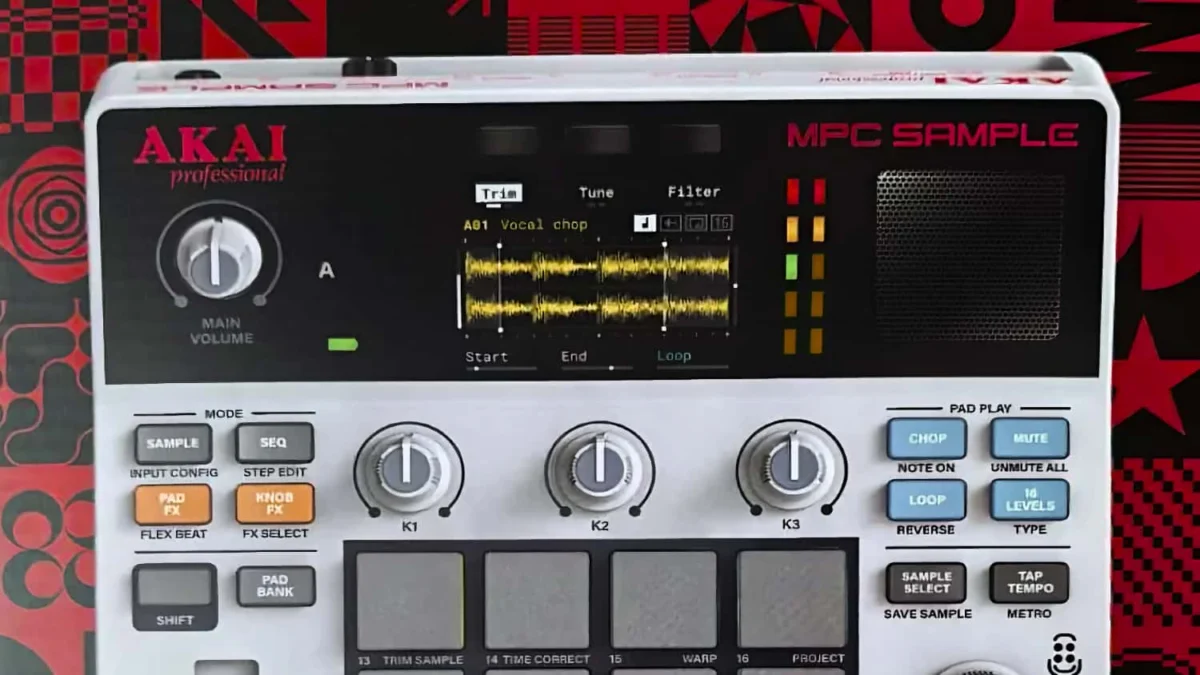
The music technology industry is bracing for a significant addition to the standalone sampler market as Akai Professional prepares to unveil the MPC Sample on March 24, 2026. While official specifications remain under wraps, a series of high-profile logistical slips and social media teasers have provided a comprehensive look at the upcoming device. Positioned as a direct competitor to the Teenage Engineering EP-133 KO II, the MPC Sample represents Akai Professional’s latest effort to condense four decades of sequencing and sampling heritage into a highly portable, battery-powered format. The anticipated release marks a strategic pivot for the company, aiming to capture the growing segment of producers who prioritize mobility and "DAW-less" workflows without sacrificing the professional-grade pads and sequencing logic that defined the MPC legacy.
The first concrete evidence of the MPC Sample’s existence emerged through an unconventional retail error. A user on the social media platform Reddit, identified as "fuxicles," reported receiving a hardware order from Guitar Center packaged in a repurposed shipping box clearly intended for the unreleased Akai unit. The exterior of the carton was stamped with a strict embargo notice: “Display on/after March 24, 2026 – Not before.” This inadvertent disclosure confirmed not only the product’s name but also its imminent arrival in the retail pipeline. Following this leak, Akai Professional transitioned from silence to active promotion, sharing a cryptic video teaser on Instagram that showcased the silhouette of a compact device featuring the iconic 16-pad grid, further fueling industry speculation regarding its capabilities and price point.
A New Entry in the Standalone Sampler Market
The MPC Sample is expected to enter the market at an aggressive price point of approximately $399 USD. This positioning is significant, as it places the device between the ultra-portable pocket operators and the more expensive, full-featured workstations like the MPC One+ or the MPC Live II. By targeting the sub-$500 bracket, Akai is directly challenging the dominance of Teenage Engineering’s EP-133 KO II, which revitalized the budget-friendly sampler category in late 2023. Unlike its competitors, however, the MPC Sample is expected to leverage the full MPC firmware ecosystem, offering a more robust file management system and deeper editing capabilities than its minimalist rivals.

Internal specifications suggested by industry insiders point to a device optimized for "on-the-go" creativity. The MPC Sample is rumored to feature a built-in lithium-ion battery, a departure from the AA-battery requirements of some competitors, ensuring longer session times and a slimmer profile. Furthermore, the inclusion of an integrated microphone and a built-in monitor speaker emphasizes its role as a self-contained field recorder and sketchpad. While the device is scaled down in physical size, it is expected to maintain the velocity-sensitive, pressure-sensitive pads that have been the hallmark of Akai hardware since the release of the MPC 60 in 1988.
Chronology of the MPC Sample Leak and Announcement
The path to the March 24 launch has been marked by a series of events that highlight the challenges of maintaining product secrecy in a globalized retail environment.
- January 2026: Initial rumors of a "Mini MPC" begin circulating on music production forums, following patent filings and supply chain whispers regarding a new compact chassis.
- February 15, 2026: A Reddit user receives a Guitar Center shipment in an MPC Sample box, providing the first visual confirmation of the product name and the official launch date.
- February 20, 2026: Leaked low-resolution images of a prototype appear on European retail sites, showing a sleek, charcoal-gray unit with a simplified interface compared to the MPC One.
- March 10, 2026: Akai Professional releases a 15-second teaser on Instagram, featuring rhythmic sampling of environmental sounds, suggesting the unit’s focus on field sampling and portability.
- March 24, 2026: The scheduled global unveiling and opening of pre-orders.
This timeline suggests that Akai had planned a carefully orchestrated "hype cycle" that was accelerated by the shipping error. However, the leak has served to galvanize the producer community, with many expressing interest in a device that bridges the gap between the software-heavy MPC Touch and the fully standalone Live series.
Technical Analysis: Hardware and Connectivity
From a technical standpoint, the MPC Sample is designed to function as both a standalone instrument and a peripheral for modern digital audio workstations (DAWs). The inclusion of USB-C connectivity is a critical feature, serving three primary purposes: power delivery, high-speed data transfer for sample libraries, and MIDI-over-USB functionality. This ensures that the MPC Sample can easily integrate into a studio setup as a controller while remaining a powerful independent unit for outdoor use.

The user interface appears to lean heavily on a combination of physical encoders and a compact OLED or high-resolution LCD screen. While the larger MPC models utilize expansive touchscreens, the MPC Sample is expected to utilize a more tactile approach to navigation, perhaps similar to the workflow found on the Roland SP-404MKII. This shift would appeal to purists who prefer physical buttons and knobs over touchscreen menu-diving. The "MPC Workflow"—characterized by 16 levels, note repeat, and a powerful swing-based sequencer—is confirmed to be the core of the device’s operating system.
The Legacy of the Music Production Center
To understand the impact of the MPC Sample, one must consider the four-decade evolution of the brand. When Roger Linn and Akai debuted the MPC 60 in the late 1980s, they revolutionized music production by combining a MIDI sequencer with a digital sampler. This combination allowed producers to move away from linear tape recording and toward a pattern-based approach that defined the sound of hip-hop, house, and techno.
Over the years, the MPC line expanded into various forms, from the classic MPC 2000XL to the contemporary MPC X. However, as the market shifted toward mobile production and "bedroom studios," there has been a persistent demand for a unit that offers the legendary Akai "feel" in a form factor that fits into a backpack. The MPC Sample is the culmination of this demand. By stripping away the complexity of the larger workstations—such as multiple audio outputs and massive plugin hosting—Akai is returning to the core essence of the MPC: the ability to capture a sound, chop it up, and build a groove instantly.
Market Implications and Competitive Landscape
The release of the MPC Sample is expected to create a ripple effect across the music technology sector. For years, the portable sampler market was dominated by a few key players, namely Roland with the SP series and Teenage Engineering with the Pocket Operator and EP series. Akai’s entry into this specific niche signifies a "price war" that benefits the consumer. At $399, the MPC Sample offers a professional pedigree that may overshadow the "boutique" or "toy-like" perception of some smaller competitors.

Industry analysts suggest that the MPC Sample may also serve as a "gateway" product. By introducing younger or budget-conscious producers to the MPC ecosystem at a lower price point, Akai creates a clear upgrade path to their more expensive hardware. Furthermore, the portability of the unit addresses a specific trend in the music industry: the rise of "social media jams." Platforms like Instagram and TikTok have seen a surge in creators performing short, hardware-based sets in non-traditional locations. A battery-powered MPC with a built-in speaker is perfectly positioned to become the tool of choice for this demographic.
Official Responses and Anticipation
While Akai Professional has not released a detailed press kit ahead of the March 24 date, representatives have hinted at the device’s philosophy in recent trade show appearances. In general statements regarding the future of the brand, Akai executives have emphasized "democratizing professional tools" and "removing the barriers between inspiration and execution." This language aligns perfectly with the leaked features of the MPC Sample.
Retailers, meanwhile, are preparing for high demand. Reports from major distributors suggest that initial stock levels are being bolstered to avoid the "out-of-stock" issues that plagued the launch of the EP-133 KO II. The "Guitar Center leak" has unintentionally acted as a stress test for consumer interest, with forum engagement metrics indicating that the MPC Sample is one of the most anticipated gear releases of the year.
Conclusion: A Strategic Leap Forward
As the March 24 launch approaches, the Akai Professional MPC Sample stands as a testament to the enduring relevance of hardware in a software-dominated world. By combining the historical weight of the MPC name with modern requirements for portability and affordability, Akai is not merely releasing a new product; they are attempting to redefine the entry-level production experience. Whether the MPC Sample will indeed be the "KO II killer" remains to be seen, but its arrival signals a new chapter in the ongoing evolution of the music production center. For producers waiting for a professional, portable, and affordable sampling solution, the wait appears to be nearly over.
