

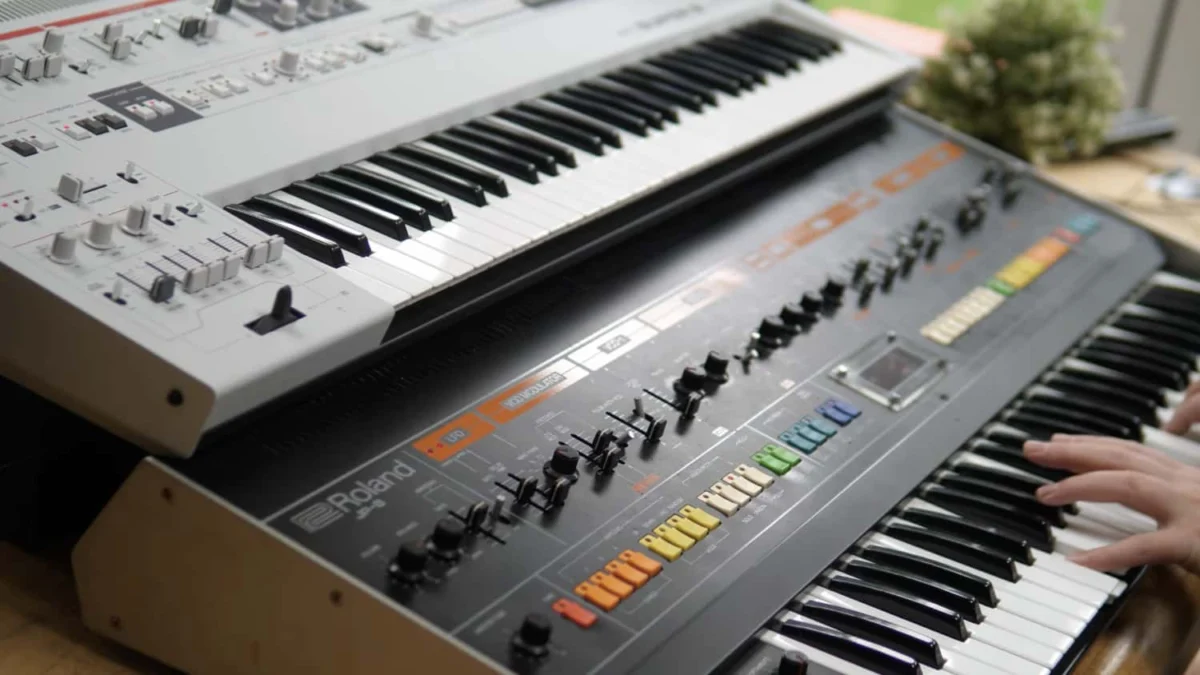
The enduring legacy of the Roland Jupiter-8, a flagship polyphonic synthesizer released in 1981, remains a focal point of discussion within the music production and synthesizer engineering communities. Despite the advent of high-resolution digital modeling and sophisticated analog recreations, a segment of professional users and enthusiasts maintains that the specific "sonic fingerprint" of the Jupiter-8—defined by its unique filter texture and envelope response—remains elusive. This technical debate centers on the discrepancy between empirical data, such as frequency-domain spectrograms, and the psychoacoustic perception of sound, particularly regarding time-domain fluctuations and the nuances of voltage-controlled components.
Technical Architecture and the IR3109 Filter
The Roland Jupiter-8’s reputation is largely anchored in its voice architecture, which utilizes discrete oscillators and the proprietary IR3109 integrated circuit (IC). The IR3109 is a custom-designed operational transconductance amplifier (OTA) that serves as the heart of the Jupiter-8’s four-pole (24 dB/octave) low-pass filter. Unlike many modern filters that aim for surgical precision, the IR3109 is characterized by a specific nonlinear behavior when pushed, contributing to what engineers describe as a "creamy" or "silky" resonance.
While modern synthesizers like the Arturia PolyBrute utilize advanced macro-mapping to emulate these timbres, critics argue that these recreations often focus primarily on the frequency domain—the specific peaks and valleys in the harmonic spectrum. However, the perceived "texture" of the Jupiter-8 is rooted equally in the time domain. This involves minute, non-periodic phase shifts and frequency instabilities that are not always captured by standard Fourier transform-based spectrograms. These subtle fluctuations in the filter’s behavior over time create a sense of movement and "organic" depth that differentiates vintage hardware from modern digital or digitally-controlled analog counterparts.
The Spectrogram Limitation and the Case of the Dual All-Pass Filter
The limitations of scientific visualization in capturing sonic character are exemplified by the behavior of Dual All-Pass Filters (DAPF), such as those found in modules by manufacturers like Instruō. An all-pass filter, by definition, does not significantly alter the frequency magnitude of a signal; rather, it shifts the phase relationship of the frequencies. When viewed on a standard spectrogram, the output of an all-pass filter may appear nearly identical to the input, showing a static frequency response.
However, the human ear is highly sensitive to the phase-shifting effects of these filters, which manifest as a perceived change in the "space" or "texture" of the sound. This phenomenon mirrors the debate surrounding Roland’s vintage filters. The difference between a Roland Jupiter-8 and a modern emulation may not be found in the static frequency cutoff point, but in how the filter interacts with the harmonics in the time domain. This "perceived difference" versus the "scientific method" highlights a gap in current audio analysis where traditional measurement tools fail to account for the temporal complexity of analog circuitry.
The Role of Envelope Curves in Sound Design
Beyond the filter, the Jupiter-8’s envelope generators (EGs) are cited as a critical component of its distinct sound. In the early era of synthesis, envelopes were often viewed as secondary utility modules. However, the specific curvature of the Jupiter-8’s Attack, Decay, Sustain, and Release (ADSR) stages is central to its "snappiness." Roland’s hardware envelopes—later refined in the System 100m and the System 540 modular units—utilize specific voltage-discharge curves that are neither purely linear nor perfectly exponential.
The "shape" of the envelope determines how the filter or amplifier opens and closes. A slightly faster-than-exponential attack can make a brass sound feel more immediate, while a specific decay curve can give a plucked string sound a more natural dissipation. Engineers who have worked with the Roland System 540 module note that the importance of envelope shape is often underestimated until experienced in a tactile, voltage-controlled environment. Modern digital envelopes often struggle to replicate the "bounciness" of these analog circuits, leading to sounds that may be tonally accurate but lack the rhythmic "feel" of the original hardware.
Comparative Analysis of Modern Synthesizers
In the contemporary market, several synthesizers have attempted to bridge the gap between vintage character and modern reliability. The Arturia PolyBrute, for instance, offers immense modulation capabilities and has been demonstrated to come close to the Jupiter timbre through the use of its "Morphee" controller and complex macros. However, purists note that while the PolyBrute can mimic the frequency response of a Jupiter, it retains its own distinct French-engineered Steiner-Parker and Ladder filter characteristics, which provide a different textural density.
Conversely, the Korg Prologue has been identified as a modern instrument that successfully replicates some of the "shimmer" and "texture" associated with vintage Roland gear. This is attributed to Korg’s implementation of its natural analog signal path and its unique digital multi-engine, which allows for a hybrid approach to texture. The Novation Summit, designed by the late Chris Huggett, also approaches this territory. By using high-resolution FPGA (Field-Programmable Gate Array) oscillators running at 24MHz, the Summit minimizes aliasing and provides a smooth, "liquid" filter response that echoes the behavior of the IR3109, even if it does not replicate it exactly.
Chronology of Roland’s Polyphonic Development
To understand the context of the Jupiter-8’s unique status, one must look at the timeline of Roland’s engineering evolution during the late 20th century:
- 1978: Roland releases the Jupiter-4, their first polyphonic synthesizer, utilizing the IR3109 filter chip but featuring a more "unruly" discrete oscillator design.
- 1981: The Jupiter-8 is launched. It introduces a more stable architecture, split/layer capabilities, and the refined implementation of the IR3109 filter, setting a new standard for professional synthesizers.
- 1982: The Juno-6 and Juno-60 are released. While they use similar filter technology, they utilize a single-oscillator-per-voice design and a famous analog chorus to compensate for the lack of a second oscillator.
- 1983: The Jupiter-6 is introduced. It moves toward a more "clinical" and "aggressive" sound, utilizing the CEM3340 oscillators and a different filter design (the IR3R01), marking a shift away from the Jupiter-8’s signature warmth.
- 2010s-Present: Roland introduces "Analog Circuit Behavior" (ACB) technology in its Boutique and Cloud series, attempting to model the original hardware at the component level through digital signal processing (DSP).
Market Implications and the "Vintage Tax"
The inability of modern technology to perfectly satisfy the ears of all professionals has led to a significant surge in the market value of original Jupiter-8 units. Originally retailing for approximately $5,000 in 1981, well-maintained units now command prices exceeding $30,000 on the secondary market. This "vintage tax" is a direct result of the perceived "unreplicable" nature of the instrument’s analog texture.
From an industry perspective, this creates a bifurcated market. On one side, manufacturers like Roland and Arturia focus on accessibility, providing 95% of the sonic character at a fraction of the cost through digital modeling and modern analog. On the other side, a boutique industry of "cloners" and high-end synth designers (such as Black Corporation with their ISE-NIN) seeks to recreate the exact discrete circuitry of the 1980s to capture the remaining 5% of "textural magic" that remains hidden from spectrograms.
Broader Impact on Audio Engineering
The ongoing fascination with the Jupiter-8’s filter and envelopes highlights a broader trend in audio engineering: the shift from objective measurement to subjective experience. As digital tools become more precise, the "flaws" of analog systems—phase distortion, thermal drift, and non-linear envelope shapes—are increasingly recognized as desirable musical traits.
The discussion surrounding the Jupiter-8 suggests that the future of synthesizer design may not lie in achieving greater mathematical precision, but in better understanding the time-domain complexities that the human ear perceives as "warmth" or "soul." As the industry moves forward, the lessons learned from the IR3109 filter and the snappiness of Roland’s vintage envelopes will likely continue to influence the development of both hardware and software instruments, ensuring that the quest for the "perfect balance" remains a driving force in musical innovation.
