

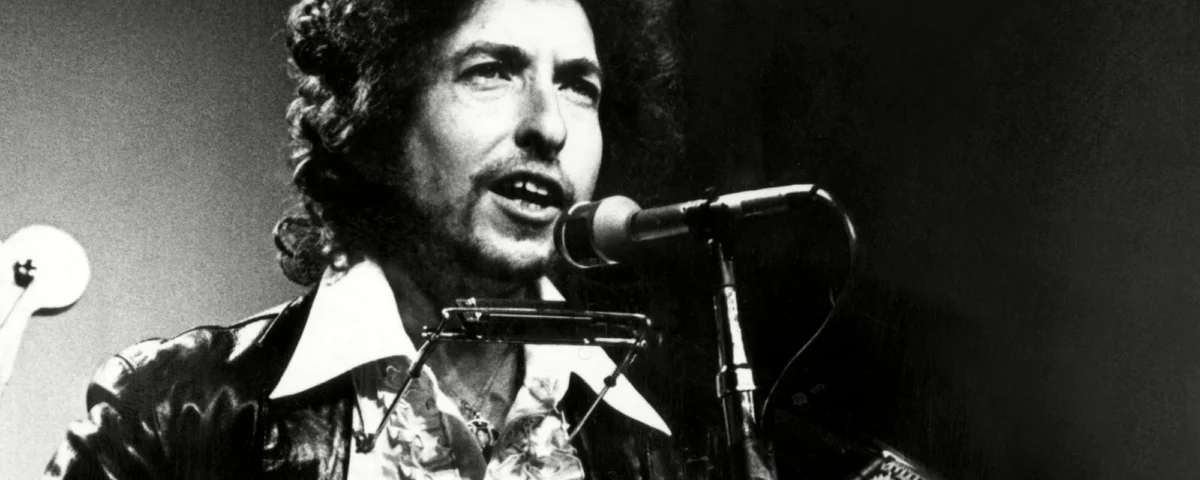
The release of Bob Dylan’s fifteenth studio album, Blood on the Tracks, on January 20, 1975, marked a pivotal moment in the history of American popular music. While the album is now universally regarded as a definitive exploration of heartbreak, memory, and the dissolution of romantic bonds, its final form was the result of a sudden and controversial decision to overhaul the recordings just weeks before the scheduled release. This late-stage intervention, driven by Dylan’s dissatisfaction with the initial sessions, transformed what might have been a quiet, introspective folk record into a dynamic, multi-textured work that bridged the gap between his acoustic roots and the sophisticated rock arrangements of his mid-career peak.
The Creative Genesis and the Raeben Influence
To understand the complexity of Blood on the Tracks, it is necessary to examine the artistic transition Bob Dylan underwent in 1974. Following a decade of immense fame and a period of relative domesticity, Dylan began seeking new methods of expression. During the summer of 1974, he enrolled in art classes led by Norman Raeben, a teacher who emphasized the importance of perspective and the ability to view time and space as fluid entities.
Raeben’s influence was profound. Dylan later remarked that these lessons changed the way he perceived reality, allowing him to write songs that functioned like canvases. Rather than following a traditional linear narrative, his new compositions utilized "time-shifting" techniques, where the past, present, and future often bled into one another within a single verse. This is most evident in "Tangled Up in Blue," where the narrator’s identity and location shift fluidly, creating a sense of universal experience rather than a specific autobiographical account.
While Dylan’s personal life was simultaneously fracturing—his marriage to Sara Lownds was nearing its end—the songwriter has historically resisted the "divorce album" label. He has maintained that the emotional weight of the songs was a product of his artistic evolution and his readings of Chekhov, rather than a direct transcription of his marital woes. Regardless of the source, the material he brought to the studio in late 1974 was arguably the strongest of his career since the mid-1960s.
The New York Sessions: A Study in Intimacy
In September 1974, Dylan entered A&R Studios in New York City to record the material. Working with legendary engineer Phil Ramone and a group of session musicians that included members of the band Deliverance, the sessions were characterized by an atmosphere of stark intimacy. Dylan, however, quickly found the large ensemble distracting. By the second day of recording, he had dismissed most of the backing band, choosing instead to record primarily with bassist Tony Brown.
The New York recordings were defined by their vulnerability. The tracks featured audible finger-scrapes on the guitar strings and a hushed, weary vocal delivery. By the end of the month, test pressings were produced, and Columbia Records began preparing for a year-end release. Critics and colleagues who heard the early cuts described them as a return to form—a "quiet" Dylan record that focused on the raw power of his lyrics. For a time, it appeared that the world would receive a minimalist, purely acoustic version of Blood on the Tracks.
The Turning Point in Minneapolis
The trajectory of the album changed during the 1974 holiday season. Dylan returned to his home state of Minnesota, bringing the test pressings with him. Upon playing the recordings for his brother, David Zimmerman, the feedback was unexpectedly critical. Zimmerman, who possessed a keen ear for commercial production and local music trends, suggested that the album was too "sparse" and might benefit from a fuller, more energetic sound to appeal to a broader audience.
Zimmerman’s critique resonated with Dylan’s own burgeoning doubts. In a move that shocked his label and his New York collaborators, Dylan decided to re-record five of the album’s ten tracks. Working at Sound 80 Studios in Minneapolis, Zimmerman helped assemble a group of local musicians who had no prior experience working with Dylan. This group included Kevin Odegard on guitar, Chris Weber on guitar, Billy Peterson on bass, Bill Berg on drums, and Peter Ostroushko on mandolin.
The Sound 80 Sessions: Energy and Anguish
The Minneapolis sessions took place on December 27 and 30, 1974. Unlike the New York sessions, which were characterized by a somber, professional distance, the Minneapolis sessions were spontaneous and high-energy. The local musicians, unaware of the gravity of the project until Dylan walked into the room, provided a rhythmic drive that the New York tapes lacked.
The transformation of the songs was dramatic:
- "Tangled Up in Blue": Originally recorded in the key of G in New York, the Minneapolis version was sped up and moved to the key of A. The addition of a driving rhythm section turned the song into a panoramic road movie, emphasizing the restlessness of the lyrics.
- "Idiot Wind": The New York version was a sorrowful, wounded lament. In Minneapolis, it became a ferocious, organ-drenched diatribe. The sneering delivery in the final version added a layer of righteous anger that redefined the song’s emotional impact.
- "If You See Her, Say Hello": The addition of Peter Ostroushko’s mandolin provided a delicate, melancholic texture that elevated the song’s sense of longing.
- "You’re a Big Girl Now" and "Lily, Rosemary and the Jack of Hearts": These tracks also received more robust arrangements, with the latter becoming a sprawling, cinematic narrative driven by a jaunty, almost carnivalesque rhythm.
Chronology of the Final Release
The hybrid nature of the album—consisting of five tracks from New York and five from Minneapolis—created a unique sonic tension. The final tracklist was organized as follows:
- Tangled Up in Blue (Minneapolis)
- Simple Twist of Fate (New York)
- You’re a Big Girl Now (Minneapolis)
- Idiot Wind (Minneapolis)
- You’re Gonna Make Me Lonesome When You Go (New York)
- Meet Me in the Morning (New York)
- Lily, Rosemary and the Jack of Hearts (Minneapolis)
- If You See Her, Say Hello (Minneapolis)
- Shelter from the Storm (New York)
- Buckets of Rain (New York)
This sequencing allowed the album to oscillate between the aggressive energy of the full band and the devastating intimacy of the solo acoustic performances. When the album hit shelves on January 20, 1975, it was met with immediate critical acclaim, eventually reaching Number 1 on the Billboard 200 and becoming one of the best-selling albums of Dylan’s career.
Supporting Data and Commercial Impact
The commercial success of Blood on the Tracks served as a significant "rebound" for Dylan following the mixed reception of earlier 1970s projects like Self Portrait and Dylan. According to RIAA data, the album was certified Gold within months of its release and eventually achieved Double Platinum status.
Critically, the album’s influence is difficult to overstate. In 2003 and 2012, Rolling Stone ranked it at number 16 on its list of the "500 Greatest Albums of All Time," and it climbed to number 9 in the 2020 revised list. The decision to include the Minneapolis tracks is often cited by musicologists as the factor that prevented the album from being "one-note." The variety in production allowed the album to function as a complete emotional journey, moving from spite and fury to resignation and peace.
The Archival Legacy and "More Blood, More Tracks"
For decades, the original New York test pressings were the "holy grail" for Dylan fans and bootleggers. The stark differences between the two sessions fueled a long-standing debate among enthusiasts: was the "acoustic" version a more honest representation of Dylan’s psyche, or was the "electric" version a necessary evolution for a public release?
This debate was addressed formally in 2018 with the release of The Bootleg Series Vol. 14: More Blood, More Tracks. This exhaustive collection included every surviving take from the New York sessions, allowing the public to hear the album exactly as Dylan had originally intended in September 1974.
The archival release provided a factual basis for analysis. It revealed that while the New York sessions were technically proficient and emotionally deep, they lacked the "vocal bite" that Dylan achieved in Minneapolis. Industry analysts noted that the New York sessions, while beautiful, might have lacked the radio-friendly momentum required to dominate the 1975 airwaves.
Broader Impact and Implications
The history of Blood on the Tracks serves as a case study in the importance of artistic intuition and the role of the "outside ear." Had David Zimmerman not challenged his brother’s work, the album might have remained a niche folk recording rather than a cultural phenomenon.
Furthermore, the album’s non-linear storytelling, influenced by Raeben, set a new standard for lyricism in rock music. It moved the genre away from simple "A-to-B" narratives and toward a more complex, impressionistic style that respected the listener’s intelligence. Artists from Joni Mitchell to Bruce Springsteen have cited the album as a blueprint for how to handle mature, personal themes with both poetic grace and musical vigor.
In the final analysis, Blood on the Tracks remains a testament to the idea that a masterpiece is often found in the revisions. Dylan’s willingness to scrap his work and start over at the eleventh hour—ignoring the logistical hurdles and the expectations of his record label—remains one of the most successful gambles in the history of the recording industry. It transformed a collection of great songs into a definitive statement on the human condition, ensuring its relevance for generations of listeners to come.
