

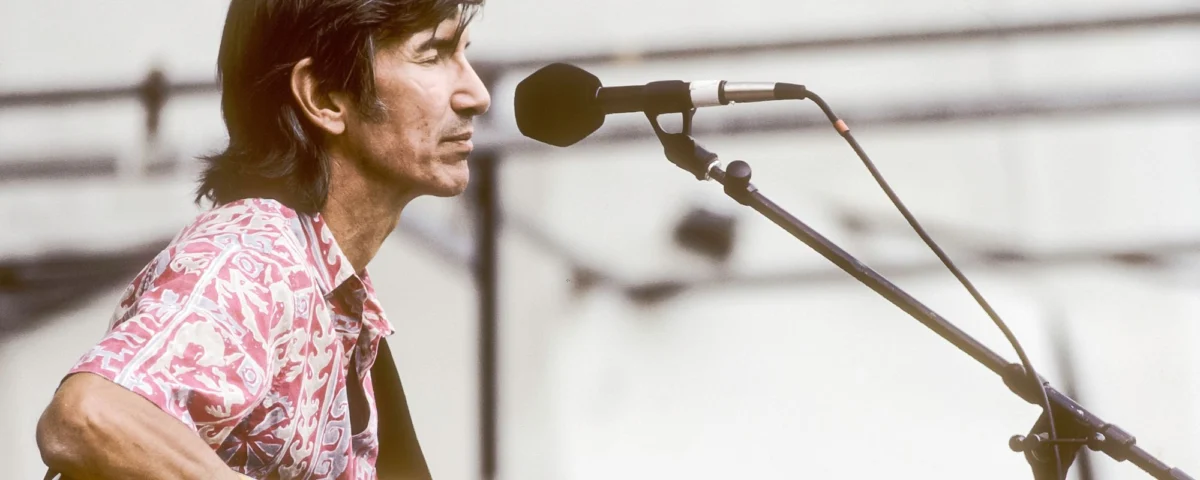
The landscape of American folk and country music is populated by thousands of compositions, yet only a select few achieve a status that transcends the era of their creation. Townes Van Zandt’s "Pancho and Lefty" occupies this rare echelon, possessing a narrative depth and melodic structure that suggests it could have been written in the 1820s as easily as the 1970s. While many contemporary listeners recognize the song through the voices of Willie Nelson and Merle Haggard, the history of the track reveals a complex interplay between artistic integrity, commercial success, and the enigmatic life of its creator. Van Zandt, a figure often described as the "songwriter’s songwriter," crafted a piece of literature set to music that has become a cornerstone of the American songbook, despite the author himself remaining on the periphery of mainstream stardom throughout his career.
The Genesis of a Modern Folk Myth
Townes Van Zandt wrote "Pancho and Lefty" in 1972 while staying in a motel room outside of Denton, Texas. At the time, Van Zandt was already a respected figure in the burgeoning outlaw country and folk scenes of Houston and Austin, known for his haunting lyrics and nomadic lifestyle. The song was eventually released on his sixth studio album, The Late Great Townes Van Zandt, in 1972. The composition process, as Van Zandt later recounted, felt less like an act of creation and more like a moment of transmission. He often stated that he felt "forced" to write the song, staying in his room until the lyrics were completed, driven by a creative impulse that he did not fully understand at the time.
The lyrics tell the story of two characters: Pancho, a bandit who meets a tragic end in the deserts of Mexico, and Lefty, his associate who survives but lives out his days in the cold solitude of Ohio. For decades, listeners and critics speculated whether the song was a historical account of the Mexican revolutionary Pancho Villa and an associate. However, Van Zandt consistently clarified that the characters were fictional. In a notable historical irony, Van Zandt was once pulled over by two policemen in Texas who identified themselves as "Pancho" and "Lefty," an event that occurred after the song had gained regional popularity but before it became a national phenomenon.
The 1983 Duet and Commercial Breakthrough
While the song was a staple of the folk circuit for a decade, it did not reach the height of the commercial charts until 1983. The catalysts for this resurgence were Willie Nelson and Merle Haggard, two titans of country music who were collaborating on a duet album. The recording of "Pancho and Lefty" was almost an afterthought; the duo was nearing the completion of their sessions and realized they lacked a definitive lead single.
The suggestion to record Van Zandt’s ballad came from Lana Nelson, Willie’s daughter. According to studio accounts, Willie Nelson heard the song for the first time late at night and was immediately struck by its poetic resonance. He recorded his parts in the early morning hours and reportedly woke Merle Haggard, who was sleeping on his tour bus, to record his verses. Haggard, initially unfamiliar with the song and groggy from sleep, delivered a performance that would become one of the most celebrated in his career.
The Nelson-Haggard version was a massive success, reaching number one on the Billboard Hot Country Singles chart in July 1983. It transformed a cult folk favorite into a mainstream anthem, eventually being certified Gold by the RIAA. The success of the single propelled the album, also titled Pancho & Lefty, to multi-platinum status, solidifying the song’s place in the cultural zeitgeist.
The Music Video and Van Zandt’s Cinematic Cameo
As the song’s popularity peaked in the mid-1980s, a music video was commissioned to accompany the hit. In a move that signaled their respect for the song’s origins, Nelson and Haggard invited Townes Van Zandt to appear in the production. The video was filmed over four and a half days in a rugged, cinematic style that mirrored the song’s Western themes.
Van Zandt was cast in the role of the Captain of the Federales, the very force that pursues the character of Pancho in the lyrics. In interviews conducted years later, Van Zandt reflected on the experience with a mixture of amusement and humility. He noted that he was paid approximately $100 a day for his time—a modest sum compared to the royalties the song was generating, but a meaningful experience nonetheless. "It was real nice they invited me," Van Zandt told interviewer Aretha Sills in the mid-1990s. "They didn’t have to invite me… I got to ride a horse. I always like that."
The video served as a visual bridge between the gritty reality of the song’s creator and the polished stardom of its most famous performers. For Van Zandt, the experience was less about the fame and more about the camaraderie of the industry. His presence in the video remains a poignant reminder of the man behind the myth, a songwriter who watched his creation achieve world-renowned status while he continued to play smaller clubs and intimate venues.
Artistic Integrity versus Financial Success
The financial trajectory of "Pancho and Lefty" highlights the often-disparate paths of artistic creation and commercial exploitation. While the song generated significant revenue through publishing and airplay, Van Zandt’s personal relationship with wealth remained complicated. He famously struggled with substance abuse and lived a lifestyle that often eschewed the trappings of the music industry’s elite.
In his later years, Van Zandt spoke philosophically about the money his music generated. He admitted that much of the financial gain "goes by a strange life or elsewhere," implying that he did not see the bulk of the wealth associated with his greatest hit. However, his focus remained on the moral and emotional impact of his work rather than the bottom line. He once remarked that if he could write a song that would "somehow turn one five-year-old girl around to do right," he would consider his career a success. This sentiment underscores the "outlaw" ethos that defined his generation—a commitment to the craft over the commerce.
Comparative Analysis of Interpretations
The enduring power of "Pancho and Lefty" is evidenced by the diversity of artists who have covered it. Before Nelson and Haggard made it a chart-topper, Emmylou Harris recorded a definitive version for her 1976 album Luxury Liner. Harris’s interpretation brought a crystalline, haunting quality to the narrative, emphasizing the loneliness of the characters.
Other notable covers include:
- Bob Dylan: Who performed the song live, acknowledging Van Zandt as one of the few songwriters he truly admired.
- Hoyt Axton: Whose deep baritone offered a more traditional folk-country take.
- Steve Earle: A protégé of Van Zandt, whose version serves as a gritty tribute to his mentor’s influence.
Each version highlights a different facet of the song. The Harris version focuses on the ethereal beauty of the melody; the Nelson-Haggard version emphasizes the legendary, cinematic scope of the story; and Van Zandt’s own recordings, often sparse and acoustic, highlight the stark, existential dread at the heart of the lyrics.
Chronology of Key Events
- 1972: Townes Van Zandt writes "Pancho and Lefty" in Denton, Texas, and releases it on the album The Late Great Townes Van Zandt.
- 1976: Emmylou Harris covers the song on Luxury Liner, introducing it to a wider country-rock audience.
- 1982: Willie Nelson and Merle Haggard record their duet version during late-night sessions.
- 1983: The Nelson-Haggard version reaches #1 on the Billboard Country charts.
- 1983: The music video featuring Townes Van Zandt as a Federale captain is released.
- 1997: Townes Van Zandt passes away on New Year’s Day, leaving behind a legacy as one of the most influential songwriters in American history.
- 2004: The song is ranked #41 on CMT’s list of the "100 Greatest Songs in Country Music."
Broader Impact and Musical Legacy
The significance of "Pancho and Lefty" extends beyond its chart performance. It represents a pivotal moment in the "Outlaw Country" movement, where the boundaries between folk storytelling and Nashville production began to blur. The song’s success proved that mainstream audiences had an appetite for complex, ambiguous narratives that did not follow the standard "verse-chorus-bridge" pop formula.
Furthermore, the song’s ambiguity—the question of whether Lefty betrayed Pancho, or whether they are two sides of the same person—has made it a subject of academic study in American folklore and literature. It is often cited as a perfect example of the "border ballad," a tradition that dates back centuries.
In the decades since Van Zandt’s death, "Pancho and Lefty" has only grown in stature. It is frequently cited by modern Americana and alt-country artists as the gold standard for songwriting. The fact that the song continues to be discovered by new generations of listeners, often without them knowing the tragic and brilliant man who wrote it, is perhaps the ultimate testament to its timelessness. Van Zandt may not have sought the spotlight, but through "Pancho and Lefty," he created a shadow long enough to cover the entire landscape of American music.
The song remains a staple of Willie Nelson’s live sets to this day, a permanent fixture in a career that has spanned seven decades. For the music industry, it serves as a reminder that the most enduring hits are often those born not from a marketing meeting, but from a solitary candlelit room where a songwriter is brave enough to listen to the stories the wind tells him.
