

The narrative of rock and roll history is frequently defined by the symbiotic relationship between a performer and their signature song, yet the origins of many definitive tracks reveal a more complex and often accidental trajectory. In the professional music industry, the journey of a composition from its initial conception to its final recorded version is rarely linear, involving a network of songwriters, producers, film executives, and contractual negotiations. Three of the most recognizable anthems in the rock canon—Blondie’s "Call Me," Aerosmith’s "I Don’t Want to Miss a Thing," and The Beatles’ "The Long and Winding Road"—serve as primary case studies for this phenomenon. While these tracks are now inextricably linked to the artists who made them famous, they were originally conceptualized for entirely different voices, highlighting the role of serendipity and industry logistics in shaping the modern musical landscape.
The Evolution of Call Me and the Intersection of New Wave and Disco
In 1980, "Call Me" emerged as a pivotal moment in the career of Blondie, bridging the gap between New York’s gritty punk-inflected new wave and the polished electronic pulse of the late-disco era. However, the track began as a cinematic commission for the soundtrack of the film American Gigolo. Giorgio Moroder, the pioneering Italian producer often cited as the "Father of Disco," was tasked with composing the film’s theme. Moroder’s initial creative vision did not involve Debbie Harry or Blondie; instead, he sought the distinct, raspy vocals of Fleetwood Mac’s Stevie Nicks.
The chronology of the song’s development reveals the constraints of the 1980s music industry. At the time, Stevie Nicks was navigating the complexities of her burgeoning solo career and her ongoing commitments to Fleetwood Mac. Due to restrictive contractual obligations with her record label, Modern Records, Nicks was legally prohibited from participating in the Moroder project. Faced with this obstacle, Moroder approached Debbie Harry, who was then a leading figure in the American new wave movement.
Harry’s contribution proved to be the catalyst for the song’s global success. While Moroder provided the instrumental foundation—a driving, synthesizer-heavy track—Harry wrote the lyrics and the vocal melody in approximately one hour. This collaboration resulted in a track that possessed a harder, more aggressive "edge" than Moroder’s previous disco-centric work.
The data surrounding "Call Me" underscores its massive impact. It spent six consecutive weeks at number one on the Billboard Hot 100 and was eventually named the top-selling single of 1980 in the United States. Furthermore, it achieved international success, topping the charts in the United Kingdom and Canada. Industry analysts suggest that had Nicks recorded the song, it likely would have taken on a more ethereal, "mystical" quality consistent with her established persona. Instead, Harry’s urban, detached delivery transformed it into a quintessential anthem of the 1980s New York scene.
The Commercial Strategy Behind I Don’t Want to Miss a Thing
The 1998 power ballad "I Don’t Want to Miss a Thing" represents a unique intersection of Hollywood blockbuster marketing and the career resurgence of the Boston-based rock band Aerosmith. Written by Diane Warren, one of the most successful pop songwriters in history, the song was commissioned for the soundtrack of the Michael Bay film Armageddon.
Warren’s initial conception for the song was rooted in the pop-diva tradition of the 1990s. In various retrospective interviews, Warren has stated that she originally envisioned the track being performed by a powerhouse female vocalist such as Celine Dion. At the time, Dion was coming off the monumental success of "My Heart Will Go On" from the Titanic soundtrack, and the industry trend favored sweeping, orchestral ballads for major cinematic releases.
The decision to pivot to Aerosmith was largely a result of the film’s casting and the band’s management. Steven Tyler’s daughter, Liv Tyler, was a lead actress in Armageddon, providing a natural marketing synergy for the band’s involvement. When Aerosmith was selected to record the track, the arrangement was modified to suit their hard-rock sensibilities, incorporating Steven Tyler’s signature grit while maintaining the soaring emotionality of Warren’s composition.
The statistical performance of the single was unprecedented for the band. Despite a career spanning nearly three decades at that point, Aerosmith had never achieved a number-one single on the Billboard Hot 100. "I Don’t Want to Miss a Thing" debuted at number one and remained there for four weeks. It remains the band’s biggest commercial hit and was nominated for an Academy Award for Best Original Song. From a critical perspective, the song’s success illustrated the blurring lines between rock and mainstream pop at the end of the 20th century, proving that a veteran rock act could dominate the charts by adopting a more commercial, ballad-heavy sound.
The Conflict and Legacy of The Long and Winding Road
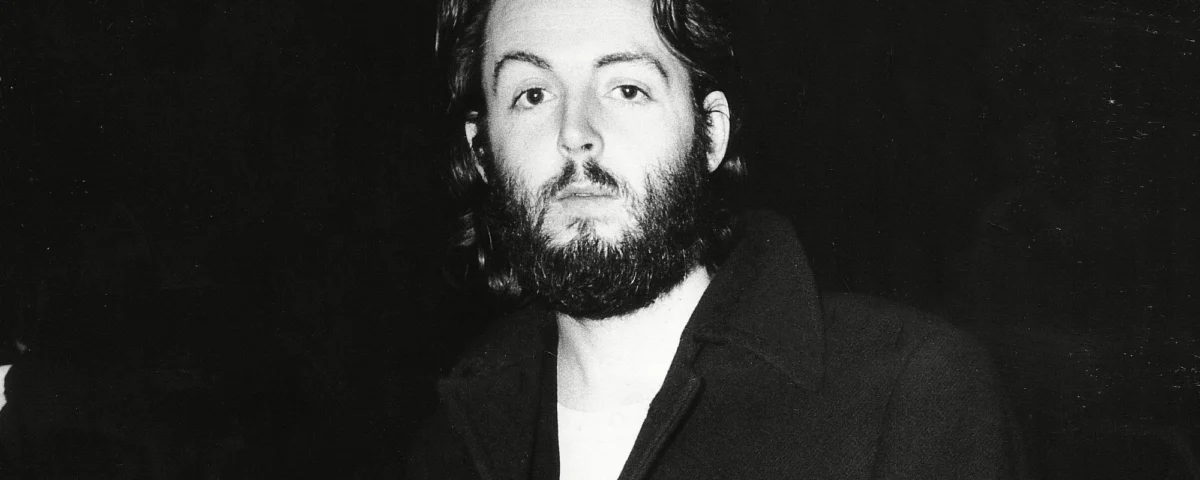
Unlike "Call Me" and "I Don’t Want to Miss a Thing," which were written by external songwriters for specific projects, "The Long and Winding Road" was penned by Paul McCartney during a period of significant internal tension for The Beatles. Written at his farm in Scotland in 1968, the song was inspired by the psychological strain of the band’s impending dissolution.
McCartney’s original intent was not for The Beatles to release the song as a primary single. Instead, he envisioned the track as a vehicle for the Welsh singer Tom Jones. McCartney went as far as sending a demo of the song to Jones, with the caveat that Jones must record and release it as his next single. However, the proposal was derailed by Jones’s management and his record label, Decca. At the time, Jones was already scheduled to release "Without Love (There Is Nothing)," and the label felt that a competing ballad would cannibalize the success of their planned release.
Following Jones’s rejection, The Beatles recorded the song during the Get Back sessions in early 1969. The track’s journey to the public was fraught with controversy. Producer Phil Spector was eventually brought in by John Lennon and manager Allen Klein to finish the Let It Be album. Spector applied his famous "Wall of Sound" production technique to the song, adding an 18-piece choir and a 30-piece orchestra. McCartney was notoriously displeased with these additions, citing them as a violation of his creative vision.
Despite the internal conflict, "The Long and Winding Road" became The Beatles’ 20th and final number-one hit in the United States, reaching the top of the charts in June 1970. The song serves as a historical marker for the end of the band’s era. While Tom Jones’s powerful baritone would have undoubtedly provided a more traditional "crooner" feel to the track, the Spector-produced Beatles version became a symbol of the band’s sophisticated, albeit fractured, final chapter.
Broader Industry Implications and the Songwriting Economy
The movement of these songs from their intended artists to their eventual performers highlights several critical aspects of the music industry’s functional economy. First, it demonstrates the power of "song placement" as a strategic tool for career longevity. For Aerosmith, a song written by a pop specialist allowed them to reach an audience that might have been alienated by their earlier, more aggressive blues-rock.
Second, these examples underscore the importance of the "vocal identity." In the case of "Call Me," the transition from a Fleetwood Mac-style rock sound to a Blondie-style new wave sound completely altered the track’s cultural context. Musicologists argue that the success of a song is often less about the composition itself and more about the "fit" between the artist’s established brand and the song’s emotional resonance.
Finally, the history of these tracks reveals the influence of external factors—such as film tie-ins, label politics, and legal contracts—on the creative process. In a professional setting, a "hit" is frequently the result of a convergence of favorable circumstances rather than a singular, isolated creative act. The fact that these three songs remain staples of classic rock radio today is a testament to the adaptability of the artists and the enduring quality of the songwriting, regardless of who was originally meant to stand behind the microphone.
Chronological Summary of Key Events
The following timeline outlines the pivotal moments in the development of these three tracks:
- 1968: Paul McCartney writes "The Long and Winding Road" and offers it to Tom Jones; Jones declines due to label scheduling.
- 1969: The Beatles record the song during the Get Back sessions.
- 1970 (April): Phil Spector adds orchestral overdubs to the track, much to McCartney’s chagrin.
- 1970 (June): "The Long and Winding Road" becomes The Beatles’ final US #1 single.
- 1979: Giorgio Moroder composes the instrumental for "Call Me" and approaches Stevie Nicks; Nicks is blocked by contractual issues.
- 1980: Debbie Harry writes lyrics for "Call Me"; the song tops the Billboard charts for six weeks.
- 1997: Diane Warren writes "I Don’t Want to Miss a Thing," initially conceptualizing it for a female pop vocalist.
- 1998: Aerosmith records the song for the Armageddon soundtrack; it becomes their first and only #1 single on the Billboard Hot 100.
In conclusion, the history of rock music is filled with "what if" scenarios. While the intended versions by Stevie Nicks, Celine Dion, or Tom Jones might have achieved their own levels of success, the final recordings by Blondie, Aerosmith, and The Beatles have become definitive cultural touchstones. These songs illustrate that in the high-stakes world of international music production, the final destination of a song is often far more significant than its point of origin.
