

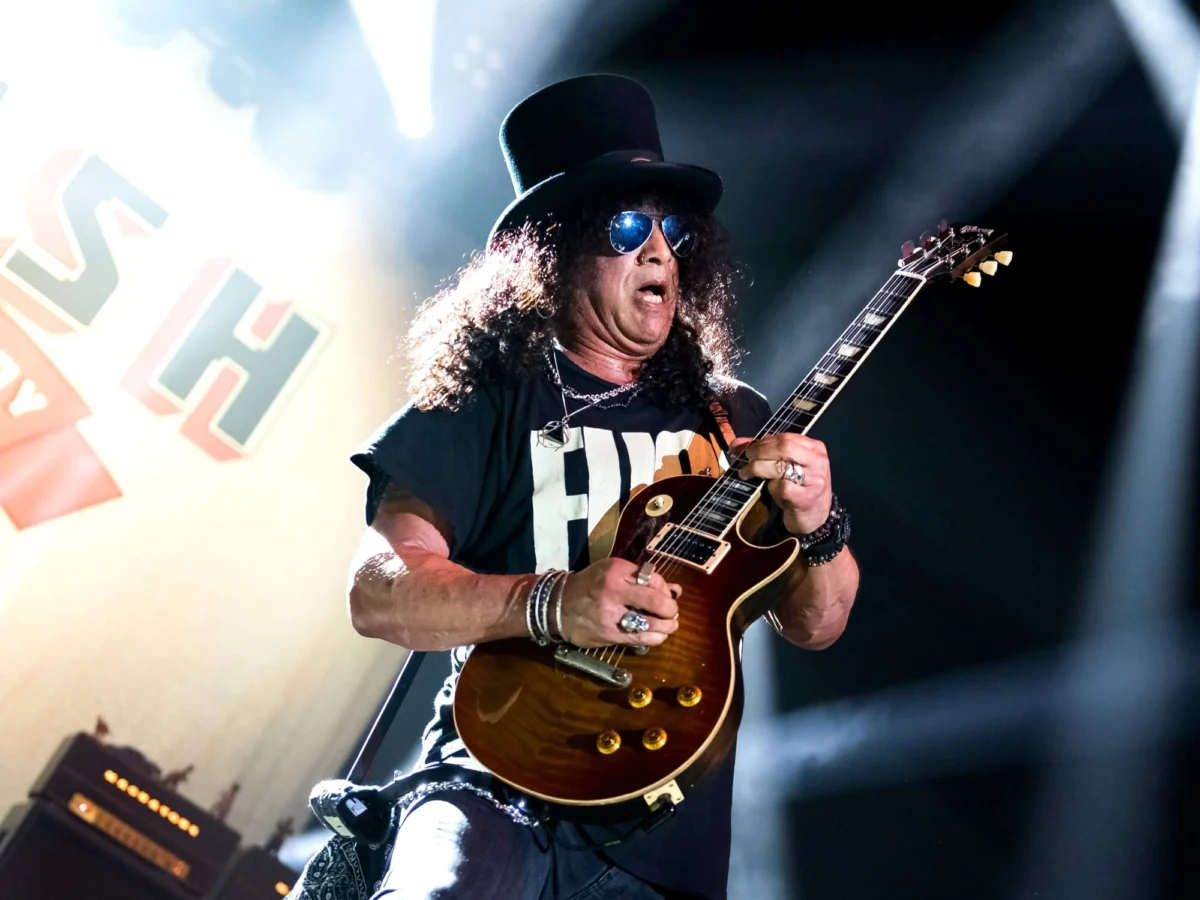
The meticulous and often punishing reality of maintaining the sonic integrity for one of rock’s most iconic figures, Slash, has been brought into sharp focus by his longtime guitar technician, Ryan Redler. In a candid interview on Shane Theriot’s Guitar Channel, Redler peeled back the curtain on a demanding role that underscores the unseen labor crucial to delivering a world-class rock spectacle night after night. His revelations paint a vivid picture of constant vigilance, rapid problem-solving, and a physical toll that mirrors the very ferocity of Slash’s legendary playing style, offering a unique perspective on the dedication required to sustain a rock legend’s performance standards.
The Unyielding Daily Grind: A Battle Against Wear and Tear
Redler’s primary daily battle revolved around the sheer destructive power of Slash’s performance intensity, particularly concerning guitar strings. For many touring guitarists, a set of strings might last several shows, or at least a full show with minor touch-ups. However, for the Guns N’ Roses co-founder, the situation was drastically different, necessitating an exceptional and physically taxing regimen. "Slash, I had to change his strings every day," Redler recounted, highlighting a demand that significantly exceeds industry norms. This was not merely a preference but a critical necessity, driven by the unique combination of his aggressive technique and physiological factors. "He would play one song and destroy [them], because of the sweat and just how hard he plays."
This daily requirement translated into a monumental workload for Redler. He elaborated, "So I was stringing his guitars every day – six, seven, eight, at least, stretching the strings, too, making sure the nut’s all set." Given that Slash’s live setup typically includes multiple Gibson Les Pauls, often tailored with specific tunings or for particular songs, rotating through a fleet of instruments is standard practice for a major touring artist. The sheer volume of string changes, however, pushed the physical limits of the technician. "Man, I was wrecking my hands. I was changing so many guitars of his a day that on days off, I’d just rest my hands." This statement offers a stark insight into the physical strain endured by a guitar tech operating at the highest echelons of professional touring, where the demands far exceed those of a typical musician’s routine maintenance or even the average touring tech’s responsibilities.
The rapid degradation of guitar strings under Slash’s playing style is attributable to a confluence of factors. Firstly, his aggressive attack, characterized by heavy picking, extensive string bending, and wide vibrato, places immense mechanical stress on the strings, leading to metal fatigue at an accelerated rate. Strings under constant tension and movement are prone to microscopic fractures, which manifest as dead spots, tuning instability, and eventually, breakage. Secondly, and perhaps more uniquely, the acidity and volume of his sweat significantly accelerate corrosion. Sweat, composed of water, salts, and various organic compounds, can quickly oxidize string metals, particularly the nickel and steel alloys commonly used in electric guitar strings. This oxidation not only dulls the tone by affecting string vibration and resonance but also increases the likelihood of breakage and severely compromises tuning stability. For a performer whose signature sound relies heavily on sustain, clarity, and precise intonation, maintaining fresh strings is paramount. The meticulous process described by Redler—changing, stretching, and setting the nut—ensures that each guitar is not just playable, but perfectly optimized for Slash’s exacting standards, minimizing any potential for issues during a high-stakes live performance. This rigorous regimen is a testament to the unwavering commitment required to uphold the sonic excellence expected from a rock legend whose sound is instantly recognizable.
The Unforeseen Challenge: A Double-Neck Dilemma in Europe
Beyond routine maintenance, Redler’s account revealed the high-pressure environment of last-minute gear modifications and unforeseen technical hurdles that can emerge just moments before a show. He recalled a particularly tense incident during the 2015 "World on Fire" tour, a period that saw Slash touring primarily with Myles Kennedy and The Conspirators, supporting his album of the same name. This tour was a significant undertaking, encompassing numerous dates across Europe and showcasing Slash’s enduring appeal as a solo artist while maintaining the massive production values associated with his rock star status. The logistical complexities of transporting and maintaining a full touring rig across continents are substantial, and the need for adaptability is constant.
The specific situation arose when Slash decided he wanted to incorporate a song requiring a double-neck guitar into the setlist, an instrument not typically part of the touring rig for that particular leg. Double-neck guitars, such as the iconic Gibson EDS-1275 often associated with legendary guitarists like Jimmy Page, are specialist instruments used for songs that require quick transitions between 6-string and 12-string sounds, or sometimes different tunings. Acquiring such an instrument on the fly in a foreign country is itself a significant logistical challenge, often requiring extensive contacts and rapid procurement. Redler, through his network and resourcefulness, managed to source one. However, the real test came mere minutes before showtime.
"We went to Europe, and he decided he wanted to play a song where he needed a double-neck. We didn’t take his with him, so I found him a double-neck, and right before the show, I showed it to him, and the pickup covers were still on," Redler explained. Slash’s immediate request was clear and concise: "You got to take the pickup covers off."
This seemingly minor aesthetic detail presented a significant technical and time-sensitive problem. Pickup covers, typically made of nickel or chrome, are usually soldered onto the pickup’s baseplate to reduce microphonic feedback and protect the delicate coils. Removing them requires delicate desoldering, careful handling of the pickup components, and then reassembly, all without damaging the sensitive electronics. "And I was like ‘now?’ And it was getting close to showtime, and I had a lot of stuff to do. So that meant four pickup covers off, and they’re soldered on there," Redler recounted, emphasizing the extreme pressure of the rapidly dwindling time before the performance. The guitar had two pickups on each neck, meaning four covers needed removal, each requiring meticulous and precise work under duress.
The conditions under which this emergency repair had to be performed further exacerbated the challenge. "It was hot. We were outdoors. I didn’t have my whole work case," Redler said, painting a vivid picture of a technician working under less-than-ideal circumstances, likely with a limited travel toolkit rather than the comprehensive workshop available at a dedicated rehearsal space or major venue. The absence of specialized tools or a controlled environment amplified the risk of error or damage to the instrument.
Then, disaster nearly struck. While attempting the intricate desoldering, a small but critical component went astray. "I’m taking the pickguards off… I was melting the solder to get that off, and one of those springs goes flying," he recalled. These tiny springs are essential for setting the pickup height, directly impacting the guitar’s output and tone. Losing one could render a pickup, or even an entire neck, unusable, severely compromising the performance or forcing a last-minute song change. "I was nervous enough, and that spring goes flying, and it’s an old wooden stage. And I didn’t have my stuff with me. I didn’t have a spring, and I don’t know what I would have done."
The clock was relentlessly ticking towards showtime, the stage lights were likely warming up, and thousands of fans were awaiting the opening chords, oblivious to the high-stakes drama unfolding backstage. "I looked for about 15 minutes, and time’s running out. It’s showtime… but I found that spring. I did it, and hopefully it was in tune that night!" Redler’s relief at finding the minuscule spring was palpable, underscored by the lingering anxiety over whether the rushed repair held up under the immense scrutiny of a live performance. This anecdote powerfully illustrates the razor’s edge on which live music production often balances, where the ingenuity, resourcefulness, and resilience of the backline crew are as vital as the performance itself. The seemingly simple aesthetic request from Slash transformed into a high-stakes technical sprint, a testament to the unpredictable nature of touring at the highest level.
Beyond the Bench: Onstage Tech Duties and Collaborative Performance
Redler’s responsibilities extended beyond pre-show preparations and emergency repairs, directly influencing Slash’s live performance. Guitar technicians often play a crucial role in shaping the artist’s sound in real-time, operating effects pedals and making quick adjustments during a show. For Slash, this involved precise timing and an intimate understanding of his setlist and sonic preferences, making the tech a silent partner in the musical delivery.
"If he’s playing a lead, [I had to] hit a boost or a chorus," Redler explained. This task requires more than just technical proficiency; it demands a deep musicality and an almost symbiotic relationship with the performer. During a guitar solo, a "boost" pedal increases the signal level, making the solo cut through the mix with more presence and volume, ensuring it stands out from the rhythm section. A "chorus" pedal adds a swirling, shimmering modulation effect, often used for specific song parts or to add texture to certain leads, contributing to the distinct sonic palette of a song. The timing of these activations is critically precise; a millisecond too early or too late can disrupt the flow of the music, distract the audience, or alter the intended emotional impact of a musical phrase.
This active participation in the performance places the guitar tech squarely in the spotlight, albeit from the wings or offstage. It necessitates constant communication, meticulous rehearsal, and an intuitive grasp of the artist’s cues. Redler would have needed to memorize the exact moments within each song where these effects were required, often watching Slash for visual signals, or relying on meticulously planned setlists and cue sheets. The seamless execution of these tasks ensures that Slash’s iconic guitar tones are precisely delivered, enhancing the audience’s experience without any visible interruption or distraction from the technical side. It underscores that a rock concert is not just about the musicians on stage, but a tightly choreographed effort involving an entire crew dedicated to sonic perfection and artistic fidelity.
The Human Element: Trust, Communication, and Professionalism
Despite the relentless workload and high-pressure situations, Redler emphasized the grounded and professional nature of his working relationship with Slash. In an industry often perceived as being plagued by ego and demanding personalities, Redler’s experience speaks to a mutual respect that is absolutely essential for a successful, long-term collaboration, particularly when the stakes are as high as they are for a global rock tour.
"If we had something go wrong, I could always go talk to him and say, ‘Hey, man.’ He’s always available. You could always go into the dressing room after and say, ‘Hey, I screwed up,’" Redler revealed. This level of open communication is invaluable in a high-stakes touring environment. It fosters an atmosphere where mistakes can be acknowledged, learned from, and addressed without fear of severe repercussion, ultimately leading to a more resilient and effective team. The ability to approach a rock icon like Slash directly with technical issues or personal errors speaks volumes about the trust and professional rapport built over years of working together, a bond forged in countless hours of rehearsals, soundchecks, and performances.
This candidness is a crucial element in mitigating the inherent risks of live performance. Gear failures, while rare, are inevitable given the constant wear and tear of touring, the unpredictable nature of electronics, and the physical demands placed on instruments. Knowing that issues can be openly discussed allows for proactive problem-solving and prevents small problems from escalating into major disasters that could impact the entire show. It also highlights Slash’s character as an artist who understands the collaborative nature of live music and values the expertise, honesty, and dedication of his crew. This reciprocal respect ensures that the primary focus remains on delivering the best possible show for the fans, with the technical team feeling empowered to address challenges head-on rather than attempting to hide them, which could lead to far worse outcomes.
The Unsung Heroes of Rock: Broader Implications for Live Music
Redler’s insights offer a rare and valuable glimpse into the often-overlooked world of the guitar technician, a role that is foundational to the success of any major live music production. These individuals are the unsung heroes, operating behind the scenes to ensure that the complex machinery of a rock show runs flawlessly. Their expertise extends far beyond simple string changes; it encompasses deep knowledge of electronics, woodworking, metallurgy, audio engineering principles, and an intricate understanding of an artist’s unique preferences and sonic vision. They are often problem-solvers, engineers, and confidantes rolled into one.
The implications of Redler’s story resonate across the entire live music industry. Firstly, it underscores the immense dedication and specialized skill required to maintain high standards of performance for artists operating at Slash’s level. The demands are not merely technical but also psychological, requiring calm under immense pressure, rapid decision-making in critical moments, and an unwavering commitment to excellence, often for extended periods on the road. The physical toll, as evidenced by Redler’s hand fatigue from relentless string changes, further emphasizes the strenuous and demanding nature of the job, a reality often hidden from public view.
Secondly, the narrative highlights the crucial financial and logistical investments made in touring at this scale. Equipping a major artist like Slash with a fleet of instruments, specialized tools, and a dedicated technical crew represents a significant operational cost. These investments are vital for preserving an artist’s unique sound quality and stage presence, directly impacting ticket sales, fan satisfaction, and ultimately, the artist’s brand longevity. The presence of skilled and trusted technicians allows artists to focus solely on their performance, confident that their instruments are in perfect working order and that any unforeseen issues will be handled swiftly and competently.
Finally, Redler’s experiences serve as a powerful reminder of the indispensable human element at the heart of even the most technologically advanced concerts. While digital modeling, automation, and advanced sound engineering have become more prevalent in music production, the irreplaceable hands-on skill, intuition, and quick thinking of a human technician remain paramount. From soldering a stray wire to finding a lost spring on a dimly lit stage just before showtime, these moments define the difference between a successful, memorable show and a potentially disastrous one. The bond of trust and open communication between artist and tech, as demonstrated by Slash and Redler, is a cornerstone of this intricate ecosystem, ensuring that the magic of live rock and roll continues to captivate audiences worldwide. The detailed account from Redler not only enriches our understanding of Slash’s touring life but also elevates the recognition of the indispensable professionals who make rock history happen, one perfectly tuned guitar at a time.
